Mindblown: a blog about philosophy.
-
Appendicular skeleton
Refers to the bones associated with the appendages and includes the bones in the arms, shoulders, legs, and hips. Part of the skeleton, formed of the pelvic girdle, pectoral girdle and the bones of the arms and legs. The bones of the limbs and girdles attached to the axial skeleton. The bones that make up…
-
Aorta
A large artery stemming from the left ventricle of the heart through which blood travels on its way to the body. The largest artery in the body that delivers oxygenated blood from the left ventricle to the entire body. The largest artery in the body, which carries oxygenated blood pumped from the left muscular chamber…
-

Antioxidants
These protect the cell membrane, lipids, proteins, DNA, or cholesterol molecules by being destroyed themselves. Oxidation-fighting micronutrients that can counter the destructive activity of free radicals, as well as help to offset the premature aging of cells. A chemical compound or substance that inhibits oxidation and protects against free radical activity and lipid oxidation such…
-
Anterior tilt
Anterior tilt of the head means flexion (flattening) of the cervical spine. With the pelvis, the lumbar spine extends, and the top part of the pelvis moves forward.
-

Anorexia athletica
A preoccupation with diet and weight loss, resulting in compulsive and excessive exercise that interferes with daily functions. An eating disorder that is characterized by a food intake less than that required to support the training regimen and by a body weight less than 95% of normal. Use of excessive exercise to lose weight, normally…
-

Angina pectoris
A feeling of pressure or tightness in the chest. This cardiac pain can radiate to the arm, shoulder, upper back, or jaw. Paroxysmal thoracic pain and choking sensation, especially during exercise or stress, due to partial blockage of a coronary artery (blood vessel supplying the heart), as a result of atherosclerosis. Chest pain resulting from…
-
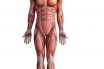
Anatomical position
The body in an upright, erect position with forearms supinated and all joints in neutral position. In anatomy, the standard position of the body from which all directions and positions are derived. The body is assumed to be standing, with the feet together, the arms to the side, and the head, eyes and palms facing…
-
Anaerobic glycolysis
Energy production in the absence of oxygen that results in the incomplete breakdown of carbohydrates into lactic acid. Also known as the glycolytic system. Glycolysis is a several-step process whereby energy is produced by the breakdown of glucose. When glucose is broken down “aerobically,” the endpoint of glycolysis is pyruvic acid, also known as pyruvate.…
-
Amyotrophic lateral sclerosis (ALS)
Sometimes called Lou Gehrig’s disease, ALS is a rapidly progressive, fatal neurological disease that attacks the nerve cells responsible for controlling voluntary muscles. A neurological disease of unknown cause that affects motor neurons and is characterized by muscular weakness and atrophy, most often noted initially in the hands and less often in the feet. Cramps…
-
Americans with disabilities act (ADA)
Initiated and approved in 1990, the purpose of this federal civil rights law is “to establish a clear and comprehensive prohibition of discrimination on the basis of disability.” A civil rights law enacted in 1990 to eliminate discrimination against individuals with disabilities and to provide disabled Americans with a system of legal redress. The Americans…
Got any book recommendations?