Mindblown: a blog about philosophy.
-
Transfection
The uptake of naked or purified DNA into cells, usually eukaryotic. It is analogous to bacterial transformation. A special case of transformation in which an appropriate recipient strain of bacteria is exposed to (free) DNA isolated from a transducing phage with the “take-up” of that DNA by some of the bacteria and consequent production and…
-
Transcription factors
Endogenous substances, usually proteins, which are effective in the initiation, stimulation, or termination of the genetic transcription process. Proteins that interact with each other and (somewhat) with DNA (when immediately adjacent to the DNA in a cell) to either facilitate (i.e., “turn on”) or inhibit (i.e., “turn off”) the activity (i.e., coding for proteins) of…
-
Transcriptase
An enzyme which catalyses the synthesis of a complementary mRNA molecule from a DNA template in the presence of a mixture of the four ribonucleotides (ATP, UTP, GTP and CTP). A polymerase enzyme that constructs a messenger RNA molecule that is a complementary copy of the base sequence on a DNA gene.
-
Trace element
Substance or element essential to plant or animal life, but present in extremely small amounts. The nutrients that the body needs in very small amounts. A substance which is essential to the human body, but only in very small quantities. Minerals needed in trace amounts. Alternate name for elements such as iron, copper, iodine, zinc,…
-
Toxoplasmosis
The acquired form of infection by Toxoplasma gondii in animals and man. A disease caused by infection with protozoa found in many mammals and birds. disease with symptoms similar to mononucleosis that can affect a pregnant woman and her unborn child. It may be contracted by consuming inadequately cooked meat or by poor personal hygiene.…
-
Toxicology
The science concerned with the detection, chemical composition, and pharmacologic action of toxic substances or poisons and the treatment and prevention of toxic manifestations. The science of poisons and their antidotes. Science that studies toxins and their effects in humans or animals. The science that is concerned with the nature and effects of poisons. The…
-
Toxic
Having to do with poison or something harmful to the body. Toxic substances usually cause unwanted side effects. Having a poisonous effect; potentially lethal.
-
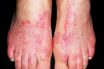
Tinea pedis
Dermatological pruritic lesion in the feet, caused by Trichophyton rubrum, T. mentagrophytes, or Epidermophyton floccosum. Athlete’s foot, Tinea corporis. Medical term for fungal infections of the feet; red, itchy rash of the skin on the bottom of the feet and/or in between the toes, usually found between the fourth and fifth toe. Fungal infection of…
-
Thyroid
A gland located near the windpipe (trachea) that produces thyroid hormone, which helps regulate growth and metabolism. The thyroid gland. An endocrine gland in the neck, which is activated by the pituitary gland and secretes a hormone which regulates the body’s metabolism. A gland located beneath the voice box (larynx) that produces thyroid hormone. The…
-
Thymus
An organ that is part of the lymphatic system, in which T lymphocytes grow and multiply. The thymus is in the chest behind the breastbone. A gland that enables cells of the immune system of mammals to mature. In humans, it lies behind the breast bone and extends upwards as far as the thyroid gland.…
Got any book recommendations?