Mindblown: a blog about philosophy.
-
Nerve
A cordlike structure of nervous tissue that connects parts of the nervous system with other tissues of the body and conveys nervous impulses to, or away from, these tissues. A simple or unbranched vein or slender rib. Most commonly refers to a leaf. Used to distinguish leaf-ribs or veins when parallel, and more or less…
-
Neoplastic
Pertaining to or like a neoplasm (= any new and abnormal growth); pertaining to neoplasia (= the formation of a neoplasm). Referring to neoplasms, neoplasty or neoplasia. Pertaining to a growth of tissue which may be benign or malignant.
-
Neonatologist
Doctor who specializes in treating the diseases and disorders of newborn babies. A specialist who looks after babies during the first few weeks of life, or premature babies and babies with some congenital disorders. A medical specialist who cares for newborns, generally for the first four weeks of life but sometimes longer, as when an…
-
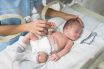
Neonatal
Referring to the first four weeks after birth, during which the newborn, or neonate, is often cared for by a neonatologist, especially if a high-risk or premature baby. To a neonate or to the first month of life.
-
Need
A state of tension or dissatisfaction felt by an individual that impels him to action toward a goal he believes will satisfy the impulse. A variety of felt urgencies related to existence, continuation, maintenance of life, and enhancement of living. The biological and psychosocial needs are interrelated. Some thing or action which is essential, indispensable,…
-
National cancer institute
Part of the National Institutes of Health of the United States Department of Health and Human Services, is the federal government’s principal agency for cancer research. NCI conducts, coordinates, and funds cancer research, training, health information dissemination, and other programs with respect to the cause, diagnosis, prevention, and treatment of cancer. Access the NCI Web…
-
Natural killer cells (NK)
NK cells. A type of white blood cell that contains granules with enzymes that can kill tumor cells or microbial cells. Also called large granular lymphocytes (LGL). Specialised T-cells with the continuous task of identifying and eliminating cells recognised as being foreign or non-self. Innate immune cells that destroy virus-infected and cancerous body cells by…
-
Naive
Used to describe an individual who has never taken a certain drug or class of drugs (e. g., AZT-naive, antiretroviral-naive), or to refer to an undifferentiated immune system cell.
-
Myosin
Chief protein in muscle and the main constituent of the thick filaments of muscle fibers. In conjunction with actin, it is responsible for the contraction and relaxation of muscles. One of the chief proteins of muscle. Muscle cell protein that (with actin) plays a role in muscle contraction and relaxation. Along with actin, myosin is…
-
Myocardium
The muscle tissue of the heart composed of striated, involuntary muscle known as cardiac muscle. The thick, muscular layer forming the heart wall. The middle layer of the heart, consisting of the cardiac muscle. The middle layer of the wall of the heart, formed of heart muscle. Thick, muscular middle layer of the heart wall,…
Got any book recommendations?