Mindblown: a blog about philosophy.
-
Host
The plant on which a parasite grows, and from which the parasite derives its food. Any animal that receives a transplanted graft. By definition a stranger is strange, and since this strangeness may evoke fear or delight, a stranger may be seen as either an enemy or a friend. Accordingly, the Indo-European word that meant…
-
Hort.
When placed after a taxon name indicates the use of that name in horticulture.
-
Horseshoe-shaped
Shaped like the shoe of a horse, i.e. like the letter “U” with the ends curved inwards.
-
Hornotine, hornotinal, hornotinous
Of this year’s growth [unusual term].
-
Horned
With a horn, a tapering 3-dimensional structure resembling an elongated cone but often curved.
-
Hook
A slender process with a curved or bent part at the tip. A surgical instrument with a bent end used for holding structures apart in operations. A surgical instrument with a bent or curved tip, used to hold, lift, or retract tissue at operation.
-

Hooded
Forming a hood. Arching over and partially concealing or shielding.
-
Hood
3-dimensional shape with the sides and apex curved inwards. The curing or folded, petal-like structures interior to the petals and exterior to the stamens in milkweed flowers (Asclepias species); because most milkweeds have reflexed petals, the hoods are typically the most prominent feature of the flowers.
-
Honeyguides
Streaks or blotches of colour leading to the glands or nectaries secreting the nectar. A set of coloured streaks and/or blotches on the perianth of a flower that point to the nectary.
-
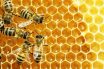
Honey
Sweet secretion from glands or nectaries that is processed by bees. The first sweetener used by humans, honey has long been associated with pleasure and happiness: in the Old Testament, for example, the Promised Land of the Israelites is said to be flowing with milk and honey. The word honey itself is likewise of ancient…
Got any book recommendations?