Mindblown: a blog about philosophy.
-
Mitogen
A substance that causes DNA synthesis, blast transformation, and mitosis in lymphocytes. An agent that triggers mitosis, elicit all the signals necessary to induce cell proliferation. A substance (e.g., growth factor, hormone, etc.) that initiates cell division within the body. For example, most Angiogenic Growth Factors (e.g., fibroblast growth factor) stimulate cell division of the…
-
Misfit
Lack of precise adaptation of one component to another, particularly the lack of ideal passive fit of a multiple‐unit prosthesis to two or more implants. Misfit is considered to be detrimental in that it may lead to increased occurrence of component loosening or fracture and may contribute to attachment loss adjacent to an implant.
-
Mirroring
The process of symmetrically copying and transferring one dental design feature (e.g., crown) to the contralateral side. For example, mirroring a maxillary central incisor so that its pair is an exact, mirrored duplicate. As conceptualized by Heinz Kohut (1913–1981), the empathic responsiveness of the parent to the developing child’s activities. The parental response teaches the…
-
Minor (thread) diameter
The smallest diameter of a screw thread.
-
Minor connector
The connecting link between the major connector or base of a partial removable dental prosthesis and the other units of the prosthesis, such as the clasp assembly, indirect retainers, occlusal rests, or cingulum rests.
-
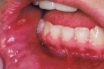
Minor aphtha
The most common form of recurrent aphthae. Also known as a canker sore. Shallow, painful, nonscarring ulcers surrounded by an erythematous halo that are usually found on movable, nonkeratinized oral mucosa.
-
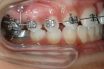
Miniscrew
Small titanium threaded implant used for temporary orthodontic anchorage via mechanical monocortical bone retention.
-
Minimum inhibitory concentration (MIC)
The minimum concentration of an antimicrobial agent required to inhibit the growth and/or reproduction of a pure population of bacteria in vitro.
-
Minimum effective strain (MES)
Derived from Frost’s mechanostat theory for bone adaptation, the MES is essentially a minimum value of strain that must be exceeded to provoke an adaptive response in bone; stimulus for bone remodeling. Called also minimum effective strain for remodeling (MESr).
-
Minimum bactericidal concentration (MBC)
The minimum concentration of an antimicrobial agent required to kill a pure population of bacteria in vitro.
Got any book recommendations?