Mindblown: a blog about philosophy.
-
Iatrogenic
An abnormal mental or physical condition induced in a patient by the effects of treatment. A condition caused by medical intervention or drug treatment; iatrogenic nutrient deficiency is due to drug-nutrient interactions. Illness, disease, or imbalances created by medical or nonmedical treatment that were not present before treatment. In medicine the therapy is blamed (not…
-
IAN (abbrev)
Inferior alveolar nerve.
-
IAJ (abbrev)
Implant–abutment junction.
-

Hypoplasia (of enamel)
A congenital disorder that is the result of a decrease in the typical number of cells and manifests as defective or incomplete organ/tissue development. Incomplete development or underdevelopment of an organ or tissue. poorly developed, under-mineralised enamel. The incomplete development of an organ or tissue. A lack of development or incorrect formation of a body…
-
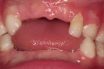
Hypophosphatasia
An inborn error of metabolism characterized by deficient alkaline phosphatase in serum and bone, resulting in the defective formation of bone and cementum. Hypophosphatasia is an uncommon disorder of bone and cartilage formation. Its salient features include poor mineralization of the skull, short ribs resulting in an underdeveloped thorax and respiratory insufficiency, and poorly formed,…
-
Hyponasality
A speech characteristic caused by insufficient resonance of air in the nasal cavity such that the speaker sounds as though he or she has a cold. Also known as denasality.
-
Hypogeusia (hypoageusia)
Reduced sense of taste, including sweet, sour, salty, and bitter substances. Called also hypogeusesthesia.
-
Hypoesthesia
Decreased perception of stimulation by noxious or non‐noxious stimuli. A condition in which the ability to detect sound, taste, smell, or physical contact is abnormally weak.
-

Hypodontia
Congenital absence of one or more, but not all, of the normal complement of teeth. The developmental absence of one or more teeth.
-
Hypertrophy
Nontumor‐associated increase in tissue or organ size related to an increase in constituent cell size. A hypertrophic response may occur as a result of a particular condition. To be distinguished from hyperplasia, which is related to an increase in cell number. Enlargement or overgrowth of an organ. A term used to describe an increase in…
Got any book recommendations?