Mindblown: a blog about philosophy.
-
Angulated abutment
Any endosteal dental implant abutment which alters the long axis angulation between the dental implant and the angulated dental implant abutment.
-
Angled/angulated implant
Relative position of an implant to other adjacent implants or natural dentition.
-
Angled/angulated abutment
Prosthetic implant component designed to change direction from parallel along the long axis of the implant to a specified angle from parallel.
-
Angle of gingival convergence
According to Schneider, the angle of gingival convergence is located apical to the height of contour on the abutment tooth. It can be identified by viewing the angle formed by the tooth surface gingival to the survey line and the analyzing rod or undercut gauge in a surveyor as it contacts the height of contour.…
-
Class III malocclusion (mesioocclusion)
The mandibular dental arch is positioned anterior to the maxillary arch. The mandibular first molar is located mesial to the position seen in neutroocclusion.
-
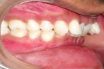
Class II, Division 2 malocclusion
The maxillary central incisors are in linguoversion.
-
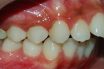
Class II, Division 1 malocclusion
The maxillary incisor teeth are in labioversion.
-
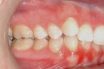
Class II malocclusion (distoocclusion)
Characterized by an interarch relationship where the mandibular dental arch is positioned posterior to the maxillary arch. The mandibular first molar is distal to the position seen in neutrocclusion.
-
Class I malocclusion (neutroocclusion)
Characterized by a normal relationship between the dental arches where the mesiobuccal cusp of the maxillary first permanent molar occludes into the buccal groove of the mandibular first permanent molar. A Class I malocclusion is presented as an internal derangement (e.g., crowding) in one of the arches.
-
Angle’s classification of malocclusion
A categorization of malocclusions according to the anteroposterior relationship of the dental arches.
Got any book recommendations?