Mindblown: a blog about philosophy.
-
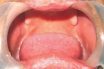
Anodontia
Rare dental condition characterized by congenital absence of all teeth (both deciduous and permanent). Compare: Hypodontia, Oligodontia. A total or partial absence of teeth, usually due to heredity. Total anodontia is a rare condition in which the primary teeth or the permanent teeth fail to develop. In this case, some teeth may be present but…
-
Anodizing surface treatment
Surfaces of various implant‐related components (e.g., abutments, screws) may be anodized to produce coloration, which assists with recognition by the clinician. Anodizing titanium with a yellow or golden color is thought to reduce the tendency for gray show‐through of abutments when placed beneath thin tissues.
-
Anodization
Electrolytic passivation process used to increase the thickness of the natural oxide layer on the surface of a metal (e.g., titanium). During the process, a dye may be used to color a dental implant component to facilitate its recognition.
-
Anneal
To heat a material followed by cooling in a controlled fashion to improve the material’s physical properties. The process results in (A) degassing; (B) removal of internal stresses, providing the required amount of toughness, temper, or softness; and (C) driving impurities from the surface of the material. To heat a material, such as gold foil,…
-
Ankylosis
Joint: fibrous or bony fixation. Tooth: fusion of the tooth and the alveolar bone. Union or fusion between two joint components or between a tooth and the alveolar bone, often resulting from traumatic destruction of the periodontal membrane. When ankylosis is established, the tooth will gradually be replaced by bone replacement resorption. Immobility, fixation, consolidation…
-

Ankyloglossia
Partial or complete fusion of the tongue with the floor of the mouth or the lingual gingiva due to an abnormally short, midline lingual frenulum, resulting in restricted tongue movement and speech impediments; may be complete or partial. Also known as adherent tongue, lingua frenata, and tongue‐tie. Condition in which the band of tissue (frenum)…
-
Anisotropic surface
Surface with a directional pattern.
-
Anisotropic implant surface
Implant surface that is not isotropic and may have different characteristics when measured or loaded in a different direction.
-
Animal model
Use of animals in biomedical research for conducting experiments. The quality, species, and breeding of the animal can help establish the type of animal to be used in the experiment. An animal with a disease either the same as or like a disease in humans. Animal models are used to study the development and progression…
-
Angulated abutment (syn)
Angled abutment. Abutment with a body not parallel with the long axis of the dental implant. It is used when the implant is at a different inclination in relation to the proposed prosthesis.
Got any book recommendations?