 Small pointed projection, usually triangular.
Serration, as on the edge of a leaf (plural, teeth).
The serrations on the edges of a leaf or leaflet, as in rose leaves.
One of a set of bones in the mouth which are used to chew food.
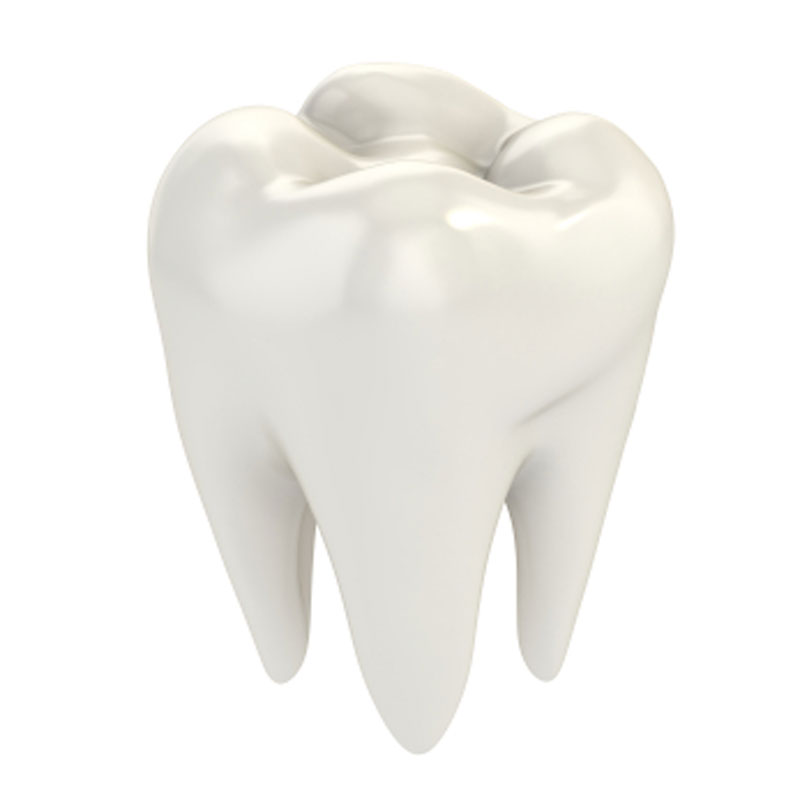
Any of the hard structures in the mouth used to cut, grind, and process food. Each tooth contains an enamel-covered crown above the gum and a neck with a dentin-covered pulp-filled cavity that stretches to the cementum-covered root embedded in the socket of the jaw. Normally two sets of teeth appear during life: a deciduous (milk) set of 20 teeth that appears during infancy and a permanent set of 32 teeth that appears gradually during childhood and early adulthood. The 32 adult teeth differ somewhat in shape and function.
One of the hard structures in the mouth used for cutting and chewing food. Each tooth is embedded in a socket in part of the jawbone (mandible or maxilla) known as the alveolar bone (or alveolus), to which it is attached by the periodontal membrane. The exposed part of the tooth (crown) is covered with enamel and the part within the bone (roof) is coated with cementum; the bulk of the tooth consists of dentine enclosing the pulp. The group of embryological cells that gives rise to a tooth is known as the tooth germ, consisting of the enamel organ and dental papilla. The development of a tooth is illustrated in the diagram. There are four different types of teeth, which are specialized for different functions. The total number of teeth varies with the age of the individual.
One of the hard, bony conical structures of the upper and lower jaws used for chewing. A tooth consists of a crown portion above the gum, a root portion embedded in a socket (alveolus) of the jaw bone, and a neck or cervical constricted region between the crown and root. The soft tissue gingiva covers the neck and root to a variable extent, depending on age and oral hygiene. The major portion of a tooth consists of dentin, which is harder than bone; enamel; and cementum, which is similar to bone. The pulp cavity contains the dental pulp. Each tooth has five surfaces: occlusal, mesial, distal, lingual, and facial or buccal.
A tooth is one of the hard structures that protrude from the gums of the jaws, functioning to grind food, assist in speaking, and shape the appearance of the face. Each tooth is composed of: (1) a core of dentine encompassing a chamber that houses the dental pulp, along with nerves and blood vessels; (2) a crown that is coated with enamel; (3) a root that can be singular, double, or triple, sheathed with cementum; and (4) a neck that serves as the connection point between the crown and the root.