

Causes of Underweight
- Eating Disorders: Conditions like anorexia nervosa or bulimia cause individuals to severely limit their food intake, leading to unhealthy and dangerous weight loss 3.
- Thyroid Problems: An overactive thyroid gland, known as hyperthyroidism, significantly speeds up the body’s metabolism and causes it to burn calories much faster than normal 4.
- Digestive Diseases: Conditions such as celiac disease, chronic inflammation of the pancreas, and long-lasting intestinal infections prevent the stomach and bowels from correctly absorbing nutrients and calories from food 4.
- Mental Health Conditions: Severe depression, anxiety, and high levels of chronic stress can heavily suppress a person’s appetite and alter their eating habits, resulting in unintended weight loss 4.
- Chronic Illnesses and Infections: Long-term physical illnesses, including cancer, chronic obstructive pulmonary disease (COPD), Parkinson’s disease, and severe infections like tuberculosis or HIV/AIDS, can drain the body’s energy while simultaneously decreasing the desire to eat 4.
- Medications and Substance Use: Certain prescription drugs, such as chemotherapy treatments, often cause appetite loss or nausea as a side effect. Furthermore, the use of stimulants like amphetamines and cocaine, or the continuous overuse of laxatives, can force rapid weight loss 4.
Symptoms of Underweight
- Constant Fatigue: When the body does not receive enough calories from food, it lacks the necessary fuel to perform basic daily functions, resulting in chronic tiredness, weakness, and a general lack of energy 5.
- Frequent Illnesses: Inadequate nutrition drastically weakens the immune system, making the body highly vulnerable to infections and causing simple illnesses, such as the common cold, to happen more often and last much longer 2.
- Weakened Bones: A long-term lack of essential nutrients, specifically calcium and vitamin D, decreases bone density over time, making bones fragile and significantly increasing the risk of osteoporosis and fractures 6.
- Irregular or Absent Menstruation: In females, extremely low body weight and body fat disrupt the production of hormones needed for a normal reproductive cycle. This can cause periods to become irregular or stop completely, which may lead to fertility issues 7.
- Hair Thinning and Dry Skin: A severe deficiency in proteins, vitamins, and essential fatty acids can cause hair to become thin, brittle, and fall out, while also leaving the skin dry, pale, and prone to poor healing 5.
- Anemia: Being underweight often involves a poor dietary intake of iron, folate, or vitamin B12, leading to a low red blood cell count that causes dizziness, shortness of breath, and pale skin 8.
- Delayed Growth and Development: In children and adolescents, failing to consume enough calories and nutrients to maintain a healthy weight can physically stunt growth and delay normal developmental milestones 2.
Healthy Ways to Gain Weight
1. Eating Smaller, More Frequent Meals Throughout the Day
How it may help
Individuals who are underweight often experience early fullness or have a reduced appetite. Consuming five to six smaller meals rather than three large ones allows the body to take in more total calories and nutrients throughout the day without causing severe bloating or stomach discomfort 9.
What research says
Clinical nutrition guidelines indicate that increasing meal frequency is an effective strategy for managing unintended weight loss. Evidence shows that patients with poor appetites achieve a higher overall daily energy intake when prescribed frequent, smaller feedings rather than traditional large meals 10.
How to use it safely
To use this approach effectively, you should schedule meals and snacks every two to three hours. Ensure you select nutrient-rich foods, such as lean proteins, whole grains, and healthy fats, rather than empty calories. Set daily alarms if you struggle to remember eating times.
Potential precautions or side effects
Avoid relying on sugary snacks or heavily processed fast food to increase your meal count. This practice can lead to high blood sugar and unhealthy fat accumulation 11.
2. Prioritizing Nutrient-Dense Foods
How it may help
Choosing nutrient-dense foods ensures that the body receives essential vitamins, minerals, and proteins alongside additional calories. This approach safely builds lean muscle mass and repairs tissues, rather than just increasing body fat, which frequently happens when individuals rely on sugary or heavily processed junk foods to gain weight 10.
What research says
Clinical nutritional guidelines confirm that increasing caloric intake through nutrient-dense whole foods significantly improves long-term health outcomes for underweight individuals. Evidence demonstrates that this dietary pattern successfully restores healthy body mass, improves energy levels, and corrects underlying nutritional deficiencies without raising the risk of heart disease 11.
How to use it safely
To safely boost your caloric intake, you should steadily add whole foods like avocados, nuts, seeds, and lean meats to your regular meals. Choose whole-grain breads over refined white bread, and blend nutrient-rich fruits and whole-milk yogurt into daily smoothies.
Potential precautions or side effects
You should increase your intake of high-fiber foods and dietary fats gradually. Introducing large amounts of these nutrients too quickly can cause sudden stomach cramps, bloating, or digestive discomfort.
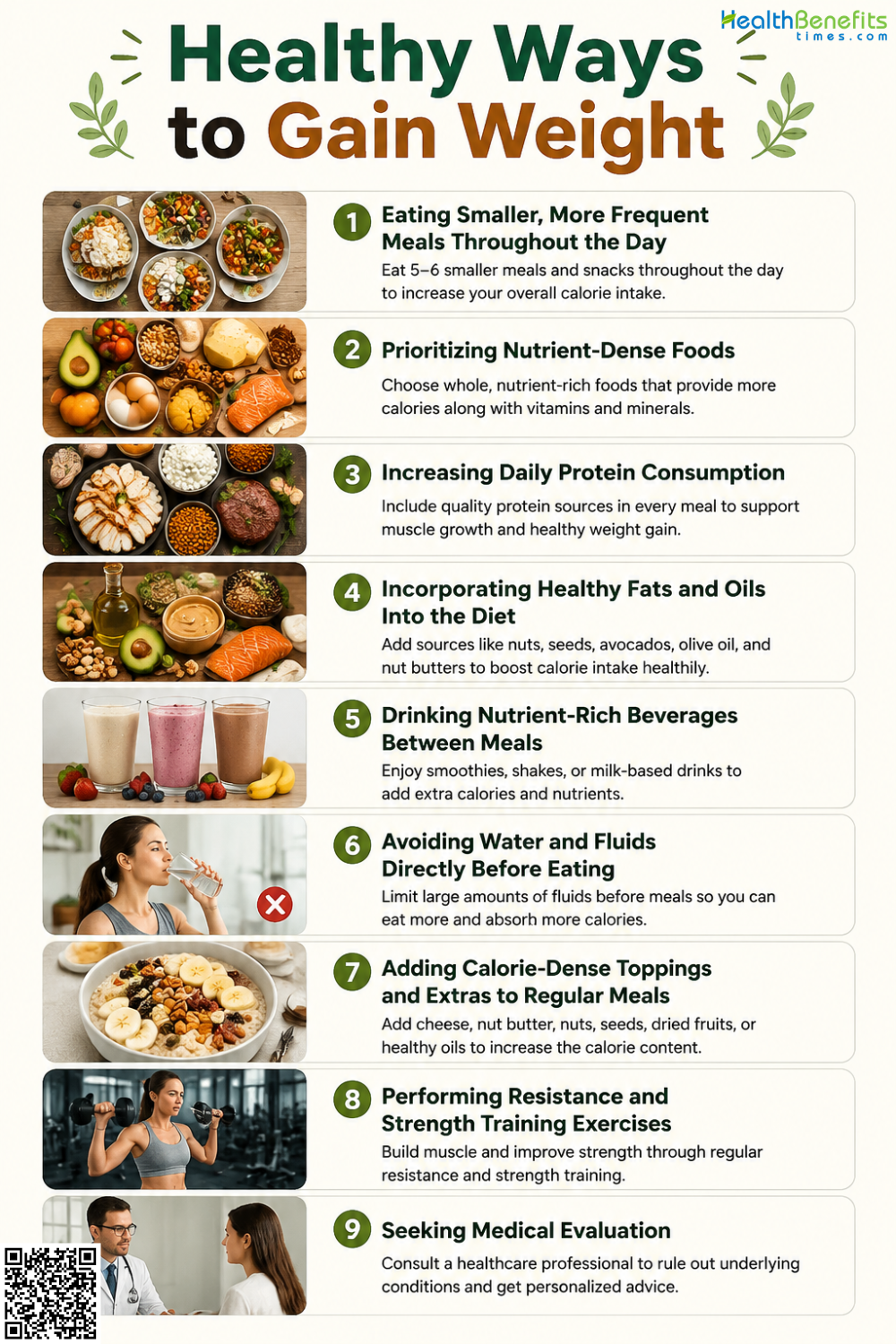
3. Increasing Daily Protein Consumption
How it may help
Protein provides the essential building blocks for human muscle tissue. For underweight individuals, consuming adequate protein ensures that excess daily calories are converted into lean muscle mass rather than exclusively into body fat. This promotes a stronger physical structure and aids in overall tissue repair 12.
What research says
Clinical evidence demonstrates that during periods of increased calorie intake, a high-protein diet successfully directs a significant portion of the resulting weight gain toward lean muscle mass. Without sufficient dietary protein, surplus calories are predominantly stored as fat, which does not improve physical strength 13.
How to use it safely
You should aim to include a high-quality protein source, such as eggs, lean meats, fish, beans, or dairy, in every meal. If you struggle to eat enough solid food, try adding unflavored whey or plant-based protein powders to your beverages or oatmeal.
Potential precautions or side effects
Because protein is highly filling, eating too much may suppress your appetite for other calories. Additionally, if you have kidney disease, you must consult a doctor before increasing protein 14.
4. Incorporating Healthy Fats and Oils Into the Diet
How it may help
Dietary fats are highly calorie-dense, providing more than double the calories per gram compared to proteins or carbohydrates. Incorporating healthy fats allows underweight individuals to significantly boost their overall daily calorie intake without adding large volumes of food, making weight gain achievable without feeling uncomfortably full 10.
What research says
Clinical nutrition research demonstrates that diets enriched with unsaturated fats—found in plant oils, nuts, and fish—effectively promote healthy weight gain. Evidence concludes that prioritizing these plant-based and marine fats increases total energy intake while simultaneously protecting cardiovascular health and maintaining healthy blood cholesterol levels 15.
How to use it safely
To safely increase your fat intake, you should drizzle olive oil or canola oil over salads and cooked vegetables. Add handfuls of unsalted nuts or seeds to your daily snacks, and spread natural nut butters or mashed avocados onto whole-grain toast.
Potential precautions or side effects
You must avoid trans fats and heavily limit saturated fats from fried fast foods, as consuming these can severely elevate bad cholesterol and increase your risk of heart disease 15.
5. Drinking Nutrient-Rich Beverages Between Meals
How it may help
Liquid calories bypass the physical fullness often caused by solid foods. Consuming nutrient-rich beverages provides a substantial amount of energy and essential vitamins without overwhelming the digestive system, making it an efficient method to increase total daily calorie intake 9.
What research says
Clinical studies show that introducing liquid nutritional supplements between regular meals significantly increases overall daily caloric intake without decreasing the amount of solid food consumed. This strategy reliably promotes healthy weight gain and improves nutritional status in individuals struggling with a poor appetite 10.
How to use it safely
You should consume high-calorie beverages like milk, 100% fruit juice, or homemade smoothies between your meals rather than with them. To maximize nutritional value, blend whole milk or dairy alternatives with fruits, nut butters, and seeds for an added calorie boost.
Potential precautions or side effects
You should strictly avoid sugary sodas and heavily sweetened coffee drinks, as they lack nutritional value and can increase your risk of high blood sugar and dental issues 16.
6. Avoiding Water and Fluids Directly Before Eating
How it may help
Drinking fluids right before a meal physically fills the stomach, which sends early signals of fullness to the brain. By avoiding beverages immediately prior to eating, individuals preserve their stomach capacity and appetite, allowing them to comfortably consume larger portions of solid, calorie-dense foods 9.
What research says
Clinical dietary guidelines indicate that consuming liquids closely before or during a meal significantly reduces total solid food intake. Evidence shows that separating fluid consumption from mealtimes successfully prevents premature satiety, thereby helping individuals with poor appetites achieve a higher overall caloric intake 10.
How to use it safely
To apply this method, you should stop drinking fluids at least thirty minutes before your planned mealtimes. Drink your daily water and beverages in between your meals rather than during them to ensure you remain properly hydrated without spoiling your appetite 9.
Potential precautions or side effects
You must ensure you still drink enough water throughout the day. Restricting fluids entirely can lead to dangerous dehydration and severe constipation 17.
7. Adding Calorie-Dense Toppings and Extras to Regular Meals
How it may help
Incorporating calorie-dense extras into standard dishes increases total energy intake without significantly expanding the physical size of the meal. This strategy allows individuals who struggle with a poor appetite to comfortably consume extra calories and essential nutrients without feeling uncomfortably stuffed 10.
What research says
Clinical nutrition guidelines recommend food fortification as a primary intervention for undernutrition. Evidence confirms that enriching standard meals with calorie-dense ingredients successfully increases daily energy consumption. This method promotes healthy weight gain and improves overall nutritional status without forcing individuals to consume distressingly large portions of food 9.
How to use it safely
To safely increase your caloric intake, you should mix nutrient-rich extras into your daily meals. Add grated cheese to soups, sprinkle unsalted nuts and seeds over yogurt, and stir dry milk powder into mashed potatoes for a significant protein and calorie boost.
Potential precautions or side effects
You must avoid relying on unhealthy toppings like excess butter, bacon, or heavy syrups, as these can increase your risk of heart disease and rapid blood sugar spikes 15.
8. Performing Resistance and Strength Training Exercises
How it may help
Resistance and strength training exercises safely stimulate muscle growth. When combined with a high-calorie diet, these activities ensure that surplus calories are converted into lean muscle mass rather than just body fat. This strategy successfully improves overall physical strength and builds a much healthier body composition 18.
What research says
Clinical evidence demonstrates that consistent resistance training significantly increases skeletal muscle mass and improves bone density. Research concludes that weight-bearing exercises trigger physical processes that repair and enlarge muscle fibers when supported by adequate nutritional intake, making it highly effective for healthy weight gain 13.
How to use it safely
You should begin with light weights or basic bodyweight exercises two to three times a week. Focus strictly on learning the correct physical form before progressing to heavier lifting. Always ensure you rest for at least one full day between sessions to allow proper muscle recovery.
Potential precautions or side effects
You must avoid overtraining or lifting excessively heavy weights, which can cause severe muscle injuries. Additionally, performing too much aerobic exercise burns essential calories needed for weight gain 19.
9. Seeking Medical Evaluation
How it may help
Consulting a healthcare professional identifies hidden medical conditions, such as an overactive thyroid or digestive disorders, that may be causing continuous weight loss. Treating these root causes allows the body to properly absorb nutrients and safely gain weight, rather than struggling against an undiagnosed illness 2.
What research says
Clinical protocols demonstrate that a chronic underweight status frequently results from underlying systemic illnesses. Evidence concludes that dietary adjustments often fail to increase body mass unless primary medical issues, such as metabolic disorders or gastrointestinal diseases, are accurately diagnosed and properly treated by a physician 4.
How to use it safely
You should schedule a comprehensive physical examination with a doctor before starting any aggressive weight-gain diet. Be completely honest about your eating habits, daily medications, and mental health. Always follow the specific treatment plans or dietary referrals provided by your physician.
Potential precautions or side effects
You must not rely solely on online advice or self-diagnosis to treat severe weight loss. Delaying a professional medical evaluation can allow serious underlying health conditions to worsen significantly.
Foods to Avoid When You Suffer from Underweight
1. Sugary Beverages
Avoid sodas and sweetened drinks. They provide empty calories lacking nutritional value, increasing the risk of high blood sugar rather than promoting healthy muscle or tissue gain 16.
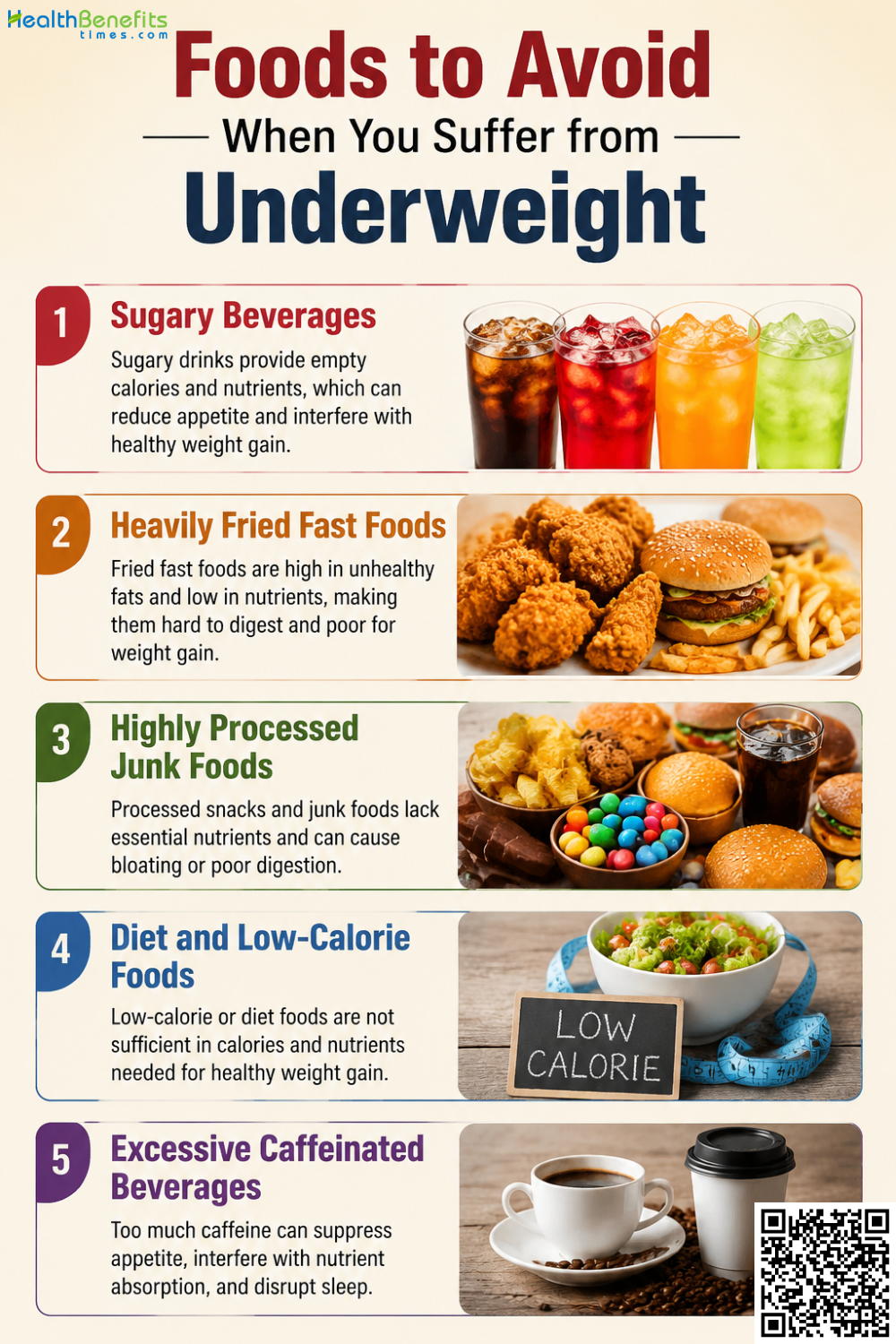
2. Heavily Fried Fast Foods
Deep-fried foods contain dangerous trans fats. Relying on these for calories rapidly raises bad cholesterol and significantly increases cardiovascular disease risk without providing necessary essential nutrients 15.
3. Highly Processed Junk Foods
Chips and pre-packaged pastries lack vital proteins and vitamins. They fill the stomach with refined carbohydrates and sodium, failing to support proper physical strength or healthy body mass 10.
4. Diet and Low-Calorie Foods
Products labeled as fat-free or low-calorie actively prevent weight gain. They replace natural, energy-dense fats with artificial additives, depriving the body of the necessary calories required for recovery 11.
5. Excessive Caffeinated Beverages
Consuming large amounts of black coffee or plain tea can severely suppress natural appetite. This prevents individuals from eating adequate amounts of nutrient-dense, solid foods needed to gain weight 9.
When to See a Doctor When You Struggle from Underweight
- Unintentional Weight Loss: See a doctor if you lose more than five percent of your body weight within six to twelve months without changing your diet or exercise habits 4.
- Persistent Fatigue and Weakness: Seek medical care if being underweight is accompanied by severe exhaustion, dizziness, or a constant lack of energy that interrupts regular daily activities 4.
- Chronic Digestive Problems: Consult a physician if you experience ongoing stomach pain, nausea, vomiting, or diarrhea, as these symptoms can prevent your body from absorbing essential nutrients 20.
- Missed or Irregular Menstrual Periods: Females should undergo a medical evaluation if periods become irregular or stop completely, which indicates that extremely low body weight is severely disrupting hormone production 7.
- Suspected Eating Disorders: Immediate medical and psychological intervention is necessary if weight loss is driven by an intense fear of gaining weight, forced vomiting, or severe food restriction 21.
Comments
comments