

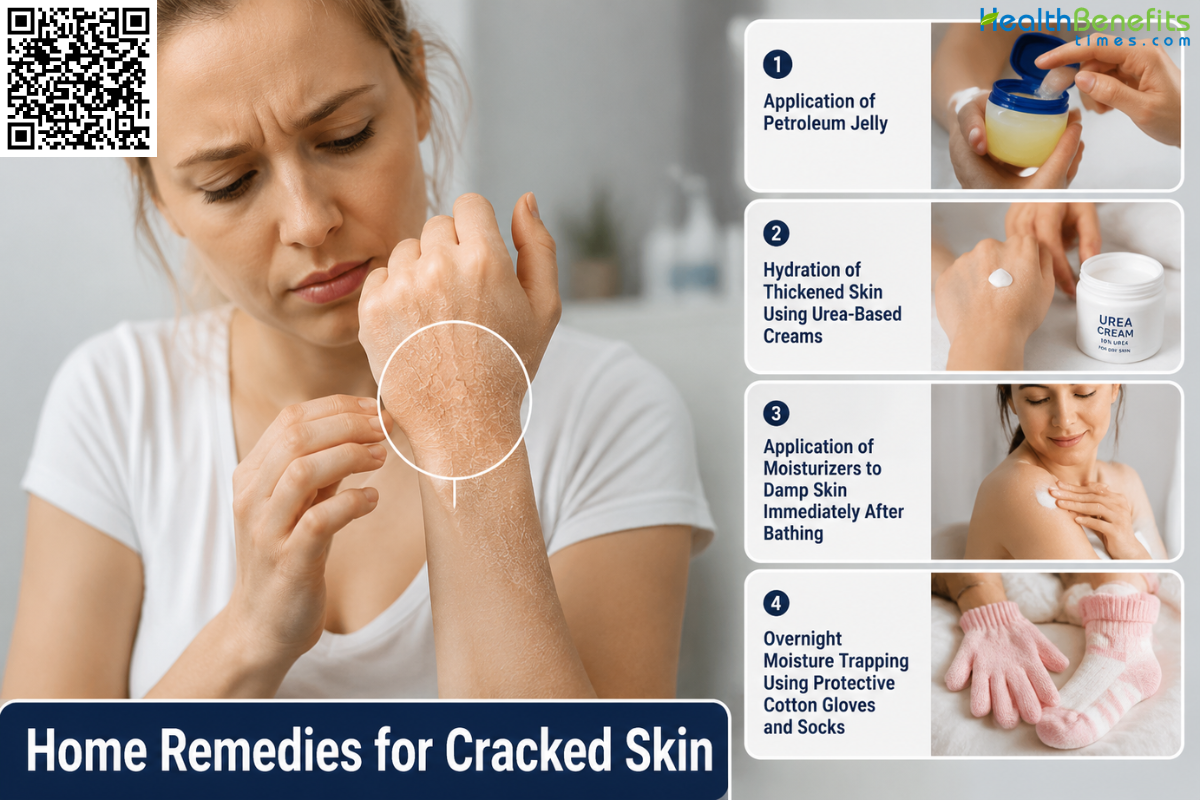
Causes of Cracked Skin
1. Environmental Factors
Exposure to cold temperatures, low environmental humidity, and dry indoor heating systems significantly strips the skin of its natural moisture. This environmental dehydration impairs the protective hydrolipid barrier, causing the epidermal layers to contract, lose flexibility, and ultimately crack 1.
2. Frequent Cleansing and Harsh Detergents
Repeated washing, prolonged exposure to hot water, and the use of alkaline soaps directly deplete the skin of its essential ceramides and natural protective oils. Without these crucial lipids, the outer skin layer cannot retain water, leading to severe dryness and structural fissures 1.
3. Inflammatory Dermatological Conditions
Chronic inflammatory skin disorders, such as atopic dermatitis (eczema), contact dermatitis, and psoriasis, inherently disrupt normal skin cell maturation and barrier function. These cellular defects cause excessive trans-epidermal water loss and abnormal scaling, which leaves the compromised skin tissue highly susceptible to deep cracking 1.
4. Systemic and Metabolic Diseases
Internal medical conditions, including diabetes mellitus, hypothyroidism, and renal failure, frequently disrupt normal sweat and oil gland activity. In patients with diabetes, autonomic nerve damage and impaired peripheral blood circulation specifically deprive the extremities of vital moisture, resulting in chronically dry, calloused, and deeply cracked heels 1.
5. Mechanical Friction and Pressure
Continuous physical stress and chronic pressure on weight-bearing areas force the body to rapidly produce excess keratin as a biological defense mechanism. This localized skin thickening, clinically known as mechanical hyperkeratosis, creates rigid, dry calluses on the hands or feet that easily fracture and split apart under regular daily pressure 2.
Symptoms of Cracked Skin
1. Visible Linear Tears (Fissures)
The primary physical symptom is the presence of distinct, shallow or deep cuts in the outermost layer of the skin. When severe dehydration diminishes natural tissue elasticity, normal stretching and mechanical movement cause the rigid skin to physically fracture 1.
2. Intense Itching (Pruritus)
Individuals frequently experience persistent and severe itching in the dried areas. A damaged skin barrier fails to retain internal moisture and simultaneously allows external environmental irritants to penetrate the tissue, which actively stimulates localized sensory nerves 1.
3. Scaling and Flaking
The surface of the affected skin typically develops a rough, uneven texture accompanied by visible peeling. This occurs because profound cellular dehydration disrupts normal cellular shedding, causing dead skin cells to accumulate and flake off in visible clumps 1.
4. Localized Pain and Tenderness
As skin cracks deepen, they expose the underlying dermal layer where pain receptors are concentrated. Consequently, applying mechanical pressure, walking, or stretching the fissured tissue triggers sharp pain and heightened sensitivity 1.
5. Capillary Bleeding
In severe clinical presentations, structural splits extend entirely through the epidermis and breach the vascular dermis. This deep tissue damage ruptures microscopic blood vessels, causing the cracks to bleed or ooze fluid 1.
6. Redness and Inflammation (Erythema)
The skin immediately surrounding the fissures often becomes noticeably red, swollen, and warm to the touch. This inflammatory response indicates that the body’s immune system is actively attempting to repair the compromised barrier and defend against potential bacterial entry 1.
Home Remedies for Cracked Skin
1. Application of Petroleum Jelly
How it may help
Petroleum jelly functions as an occlusive ointment that creates a physical, waterproof seal over the damaged epidermis 3. This impermeable barrier traps internal water, allowing severely dehydrated tissue to rehydrate, regain necessary elasticity, and successfully repair deep structural fissures.
What research says
Clinical studies demonstrate that petroleum jelly is the most effective occlusive moisturizing agent, reducing natural skin water loss by up to 99 percent 3. Researchers conclude that this intense moisture retention rapidly restores the compromised skin barrier and significantly accelerates epidermal tissue healing.
How to use it safely
Wash the affected area and gently pat it dry. Immediately apply a thick layer of petroleum jelly while your skin remains slightly damp to lock in moisture. For cracked heels or hands, wear clean cotton socks or gloves overnight to maximize hydration and prevent greasy transfer.
Potential precautions or side effects
Avoid applying petroleum jelly over active bacterial infections or uncleaned wounds, as trapping bacteria beneath the seal worsens infections. It can also trigger breakouts on acne-prone facial skin.
2. Hydration of Thickened Skin Using Urea-Based Creams
How it may help
Urea is a natural compound that simultaneously draws deep moisture into the tissue and chemically dissolves the hardened protein causing thick calluses. This dual action softens the rigid edges of cracked skin, restoring flexibility and allowing deep fissures to heal securely 4.
What research says
Clinical reviews establish urea as a highly effective topical treatment for severe skin dryness and fissuring 4. Research concludes that urea significantly increases water retention in the outermost skin layer and rapidly breaks down thickened dead tissue, repairing the structural integrity of the skin barrier 5.
How to use it safely
Apply a cream containing ten to forty percent urea directly to the thickened, cracked areas once or twice daily. Massage the moisturizer into slightly damp skin immediately after bathing, then wear clean cotton socks to lock in the hydration.
Potential precautions or side effects
Urea can cause temporary stinging, redness, or burning when applied directly into deep, open cuts. Discontinue use immediately if you experience severe pain or an allergic reaction.
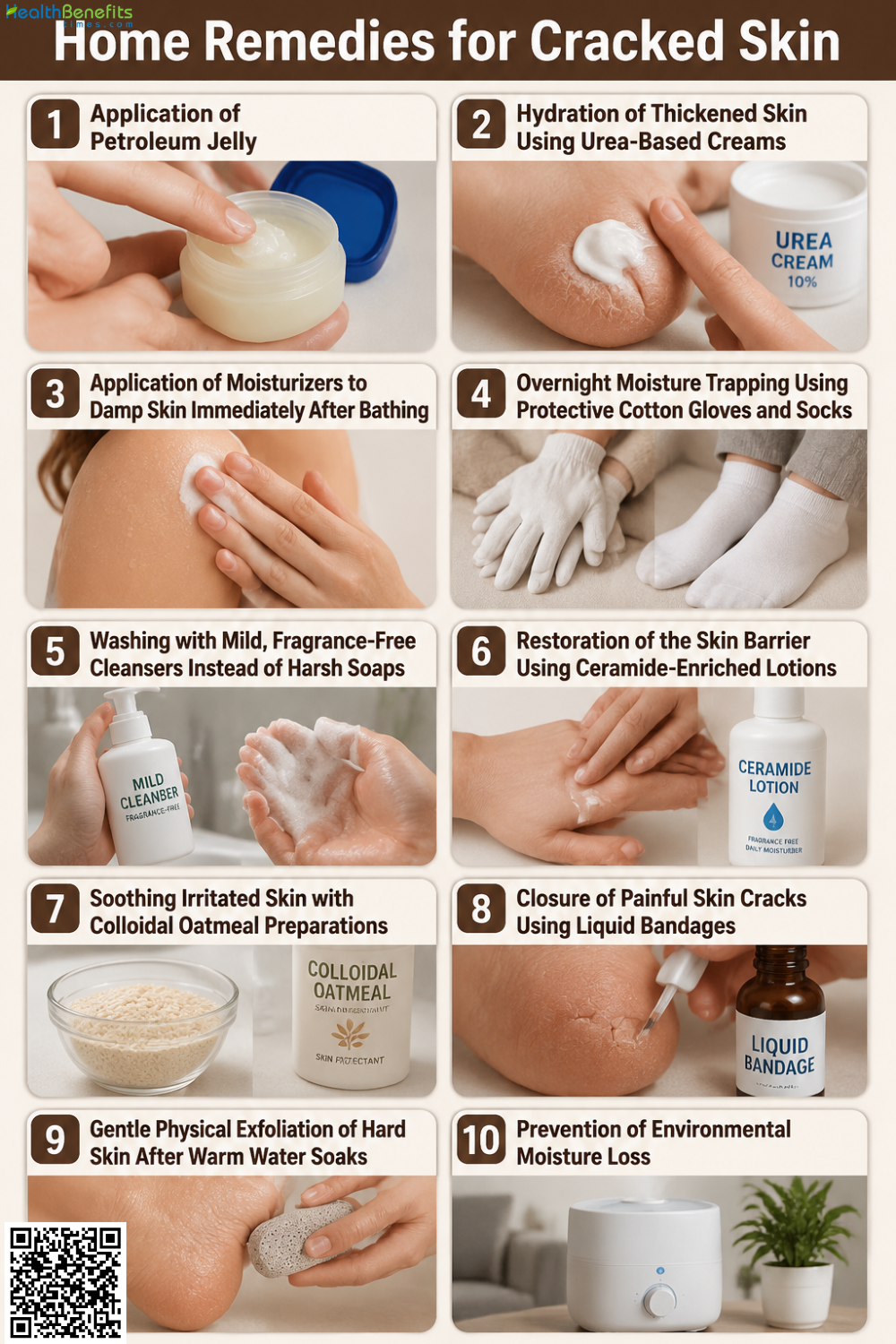
3. Application of Moisturizers to Damp Skin Immediately After Bathing
How it may help
Applying a moisturizer while the skin is still damp traps the water left on the surface after a bath. This process seals in hydration, prevents water from evaporating into the air, and helps repair the protective outer barrier, which is essential for healing deep cracks 6.
What research says
Clinical guidelines emphasize that applying moisturizers immediately after bathing significantly reduces severe dryness. Health authorities confirm that thick creams or ointments applied to damp skin are far more effective at locking in hydration than thin lotions applied to completely dry skin 7.
How to use it safely
After bathing in warm water, gently pat your skin with a soft towel, leaving it slightly wet. Immediately massage a thick, fragrance-free ointment or cream over the cracked areas. Reapply the product throughout the day whenever the skin feels tight.
Potential precautions or side effects
Avoid moisturizers containing strong fragrances, dyes, or alcohol, as these ingredients can sting and worsen broken skin 8. Discontinue use if you develop increased redness, stinging, or a rash.
4. Overnight Moisture Trapping Using Protective Cotton Gloves and Socks
How it may help
Wearing cotton gloves or socks over a heavy moisturizer overnight creates a physical barrier. This technique prevents the product from rubbing off onto bedding. It traps body heat and forces thick skin to absorb hydration continuously, effectively softening hard, deep cracks 6.
What research says
Clinical evidence demonstrates that covering moisturized skin increases water retention in the outer skin layers. Research confirms that this physical occlusion significantly enhances the absorption of thick ointments, making it a highly effective method for repairing severely damaged skin barriers 9.
How to use it safely
Wash and gently pat dry your hands or feet. Apply a generous layer of a thick, fragrance-free ointment, such as petroleum jelly. Immediately put on clean, 100% breathable cotton gloves or socks. Leave them on overnight while you sleep.
Potential precautions or side effects
Always use breathable cotton; synthetic materials can trap excessive sweat and encourage fungal infections 10. Avoid applying tight coverings over actively bleeding cuts, oozing sores, or infected wounds.
5. Washing with Mild, Fragrance-Free Cleansers Instead of Harsh Soaps
How it may help
Standard bar soaps often contain harsh chemicals that strip the skin of its natural oils, worsening dryness and scaling. Washing with mild, fragrance-free cleansers gently removes dirt without disrupting the skin’s protective lipid layer. This helps preserve essential moisture, allowing deep cracks to heal and preventing further dehydration 1.
What research says
Clinical evidence shows that traditional soaps have a high alkaline pH that damages the skin barrier and increases water loss. Research confirms that gentle, synthetic detergent cleansers with an acidic pH closely match the skin’s natural state, significantly reducing irritation and preserving protective lipids better than standard soaps 1.
How to use it safely
Wash your skin using lukewarm water, as hot water quickly strips away natural moisture 1. Gently apply a small amount of a fragrance-free liquid cleanser with your hands. Avoid scrubbing the cracks with rough washcloths. Rinse thoroughly, then gently pat dry with a soft towel.
Potential precautions or side effects
Even mild cleansers can cause irritation if overused. Avoid washing cracked skin excessively. Stop use if stinging occurs, as some ingredients may trigger local allergic contact dermatitis 11.
6. Restoration of the Skin Barrier Using Ceramide-Enriched Lotions
How it may help
Ceramides are essential natural fats that hold skin cells together. When the skin cracks, these fats are often depleted. Applying ceramide-enriched lotions directly replaces these missing lipids, filling microscopic gaps in the skin barrier to lock in moisture and block harmful irritants, allowing deep cracks to heal 12.
What research says
Clinical research demonstrates that ceramide-dominant moisturizers significantly accelerate the repair of damaged skin barriers. Studies confirm these formulations effectively replenish lipid levels, reduce rapid water evaporation, and provide superior hydration compared to standard lotions, making them highly effective for treating chronic skin cracking 12.
How to use it safely
Wash your skin with lukewarm water and pat it gently with a towel until slightly damp. Apply a generous layer of fragrance-free, ceramide-enriched lotion directly over the cracked areas. Massage it in completely and reapply at least twice daily to maintain a consistent protective barrier.
Potential precautions or side effects
Ceramide lotions are highly tolerable, but applying them to actively bleeding cracks may cause stinging. Discontinue use immediately if you develop unexpected burning, severe redness, or a rash 13.
7. Soothing Irritated Skin with Colloidal Oatmeal Preparations
How it may help
Colloidal oatmeal binds to the skin, creating a protective barrier that seals in moisture and shields against irritants. It contains specific natural compounds called avenanthramides that help reduce itching and inflammation, making it an excellent remedy to soothe the redness and discomfort associated with severely dry, cracked skin 14.
What research says
Clinical studies demonstrate that colloidal oatmeal significantly improves skin barrier function and hydration. Researchers confirm that applying oatmeal formulations reduces water loss, stimulates the repair of the skin’s outer layer, and decreases inflammatory markers, offering highly effective relief for severely dry, compromised, and irritated skin 15.
How to use it safely
Sprinkle finely ground colloidal oatmeal into lukewarm bath water and soak for ten to fifteen minutes. Afterward, gently pat your skin dry with a soft towel, leaving it slightly damp. Immediately apply a thick moisturizer over the cracked areas to lock in the soothing hydration.
Potential precautions or side effects
Colloidal oatmeal is highly tolerated, but you should avoid it if you have a known oat allergy. Additionally, oatmeal can make your bathtub slippery, so step out carefully.
8. Closure of Painful Skin Cracks Using Liquid Bandages
How it may help
Liquid bandages seal deep, painful cracks by holding the broken skin edges together. This waterproof coating instantly covers exposed nerve endings to reduce pain. It blocks dirt and bacteria while preventing further moisture loss, creating a protected environment that allows the skin to heal naturally 16.
What research says
Clinical research demonstrates that applying liquid tissue adhesives to skin fissures provides rapid pain relief and accelerates healing. Studies confirm these polymer barriers effectively seal the skin against bacterial entry and reduce mechanical stress, outperforming standard fabric bandages for treating deep hand and foot cracks 16.
How to use it safely
Wash the cracked skin thoroughly and let it dry completely. Gently pinch the edges of the crack together. Apply a thin, even layer of the liquid bandage directly over the fissure. Allow it to dry fully. Do not peel the film off; let it wear away naturally.
Potential precautions or side effects
Do not use liquid bandages on infected, actively bleeding, or oozing cracks 17. You may experience mild, temporary stinging. Discontinue use if allergic redness or severe swelling develops.
9. Gentle Physical Exfoliation of Hard Skin After Warm Water Soaks
How it may help
Thick, callused skin around deep cracks blocks moisturizers and increases physical pressure, worsening the split. Soaking the skin in warm water softens these hardened layers. Following up with gentle physical exfoliation removes the dead tissue, reducing stress on the crack and allowing healing ointments to penetrate deeper 18.
What research says
Clinical guidelines for treating severe skin fissures and calluses recommend gentle mechanical debridement to reduce tissue thickness. Research confirms that carefully removing thickened, dead skin layers after hydration significantly improves the absorption of therapeutic moisturizers and accelerates the repair of the underlying skin barrier 18.
How to use it safely
Soak the affected area in warm water for ten to fifteen minutes. While the skin is wet, gently rub a clean pumice stone in one direction over the thickened areas. Rinse, pat dry, and immediately apply a thick, protective ointment to lock in moisture.
Potential precautions or side effects
Never cut the skin or use aggressive scrubbing, which can cause bleeding. Individuals with diabetes should avoid physical exfoliation entirely due to a high risk of severe foot infections 19.
10. Prevention of Environmental Moisture Loss
How it may help
Cold weather and indoor heating create dry air that rapidly pulls moisture from the skin. Preventing environmental moisture loss by using room humidifiers or wearing protective clothing stops this evaporation. This keeps the outer layer hydrated, preventing it from shrinking, tightening, and splitting 20.
What research says
Clinical studies show that low ambient humidity directly damages the skin’s protective barrier and accelerates rapid water evaporation. Research confirms that increasing room humidity helps maintain normal skin moisture levels, reducing mechanical stress on the tissue and preventing the formation of deep fissures 20.
How to use it safely
Place a cool-mist humidifier in your bedroom to keep indoor moisture levels between thirty and fifty percent 21. Before going outside in cold, windy weather, always wear warm gloves and thick socks to shield your hands and feet from dry air.
Potential precautions or side effects
Clean your humidifier frequently. Dirty water tanks can release mold and bacteria into the air, potentially triggering respiratory infections or allergic asthma attacks 22.
Foods to Avoid When You suffer from Cracked Skin
1. Alcoholic Beverages
Alcohol acts as a diuretic, causing rapid fluid loss. Research confirms this systemic dehydration impairs the skin’s protective barrier, worsening extreme dryness and preventing deep fissures from healing 23.
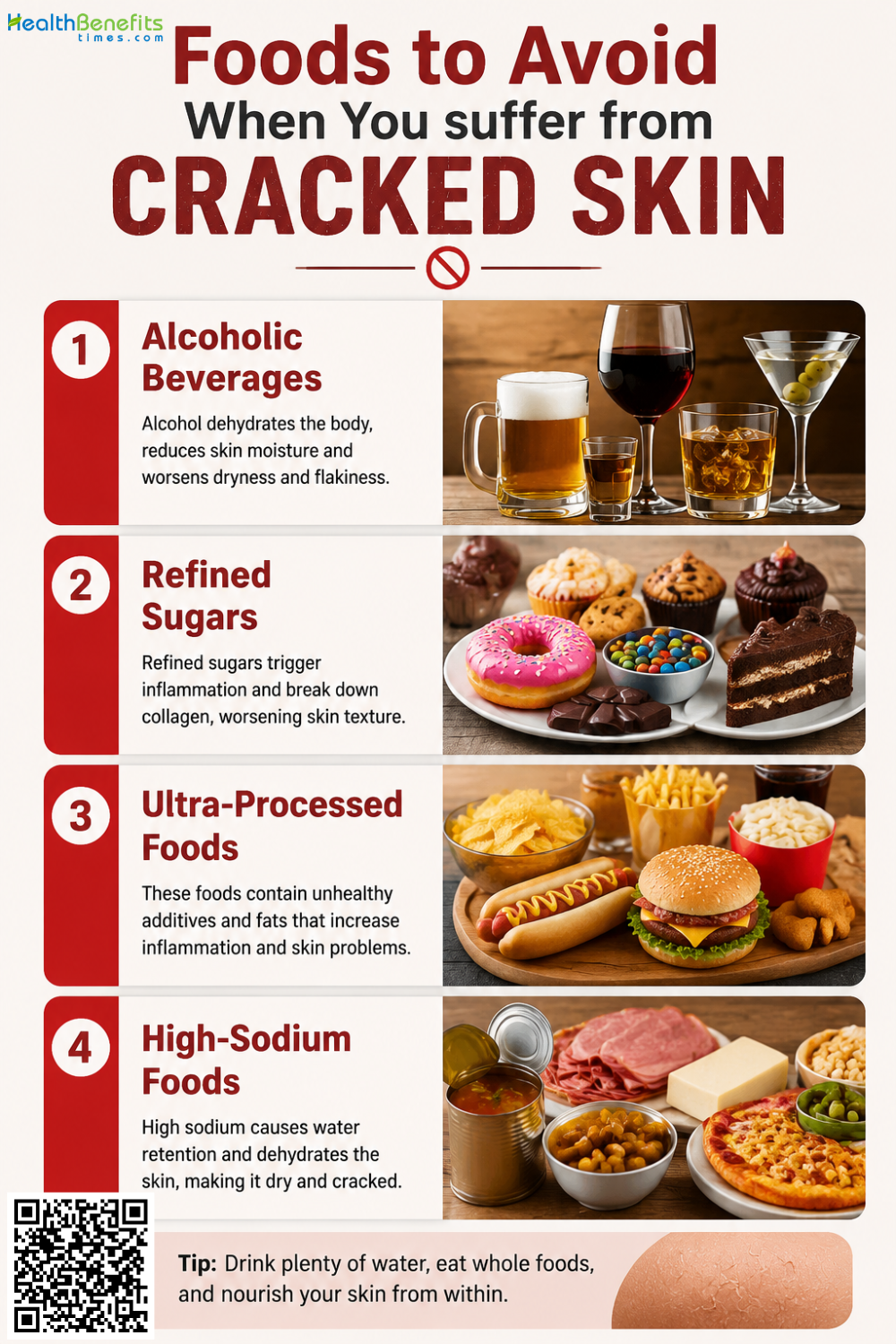
2. Refined Sugars
High sugar intake causes glycation, which damages cellular proteins. This process degrades skin elasticity and barrier integrity, leaving the tissue highly vulnerable to severe dehydration, scaling, and cracking 24.
3. Ultra-Processed Foods
Foods heavy in trans fats trigger systemic inflammation. This internal inflammatory response disrupts normal skin barrier function, worsening dryness and slowing the repair of existing tissue cracks 25.
4. High-Sodium Foods
Excessive dietary salt pulls water directly from cells to balance blood sodium levels. This internal fluid shift significantly dehydrates outer skin layers, worsening surface scaling and deep tissue cracks 26.
When to see Doctor when you struggle from Cracked Skin
1. Signs of Infection
Seek immediate medical care if the cracked skin leaks yellow pus, feels hot to the touch, or develops expanding redness, which indicates a serious bacterial infection 27.
2. Severe Pain or Bleeding
Consult a doctor if the skin fissures bleed constantly or cause extreme pain that prevents normal daily activities, requiring clinical wound closure techniques 17.
3. Lack of Improvement
Visit a healthcare provider if severe dryness and cracking do not improve after two weeks of consistent, heavy moisturizer application, which may indicate underlying eczema or psoriasis 28.
4. Presence of Diabetes
Individuals with diabetes must see a doctor immediately for foot cracks, as poor circulation and nerve damage rapidly turn minor fissures into dangerous, limb-threatening ulcers 19.
5. Development of a Fever
Seek emergency evaluation if a fever or chills accompany the cracked skin, as these systemic symptoms confirm the localized skin infection has spread deeper into the body 27.
Comments
comments