


Causes of Lipoma
- Genetic Factors and Family History: Inherited traits play a significant role, as individuals with a family history of benign fatty tumors have a higher likelihood of developing them 2. Specific genetic changes or rare inherited syndromes, such as familial multiple lipomatosis, can cause people to develop multiple growths 4.
- Physical Trauma: A history of a significant physical injury or impact to a specific area of the body is frequently noted before a lipoma forms in that same location 4.
- Underlying Medical Conditions: Certain health conditions, including obesity, high blood lipid levels, and diabetes mellitus, are associated with an increased frequency of lipoma development 4.
Symptoms of Lipoma
- Location Just Beneath the Skin: These growths typically develop directly under the skin and are most frequently found on the neck, shoulders, back, abdomen, arms, and thighs 2.
- Soft and Doughy Texture: The lumps feel soft, rubbery, and smooth to the touch, lacking a hard or rigid consistency 2.
- Easy Mobility: When pressed with slight finger pressure, the fatty mass moves easily and slides underneath the skin without being firmly attached to underlying tissue 2.
- Small Size with Slow Growth: Lipomas are generally small, typically measuring under two inches in diameter, and increase in size very gradually over extended periods 2.
- Localized Pain or Discomfort: While most masses are entirely painless, a lipoma can cause tenderness or discomfort if it enlarges and presses against nearby nerves or contains a high concentration of blood vessels 2.
Home Remedies for Lipoma
1. Dietary Modification
How it may help
Adjusting your daily diet helps regulate metabolic balance and reduces systemic inflammation, which can support the body in managing fatty tissue accumulation 5.
What research says
Clinical research indicates that adopting balanced nutritional patterns rich in whole foods aids in controlling lipid profiles and metabolic disorders associated with benign growth development 5.
How to use it safely
To use this approach safely, focus on increasing your intake of fresh vegetables, fiber, and lean proteins while minimizing processed foods and refined sugars 5.
Potential precautions or side effects
Always consult a qualified healthcare provider or clinical dietitian before making drastic dietary changes 5.
2. Omega-3 Fatty Acid Supplementation
How it may help
Omega-3 fatty acids, found in fatty fish and fish oil, possess potent anti-inflammatory properties that can help modulate localized fat tissue responses and regulate lipid profiles within the body 6. By lowering overall systemic inflammation, these essential fats may assist in managing soft tissue fatty growths, though they are not a definitive medical cure 7.
What research says
Clinical studies indicate that omega-3 supplementation significantly reduces adipose tissue inflammation and alters lipid storage patterns 7. However, direct scientific evidence proving that dietary omega-3 intake can shrink or completely eliminate established human lipomas remains limited.
How to use it safely
You should incorporate omega-3 fatty acids into your daily routine by eating fatty fish like salmon twice a week or by taking a purified fish oil supplement 8. Always follow the dosage instructions on product labels or consult a healthcare professional for personalized guidance.
Potential precautions or side effects
High doses can cause mild digestive upset, fishy aftertaste, or an increased risk of bleeding if you take blood-thinning medications.
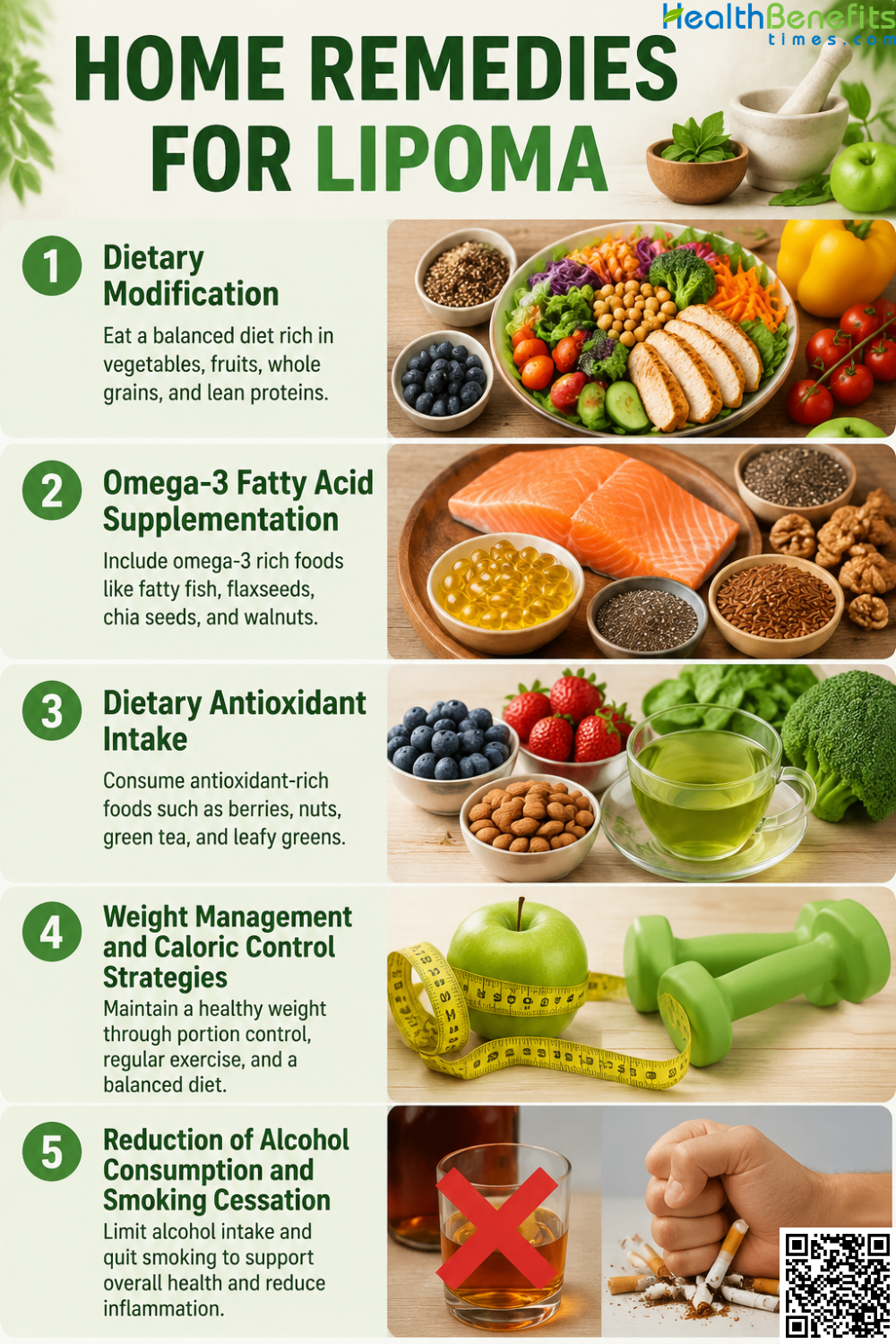
3. Dietary Antioxidant Intake
How it may help
Dietary antioxidants, such as vitamins C and E and plant polyphenols, neutralize harmful free radicals and reduce cellular inflammation within fat tissue 9. By lowering oxidative stress, these compounds support normal metabolic function in fat cells 9, which may assist in managing soft tissue fatty lumps, though they cannot shrink existing growths.
What research says
Clinical studies demonstrate that antioxidants regulate pathways linked to fat tissue development and chronic inflammation 9. However, direct evidence confirming that increasing dietary antioxidant intake can cure or reverse established human lipomas is currently lacking.
How to use it safely
You should increase your intake of natural antioxidants by eating a diverse diet rich in colorful fruits, vegetables, nuts, and seeds 9. If you choose to take antioxidant supplements, always follow the recommended daily allowance listed on the product label.
Potential precautions or side effects
Excessive intake of high-dose antioxidant supplements can cause digestive discomfort, interfere with certain medications, and potentially trigger adverse health effects.
4. Weight Management and Caloric Control Strategies
How it may help
Maintaining a balanced body weight through structured caloric control supports overall metabolic function and helps regulate systemic fat distribution 10. While lifestyle adjustments improve general health, established benign fat tumors do not respond to caloric deficits and typically persist despite overall body weight reduction 11.
What research says
Clinical observations confirm that a higher prevalence of fatty lumps correlates with metabolic syndrome and systemic weight fluctuations 10. However, scientific literature consistently shows that intentional weight loss or strict dieting cannot shrink or eliminate existing encapsulated lipomas 11.
How to use it safely
You should pursue gradual weight management through a balanced diet rich in whole foods and regular physical activity 10. Avoid extreme or crash dieting, and consult a qualified healthcare provider to design a safe, sustainable nutritional program tailored to your personal health needs 12.
Potential precautions or side effects
Rapid caloric restriction can cause nutrient deficiencies, muscle loss, fatigue, and gallstone formation if not properly monitored by a medical professional.
5. Reduction of Alcohol Consumption and Smoking Cessation
How it may help
Reducing alcohol intake and stopping smoking improve systemic circulation and decrease chronic oxidative stress throughout soft tissues 9. While these lifestyle changes promote overall metabolic wellness and lower systemic inflammation 6, they do not alter or reverse existing benign fatty growths.
What research says
Clinical data shows that smoking and heavy alcohol consumption impair tissue oxygenation and cellular repair mechanisms 9. However, scientific literature confirms that neither smoking cessation nor cutting down on alcohol can shrink or eliminate established encapsulated lipomas.
How to use it safely
You should adopt structured cessation programs, utilize behavioral counseling, or speak with a healthcare provider for nicotine replacement options to quit smoking safely 13. Gradually taper alcohol intake in line with national public health guidelines to prevent withdrawal complications.
Potential precautions or side effects
Abruptly stopping heavy alcohol use can trigger severe medical emergencies, requiring professional clinical supervision during detoxification.
Foods to Avoid When You Suffer from Lipoma
1. Refined Sugars and Sweets
Consuming foods high in added sugars spikes blood glucose and promotes chronic metabolic inflammation 14, which can negatively influence soft tissue health and fat storage patterns 9.
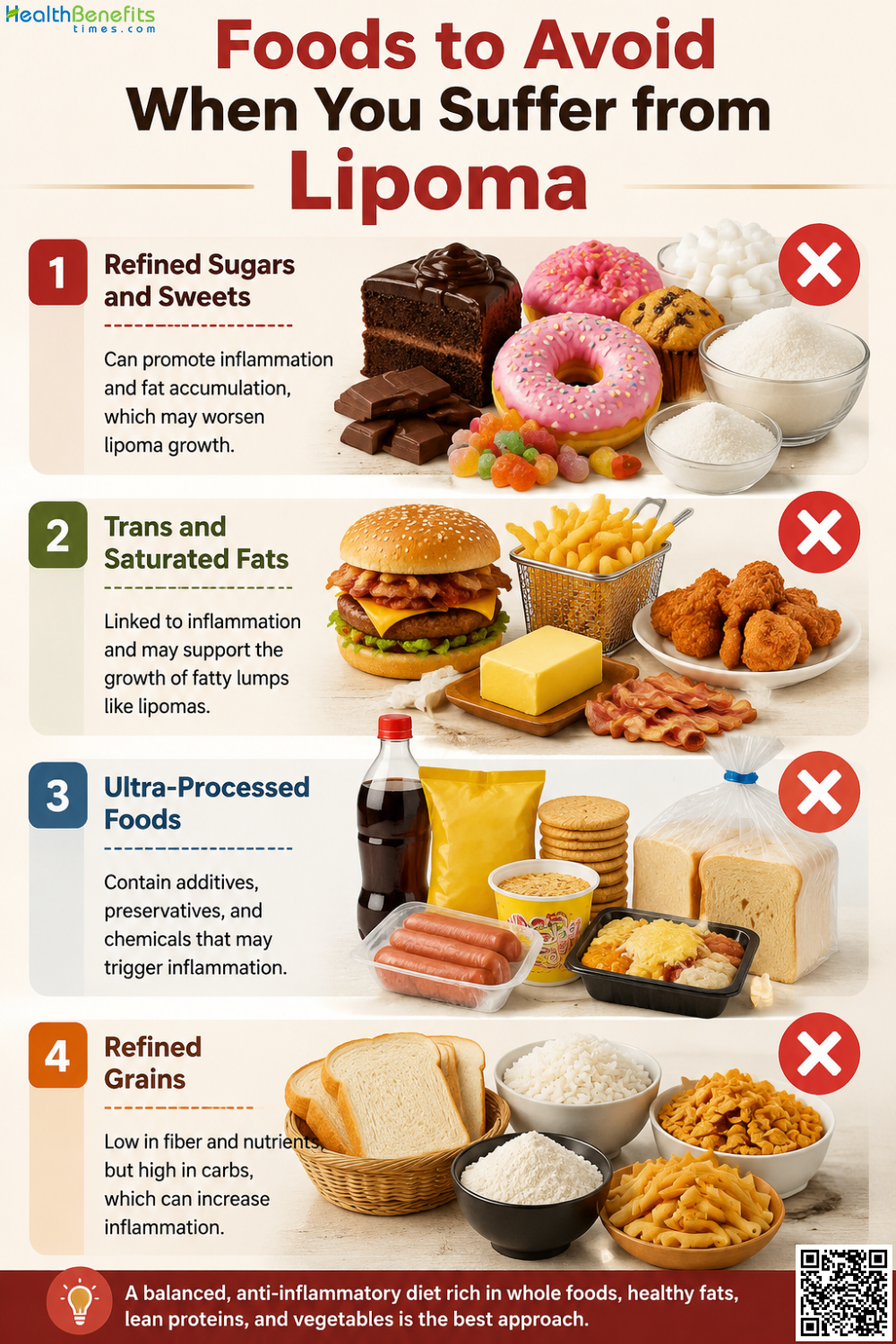
2. Trans and Saturated Fats
Fried items, processed snacks, and fatty cuts of red meat elevate systemic inflammation and disrupt healthy lipid regulation 15, potentially supporting the progression of fatty lumps 10.
3. Ultra-Processed Foods
Packaged meals and convenience foods contain chemical additives and unhealthy oils that impair normal metabolic function 16, increasing oxidative stress within adipose tissues 9.
4. Refined Grains
White bread, pastries, and white rice cause rapid blood sugar surges 14 that overwork metabolic pathways 10, hindering the body’s ability to maintain balanced fat distribution 11.
When to See a Doctor When You Struggle from Lipoma
1. Rapid Size Increase
You should consult a healthcare professional immediately if you notice a soft tissue lump growing quickly over a period of weeks 3, as rapid enlargement requires clinical evaluation to rule out malignancy 17.
2. Persistent Pain or Tenderness
Seek medical advice if a fatty lump becomes painful, tender to the touch, or sore 3, because discomfort often indicates that the growth is pressing against neighboring nerves or blood vessels 18.
3. Firm Texture or Fixed Mobility
Schedule an examination if the mass feels hard, rigid, or firmly attached to underlying structures instead of moving easily beneath your skin 3.
4. Large Dimensions
You must have any subcutaneous growth measuring larger than 5 cm professionally assessed {% https://pubmed.ncbi.nlm.nih.gov/31767281/} to ensure accurate diagnostic imaging and definitive characterization 3.
Comments
comments