


Causes of Rectal Itching
1. Hemorrhoids and Anal Fissures
Enlarged blood vessels (hemorrhoids) or small tears in the anal lining (fissures) can alter the normal shape of the anal opening. This structural change often allows small amounts of moisture and mucus to leak and become trapped against the skin, causing continuous irritation and a persistent urge to scratch 4.
2. Fecal Soilage and Moisture
Small amounts of stool left on the skin, whether due to incomplete wiping, loose stools, or minor bowel leakage, contain highly irritating digestive enzymes. Continuous contact with these enzymes breaks down the sensitive top layer of the skin, triggering localized inflammation and significant itching 2.
3. Excessive Cleaning and Scrubbing
Vigorously scrubbing the area or using harsh, heavily scented soaps and pre-packaged wet wipes often worsens the condition. These aggressive cleaning habits strip away the natural protective oils of the skin, leading to severe dryness, tiny skin cracks, and chemical irritation known as contact dermatitis 3.
4. Parasitic Infections (Pinworms)
Pinworm infections are a highly contagious parasitic issue, most frequently identified in households with young children. The female worms travel to the outside of the anus during the night to lay their eggs, which triggers a localized allergic immune response and severe, disruptive nighttime itching 5.
5. Fungal and Yeast Infections
The warm, enclosed, and moist environment of the perianal area creates ideal conditions for yeast overgrowth, particularly Candida species. Fungal infections in this region typically present as a bright red, raw-looking rash accompanied by intense, unrelenting itching that does not respond to standard hygiene practices 1.
6. Dietary Triggers
Certain foods and beverages can relax the anal muscle or directly irritate the digestive tract as they pass through. High intakes of caffeinated coffee, alcohol, chocolate, tomatoes, citrus fruits, and spicy foods are clinically proven to increase the frequency and severity of anal itching in sensitive individuals 2.
7. Underlying Skin Disorders
General dermatological conditions, including psoriasis and eczema, frequently extend to the perianal area. These chronic inflammatory disorders cause the skin to become thickened, scaly, cracked, and highly sensitive to normal friction from clothing and daily movement 3.
Symptoms of Rectal Itching
- Intense and Persistent Urge to Scratch: The defining characteristic of this condition is an overwhelming and continuous need to scratch the skin directly surrounding the anal opening, which typically peaks in intensity at night or immediately following a bowel movement 1.
- Redness and Visible Inflammation: The affected area frequently appears bright red, swollen, and visibly irritated, largely as a direct reaction to constant physical friction, trapped moisture, or localized allergic responses 3.
- Burning Sensation and Soreness: Individuals commonly experience a sharp stinging or deep burning pain, which is especially noticeable when wiping with toilet paper or when the sensitive skin comes into contact with sweat and acidic digestive enzymes 2.
- Skin Thickening and Leathery Texture: In chronic cases where scratching continues over weeks or months, the skin undergoes a defensive structural change, becoming abnormally thick, pale, and leathery in a process known clinically as lichenification 1.
- Minor Bleeding and Skin Cracking: The delicate outer layers of tissue in the anal region are easily damaged by fingernails, leading to raw patches, small open tears, and minor amounts of bright red blood that may appear on toilet tissue 3.
- Sleep Disruption: Because the severity of the itching naturally increases while resting in bed, the condition routinely causes fragmented sleep patterns, chronic fatigue, and further tissue damage from unintentional scratching while asleep 2.
Home Remedies for Rectal Itching
1. Gentle Cleaning with Plain Water
How it may help:
Washing the perianal area with plain water effectively removes residual stool and irritating digestive enzymes without stripping the skin’s natural protective oils. This method prevents the physical micro-tears caused by abrasive toilet paper and avoids the chemical inflammation triggered by scented soaps and commercial wet wipes.
What research says:
Clinical guidelines emphasize that avoiding soaps and utilizing plain water is a primary treatment for perianal itching 1. Dermatological research confirms that conventional soaps and pre-packaged wet wipes contain harsh preservatives and fragrances that cause contact dermatitis and disrupt the skin barrier, severely worsening localized itching 2.
How to use it safely:
After each bowel movement, gently rinse the area using a bidet, handheld showerhead, or a portable squeeze bottle filled with lukewarm water. Do not rub the skin. Instead, pat the area completely dry using a soft cotton towel or use a hair dryer on a cool setting.
Potential precautions or side effects:
Avoid using excessively hot water, which increases localized inflammation and intensifies itching. Ensure the skin is completely dry afterward, as trapped moisture promotes fungal infections and worsens symptoms.
2. Drying the Skin Completely Using Gentle Patting or Cool Air
How it may help:
Trapped moisture in the perianal area breaks down the delicate skin barrier. This continuous dampness creates an ideal environment for fungal and bacterial growth. Drying the skin completely eliminates this excess moisture, protecting the tissues from further damage and stopping the cycle of severe irritation.
What research says:
Clinical protocols confirm that controlling local moisture is essential for treating rectal itching 1. Studies show that residual dampness directly exacerbates skin inflammation and promotes fungal infections, making strict drying techniques a primary and highly effective conservative treatment for this condition 2.
How to use it safely:
After washing, use a soft cotton towel or plain toilet paper to gently press and pat the area dry. Alternatively, use a hairdryer. Always select the coolest air setting and hold the dryer several inches away to ensure safe drying.
Potential precautions or side effects:
Never rub the skin, as friction causes micro-tears. Strictly avoid warm or hot hairdryer settings, which can severely burn sensitive anal tissues and worsen inflammation.
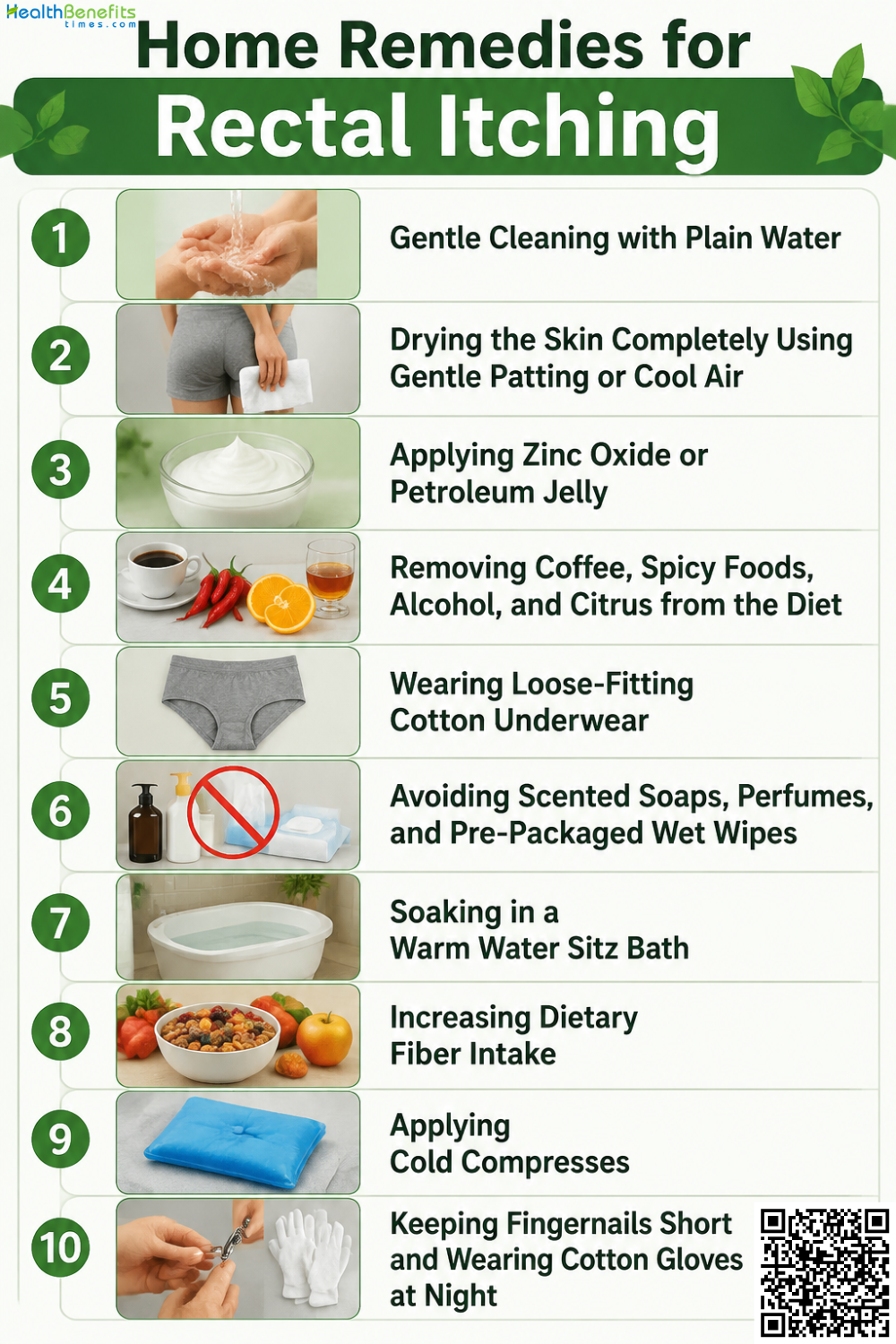
3. Applying Zinc Oxide or Petroleum Jelly
How it may help
Zinc oxide and petroleum jelly act as physical barrier creams 6. They coat the sensitive skin around the anus, protecting it from irritating moisture, sweat, and stool. By sealing the skin, these ointments reduce friction and prevent further irritation, allowing damaged skin to heal naturally.
What research says
Clinical guidelines support using barrier ointments as a primary conservative treatment for perianal itching. Medical experts conclude that barrier creams effectively restore the skin barrier and reduce inflammation without the skin-thinning side effects commonly caused by long-term steroid cream use 7.
How to use it safely
Clean the area gently with water and pat it completely dry with a soft towel. Apply a thin layer of zinc oxide or petroleum jelly to the outer skin. Reapply the ointment after bowel movements or bathing. Do not rub the skin forcefully.
Potential precautions or side effects
These ointments are highly safe, but applying them over wet skin traps moisture and worsens irritation. Discontinue use if you notice increased redness, swelling, or signs of allergic reactions.
4. Removing Coffee, Spicy Foods, Alcohol, and Citrus from the Diet
How it may help
Certain foods and drinks weaken the anal sphincter muscle or produce irritating chemicals in stool. By removing coffee, alcohol, spicy foods, and citrus from the diet, individuals can stop minor fecal leakage and prevent acidic or spicy compounds from inflaming the sensitive skin around the anus.
What research says
Medical research confirms that specific dietary items directly trigger perianal itching by lowering anal resting pressure and increasing fecal seepage 7. Clinical evaluations demonstrate that eliminating coffee, alcohol, citrus, and spicy foods resolves symptoms for most patients, making it a highly effective first-line treatment 6.
How to use it safely
Stop consuming all potential trigger foods for two weeks to observe improvements. If the itching stops, you may gradually reintroduce one food item at a time every few days to identify the specific dietary cause while maintaining a nutritionally balanced diet.
Potential precautions or side effects
Suddenly stopping coffee may cause temporary withdrawal headaches. Ensure your modified diet still provides adequate daily nutrition and sufficient dietary fiber to prevent constipation.
5. Wearing Loose-Fitting Cotton Underwear
How it may help
Wearing loose-fitting cotton underwear keeps the perianal area dry and well-ventilated. Unlike synthetic fabrics that trap moisture and heat, breathable cotton allows sweat to evaporate. This prevents the warm, damp environment that worsens skin irritation, fungal growth, and friction around the sensitive anal skin.
What research says
Clinical guidelines emphasize that keeping the perianal region dry is essential for treating rectal itching. Medical literature confirms that avoiding tight, restrictive clothing and using pure cotton underwear significantly reduces skin maceration and moisture retention, eliminating primary environmental triggers for anal pruritus 6.
How to use it safely
Choose underwear made entirely of cotton rather than nylon, polyester, or silk. Change your underwear daily, or immediately after heavy sweating and exercise. Wash these garments using mild, fragrance-free detergents to avoid leaving chemical irritants on the fabric.
Potential precautions or side effects
This approach has no direct medical side effects. Ensure clothing is not overly tight around the groin, as stiff elastic bands can cause independent friction or pressure issues.
6. Avoiding Scented Soaps, Perfumes, and Pre-Packaged Wet Wipes
How it may help
Scented soaps, perfumes, and pre-packaged wet wipes contain harsh chemicals, alcohol, and artificial fragrances that strip natural oils from the skin. Avoiding these products stops chemical irritation and prevents allergic skin reactions. This protects the delicate skin barrier around the anus, reducing inflammation and preventing further itching.
What research says
Clinical studies show that allergic skin reactions to cosmetic chemicals are a leading cause of perianal itching 7. Medical protocols emphasize that eliminating topical irritants, such as the preservatives and fragrances found in wet wipes, is a mandatory step for successfully resolving chronic symptoms 6.
How to use it safely
Clean the anal area using only plain, warm water. Instead of using scented toilet paper or commercial wet wipes, gently pat the area dry with a soft cloth or unscented toilet paper. If necessary, use a basic bidet or a handheld showerhead for gentle cleansing.
Potential precautions or side effects
Vigorous wiping, even with plain water or dry tissue, can damage healing skin. Always pat the area gently and avoid scrubbing to prevent micro-tears and increased irritation.
7. Soaking in a Warm Water Sitz Bath
How it may help
Soaking in a warm water sitz bath gently cleanses the perianal area without the need for abrasive wiping. The warm water relaxes the anal sphincter muscle, increases local blood circulation, and provides immediate soothing relief to irritated, inflamed skin, effectively reducing the urge to scratch.
What research says
Clinical protocols endorse warm sitz baths as an effective, non-invasive treatment for anorectal discomfort. Medical research confirms that soaking in warm water significantly lowers anal resting pressure and relieves perianal spasms, which accelerates the healing of damaged tissue and quickly reduces chronic itching 6.
How to use it safely
Fill a clean basin or bathtub with a few inches of plain, warm water. Sit directly in the water for 10 to 15 minutes, two or three times daily. Afterward, gently pat the area completely dry with a soft, clean towel. Never rub or scrub the skin.
Potential precautions or side effects
Ensure the water is mildly warm, not hot, to prevent scalding. Avoid adding Epsom salts, soaps, or essential oils, as these substances can further irritate damaged skin.
8. Increasing Dietary Fiber Intake
How it may help
Increasing dietary fiber adds bulk and softens stool, promoting regular, complete bowel movements. This prevents both constipation and diarrhea, reducing the need to strain. By ensuring the bowels empty fully, fiber minimizes residual fecal leakage, which is a primary cause of perianal skin irritation and itching.
What research says
Medical guidelines emphasize establishing regular bowel habits to treat rectal itching. Clinical studies confirm that dietary fiber supplementation effectively resolves perianal itching by preventing liquid stools and fecal seepage, while also reducing the swelling of hemorrhoids that frequently trigger the condition 6.
How to use it safely
Gradually add fiber-rich foods like oats, beans, whole grains, and fresh vegetables to your daily meals. Increase your intake slowly over several weeks to let your body adjust. You must drink plenty of water daily to help the extra fiber move smoothly through your digestive tract.
Potential precautions or side effects
Adding fiber too quickly can cause uncomfortable bloating, abdominal cramps, and gas. Without adequate water intake, increasing dietary fiber may paradoxically lead to severe constipation or bowel blockages.
9. Applying Cold Compresses
How it may help
Applying a cold compress temporarily numbs local nerve endings and constricts blood vessels in the perianal area. This immediate physical response reduces local tissue swelling and effectively blocks the nerve signals that cause severe itching and burning sensations.
What research says
Clinical guidelines acknowledge cold therapy as a standard conservative measure for acute anorectal inflammation. Medical literature confirms that localized cooling significantly decreases tissue swelling and nerve conduction velocity, providing safe, immediate relief for perianal pruritus and underlying conditions like hemorrhoids 6.
How to use it safely
Wrap a clean ice pack or a sealed bag of crushed ice in a soft, dry cotton towel. Gently press it against the anal area for 10 to 15 minutes. You may repeat this several times a day. Never apply bare ice directly to the skin.
Potential precautions or side effects
Applying ice directly to bare skin can cause severe frostbite and tissue damage. Prolonged exposure to freezing temperatures may worsen skin irritation and restrict necessary blood flow.
10. Keeping Fingernails Short and Wearing Cotton Gloves at Night
How it may help
Unconscious scratching during sleep damages delicate perianal skin, creating micro-tears that intensify the urge to scratch and invite bacterial infections. Keeping fingernails trimmed short and wearing soft cotton gloves creates a physical barrier. This prevents involuntary nighttime skin trauma, allowing irritated tissue to heal and breaking the vicious itch-scratch cycle.
What research says
Clinical guidelines state that involuntary nighttime scratching severely prolongs perianal inflammation by perpetuating an continuous itch-scratch cycle. Medical literature confirms that preventing mechanical trauma through conservative measures, such as trimming fingernails and wearing gloves to bed, significantly reduces excoriations and the risk of secondary bacterial skin infections 6.
How to use it safely
Trim your fingernails straight across and gently file the edges to remove any sharp points. Before going to sleep, put on clean, breathable gloves made entirely of cotton. Wash the gloves frequently with a mild, fragrance-free detergent to prevent the buildup of bacteria or chemical irritants.
Potential precautions or side effects
Ensure the cotton gloves fit loosely so they do not restrict blood circulation in your hands. Avoid synthetic fabrics, which can trap sweat and cause discomfort during the night.
Foods to Avoid When You suffer from Rectal Itching
Medical evidence shows that specific dietary items directly influence bowel habits and anal sphincter muscle function. If you experience chronic perianal itching, clinical experts recommend eliminating foods that promote loose stools, decrease anal muscle pressure, or contain irritating chemicals. Removing these items from your diet stops environmental triggers, allowing the damaged skin barrier to heal naturally.
1. Coffee
Both caffeinated and decaffeinated coffee lower anal resting pressure, causing involuntary fecal leakage that severely irritates the skin 1.
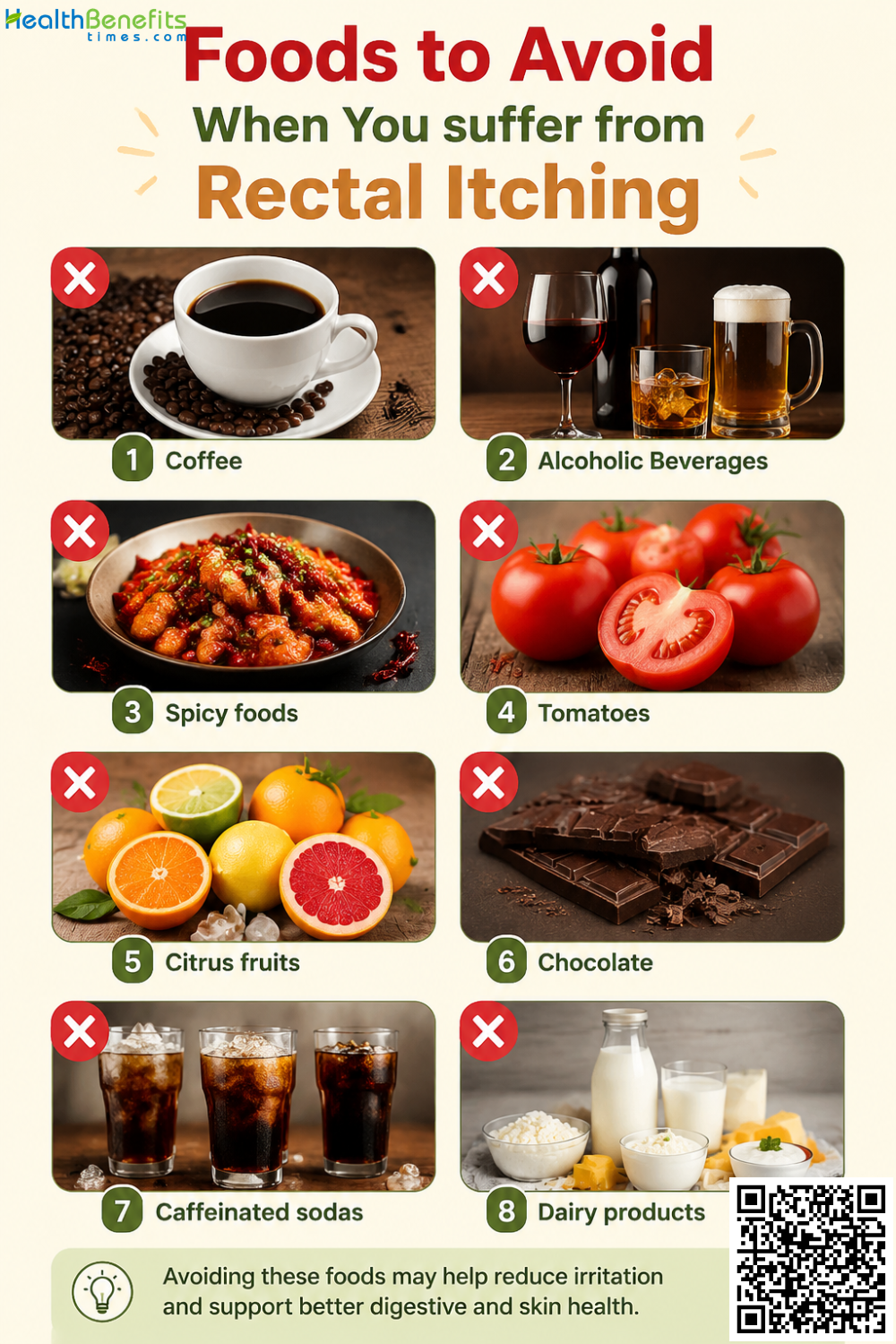
2. Alcoholic beverages
Drinks like beer and wine promote loose stools and increase perianal moisture, which worsens inflammation and itching 1.
3. Spicy foods
Undigested compounds in heavily spiced meals remain in the stool, causing direct burning and skin sensitization upon elimination 8.
4. Tomatoes
Fresh tomatoes and tomato-based products contain high levels of naturally occurring histamine, a chemical known to trigger itching 1.
5. Citrus fruits
Acidic elements in oranges and lemons alter stool chemistry, making it highly irritating to sensitive perianal tissues 9.
6. Chocolate
Chocolate relaxes the anal sphincter and stimulates exaggerated bowel reflexes, resulting in excessive moisture and localized skin trauma 8.
7. Caffeinated sodas
Colas accelerate digestive transit times, often producing liquid stools that cause difficult-to-clean fecal soiling and continuous irritation 8.
8. Dairy products
Milk consumption can trigger mild digestive intolerances, leading to frequent bowel movements that prevent damaged perianal skin from healing 1.
When to see a Doctor when you struggle from Rectal Itching
While conservative home care resolves most minor cases of perianal itching, persistent or severe symptoms mandate formal clinical evaluation. Medical professionals conduct comprehensive physical examinations to identify or rule out underlying systemic diseases, serious dermatological conditions, and structural colorectal abnormalities that demand specialized medical intervention rather than basic symptom management.
- Rectal Bleeding: Visible blood on toilet tissue or in stool often indicates internal hemorrhoids, anal fissures, or colorectal malignancies that require immediate endoscopic evaluation 7.
- Lack of Improvement: You should consult a physician if severe itching persists for more than four weeks despite strictly following barrier ointment protocols and dietary modifications 6.
- Severe Localized Pain: Sharp or throbbing pain replacing the itch suggests acute structural complications, such as a thrombosed hemorrhoid or a developing perianal abscess 10.
- Signs of Infection: The presence of foul-smelling discharge, localized warmth, unusual swelling, or fever points to a bacterial infection or anal fistula requiring antibiotics 7.
- Skin Growths or Lumps: Any hardened lumps, persistent ulcers, or abnormal skin tissue developing around the anus require a clinical biopsy to rule out anal cancer 6.
- Changes in Bowel Habits: Chronic diarrhea or sudden shifts in bowel frequency accompanying the itching may signal underlying inflammatory bowel disease or systemic digestive disorders 10.
Comments
comments