

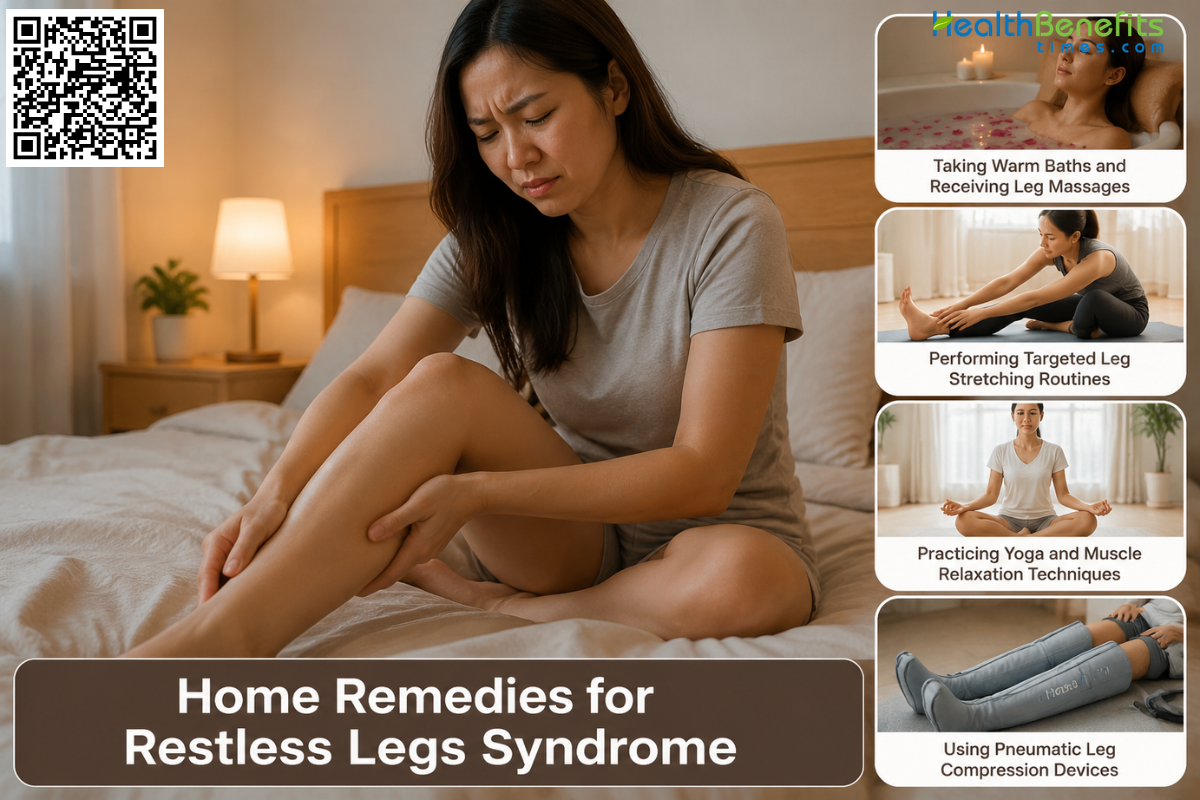
Causes of Restless Legs Syndrome
- Brain Chemical Imbalance: Medical researchers link the condition to a disruption in the brain pathways that utilize dopamine. Dopamine is a chemical messenger that helps the brain produce and control smooth, purposeful muscle movements 1.
- Genetics and Family History: In many cases, the disorder runs in families, particularly when symptoms begin before the age of 40. Researchers have identified specific genetic variations that directly increase the risk of developing the condition 1.
- Low Iron Levels in the Brain: A primary physical cause is a deficiency of iron in the brain tissue. This specific iron deficiency can trigger symptoms even if standard blood tests show normal systemic iron levels and the individual does not have anemia 2.
- Nerve Damage (Peripheral Neuropathy): Damage to the nerves in the hands and feet frequently leads to secondary restless legs syndrome. This type of nerve damage is most commonly caused by underlying chronic diseases such as diabetes or heavy, long-term alcohol use 1.
- Kidney Failure: Individuals with late-stage kidney disease often experience the syndrome. When the kidneys fail to function properly, the resulting iron depletion and the rapid buildup of waste products in the bloodstream can trigger severe physical discomfort in the legs 2.
- Pregnancy: Hormonal fluctuations and physical changes during pregnancy frequently cause the condition to develop in otherwise healthy individuals. Symptoms typically peak during the third trimester but usually disappear completely within a few weeks after giving birth 2.
- Medication Side Effects: Certain prescription and over-the-counter drugs can induce the syndrome or severely worsen existing symptoms. Common chemical triggers include sedating antihistamines found in allergy and cold medicines, anti-nausea drugs, antipsychotic medications, and many standard antidepressants 1.
Symptoms of Restless Legs Syndrome
- Overwhelming Urge to Move: The defining feature of the disorder is a powerful, irresistible need to move the legs, which is almost always driven by highly uncomfortable physical feelings deep within the limb 1.
- Distinct Uncomfortable Sensations: Individuals commonly describe the distress as creeping, crawling, pulling, throbbing, aching, or an electric-like itching sensation that occurs inside the leg muscles rather than on the skin’s surface 1.
- Triggered by Rest and Inactivity: The physical discomfort consistently begins or significantly worsens when a person is resting, sitting motionless for an extended period, or lying down in bed attempting to sleep 2.
- Temporary Relief Through Movement: The uncomfortable feelings rapidly decrease or completely disappear as soon as the individual engages the affected limbs. Actions such as walking, pacing, deeply stretching, or rubbing the legs provide immediate but temporary relief 1.
- Severe Worsening at Night: The symptoms follow a strict daily cycle where the sensations and the urge to move become vastly more intense during the late evening and nighttime hours, often preventing the ability to fall or stay asleep 2.
- Involuntary Nighttime Leg Twitching: More than 80 percent of people with this syndrome also experience a related condition that causes their legs to involuntarily twitch, jerk, or kick every 15 to 40 seconds throughout their sleep cycle 1.
Home Remedies for Restless Legs Syndrome
1. Regular and Moderate Physical Exercise
How it may help
Engaging in daily physical activity naturally promotes healthy dopamine function in the brain and improves blood circulation throughout the lower limbs. This routine muscle movement physically tires the legs and reduces nervous system overactivity, directly decreasing the sudden urge to move during evening rest periods 1.
What research says
Clinical studies confirm that consistent, moderate aerobic and lower-body resistance training significantly decreases the severity of restless legs syndrome. Medical evidence demonstrates that patients who maintain a structured daily exercise program experience fewer nighttime awakenings and report major improvements in overall sleep quality and physical comfort 3.
How to use it safely
Incorporate 30 to 60 minutes of moderate activity, such as brisk walking, swimming, or light cycling, into your daily routine. Schedule your exercise sessions earlier in the day to allow your leg muscles adequate time to fully relax and recover before you go to sleep 1.
Potential precautions or side effects
Avoid overly intense, exhausting workouts or exercising late in the evening. Pushing your body to extreme fatigue or working out near bedtime can severely worsen your nighttime leg discomfort 1.
2. Establishing a Strict and Consistent Sleep Schedule
How it may help
Maintaining a regular sleep routine helps align your body’s natural internal clock, which heavily regulates nervous system stability and nighttime physical relaxation. Going to bed and waking up at the exact same time every day reduces the physical stress that heavily triggers nighttime leg discomfort 1.
What research says
Clinical sleep research demonstrates that irregular sleep patterns severely exacerbate neurological conditions like restless legs syndrome. Medical consensus confirms that maintaining strict sleep hygiene practices significantly decreases overall nighttime sleep disruption and lowers the intensity of nocturnal limb discomfort 2.
How to use it safely
Go to bed and wake up at the exact same times every single day, including weekends. Create a quiet, dark, and cool bedroom environment, and turn off all electronic screens at least one hour before attempting to sleep 1.
Potential precautions or side effects
Avoid spending excessive waking hours lying awake in bed trying to force sleep, as this can heighten anxiety and worsen symptom severity 1.
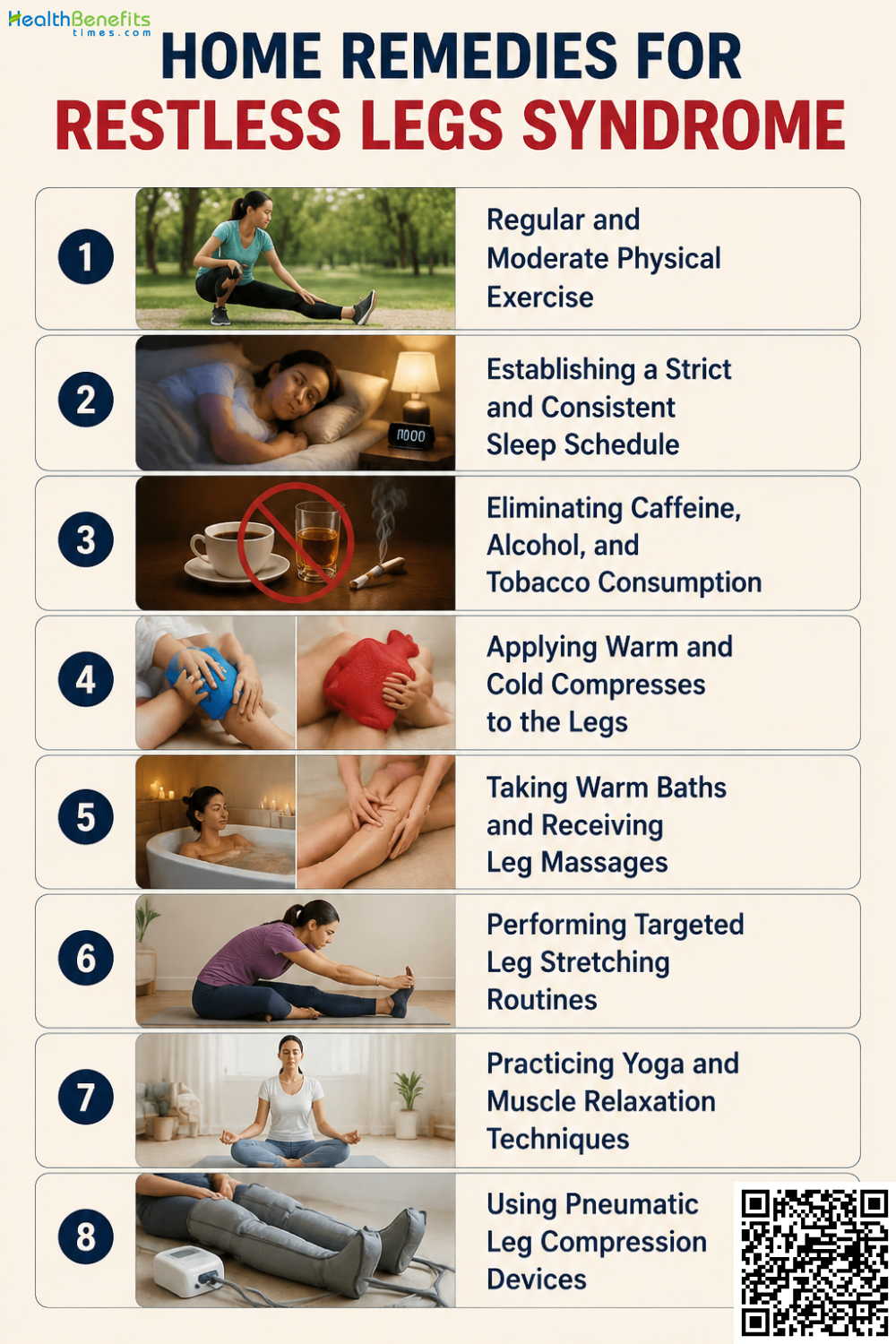
3. Eliminating Caffeine, Alcohol, and Tobacco Consumption
How it may help
Substances like caffeine, alcohol, and nicotine act as potent chemical stimulants or nervous system disruptors. They interfere with normal dopamine regulation and blood circulation, directly triggering or severely intensifying the uncomfortable crawling sensations and muscle twitches associated with restless legs syndrome 1.
What research says
Clinical observations confirm that consuming caffeine, alcohol, or tobacco significantly increases symptom frequency and severity. Medical guidelines explicitly recommend reducing or completely eliminating these substances to achieve a measurable decrease in nocturnal leg discomfort and to improve overall sleep architecture 2.
How to use it safely
Gradually eliminate coffee, energy drinks, alcoholic beverages, and tobacco products from your daily routine, especially during the afternoon and evening hours. Replace caffeinated options with water or caffeine-free herbal teas 1.
Potential precautions or side effects
Stopping regular caffeine or nicotine use abruptly can trigger temporary withdrawal headaches, fatigue, or irritability, which gradually subside within a few days 1.
4. Applying Warm and Cold Compresses to the Legs
How it may help
Thermal therapy alters sensory nerve signaling within the lower limbs. Applying temperature changes effectively distracts the nervous system, decreases muscle tension, and temporarily blocks the transmission of uncomfortable creeping or pulling sensations from reaching the brain 1.
What research says
Clinical guidelines recognize thermal therapy as a practical, non-pharmacological approach for managing mild sensory symptoms. Research supports that alternating between hot and cold applications provides effective short-term relief, helping patients soothe nocturnal limb discomfort without the risk of drug side effects 2.
How to use it safely
Apply a heating pad set to a low temperature or an ice pack wrapped in a protective cloth to your legs for 15 to 20 minutes before bedtime. Alternating between warm and cold compresses can maximize comfort 1.
Potential precautions or side effects
Avoid placing extreme heat or ice directly against bare skin to prevent tissue damage, skin irritation, or localized burns 1.
5. Taking Warm Baths and Receiving Leg Massages
How it may help
Warm water immersion and physical manipulation relax tense leg muscles and improve local blood flow. This dual action stimulates sensory receptors in the limbs, effectively interrupting the uncomfortable nerve signals and reducing the intense urge to move 1.
What research says
Clinical observations indicate that physical relaxation techniques provide significant temporary relief for individuals with mild symptoms. Medical guidelines support that soaking in a warm bath combined with deep muscle massage helps decrease nocturnal limb discomfort and promotes better sleep onset 2.
How to use it safely
Soak in a warm bath for 15 to 20 minutes right before bedtime. Follow the bath by gently massaging your calves and thighs using firm, soothing upward strokes to maximize muscle relaxation 1.
Potential precautions or side effects
Avoid excessively hot water temperatures, which can cause dizziness, lightheadedness, or sudden drops in blood pressure 1.
6. Performing Targeted Leg Stretching Routines
How it may help
Targeted physical stretching releases built-up muscle tension and improves neuromuscular coordination in the lower extremities. This intentional movement satisfies the biological urge to move, stretches tight tendons, and temporarily blocks uncomfortable nerve signals from traveling upward to the brain 1.
What research says
Clinical observations indicate that regular, low-impact stretching exercises provide meaningful, short-term relief for mild sensory symptoms. Medical guidelines support incorporating gentle lower-body stretches into nightly routines to decrease muscle stiffness and improve sleep continuity 2.
How to use it safely
Perform gentle calf, hamstring, and front thigh stretches slowly before getting into bed. Hold each stretch steady for 20 to 30 seconds without bouncing, and breathe deeply through the movement 1.
Potential precautions or side effects
Avoid overextending your muscles or forcing painful ranges of motion, which can cause acute muscle strains 1.
7. Practicing Yoga and Muscle Relaxation Techniques
How it may help
Mind-body practices like yoga combine gentle physical stretching with controlled breathing. This dual approach calms the central nervous system, lowers daily stress hormones, and releases chronic muscle tension, directly easing the uncomfortable sensations that trigger restless legs syndrome 4.
What research says
Clinical studies confirm that structured yoga programs significantly reduce the severity of restless legs syndrome symptoms. Research demonstrates that regular participants experience marked improvements in overall sleep quality, reduced daytime fatigue, and a noticeable decrease in psychological stress linked to the condition 4.
How to use it safely
Participate in beginner-friendly yoga classes or practice guided relaxation routines at home for 20 to 30 minutes several times a week. Focus on slow, deliberate movements and gentle lower-body postures 4.
Potential precautions or side effects
Avoid advanced or strenuous yoga poses that require extreme flexibility, as pushing your joints too far can cause muscle strains 4.
8. Using Pneumatic Leg Compression Devices
How it may help
Pneumatic compression devices use motorized sleeves wrapped around the legs to apply intermittent, rhythmic pressure. This mechanical action enhances local blood circulation, stimulates sensory nerve pathways, and satisfies the underlying neurological need for limb movement, effectively calming the uncomfortable sensations associated with the syndrome 5.
What research says
Clinical studies indicate that applying external pneumatic compression to the lower limbs significantly reduces symptom severity. Medical research concludes that using these devices before bedtime provides a safe, non-drug alternative that helps patients achieve longer periods of uninterrupted, restful sleep 5.
How to use it safely
Wrap the device cuffs securely around your calves or thighs following the manufacturer’s instructions. Turn on the machine to a comfortable pressure setting and use it for 30 to 60 minutes during the evening hours before attempting to sleep 5.
Potential precautions or side effects
Avoid setting the pressure excessively high, as over-tightening can restrict blood flow or cause temporary skin bruising and muscle soreness 5.
Foods to Avoid When You Suffer from Restless Legs Syndrome
Dietary choices can significantly influence nervous system stability and trigger nocturnal limb discomfort.
1. Caffeinated Beverages and Foods
Coffee, tea, and chocolate act as powerful chemical stimulants. They disrupt normal dopamine pathways and nervous system balance, which can instantly trigger or severely intensify leg symptoms 1.
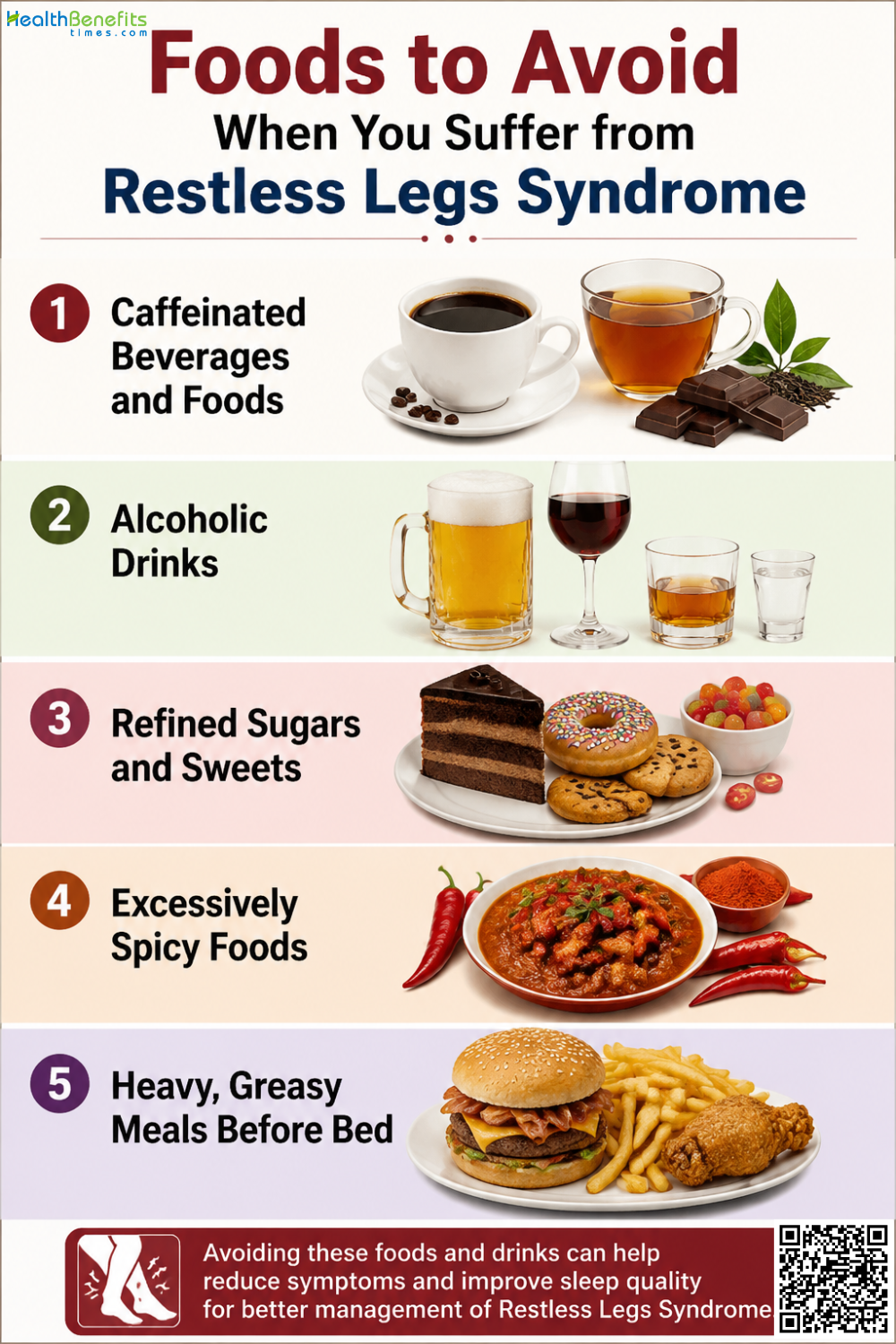
2. Alcoholic Drinks
While alcohol initially causes drowsiness, it disrupts sleep architecture as it metabolizes. This chemical disturbance frequently triggers severe muscle contractions and worsens nighttime discomfort 1.
3. Refined Sugars and Sweets
Foods loaded with simple sugars cause rapid, unstable blood glucose fluctuations. This sudden metabolic volatility increases internal physical stress and promotes inflammation that aggravates limb sensations 1.
4. Excessively Spicy Foods
Intense spices can irritate the digestive tract and cause general physical unrest. This systemic irritation often translates into heightened nervous tension and worsened physical symptoms at rest 1.
5. Heavy, Greasy Meals Before Bed
Eating large, high-fat meals late in the evening overburdens the digestive system. This physical strain disrupts deep sleep stages, making the nervous system far more sensitive to discomfort 1.
When to See a Doctor When You Struggle from Restless Legs Syndrome
While mild discomfort can often be managed through lifestyle adjustments, certain persistent signs require professional medical evaluation and diagnosis.
1. Symptoms Disrupting Daily Sleep
Consult a physician if your leg discomfort consistently prevents you from falling or staying asleep, leading to severe daytime fatigue 1.
2. Unrelenting Daily Discomfort
Seek medical advice if your symptoms happen frequently, worsen over time, or fail to respond to home care strategies like stretching and warm baths 1.
3. Signs of Underlying Iron Deficiency
A doctor should evaluate your symptoms to check for hidden iron deficiency or anemia, as correcting low iron levels often resolves the condition 2.
4. Severe Daytime Impairment
Professional intervention is necessary if chronic sleep deprivation from nighttime leg twitches significantly impacts your work performance, memory, or overall mental health 1.
5. Symptoms Linked to Chronic Illness
Schedule an evaluation if your restless legs begin alongside other health conditions like kidney disease, nerve damage, or during pregnancy 2.
Comments
comments