

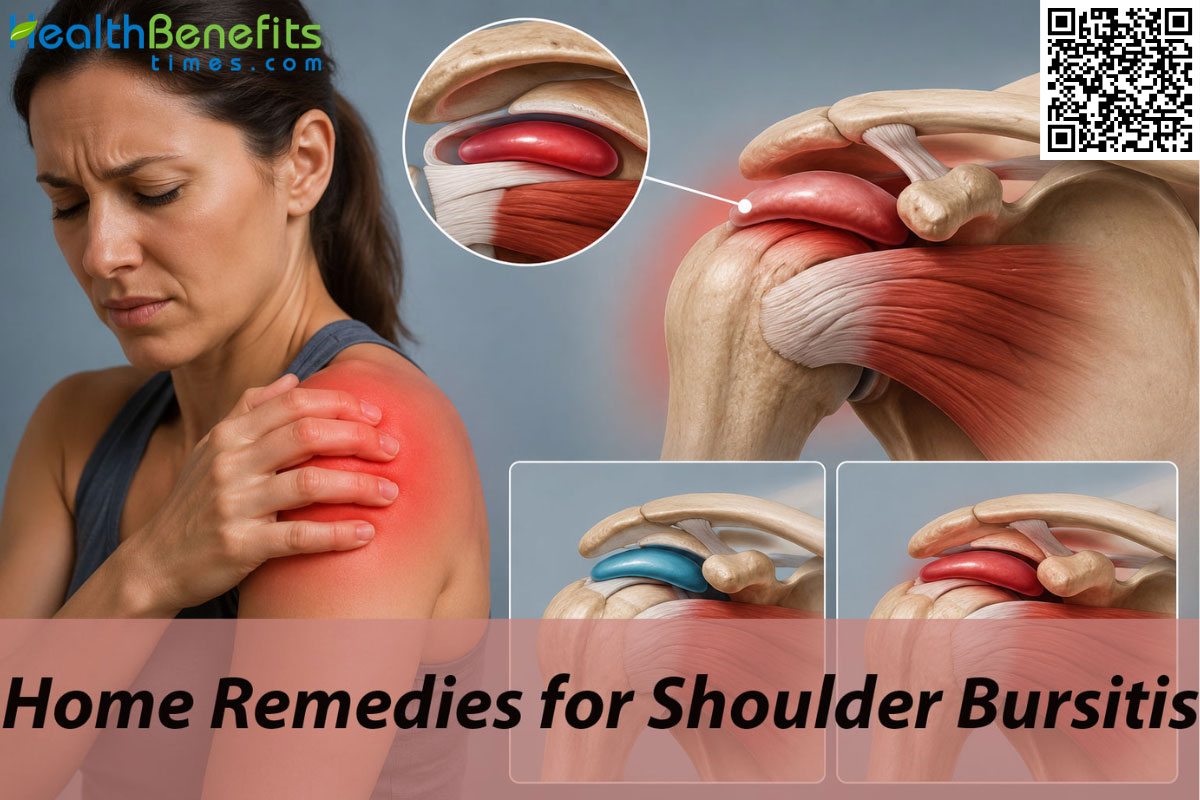
Causes of Shoulder Bursitis
- Repetitive Overhead Motions: Engaging in activities that require repeated lifting, reaching, or throwing (e.g., painting, swimming, or pitching), which creates continuous friction in the shoulder joint.
- Direct Trauma or Injury: A sudden impact, such as a fall onto the shoulder or a direct blow, causing acute bleeding and subsequent inflammation within the bursa.
- Subacromial Impingement: Structural issues where the space between the rotator cuff and the shoulder blade narrows, often due to bone spurs, pinching the bursa during movement.
- Systemic Inflammatory Conditions: Pre-existing autoimmune disorders, such as rheumatoid arthritis or ankylosing spondylitis, which can cause widespread inflammation affecting the bursae.
- Crystal Deposition Diseases: Conditions like gout or pseudogout, where uric acid or calcium crystals form within the bursa fluid and create severe irritation.
- Infection (Septic Bursitis): Bacteria entering the bursa through a puncture wound, cut, or the bloodstream, leading to a localized, painful joint infection.
- Age-Related Degeneration: Natural wear and tear on the shoulder tendons and joints over time, making older adults more susceptible to chronic bursal inflammation. 1, 2, 3
Symptoms of Shoulder Bursitis
- Localized Pain: A dull ache or sharp pain primarily felt on the front and outer side of the shoulder, just below the tip of the shoulder blade.
- Pain with Overhead Movement: Worsening discomfort or a pinching sensation when lifting the arm, reaching upward, or performing overhead tasks, particularly when the arm is raised between 75 and 120 degrees.
- Nighttime Pain: Increased shoulder ache when resting or attempting to sleep, especially if lying directly on the affected side.
- Point Tenderness: Noticeable sensitivity or pain when direct physical pressure is applied to the top and outer edge of the shoulder.
- Restricted Range of Motion: Stiffness and a decreased ability to move the shoulder freely, making everyday tasks like getting dressed or brushing hair difficult.
- Shoulder Weakness: A noticeable drop in arm strength or a feeling that the arm might give out when trying to lift or hold objects, often secondary to the pain of the compressed bursa.
- Swelling and Warmth: Mild visible swelling, a soft or “boggy” feeling under the skin, and occasionally localized warmth over the joint caused by trapped inflammatory fluid. 145
Home Remedies for Shoulder Bursitis
1. Rest and Temporary Activity Modification
How it may help
Resting the shoulder reduces physical stress and continuous friction on the inflamed bursa, allowing the irritated tissue to heal naturally 3. Avoiding repetitive overhead motions prevents further fluid buildup and swelling within the joint space, which is essential for managing acute pain.
What research says
Clinical guidelines identify rest and activity modification as the standard first-line treatment for managing shoulder bursitis 1. Evidence shows that temporarily stopping aggravating activities significantly decreases localized joint inflammation and accelerates recovery time compared to continuing normal physical strain 4.
How to use it safely
You should avoid lifting your arm above shoulder level or carrying heavy objects during the initial pain phase. Do not use a sling for prolonged periods unless advised by a doctor, as complete immobilization is rarely necessary and can delay full recovery 5.
Potential precautions or side effects
Prolonged rest or complete joint immobilization can quickly lead to muscle weakness and a severely stiffened joint, commonly known as frozen shoulder 6.
2. Cold Compress Therapy
How it may help
Applying a cold compress to the shoulder constricts local blood vessels, which directly reduces blood flow to the inflamed bursa 7. This immediate cooling decreases fluid buildup within the joint and temporarily numbs nerve endings, providing rapid relief from acute shoulder pain and swelling 8.
What research says
Clinical evidence supports cryotherapy as an effective early intervention for acute joint inflammation 9. Research indicates that localized cooling significantly lowers tissue temperature and metabolic rate, which directly inhibits the inflammatory response and limits secondary tissue damage in soft tissue injuries 10.
How to use it safely
You should wrap an ice pack or frozen vegetables in a thin towel before applying it to your shoulder. Hold the compress against the painful area for 15 to 20 minutes, repeating this process every few hours during the initial days of pain 11.
Potential precautions or side effects
Applying ice directly to bare skin or leaving it on for longer than 20 minutes can cause severe tissue damage, ice burns, or frostbite 12.
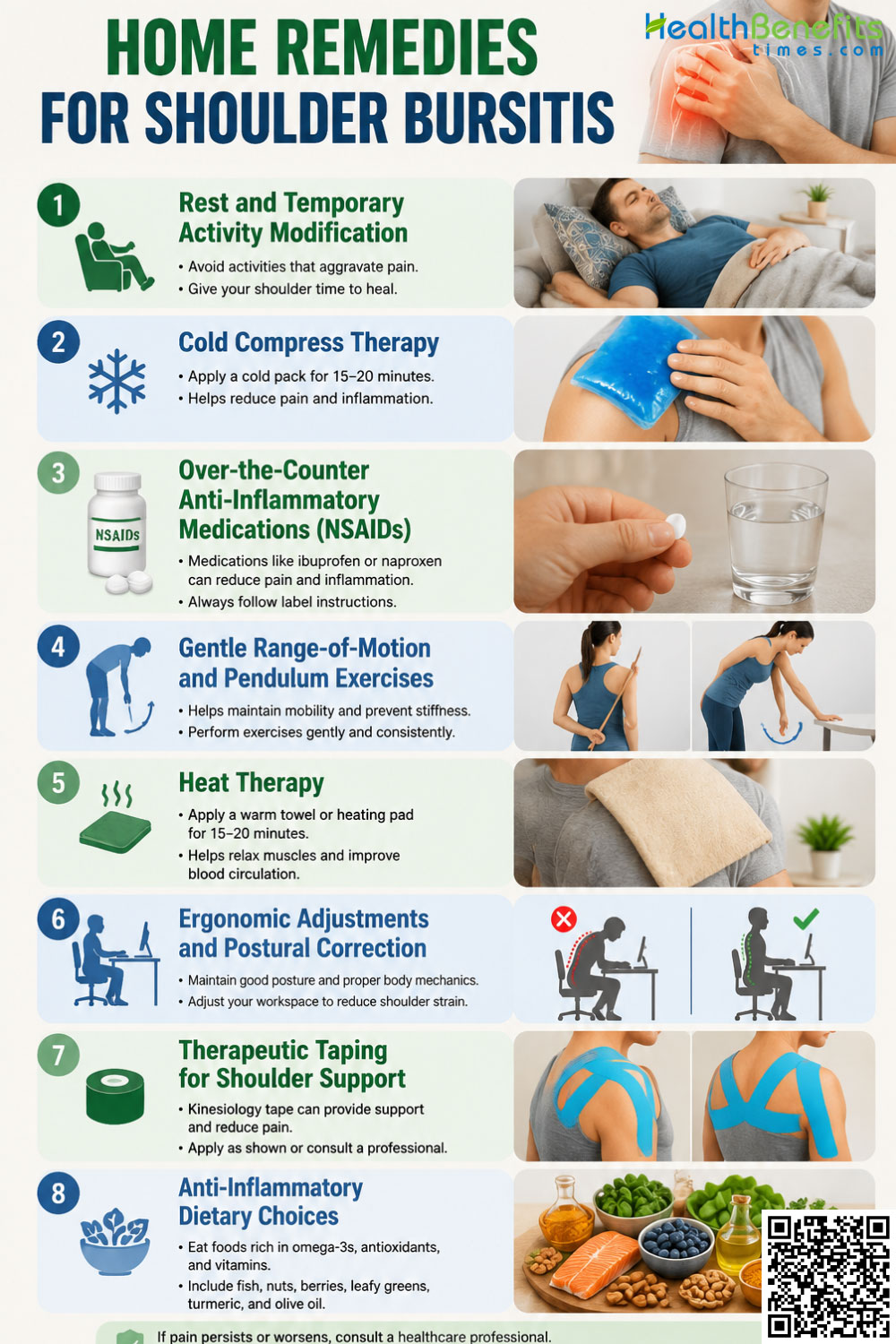
3. Over-the-Counter Anti-Inflammatory Medications (NSAIDs)
How it may help
Nonsteroidal anti-inflammatory drugs, such as ibuprofen or naproxen, work by blocking the enzymes responsible for producing inflammatory chemicals in the body 13. By stopping this chemical process, these medications effectively reduce swelling within the inflamed bursa and provide significant relief from acute shoulder joint pain 14.
What research says
Medical guidelines confirm that the short-term use of oral nonsteroidal anti-inflammatory drugs significantly decreases acute shoulder pain and improves overall joint function 15. Clinical research demonstrates that these medications are highly effective for managing soft tissue inflammation when used as a primary treatment for localized bursitis 1.
How to use it safely
You should take these medications with food or a glass of milk to minimize the risk of stomach irritation 16. Always follow the exact dosage instructions on the package label, and do not use them continuously for more than ten days without consulting a healthcare professional 17.
Potential precautions or side effects
Prolonged use of these medications significantly increases the risk of severe stomach ulcers, gastrointestinal bleeding, kidney damage, and dangerous cardiovascular events like heart attacks or strokes 18.
4. Gentle Range-of-Motion and Pendulum Exercises
How it may help
Performing gentle movement prevents the shoulder joint from becoming permanently stiff while recovering from inflammation 6. Pendulum exercises specifically use gravity to slightly pull the arm down, which temporarily widens the joint space and relieves physical pressure directly off the swollen bursa 19.
What research says
Clinical guidelines emphasize that early, controlled joint mobilization is critical for maintaining healthy shoulder function during bursitis recovery 1. Studies confirm that incorporating pendulum exercises reduces the risk of adhesive capsulitis, commonly known as frozen shoulder, without triggering further inflammatory responses 4.
How to use it safely
You should lean forward, supporting your healthy arm on a table, and let the painful arm hang completely loose 20. Gently swing the hanging arm in small circles using body momentum rather than shoulder muscles, ensuring the movement remains entirely pain-free 21.
Potential precautions or side effects
Forcing the arm through painful movements or actively lifting weights too early can severely aggravate the bursa and worsen existing joint inflammation 2.
5. Heat Therapy
How it may help
Applying heat to the shoulder improves local blood circulation and gently relaxes tense muscles surrounding the joint 22. This warming effect increases tissue flexibility, which significantly reduces joint stiffness and improves your overall range of motion as the irritated bursa begins to heal 23.
What research says
Clinical evidence shows that applying controlled heat raises the local pain threshold and stimulates the release of natural pain-relieving chemicals in the body 24. Research confirms that thermotherapy effectively reduces musculoskeletal discomfort by promoting tissue repair through enhanced blood flow to the damaged area 25.
How to use it safely
You should apply a warm, damp towel or a heating pad set to a low temperature directly to your shoulder for 15 to 20 minutes 26. Only use this therapy after the initial sharp pain and swelling have fully subsided, usually a few days after the injury.
Potential precautions or side effects
Applying heat too early during an active flare-up can rapidly increase blood flow, which may severely worsen joint inflammation, swelling, and localized pain 27.
6. Ergonomic Adjustments and Postural Correction
How it may help
Maintaining proper shoulder alignment by sitting up straight opens the subacromial space, which is the small area housing the bursa 28. This correct posture directly prevents the surrounding bones from rubbing against and pinching the inflamed tissue during daily activities 29. Using ergonomic tools reduces awkward reaching, lowering overall mechanical strain on the joint 30.
What research says
Clinical studies demonstrate that a slouched, forward-head posture significantly narrows the shoulder joint space and increases the physical compression of the bursa 31. Research confirms that integrating ergonomic workplace modifications alongside posture correction effectively decreases chronic shoulder pain and drastically lowers the recurrence rate of bursal inflammation 32.
How to use it safely
You should adjust your workspace so your computer monitor is at eye level and your keyboard sits close to your body 33. Keep your shoulders relaxed and pulled slightly back while sitting. Take frequent breaks to stand, stretch, and reset your spinal alignment throughout the day 34.
Potential precautions or side effects
Forcing your shoulders rigidly backward or maintaining tense posture for long periods can cause severe muscle fatigue and trigger secondary pain in your neck and upper back 35.
4. Therapeutic Taping
How it may help
Applying elastic therapeutic tape lifts the skin slightly, which improves local blood circulation and lymphatic drainage around the shoulder joint 36. This subtle lifting effect reduces physical pressure on the inflamed bursa, easing localized pain while providing gentle structural support without restricting the arm’s natural range of motion 37.
What research says
Clinical evidence suggests that therapeutic taping provides immediate, short-term pain relief and improves movement in patients with shoulder bursitis and related impingement issues 38. Research demonstrates that while elastic taping effectively reduces mechanical stress on soft tissues during daily tasks, it produces the best long-term outcomes when combined with standard physical therapy exercises 39.
How to use it safely
You should thoroughly clean and dry your shoulder before applying the tape to ensure proper skin adhesion. For the best structural support, have a physical therapist demonstrate the correct taping technique initially, as applying it with incorrect tension can render the treatment entirely ineffective 40.
Potential precautions or side effects
Leaving the tape on for too long or stretching it too tightly across the shoulder can cause severe skin irritation, painful blisters, or localized allergic reactions to the medical adhesive 41.
8. Anti-Inflammatory Dietary Choices
How it may help
Consuming a diet rich in omega-3 fatty acids and antioxidants actively lowers the body’s overall systemic inflammatory response 42. By reducing circulating inflammatory chemicals, these specific nutrients help calm the immune system, thereby indirectly decreasing swelling, localized warmth, and chronic pain within the irritated shoulder bursa 43.
What research says
Clinical evidence confirms that adopting dietary patterns like the Mediterranean diet significantly lowers primary blood markers associated with soft tissue inflammation 44. Research demonstrates that a sustained intake of anti-inflammatory foods correlates directly with reduced joint stiffness and a lower overall incidence of chronic musculoskeletal pain 45.
How to use it safely
You should incorporate natural whole foods like fatty fish, leafy green vegetables, and fresh berries into your daily meals 46. Prioritize these dietary modifications over nutritional supplements, and always consult a doctor before starting new regimens to ensure they safely match your current treatments 47.
Potential precautions or side effects
Consuming excessive amounts of concentrated anti-inflammatory supplements, particularly high-dose fish oils, can dangerously interact with prescription blood thinners and significantly increase your risk of severe bleeding episodes 48.
Foods to Avoid When You suffer from Shoulder Bursitis
1. Refined Sugars and Sweets
High sugar intake rapidly spikes blood glucose, triggering the release of pro-inflammatory cytokines that directly worsen joint swelling and aggravate inflamed bursa tissues. 49, 50
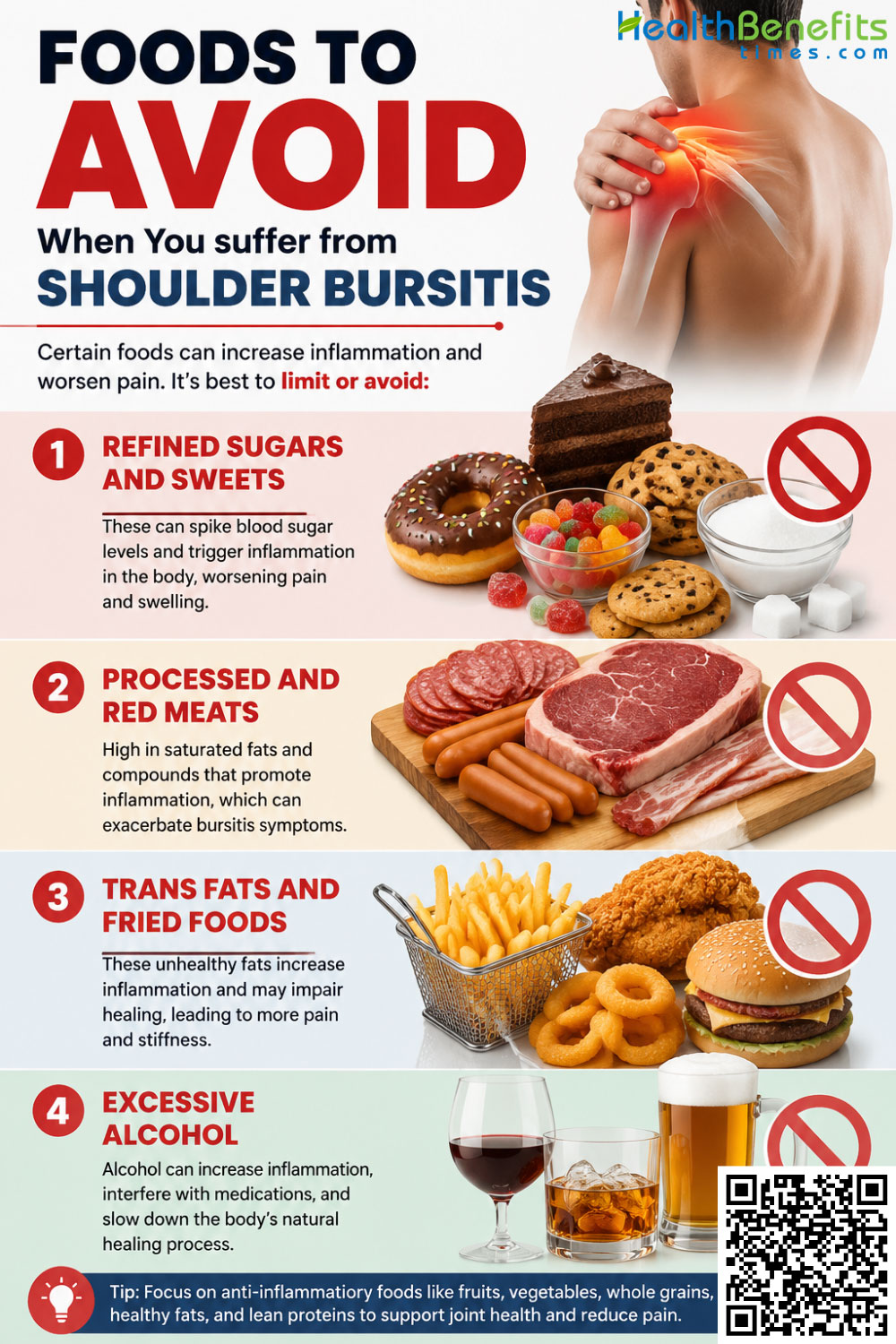
2. Processed and Red Meats
Meats high in saturated fats and advanced glycation end products stimulate systemic inflammation, which can prolong shoulder pain and delay natural joint healing. 51, 52
3. Trans Fats and Fried Foods
Artificial trans fats strongly activate the immune pathways, significantly increasing circulating inflammatory markers that exacerbate acute localized swelling in irritated shoulder joints. 53, 54
4. Excessive Alcohol
Heavy alcohol consumption disrupts liver function and alters gut bacteria, leading to widespread systemic inflammation that drastically impairs the body’s ability to repair inflamed tissues. 55, 56
When To see Doctor when you have Shoulder Bursitis
1. Signs of Infection
Seek immediate medical care if the shoulder becomes intensely red, hot to the touch, or if you develop a fever, as these indicate a serious joint infection. 57, 58
2. Severe or Worsening Pain
Consult a doctor if the shoulder pain becomes sudden and excruciating, or rapidly worsens despite rest, which may suggest a severe tear or acute inflammatory flare-up. 59, 60
3. Inability to Move the Arm
Medical evaluation is necessary if you completely lose the ability to move your shoulder or cannot raise your arm, indicating potential tendon ruptures or advanced joint freezing. 61, 62
4. Prolonged Symptoms
Schedule an appointment if shoulder discomfort and stiffness persist for more than two to three weeks despite consistent home remedies, requiring professional diagnostic imaging or targeted treatments. 63, 64
5. Neurological Symptoms
See a healthcare provider immediately if you experience persistent numbness, tingling sensations, or unexplained muscle weakness extending down your arm or into your fingers. 65, 66
Comments
comments