

Causes of Sinus Congestion
1. Viral Respiratory Infections
The majority of sinus congestion cases originate from viral infections, most notably the common cold. These viruses directly invade the nasal passages, causing the internal tissue linings to swell and produce excessive mucus, which blocks normal drainage pathways 3.
2. Seasonal and Year-Round Allergies
Inhaling airborne allergens such as pollen, mold spores, dust mites, or pet dander triggers an abnormal immune system response known as allergic rhinitis. This immune reaction releases chemicals that cause severe inflammation and swelling within the sinus cavities, leading to chronic congestion 4.
3. Nasal Polyps
These are soft, painless, and noncancerous tissue growths that develop along the lining of the nasal passages or sinuses. As these polyps grow larger, they physically obstruct the airways and block normal sinus drainage, trapping fluid and causing persistent congestion 5.
4. Deviated Nasal Septum
The nasal septum is the wall of cartilage and bone that divides the inside of the nose into two equal halves. When this dividing wall is significantly off-center or crooked, it physically narrows one or both nasal passages, restricting standard airflow and preventing mucus from draining out of the sinuses properly 6.
5. Bacterial Infections
While less frequent than viral triggers, bacteria can directly infect the sinus cavities, typically developing as a secondary complication after a prolonged viral cold. When viral inflammation traps fluid inside the blocked sinuses for extended periods, this stagnant fluid creates an ideal breeding ground for bacteria to multiply and cause intense, long-lasting congestion 3.
Symptoms of Sinus Congestion
1. Facial Pain and Pressure
Individuals with sinus congestion typically experience a deep, continuous ache or severe physical pressure around the eyes, cheeks, forehead, and upper jaw. This discomfort occurs because the hollow sinus cavities fill with trapped fluid and rapidly expand, which presses directly against sensitive facial nerves 7.
2. Thick Nasal Discharge
A primary physical sign is the production of thick, yellowish or greenish mucus that drains from the nose or heavily down the back of the throat, a condition known as postnasal drip. This discolored discharge indicates that the inflamed sinus linings and immune system are actively responding to an underlying viral or bacterial infection 2.
3. Severe Nasal Blockage
The internal tissues of the nasal passages become significantly swollen and inflamed, physically restricting normal airflow and creating an intense sensation of stuffiness. This internal obstruction forces individuals to breathe primarily through their mouth and drastically impairs general respiration 7.
4. Diminished Sense of Smell and Taste
The severe internal swelling and trapped mucus prevent airborne odor particles from reaching the sensory receptors located high inside the nasal cavities. As a direct result, patients frequently experience a temporary but noticeable reduction in their ability to smell scents and taste food 7.
5. Persistent Cough
When excess sinus mucus continuously drips down the back of the throat, it severely irritates the vocal cords and airway linings, triggering a persistent, dry cough. This coughing reflex is almost always more severe at night or when lying completely flat, because gravity causes the excess fluids to pool directly in the upper throat 2.
6. Halitosis (Bad Breath)
The stagnant, trapped fluid inside the blocked sinus cavities creates an ideal breeding ground for bacteria. As these trapped bacteria rapidly multiply and break down the pooled mucus, they release foul-smelling chemical gases that result in noticeably bad breath 7.
Home Remedies for Sinus Congestion
1. Daily Saline Nasal Irrigation
How it may help
Saline nasal irrigation physically flushes thick mucus, trapped allergens, and inflammatory debris out of the nasal passages. This rinsing action restores moisture to dry tissues, reduces internal swelling, and opens blocked sinus cavities, allowing for easier breathing and rapid relief from facial pressure 8.
What research says
Clinical studies confirm that daily saline irrigation is a proven, evidence-based treatment for acute and chronic sinus congestion. Medical research concludes that this practice significantly improves overall sinus symptoms, decreases reliance on prescription medications, and enhances daily quality of life for individuals suffering from continuous nasal blockages 8.
How to use it safely
You must strictly use distilled, sterile, or previously boiled and cooled water to prepare the saline solution. Lean over a sink, gently pour the solution into one nostril, and let it drain from the other. Thoroughly clean and air-dry your irrigation device after every single use 9.
Potential precautions or side effects
Using unsterilized tap water introduces dangerous amoebas that can cause fatal brain infections. Minor side effects of safe irrigation include temporary nasal stinging or fullness in the ears 9.
2. Inhalation of Warm Steam
How it may help
Inhaling warm, moist air directly soothes irritated nasal passages and rapidly thins thickened mucus. This added moisture helps trapped fluids drain more easily from the blocked sinus cavities, which reduces severe facial pressure and temporarily improves airflow through the nose 7.
What research says
Clinical guidelines support steam inhalation for safe, temporary symptom management. Medical evidence indicates that while steam does not cure underlying viral or bacterial infections, it effectively relieves subjective feelings of congestion, reduces acute facial pain, and serves as a practical complementary therapy for sinus inflammation 7.
How to use it safely
Pour hot, but not actively boiling, water into a large bowl. Drape a towel over the back of your head, lean carefully over the bowl, and breathe deeply through your nose for several minutes. Alternatively, sit in a hot, steamy bathroom 7.
Potential precautions or side effects
The primary risk is severe scald burns from spilled water or excessively hot steam. Always place the bowl on a stable, flat surface and strictly supervise children 7.
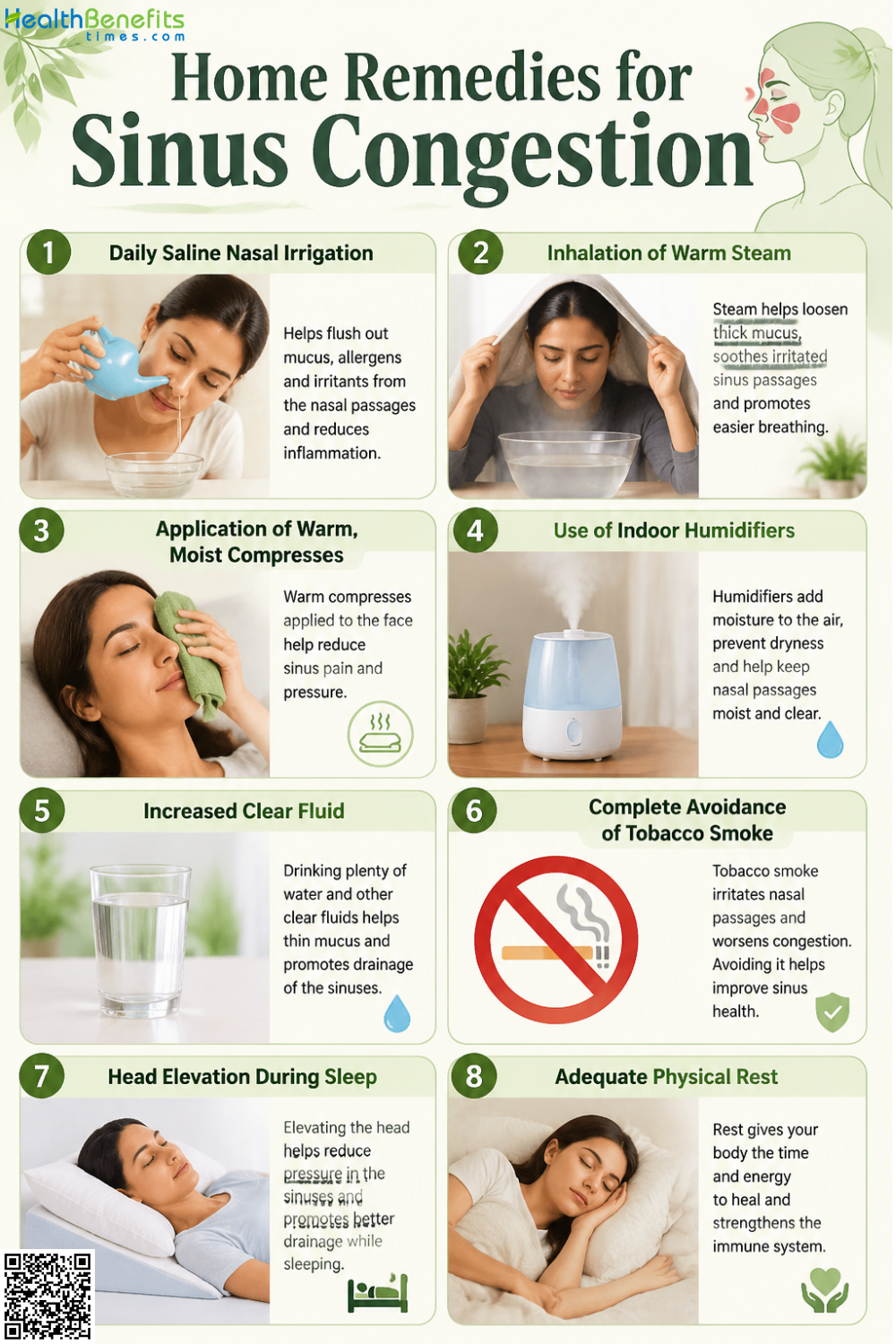
3. Application of Warm, Moist Compresses
How it may help
Applying a warm, moist cloth across the face increases local blood flow and soothes inflamed tissues. The external heat gently warms the sinus cavities, which helps loosen thick, trapped mucus and alleviates the intense physical pressure felt around the eyes and nose 2.
What research says
Clinical guidelines recognize warm compresses as an effective, non-pharmacological supportive therapy for sinus congestion. Health authorities conclude that while this method does not cure underlying infections, it safely provides immediate, localized relief from acute facial pain and pressure during a sinus flare-up 2.
How to use it safely
Soak a clean washcloth in warm, but not scalding, water and wring out the excess moisture. Place the warm cloth directly across your nose, cheeks, and forehead. Leave it in place for 10 to 15 minutes, repeating several times a day 7.
Potential precautions or side effects
The primary risk is thermal burns to sensitive facial skin. Always test the compress temperature on the inside of your wrist before applying it to your face 7.
4. Use of Indoor Humidifiers
How it may help
Indoor humidifiers release water vapor to increase ambient moisture in dry environments. Breathing this moistened air hydrates dry nasal tissues, thins thick mucus trapped in the cavities, and promotes natural sinus drainage, which subsequently relieves severe facial pressure and nasal congestion 7.
What research says
Clinical guidelines recommend utilizing humidifiers as an effective supportive intervention for upper respiratory infections. Medical experts conclude that maintaining adequate indoor humidity prevents the nasal mucosa from drying out, thereby supporting the respiratory system’s natural ability to expel trapped mucus and clear blocked airways 2.
How to use it safely
Place a cool-mist humidifier in your room while resting or sleeping. Clean the water tank thoroughly every day and refill it strictly with distilled or sterile water to prevent the growth and airborne dispersion of harmful bacteria into your environment 7.
Potential precautions or side effects
Failing to clean the humidifier allows mold and bacteria to breed rapidly. Inhaling these contaminated water droplets can trigger respiratory infections, cause allergic reactions, and worsen existing sinus inflammation 7.
5. Increased Clear Fluid
How it may help
Drinking plenty of clear fluids significantly increases overall body hydration, which directly thins the thick, sticky mucus trapped inside the sinus cavities. This thinning effect promotes natural drainage, reducing severe internal blockages and relieving the intense physical pressure felt across the face 7.
What research says
Clinical guidelines consistently recommend adequate hydration as a supportive treatment for upper respiratory infections. Medical experts conclude that maintaining optimal fluid levels prevents the nasal mucosa from drying out, which is essential for the respiratory system to effectively expel trapped mucus and clear viral or bacterial pathogens 2.
How to use it safely
Drink ample amounts of plain water, hot decaffeinated tea, or clear broths throughout the day. You should strictly avoid beverages containing caffeine or alcohol, as these substances act as diuretics that remove water from your body and worsen nasal dryness 7.
Potential precautions or side effects
If you have congestive heart failure, severe kidney disease, or are on strict fluid restrictions, always consult your doctor before significantly increasing your daily water intake 10.
6. Complete Avoidance of Tobacco Smoke
How it may help
Eliminating exposure to tobacco smoke prevents toxic chemicals from irritating the nasal passages and paralyzing the tiny structures responsible for clearing fluids. This avoidance rapidly reduces internal inflammation, allowing trapped mucus to drain effectively and relieving severe nasal blockages 3.
What research says
Clinical studies establish that active smoking and secondhand smoke exposure are major risk factors for chronic sinusitis. Medical research concludes that tobacco toxins directly damage respiratory tissues, suppress local immune function, and significantly increase the severity and frequency of sinus congestion 11.
How to use it safely
If you smoke, consult your doctor for a structured cessation plan. To prevent secondhand exposure, strictly prohibit smoking inside your home and vehicle, and actively avoid enclosed public environments where airborne tobacco chemicals are present 12.
Potential precautions or side effects
Quitting tobacco can trigger severe nicotine withdrawal, causing temporary anxiety, irritability, and intense cravings. Prescribed medical therapies and counseling safely manage these specific withdrawal symptoms 13.
7. Head Elevation During Sleep
How it may help
Lying completely flat causes mucus to pool inside the nasal passages, which worsens blockages and facial pain. Elevating the head uses gravity to actively drain this trapped fluid from the sinus cavities, immediately reducing internal pressure and improving breathing during the night 7.
What research says
Medical guidelines recommend head elevation as a supportive mechanical intervention for sinus infections. Health authorities confirm that utilizing gravity to prevent fluid accumulation during sleep successfully decreases mucus dripping down the throat, reduces nighttime coughing, and alleviates the severe congestion that typically worsens when flat 7.
How to use it safely
Prop up the head of your bed by a few inches or use an extra pillow to keep your head consistently higher than your chest. Ensure your neck remains properly aligned to prevent muscle strain while resting 7.
Potential precautions or side effects
Stacking too many standard pillows can unnaturally bend your neck, causing severe muscle stiffness and restricting your airway. Consider using a firm wedge pillow to elevate your upper body safely 7.
8. Adequate Physical Rest
How it may help
Physical rest allows the body to conserve vital energy and redirect it toward the immune system. This enhanced immune response more efficiently fights the underlying viral or bacterial infections causing the sinus congestion, which reduces internal tissue inflammation and clears blocked nasal passages 3.
What research says
Clinical guidelines establish that adequate sleep is a fundamental supportive treatment for respiratory infections. Medical experts conclude that sleep deprivation severely suppresses immune function, whereas sufficient rest actively accelerates the body’s natural recovery from the specific pathogens that trigger sinus inflammation 3.
How to use it safely
Aim for at least seven to nine hours of continuous sleep each night during a flare-up. Pause intense physical exercises and demanding chores, prioritizing relaxation to allow your body to heal without unnecessary physical strain 3.
Potential precautions or side effects
Prolonged, strict bed rest over many days can cause minor muscle stiffness. Balance your rest with light, gentle indoor movements to maintain healthy blood circulation while you recover 14.
Foods to Avoid When You suffer from Sinus Congestion
To effectively manage sinus congestion and prevent worsening symptoms, individuals should avoid specific foods and beverages that dehydrate the body, promote systemic inflammation, or trigger allergic reactions.
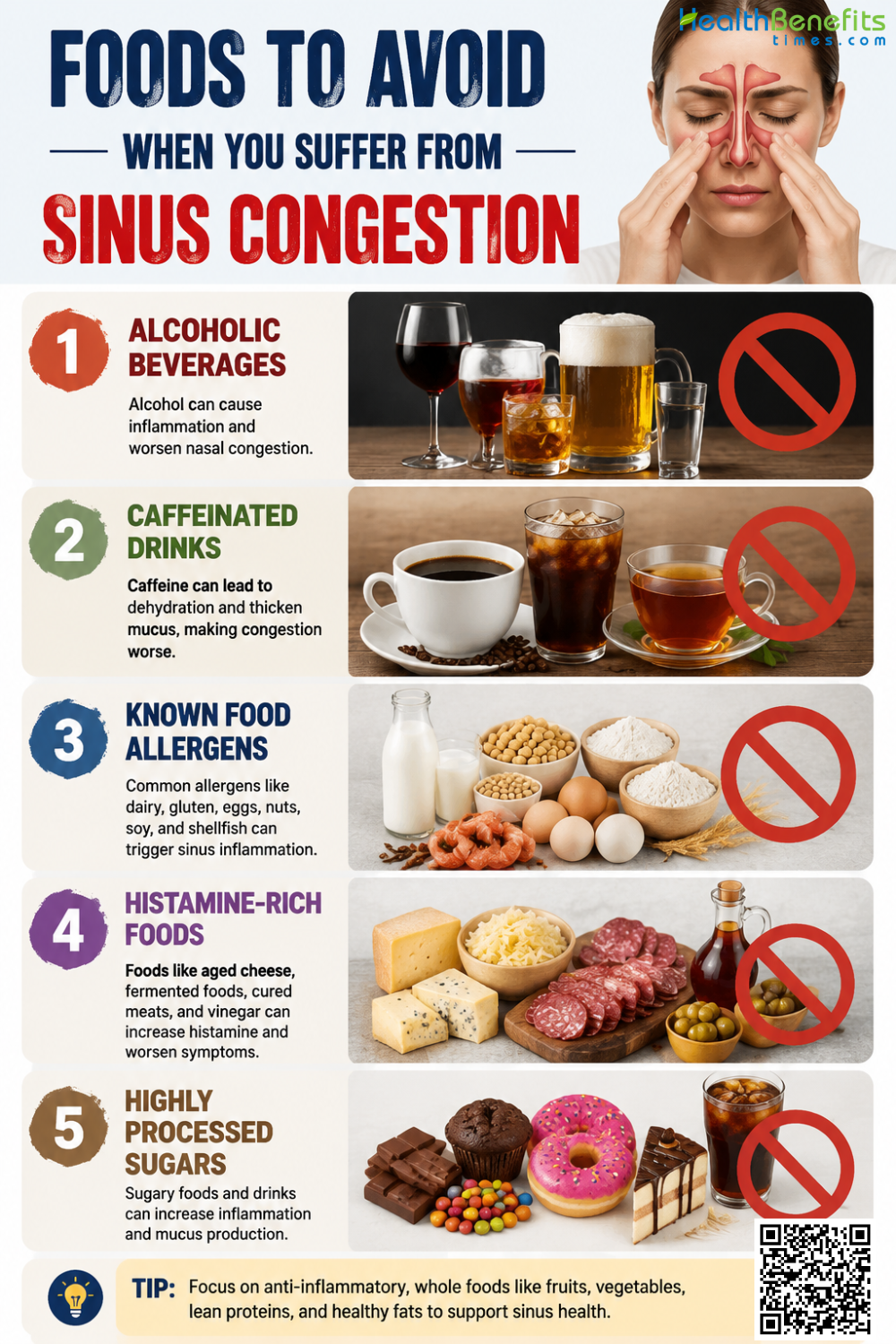
1. Alcoholic Beverages
Alcohol dilates nasal blood vessels, immediately worsening tissue swelling. It also acts as a diuretic, dehydrating the body and thickening trapped sinus mucus 7.
2. Caffeinated Drinks
Beverages containing high caffeine levels promote fluid loss through increased urination. This dehydration causes sinus secretions to become significantly thicker and harder to drain 7.
3. Known Food Allergens
Consuming specific foods you are allergic to triggers an immediate immune response, releasing chemicals that directly cause severe nasal inflammation and excess mucus production 15.
4. Histamine-Rich Foods
Fermented foods and aged cheeses contain high histamine levels. In sensitive individuals, consuming these directly mimics allergic reactions, intensifying nasal swelling and severe congestion 16.
5. Highly Processed Sugars
Diets excessively high in refined sugars trigger systemic inflammation throughout the body, which can exacerbate existing sinus tissue swelling and delay natural immune recovery 17.
When to see Doctor when you suffer from Sinus Congestion
While most sinus congestion resolves independently through home care, specific clinical warning signs indicate a potential bacterial infection or severe complication requiring immediate medical evaluation.
1. Prolonged Symptoms
If severe congestion and nasal discharge persist for more than 10 days without any sign of clinical improvement, a medical evaluation is necessary 2.
2. Double Sickening
Seek care if symptoms initially improve over a few days but suddenly return with increased severity, which often signals a secondary bacterial infection 2.
3. High Fever
Developing a persistent, high-grade fever during a sinus flare-up indicates a systemic infection that necessitates professional medical diagnosis and potential prescription treatment 2.
4. Severe Facial Pain
Sudden, severe pain, redness, or swelling around the eyes and forehead can indicate a dangerous infection spreading beyond the hollow sinus cavities 7.
5. Vision Changes
Experiencing double vision, blurry sight, or a stiff neck requires immediate emergency care, as these indicate critical neurological or orbital complications 7.
Comments
comments