

Causes of Split Ends in Hair
- Mechanical Damage and Friction: Daily grooming habits, such as vigorous brushing, combing, or rough towel-drying, create persistent physical friction that gradually strips away the hair’s protective outer layer (cuticle). Furthermore, cutting hair with dull scissors or razors creates an uneven, jagged edge that leaves the hair shaft highly vulnerable to peeling and splitting 1.
- Chemical Treatments: Cosmetic procedures that alter hair color or texture—such as bleaching, dyeing, perming, and applying alkaline chemical straighteners—dissolve essential structural lipids and proteins. These treatments compromise the internal cellular cement of the hair, leading directly to cuticle cracking and fiber fracture at the ends 2.
- Thermal Stress: The repetitive use of high-heat styling appliances, including flat irons, curling wands, and blow dryers, causes rapid moisture evaporation deep within the hair fiber. This intense heat degrades keratin proteins and causes the outer cuticles to blister and lift, resulting in dry, brittle ends that easily split 3.
- Environmental Exposure: Prolonged unprotected exposure to ultraviolet (UV) radiation from sunlight triggers photochemical reactions that break the structural protein bonds within the hair. Because the hair ends are the oldest and most exposed sections, this environmental weathering degrades the cuticle layer, inevitably leading to physical rupture and longitudinal splitting 1.
- Clinical and Behavioral Factors: Conditions involving repetitive physical trauma to the hair, such as the compulsive hair-pulling disorder trichotillomania, repeatedly stretch and fracture the hair shaft, creating widespread split ends 4. Similarly, hairstyles that inflict continuous, tight tension on the hair (traction alopecia) weaken the structural integrity of the fiber, resulting in severe fraying 5.
Symptoms of Split Ends in hair
- Visible Hair Fiber Division: The most definitive physical sign is the visible longitudinal fracturing of the hair shaft at its very tip. This split typically presents as a “Y” shape where a single fiber separates into two distinct branches, though severe structural degradation can result in multiple, feather-like splits extending further up the hair shaft 6.
- Rough Texture and Frizz: As the overlapping cells of the protective cuticle layer peel away or lift, the hair loses its naturally smooth surface. This cellular damage causes the affected ends to feel physically rough to the touch and appear highly frizzy, making the hair look frayed and disorganized 7.
- Increased Tangling and Knotting: The jagged edges and exposed inner cortex of split ends create excessive mechanical friction between individual hair strands. These damaged, uneven tips easily hook onto neighboring hairs, resulting in frequent knots, severe tangles, and significantly increased difficulty when combing or brushing the lower lengths of the hair 6.
- Dryness and Brittleness: Because the protective outer lipid layer and cuticle are completely compromised at the site of a split end, the hair fiber loses its ability to retain internal moisture. Consequently, the tips become chronically dehydrated, rigid, and brittle, making them highly susceptible to snapping or breaking off entirely under minimal stress 7.
- Dullness and Discoloration: Extensive structural weathering at the fractured tips alters how the hair fiber reflects light, eliminating its natural shine. Furthermore, the constant environmental and physical damage degrades the hair’s pigment (melanin), frequently causing the split ends to appear notably lighter, duller, or more faded compared to the healthier mid-lengths of the hair 6.
Home Remedies for Split Ends In Hair
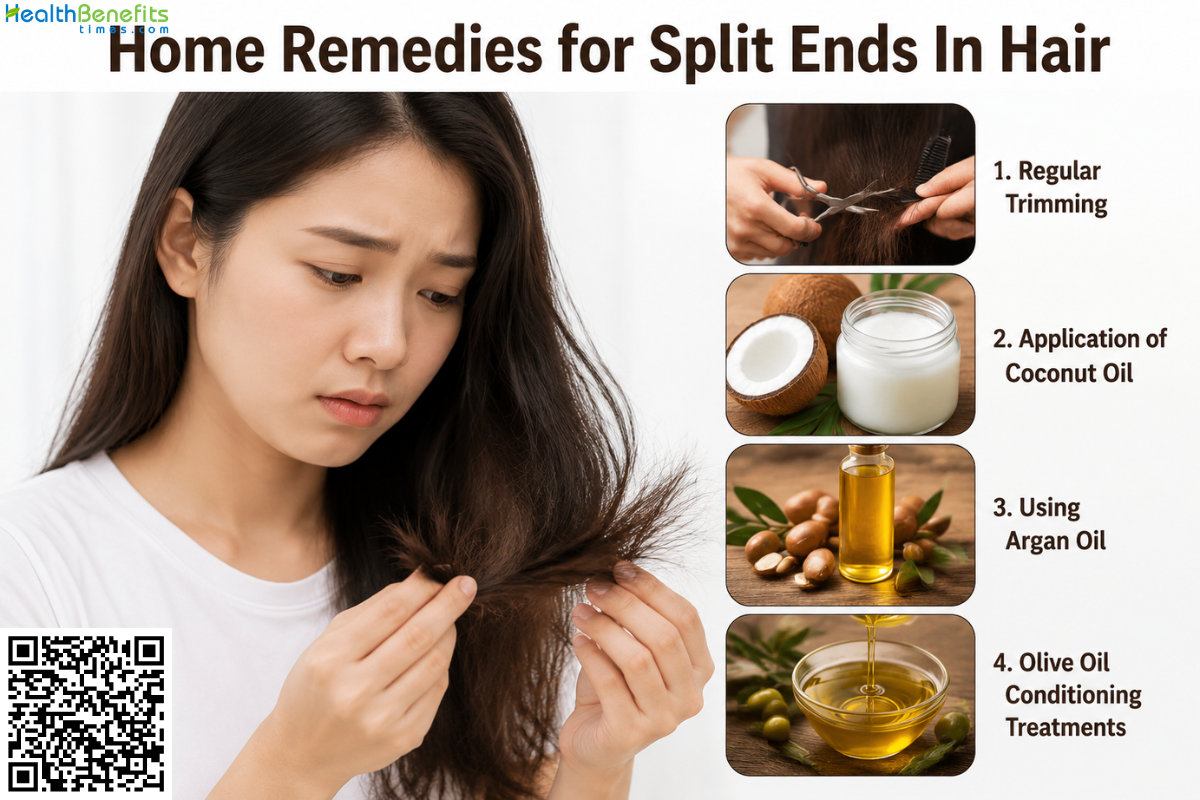
1. Regular Trimming
How it may help
Because fully grown hair consists of non-living tissue, a structurally fractured hair tip cannot biologically heal or fuse back together. Physically removing the damaged tip through trimming is the only way to eliminate the split end and stop the fracture from traveling further up the hair shaft, which prevents more severe breakage.
What research says
Dermatological studies confirm that structural weathering of the hair fiber, such as longitudinal splitting, is an irreversible physical change 6. Research emphasizes that cleanly severing the damaged fiber with sharp instruments is the only effective method to halt the progression of the split and restore the structural integrity of the remaining strand 7.
How to use it safely
To effectively remove damage, you should trim your hair approximately one-quarter inch above the highest point of the visible split. Always use sharp, professional-grade hair shears. Avoid using regular household scissors, as their dull blades can crush the hair cuticle and instantly create new split ends 6.
Potential precautions or side effects
There are no medical side effects to cutting hair. However, using dull blades will severely crush the hair shaft, accelerating further cuticle damage and immediate splitting 6.
2. Application of Coconut Oil
How it may help
Coconut oil possesses a specific chemical structure that allows it to easily penetrate deeply into the hair fiber. By filling the inside of the hair shaft, it prevents excessive water absorption. This stops the outer protective cuticle from swelling, lifting, and eventually splitting due to daily physical friction.
What research says
Clinical research demonstrates that coconut oil significantly reduces protein loss in both healthy and damaged hair when used as a grooming treatment 8. Its primary fatty acid, lauric acid, has a high affinity for hair proteins and a low molecular weight, allowing it to easily penetrate and reinforce the hair shaft 8.
How to use it safely
Warm a small amount of pure coconut oil between your hands until liquid. Gently rub the oil exclusively into the lowest few inches of your hair. You can apply it before shampooing or use a tiny drop on damp ends after washing to temporarily seal the cuticle.
Potential precautions or side effects
Applying too much oil can create heavy buildup, making hair appear greasy. Avoid rubbing it directly onto your scalp, as coconut oil can clog pores and trigger acne breakouts 6.
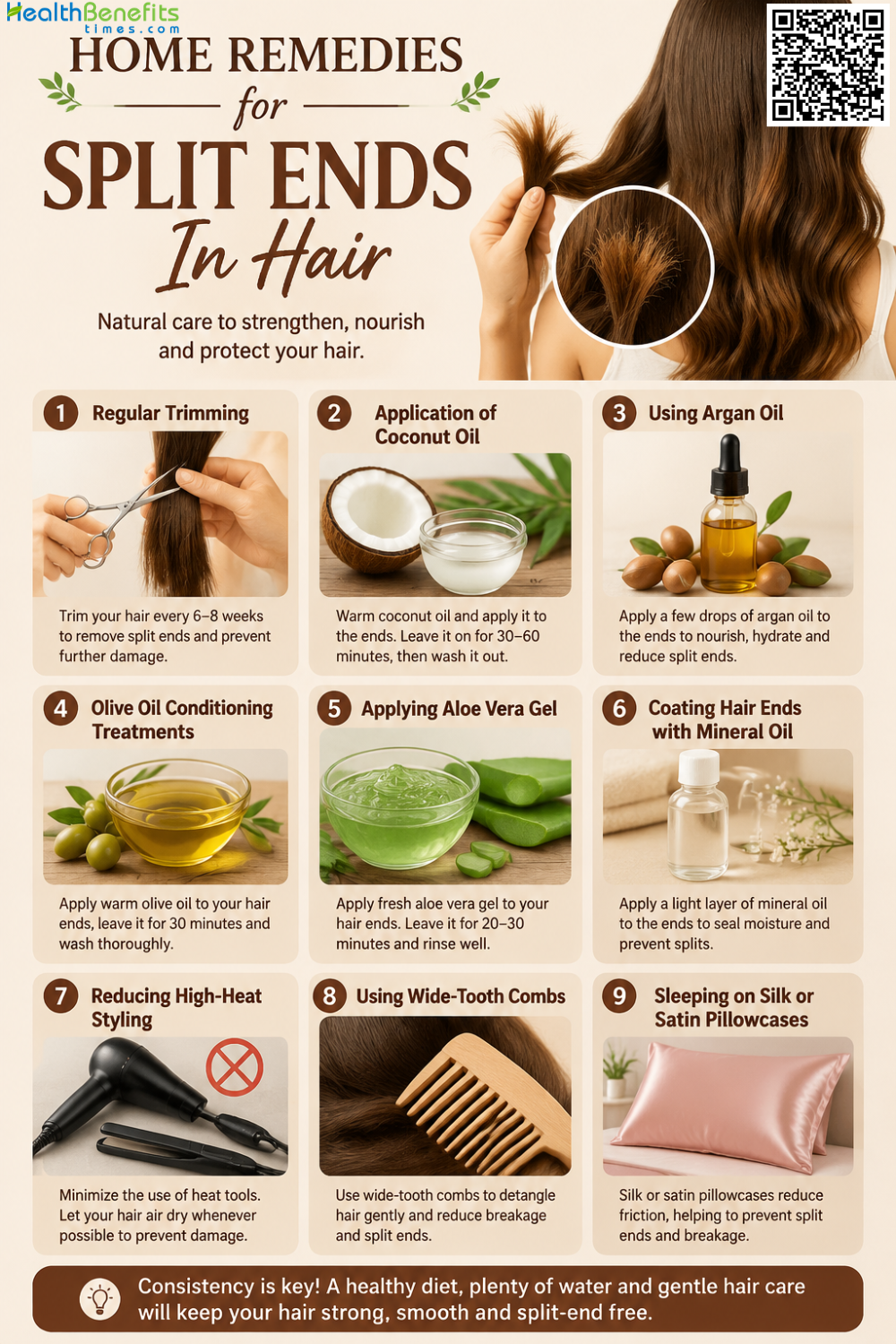
3. Using Argan Oil
How it may help
Argan oil is highly concentrated with nourishing fatty acids and antioxidants. By lightly coating the hair shaft, it improves fiber elasticity and reduces physical friction between strands. This natural lubrication helps seal the overlapping cuticles down, preventing moisture loss and protecting the fragile ends from everyday mechanical damage and splitting.
What research says
Scientific studies indicate that applying argan oil significantly prevents internal protein loss when the hair is exposed to severe oxidative stress 9. Furthermore, microscopic evaluations confirm that argan oil successfully penetrates the hair fiber and physically improves the sealing of the protective cuticle 10.
How to use it safely
Place two to three drops of pure argan oil into your palms and gently rub them together. Lightly press and smooth the oil directly onto the bottom two inches of your damp or dry hair. Do not saturate the hair to avoid a heavy, greasy appearance.
Potential precautions or side effects
While generally safe, topical argan oil may cause allergic skin reactions in sensitive individuals 11. Applying thick layers near the scalp can also clog pores and trigger acne.
4. Olive Oil Conditioning Treatments
How it may help
Olive oil acts as an effective emollient that coats the hair fiber, providing a protective barrier against external environmental stressors. By smoothing the cuticle surface, the oil reduces mechanical friction between strands, which helps prevent further fraying of damaged tips and improves the overall manageability and appearance of the hair.
What research says
Clinical investigations show that olive oil effectively penetrates the hair shaft, increasing fiber elasticity and significantly reducing the risk of fracture caused by mechanical grooming 12. Studies confirm that its fatty acid composition aids in maintaining the structural integrity of the cuticle layer under daily environmental stress 2.
How to use it safely
Warm a small amount of extra virgin olive oil between your palms. Apply it evenly to the bottom few inches of your hair, focusing on the ends. Leave it on for 15 to 30 minutes before washing it out thoroughly with shampoo to ensure no residue remains.
Potential precautions or side effects
Excessive application can leave hair greasy or heavy. If you have a sensitive scalp, avoid direct skin contact to prevent potential irritation or clogged pores.
5. Applying Aloe Vera Gel
How it may help
Aloe vera gel functions as a natural hydrating agent. By delivering moisture directly to the hair shaft, it improves flexibility and reduces the brittleness that often leads to fiber fracture. This consistent hydration helps smooth the raised edges of a damaged cuticle, creating a temporary seal that protects the fragile ends from further mechanical degradation.
What research says
Research indicates that aloe vera contains polysaccharides and various nutrients that contribute to hair surface health and moisture retention 13. Clinical findings suggest that its application can help maintain the integrity of the hair’s protective layer, which is essential for preventing the longitudinal splitting and dryness that characterize severely weathered hair tips 2.
How to use it safely
Apply a small amount of pure, clear aloe vera gel specifically to the ends of damp or dry hair. Work it gently into the tips to ensure even coverage. Leave it to absorb naturally as a leave-in treatment, or rinse it out after 30 minutes if preferred.
Potential precautions or side effects
Some individuals may experience allergic contact dermatitis or mild scalp irritation. Always perform a patch test on a small area of skin before applying it to your hair.
6. Coating Hair Ends with Mineral Oil
How it may help
Mineral oil acts as an inert sealant that forms a water-resistant film over the hair shaft. By coating the ends, it fills gaps in the damaged cuticle and creates a physical barrier that prevents moisture loss and reduces the mechanical friction that causes hair to fray and split during daily styling.
What research says
Scientific studies establish that mineral oil is highly effective at reducing the swelling of the hair fiber by preventing water absorption 2. By maintaining the hair in a more stable, hydrophobic state, mineral oil prevents the cuticle from lifting, which is a primary contributor to the structural breakdown and longitudinal splitting of hair tips 2.
How to use it safely
Apply a very small amount of pure mineral oil to your fingertips and gently press it into the bottom one to two inches of your hair. Use it sparingly on dry hair to seal the ends, ensuring you do not apply it to the scalp or mid-lengths.
Potential precautions or side effects
Mineral oil is highly occlusive; applying it to the scalp can clog pores, leading to acne. Use only on the extreme ends to avoid a heavy, greasy texture.
7. Reducing High-Heat Styling
How it may help
High-heat styling causes rapid moisture evaporation from the hair fiber. This dehydration makes the hair structure brittle and vulnerable to snapping. By reducing heat, you preserve the structural integrity of the internal proteins and prevent the cuticle layer from blistering, peeling, or cracking, which stops the formation of new split ends.
What research says
Clinical evidence confirms that repetitive thermal exposure from appliances like flat irons and blow dryers causes irreversible damage to the hair cortex and cuticle 3. Research shows that temperatures exceeding specific thresholds trigger structural degradation, leading to increased porosity, fiber weakening, and premature splitting of the hair tips 3.
How to use it safely
Whenever possible, allow your hair to air-dry. If you must use heat, always apply a heat-protectant spray first. Use styling tools at the lowest effective temperature setting and avoid passing hot plates over the same section of hair multiple times to minimize thermal stress.
Potential precautions or side effects
Avoid using heat tools on wet or damp hair, as this causes rapid internal water boiling, leading to immediate structural fracturing and severe, permanent fiber damage.
8. Using Wide-Tooth Combs
How it may help
Wide-tooth combs minimize mechanical tension on the hair shaft. Because they have fewer points of contact and wider spacing, they glide through tangles with less force. This reduces the risk of stretching or snapping the hair fibers during detangling, which is critical for preventing further cuticle damage and the development of new split ends.
What research says
Scientific literature confirms that high mechanical force during combing is a primary cause of fiber breakage and cuticle wear 2. Research indicates that tools with wider spacing significantly reduce the frictional force exerted on the hair fiber, thereby lowering the cumulative damage that leads to longitudinal splitting at the hair tips 2.
How to use it safely
Always start detangling at the very ends of your hair, working slowly upward toward the roots in small sections. This prevents knots from tightening. Use the comb gently on damp hair, as wet hair is more prone to stretching and fracture when subjected to excessive force.
Potential precautions or side effects
There are no clinical side effects. However, pulling the comb forcefully through stubborn tangles will cause immediate mechanical damage and exacerbate existing hair splitting.
9. Sleeping on Silk or Satin Pillowcases
How it may help
Silk and satin fabrics possess a smooth, low-friction surface compared to traditional cotton. By reducing the physical drag and abrasion on the hair during the night, these materials prevent the cuticle from becoming snagged or rubbed, which minimizes the cumulative mechanical wear that leads to weakened hair fibers and the development of split ends.
What research says
Environmental weathering and mechanical friction are established causes of cuticle degradation and fiber fracture 1. Although specific clinical trials on pillowcase materials are limited, dermatological consensus emphasizes that minimizing nighttime friction is a standard recommendation to reduce the mechanical damage that leads to structural fraying and splitting of the hair tips 2.
How to use it safely
Replace your standard cotton pillowcases with high-quality silk or satin versions. Ensure you launder the pillowcases according to the manufacturer’s instructions to maintain their smooth surface. Keeping the fabric clean also helps prevent the accumulation of oils and debris that could negatively impact your hair health.
Potential precautions or side effects
There are no known side effects to using these fabrics. However, avoid using abrasive detergents during washing, as they may damage the smooth fibers and increase friction.
Foods to Avoid When You Suffer from Split Ends In Hair
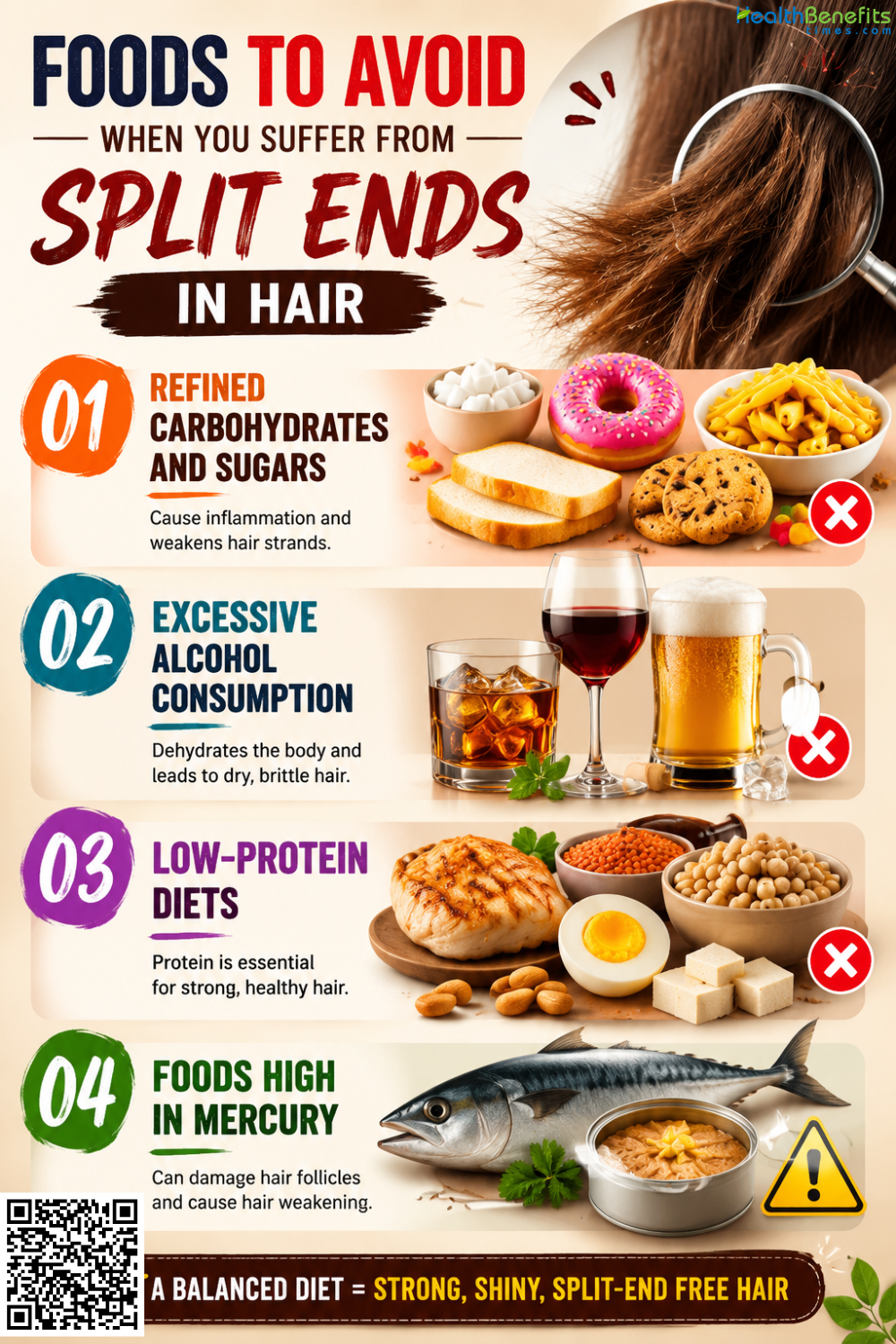
1. Refined Carbohydrates and Sugars
High intake of sugar and refined grains may increase inflammation and blood glucose levels, which can negatively impact systemic health and indirectly influence hair fiber quality 14.
2. Excessive Alcohol Consumption
Alcohol acts as a diuretic, leading to systemic dehydration. Chronic dehydration can reduce the moisture content of the hair shaft, making fibers brittle and prone to breakage 15.
3. Low-Protein Diets
Hair is primarily composed of keratin proteins. Inadequate dietary protein intake can compromise the structural synthesis of hair, leading to weaker fibers that are more susceptible to splitting 16.
4. Foods High in Mercury
Excessive consumption of predatory fish high in mercury can contribute to oxidative stress and heavy metal accumulation, which has been associated with hair thinning and structural fragility 17.
When to See a Doctor When You Suffer from Split Ends In Hair
1. Sudden or Excessive Hair Loss
If increased hair breakage is accompanied by rapid or widespread hair shedding, consult a professional to rule out underlying systemic or metabolic conditions 18.
2. Unexplained Changes in Hair Texture
Significant, sudden shifts in hair quality, such as extreme thinning, brittleness, or texture changes, may indicate nutritional deficiencies or endocrine imbalances requiring clinical investigation 16.
3. Compulsive Hair Pulling
If you struggle with an uncontrollable urge to pull or twist your hair, leading to physical damage and hair loss, seek evaluation for trichotillomania from a specialist 4.
4. Visible Scalp Abnormalities
If hair breakage is localized to areas showing scalp redness, scaling, patches of hair loss, or inflammation, a medical examination is necessary to diagnose potential dermatological conditions 5.
Comments
comments