


Causes of Stiff Neck
1. Cervical Muscle Strain and Overuse
Overworking neck muscles through repetitive movements, heavy lifting, or maintaining awkward postures for prolonged periods frequently triggers acute muscle tension and soreness 1.
2. Poor Ergonomics and Postural Stress
Slouching forward while working at a computer or persistently bending the neck downward to look at mobile devices places chronic mechanical stress on the cervical spine 2.
3. Awkward Sleeping Positions
Sleeping on an unsupportive mattress or using pillows that fail to keep the head aligned with the spine can strain soft tissues overnight, resulting in morning stiffness 1.
4. Age-Related Spinal Degeneration
Wear and tear on the bones and discs in the neck, known as cervical spondylosis, can narrow the spinal canal or compress nerve roots, leading to chronic stiffness and discomfort 3.
5. Acute Physical Trauma
Sudden impacts from motor vehicle accidents or sports injuries can cause whiplash, tearing supporting ligaments and muscles in the neck 1.
Symptoms of Stiff Neck
1. Restricted Range of Motion
Difficulty and discomfort when attempting to turn the head from side to side or tilt it up and down due to localized tissue tightness 1.
2. Localized Muscle Soreness
A persistent dull ache, tenderness, or tightness felt across the muscles of the neck and upper shoulders 2.
3. Associated Headaches
Tension headaches originating at the base of the skull and radiating upward, caused by muscle spasms and strain in the upper cervical region 1.
4. Shoulder and Upper Back Discomfort
Secondary tightness or radiating pain spreading downward into the shoulder blades and upper back muscles as they compensate for neck immobility 3.
Home Remedies for Stiff Neck
1. Applying Heat Therapy
How it may help
Heat therapy dilates blood vessels, which increases local blood circulation and oxygen delivery to tense cervical muscles 4. This enhanced blood flow promotes muscle relaxation, reduces tissue stiffness, and alleviates discomfort associated with acute soft tissue strain 5.
What research says
Clinical studies published in medical journals indicate that superficial heat application provides significant short-term pain relief and improves functional range of motion in patients experiencing acute musculoskeletal discomfort 4. Research confirms that thermal therapy effectively relaxes contracted muscle fibers and eases localized tension 5.
How to use it safely
Apply a heating pad, warm compress, or heat wrap set to a comfortable, moderate temperature directly to the affected neck area for fifteen to twenty minutes at a time 4. Ensure a protective cloth barrier is placed between the heat source and your skin to prevent thermal irritation 5.
Potential precautions or side effects
Excessive heat can cause skin burns or worsen acute inflammation. Never fall asleep while using an electric heating pad 4.
2. Applying Cold Therapy
How it may help
Cold therapy constricts local blood vessels, which reduces blood flow to the affected area and helps numb sharp pain 4. This process decreases acute swelling, limits local inflammation, and slows down nerve impulse conduction around strained cervical tissues 5.
What research says
Clinical studies published in medical journals indicate that targeted cold application effectively manages acute musculoskeletal discomfort by dampening inflammatory responses 4. Research confirms that short-term cryotherapy helps control initial tissue irritation and provides temporary relief from sudden muscle spasms 5.
How to use it safely
Wrap an ice pack, frozen gel pack, or bag of frozen vegetables in a thin towel and apply it gently to the sore neck area for fifteen to twenty minutes 4. Allow the skin temperature to return to normal between successive applications 5.
Potential precautions or side effects
Direct skin contact with ice can cause frostbite or tissue damage. Never apply frozen packs directly to bare skin or leave them on overnight 4.
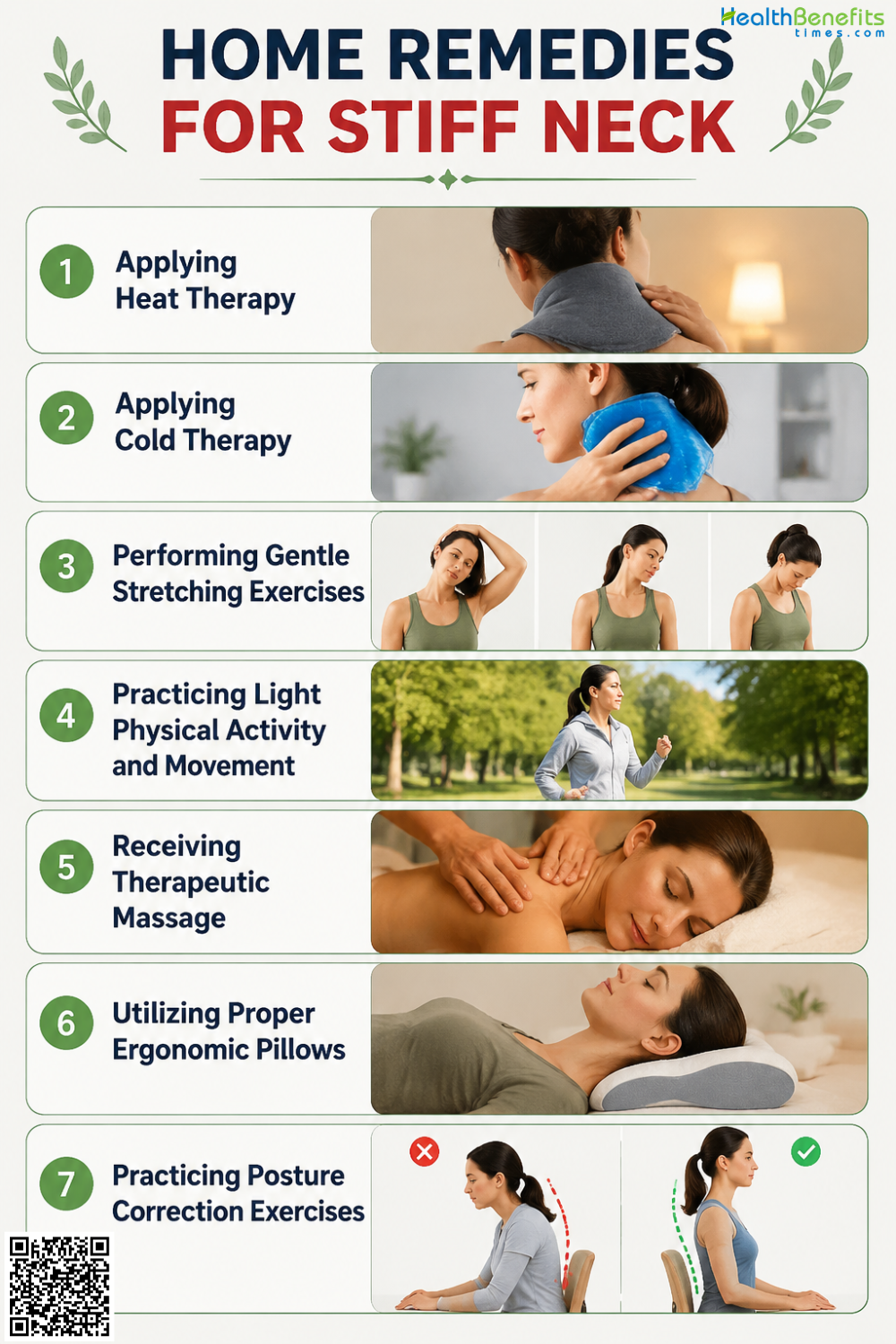
3. Performing Gentle Stretching Exercises
How it may help
Gentle stretching exercises elongate tight cervical muscles, relieve mechanical tension, and restore flexibility to the upper spine 2. This movement increases local blood circulation, promotes muscle relaxation, and gradually improves overall range of motion in the neck 3.
What research says
Clinical studies published in medical journals indicate that structured cervical stretching programs significantly reduce pain intensity and improve mobility in individuals with neck stiffness 2. Research confirms that consistent, low-load stretching effectively decreases muscle spasms and accelerates functional recovery 3.
How to use it safely
Perform slow, controlled neck movements, such as gentle side-to-side turns or ear-to-shoulder tilts, holding each stretch briefly without forcing the motion 2. Stop immediately if you feel sharp pain or increased discomfort 3.
Potential precautions or side effects
Aggressive or sudden stretching can tear muscle fibers and worsen injury. Avoid quick jerking movements or hyperextending your neck 2.
4. Practicing Light Physical Activity and Movement
How it may help
Light physical activity prevents joint stiffness and improves systemic blood circulation, delivering essential oxygen and nutrients to recovery areas 3. Consistent movement helps lubricate cervical joints, reduces muscle guarding, and prevents prolonged tissue immobilization 2.
What research says
Clinical studies published in medical journals indicate that maintaining light mobility significantly shortens recovery times for musculoskeletal neck pain 3. Research confirms that active management outperforms prolonged physical rest in restoring functional capacity and reducing long-term discomfort 2.
How to use it safely
Engage in low-impact activities like short, casual walks or easy shoulder rolls throughout the day 3. Keep your movements slow, fluid, and well within a comfortable, pain-free range of motion 2.
Potential precautions or side effects
Overexertion can trigger defensive muscle spasms and intensify pain. Avoid high-impact workouts or heavy lifting during flare-ups 3.
5. Receiving Therapeutic Massage
How it may help
Therapeutic massage applies mechanical pressure to soft tissues, which reduces muscle tension, relieves spasms, and improves local blood circulation in the neck 6. This physical manipulation helps release tight knots, lowers stress hormones, and restores comfortable range of motion 3.
What research says
Clinical studies published in medical journals indicate that professional massage therapy significantly decreases pain intensity and improves functional mobility in patients with chronic or acute neck discomfort 6. Research confirms that targeted soft tissue manipulation provides measurable relief and enhances overall physical recovery 3.
How to use it safely
Schedule sessions with a certified, licensed massage therapist who specializes in clinical or orthopedic techniques 6. Communicate your comfort level clearly during the session to ensure the applied pressure remains gentle and non-painful 3.
Potential precautions or side effects
Aggressive manipulation can tear muscle fibers or aggravate inflammation. Avoid deep tissue pressure over acute trauma sites 6.
6. Utilizing Proper Ergonomic Pillows
How it may help
Ergonomic pillows maintain proper cervical alignment during sleep, preventing unnatural neck bending and reducing sustained mechanical stress on supporting soft tissues 3. This continuous spinal support keeps neck muscles relaxed throughout the night and prevents morning stiffness 2.
What research says
Clinical studies published in medical journals indicate that specialized cervical support pillows significantly reduce morning neck pain and improve sleep quality for individuals with spinal stiffness 3. Research confirms that proper nocturnal alignment decreases muscular strain compared to standard unsupportive bedding 2.
How to use it safely
Select a contoured ergonomic or memory foam pillow designed to support the natural curve of your neck while keeping your spine straight 3. Adjust your sleeping position to rest primarily on your back or side rather than your stomach 2.
Potential precautions or side effects
An improperly fitted pillow can increase spinal tension and worsen pain. Discontinue use if discomfort persists.
7. Practicing Posture Correction Exercises
How it may help
Posture correction exercises strengthen weak upper back and neck muscles, relieving chronic mechanical strain on the cervical spine 2. These movements restore proper head alignment over the shoulders, reducing abnormal muscle overloading and preventing future tension flare-ups 3.
What research says
Clinical studies published in medical journals indicate that targeted postural training significantly reduces neck pain intensity and improves functional movement outcomes 2. Research confirms that consistent ergonomic and postural correction exercises effectively correct muscular imbalances associated with long-term discomfort 3.
How to use it safely
Perform controlled chin tucks and shoulder blade squeezes daily, holding each position briefly while maintaining smooth breathing 2. Keep your posture upright during work hours and adjust desk screens to eye level 3.
Potential precautions or side effects
Forcing muscles into rigid postures can cause fatigue and strain. Stop immediately if you experience sharp pain.
Foods to Avoid When You Suffer from Stiff Neck
1. Ultra-Processed and Refined Foods
Consuming highly processed items promotes systemic inflammation and oxidative stress, which can worsen muscle tenderness and joint discomfort 7.
2. Added Sugars and Sweetened Beverages
High sugar intake triggers inflammatory pathways in the body, potentially increasing sensitivity and delaying recovery from muscle strain 8.
3. Alcoholic Beverages
Alcohol promotes systemic dehydration and impairs tissue recovery, hindering the body’s natural capacity to repair strained cervical muscles 9.
When to See a Doctor When You Struggle from Stiff Neck
1. Stiffness Following Major Trauma
Seek immediate medical evaluation if neck stiffness occurs after a high-impact motor vehicle accident, a severe fall, or a sports injury 1.
2. Neurological Symptoms and Numbness
Consult a physician promptly if neck pain is accompanied by radiating numbness, tingling, or weakness in your arms, hands, or fingers 3.
3. High Fever and Severe Headaches
Go to an emergency room immediately if a stiff neck comes with a high fever, severe headache, confusion, or sensitivity to bright light 1.
4. Persistent Pain Lacking Improvement
Schedule an appointment with a healthcare provider if your neck stiffness and associated discomfort fail to improve after two weeks of home care 2.
Comments
comments