

Causes of Tonsil stones
- Accumulation of Cellular Debris: The primary cause of tonsil stones is the trapping of dead epithelial cells, food particles, and mucus within the deep crevices of the tonsils, which gradually calcify into hard masses over time 1.
- Bacterial Biofilm Formation: Anaerobic bacteria thrive inside the oxygen-deprived tonsil crypts, forming thick biofilms that merge with trapped organic waste to build the solid structure of the stone 2.
- Chronic Tonsillitis: Repeated episodes of tonsil inflammation chronically enlarge the tonsillar crypts, creating deeper, wider pockets that easily catch and hold the foreign materials necessary for stone development 4.
- Poor Oral Hygiene: Failing to brush and floss regularly leaves excess food remnants and plaque in the oral cavity, directly supplying the raw bacterial and organic materials that harden into tonsilloliths 5.
- Decreased Saliva Production: Dry mouth conditions reduce the natural flow of saliva required to continuously wash away oral debris, allowing dead cells and microbes to stagnate and calcify in the back of the throat 6.
Symptoms of Tonsil stones
- Chronic Bad Breath (Halitosis): Tonsil stones produce severe, chronic bad breath because the anaerobic bacteria trapped within the calcifications continuously release foul-smelling volatile sulfur compounds 1.
- Foreign Body Sensation: Individuals frequently experience a persistent, uncomfortable feeling that an object is lodged in the back of the throat, which is caused by the physical mass of the stone pressing against delicate tonsillar tissues 4.
- Persistent Sore Throat: The presence of hardened debris creates localized inflammation within the tonsil crypts, resulting in a dull, ongoing sore throat that often mimics the symptoms of a standard viral or bacterial infection 2.
- Visible White or Yellow Formations: Solid white or yellowish lumps often become clearly visually apparent on the surface of the tonsils when the calcified materials grow large enough to protrude from the deep tissue crevices 1.
- Referred Ear Pain: Because the tonsils and the ears share specific nerve pathways, the localized inflammation caused by embedded tonsil stones frequently triggers a dull, aching pain in the ear, even when no active ear infection is present 4.
- Difficulty Swallowing (Dysphagia): In cases involving exceptionally large tonsilloliths, the stones can cause severe tissue swelling or physical obstruction, making it noticeably painful or difficult to comfortably swallow solid foods and liquids 3.
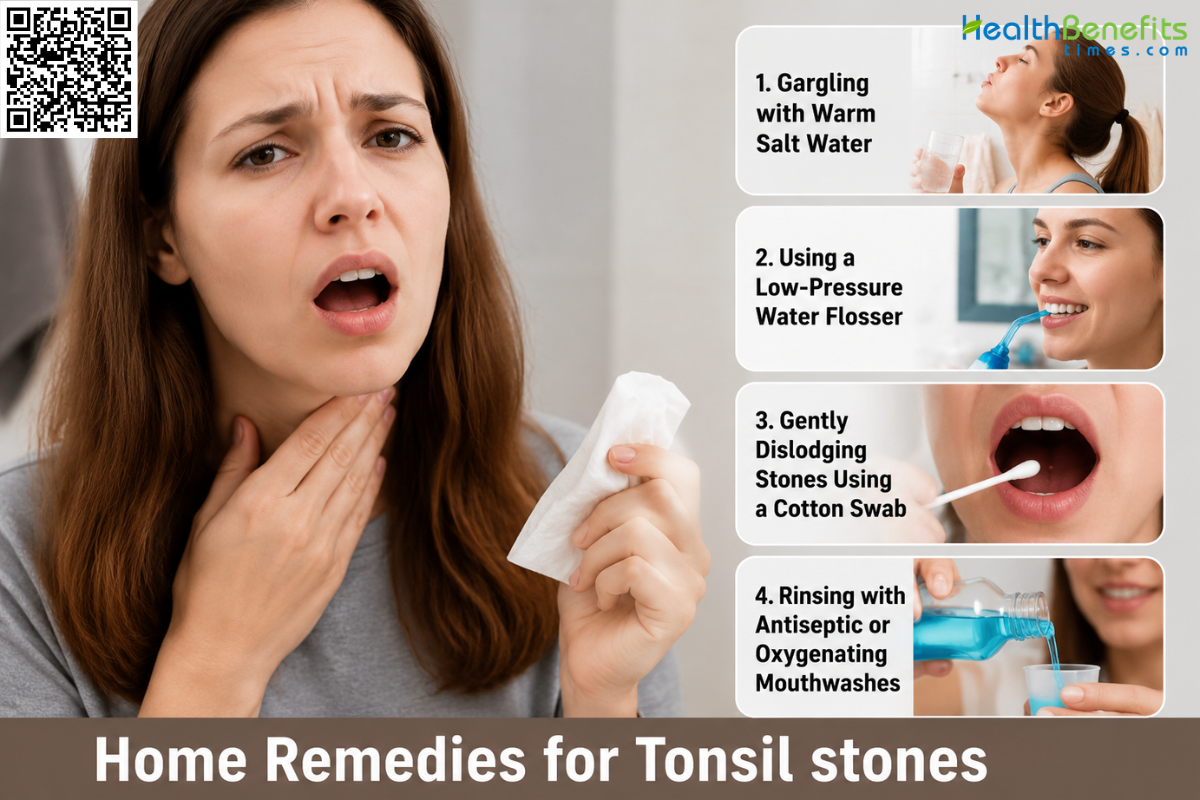
Home Remedies for Tonsil stones
1. Gargling with Warm Salt Water
How it may help
Gargling with warm salt water alters the chemical environment of the mouth, which reduces the buildup of oral bacteria responsible for forming tonsil stones. The mechanical action of the liquid washing over the tonsils also helps loosen trapped debris and soothes irritated throat tissues 4.
What research says
Clinical guidelines endorse saline gargles as an effective, conservative first-line treatment for managing tonsil stones. Medical literature confirms that this simple intervention successfully dislodges smaller calcifications, neutralizes foul odors caused by bacteria, and safely alleviates localized throat discomfort without the need for immediate surgical removal 1.
How to use it safely
You should dissolve half a teaspoon of plain salt into eight ounces of warm water. Tilt your head back and forcefully gargle the mixture deep in your throat for ten to fifteen seconds before spitting it out. Repeat this process daily after meals 4.
Potential precautions or side effects
Avoid swallowing the salt water, as ingesting excess sodium causes stomach upset and dehydration. Stop gargling if the mixture causes severe stinging or worsens your throat pain 4.
2. Using a Low-Pressure Water Flosser
How it may help
A low-pressure water flosser directs a gentle stream of water into the tonsil crevices to flush out trapped food particles, dead cells, and bacteria. This mechanical irrigation prevents debris from accumulating and hardening into stones, and it safely dislodges smaller, pre-existing stones without scratching the throat tissues 7.
What research says
Medical literature indicates that oral irrigation devices are an effective conservative treatment for managing tonsil stones. Clinical experts recognize that safely flushing the tonsillar crypts with a water flosser significantly improves oral hygiene, removes the materials that form calcifications, and reduces the need for surgical interventions like a tonsillectomy 7.
How to use it safely
You should set the water flosser to the lowest pressure setting to avoid damaging delicate tissues. Stand over a sink, carefully aim the stream just outside the tonsil pockets, and gently spray to lift the debris out. Always use clean, lukewarm water 7.
Potential precautions or side effects
Never use high-pressure settings, as excessive force can cause severe pain, tissue tearing, and throat bleeding. If bleeding occurs, stop immediately and contact your doctor for an evaluation 7.
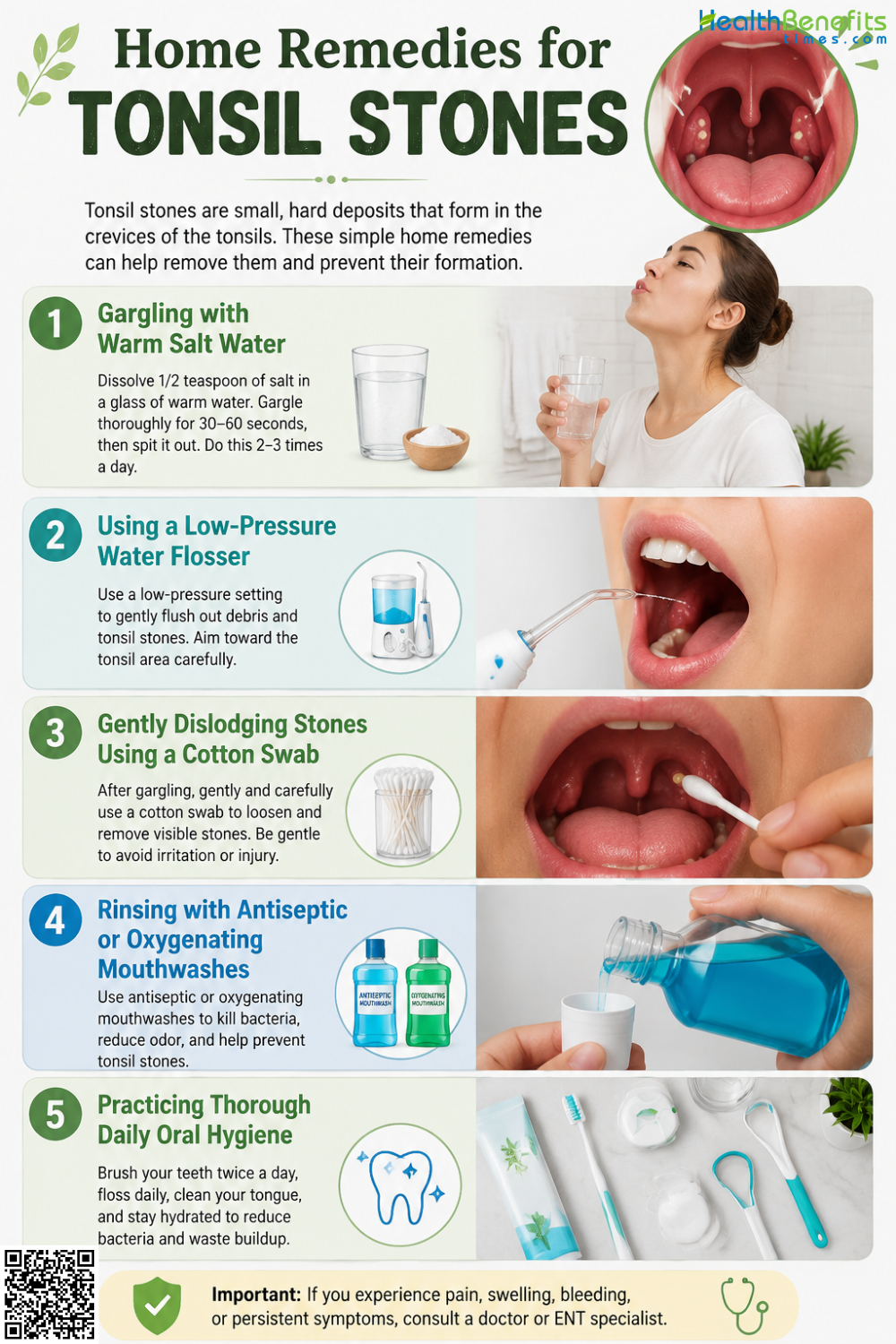
3. Gently Dislodging Stones Using a Cotton Swab
How it may help
Gently applying pressure with a cotton swab provides a targeted, mechanical method to extract visible tonsil stones from the tonsillar crypts. The soft tip physically pushes the hardened debris up and out of the tissue folds, immediately relieving throat discomfort and eliminating the source of foul odors 1.
What research says
Clinical literature notes that manual extraction of superficial tonsil stones using a soft instrument is a common conservative treatment. Medical experts emphasize that this technique successfully removes small, easily accessible calcifications, though they strongly caution against aggressive probing, which frequently causes tonsil trauma, bleeding, and localized tissue infection 2.
How to use it safely
You should dampen the cotton swab with water to soften the tip. Using a well-lit mirror, gently press the swab against the tissue directly next to the stone, pushing upward to pop it out. You must never push the swab deeply into the tonsil pockets 1.
Potential precautions or side effects
You must stop immediately if the tonsils bleed or cause severe pain. Probing too aggressively easily causes dangerous tissue tearing, secondary infections, or a strong gag reflex 2.
4. Rinsing with Antiseptic or Oxygenating Mouthwashes
How it may help
Antiseptic and oxygenating mouthwashes neutralize the foul-smelling sulfur compounds produced by trapped oral bacteria. By actively destroying these anaerobic bacteria in the mouth and throat, these rinses prevent the microbes from accumulating and combining with dead cellular debris to form new tonsil stones 4.
What research says
Clinical research demonstrates that antimicrobial and oxygenating mouth rinses effectively decrease oral bacterial loads and significantly reduce chronic bad breath associated with tonsilloliths. Medical evidence indicates regular use helps manage conservative treatment by stopping the microbial growth necessary for calcified stones to develop 1.
How to use it safely
You should vigorously swish the mouthwash and gargle it near the back of your throat for thirty to sixty seconds before spitting it out. Use an alcohol-free formula once or twice daily after brushing your teeth to maintain optimal oral hygiene 4.
Potential precautions or side effects
You must avoid alcohol-based mouthwashes, as they severely dry out mouth tissues, which accelerates bacterial growth and increases the likelihood of future tonsil stones forming 2.
5. Practicing Thorough Daily Oral Hygiene
How it may help
Thorough daily oral hygiene physically removes trapped food particles, plaque, and dead cells before they can accumulate in the back of the throat. By reducing the overall amount of bacteria and debris in the mouth, this routine eliminates the raw materials needed to form hard tonsil stones 4.
What research says
Clinical experts conclude that poor oral hygiene directly correlates with an increased frequency of tonsil stone formation. Medical literature confirms that maintaining strict brushing and flossing routines significantly lowers oral bacterial loads, successfully reducing both the occurrence of calcifications and the associated chronic bad breath 1.
How to use it safely
You should brush your teeth twice daily using a soft-bristled toothbrush and fluoride toothpaste. Incorporate daily dental flossing to remove trapped food, and use a tongue scraper to clean the back of your tongue where stone-causing bacteria frequently accumulate 4.
Potential precautions or side effects
You must brush gently, as scrubbing too hard damages tooth enamel and irritates the gums. Avoid scraping your tongue too aggressively to prevent painful tissue irritation and bleeding 8.
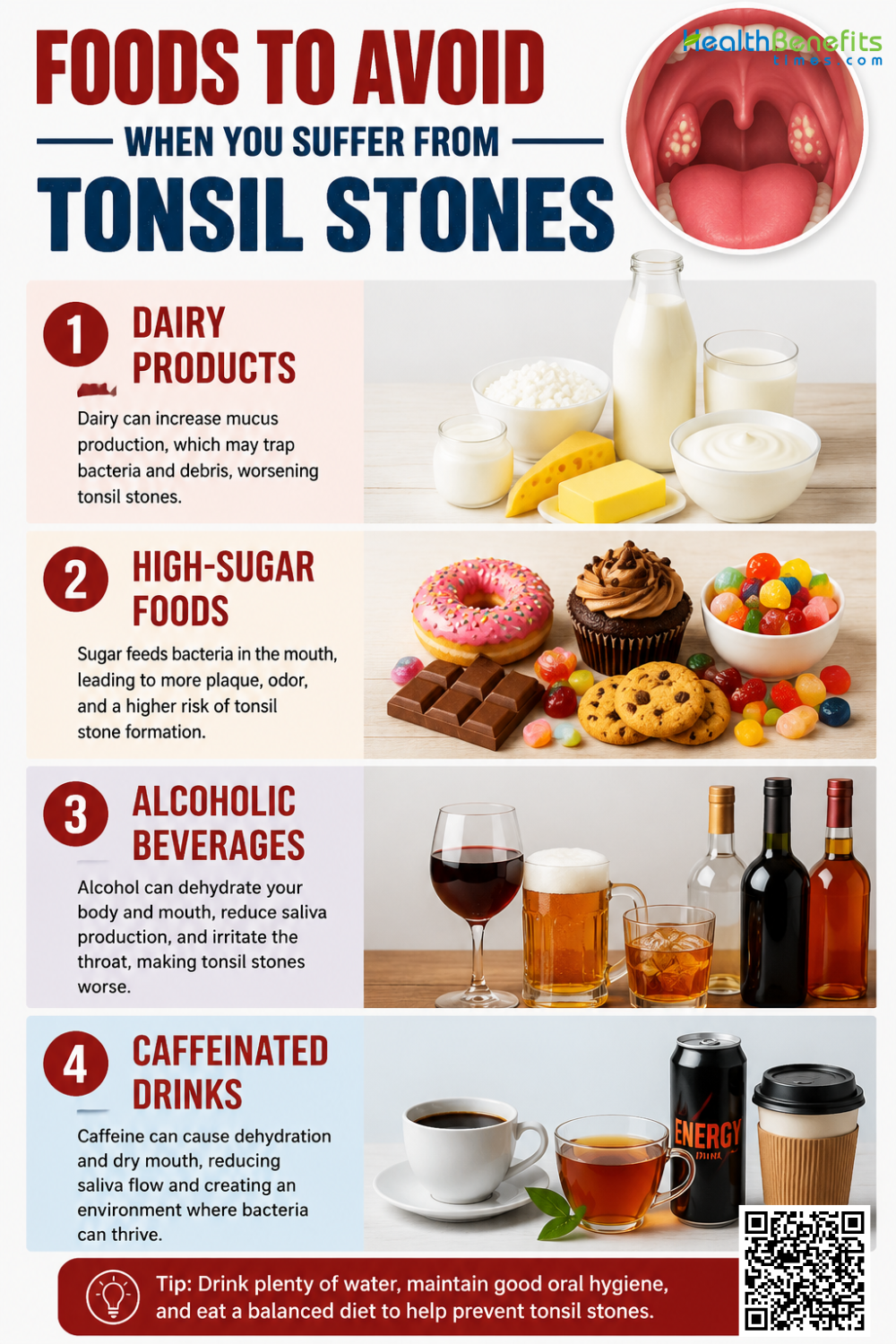
Foods to Avoid When You suffer from Tonsil stones.
1. Dairy Products
Dairy contains specific proteins that thicken oral mucus, trapping dead cells and feeding anaerobic bacteria to accelerate the formation of calcified tonsil stones 1.
2. High-Sugar Foods
Sugary foods rapidly fuel oral bacterial overgrowth. This excess bacteria accumulates within tonsil crevices, producing the foul-smelling sulfur compounds directly associated with tonsillolith development 4.
3. Alcoholic Beverages
Alcohol severely dehydrates the oral cavity, reducing protective saliva flow. Without sufficient saliva to wash away food particles, cellular debris rapidly accumulates in the tonsil pockets 6.
4. Caffeinated Drinks
Caffeinated beverages reduce natural saliva production. This creates a dry oral environment, preventing the mouth from properly flushing away the cellular waste that ultimately hardens into stones 6.
When to see Doctor when you suffer from Tonsil stones.
1. Severe Throat Pain or Swelling
Seek immediate medical evaluation if tonsil stones cause severe pain, tonsil swelling, or difficulty swallowing, as these symptoms strongly indicate an active bacterial infection or abscess 4.
2. Inability to Remove Large Stones
Consult an otolaryngologist if a stone becomes too large or deeply embedded to remove safely at home, requiring professional extraction to prevent delicate tissue damage 1.
3. Recurrent Tonsil Infections
You should see a doctor if stones are accompanied by frequent bouts of tonsillitis, which may necessitate surgical interventions like a tonsillectomy to resolve chronic inflammation 3.
4. Bleeding from the Tonsils
Contact a healthcare provider immediately if you experience spontaneous bleeding from the tonsil crypts or bleeding after attempting home removal, as this risks serious secondary infections 2.
5. Persistent Ear Pain
Seek medical care if tonsil stones trigger chronic earaches. Shared nerve pathways mean persistent ear pain often signals an advancing, untreated throat complication requiring clinical intervention 4.
Comments
comments