


Causes of Frequent Urination
1. Urinary Tract Infections (UTIs)
Bacteria invading the urinary tract cause inflammation of the bladder lining, which triggers a persistent urge to urinate even when the bladder contains very little fluid 3.
2. Diabetes
High levels of sugar in the blood force the kidneys to work harder to filter and absorb the excess glucose; when the kidneys cannot keep up, the sugar is excreted into the urine along with body fluids, leading to increased volume and frequency 4.
3. Prostate Conditions
In men, an enlarged prostate gland can press against the urethra, obstructing the natural flow of urine and preventing the bladder from emptying completely, which results in the need for more frequent trips to the restroom 5.
4. Overactive Bladder (OAB)
This condition is characterized by involuntary contractions of the bladder muscle, causing sudden, uncontrollable urges to urinate that occur frequently throughout the day and night 6.
5. Diuretic Use
Medications prescribed to treat high blood pressure or reduce fluid retention, known as diuretics, specifically act on the kidneys to increase the output of urine from the body 7.
Symptoms of Frequent Urination
1. Increased Urination Frequency
The most prominent indicator is the need to urinate significantly more often than usual, typically defined as more than eight times in a 24-hour period while maintaining normal fluid intake.
2. Urgency
This involves a sudden, compelling, and difficult-to-postpone desire to pass urine, often causing concern regarding the ability to reach a restroom in time.
3. Nocturia
This specifically refers to waking up one or more times during the night to empty the bladder, which frequently disrupts sleep quality and patterns.
4. Dysuria
Some individuals experience a sensation of burning, stinging, or pain during the act of urination, which often indicates localized irritation or infection within the urinary tract.
5. Incontinence
The involuntary leakage of urine may occur due to the bladder’s inability to hold contents until it is convenient to visit a restroom, often triggered by urgency or physical pressure 8.
6. Feeling of Incomplete Emptying
Despite just urinating, the bladder may still feel full or as though it has not completely emptied, prompting the immediate need to try again shortly thereafter.
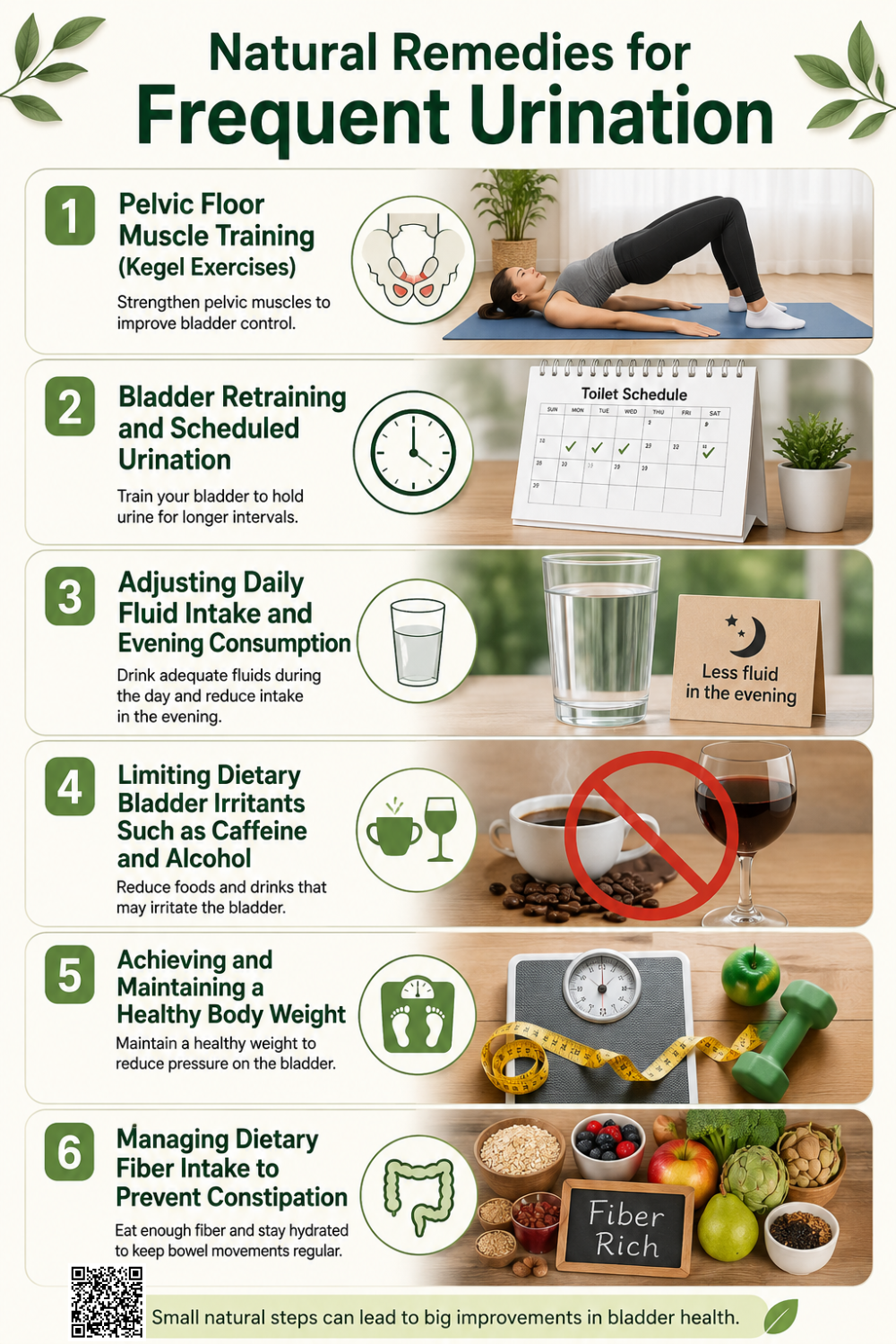
1. Pelvic Floor Muscle Training (Kegel Exercises)
How It May Help
Pelvic floor muscle training strengthens the specific group of muscles that support the bladder and urethra. By building endurance in these muscles, individuals improve their physical capacity to hold urine and can better suppress the sudden, overwhelming urges that lead to frequent restroom visits.
What Research Says
Clinical evidence establishes pelvic floor muscle training as a highly effective, first-line treatment for overactive bladders. Studies demonstrate that consistent, targeted exercise of these muscles significantly reduces daily urination frequency and decreases episodes of unintentional urine leakage in both men and women 9.
How to Use It Safely
To perform these safely, first ensure your bladder is completely empty. Squeeze the muscles you would use to stop urination, hold the tension for three to five seconds, and relax. Repeat this cycle ten times, three times daily, while keeping your stomach and leg muscles relaxed.
Potential Precautions or Side Effects
Never practice these exercises while actively urinating. Doing so disrupts natural bladder functions and can lead to incomplete emptying, which directly increases the risk of urinary tract infections.
2. Bladder Retraining and Scheduled Urination
How It May Help
Bladder retraining works by gradually stretching the bladder muscle to hold larger amounts of urine. This behavioral technique helps calm overactive nerve signals, training the body to consistently delay the urge to urinate and extending the time between necessary bathroom visits.
What Research Says
Clinical guidelines recognize bladder retraining as a primary, highly effective behavioral therapy for managing frequent urination. Evidence shows that maintaining a strict voiding schedule significantly improves bladder capacity, reduces total daily bathroom visits, and helps suppress uncontrollable urgency signals 10.
How to Use It Safely
Start by keeping a daily diary to track your normal urination patterns. Schedule bathroom visits at specific, fixed intervals, such as every hour. Gradually increase the time between these visits by 15 minutes each week until you can comfortably wait three to four hours.
Potential Precautions or Side Effects
Avoid extending the time intervals too rapidly. Holding urine for excessively long periods before your body is ready can cause physical discomfort and increase your risk of urinary tract infections.
3. Adjusting Daily Fluid Intake and Evening Consumption
How It May Help
Modifying fluid consumption directly reduces the volume of urine the kidneys produce. Spacing drinks evenly prevents rapid bladder filling, while restricting evening fluids minimizes nighttime urine production, effectively decreasing sleep disruptions caused by the sudden urge to urinate.
What Research Says
Clinical guidelines support fluid management as a standard behavioral therapy. Evidence confirms that regulating total fluid volume and stopping beverage consumption prior to sleep significantly reduces nighttime voiding and overall daily urination frequency without negatively impacting general health.
How to Use It Safely
Consume water steadily in smaller amounts across the day instead of drinking large quantities at once. Stop drinking all fluids about two hours before you go to sleep. Always ensure your urine remains pale yellow to maintain proper hydration.
Potential Precautions or Side Effects
Excessive fluid restriction causes dehydration and creates highly concentrated urine. This concentrated waste irritates the bladder lining, which can paradoxically increase the immediate urge to urinate.
4. Limiting Dietary Bladder Irritants Such as Caffeine and Alcohol
How It May Help
Caffeine and alcohol act as natural diuretics, prompting the kidneys to produce excess urine. Furthermore, these substances directly irritate the inner lining of the bladder, which can trigger involuntary muscle spasms. Eliminating them calms the bladder muscle and reduces urine volume, successfully decreasing both urgency and frequency.
What Research Says
Clinical evidence demonstrates that dietary modifications involving the restriction of caffeine and alcohol significantly improve bladder control. Research concludes that eliminating these specific chemical irritants reduces the frequency of urination and sudden urgency episodes, making dietary adjustment a recognized first-line behavioral therapy for overactive bladder management.
How to Use It Safely
Gradually reduce your daily intake of coffee, caffeinated tea, and alcoholic beverages over several weeks to avoid physical withdrawal. Substitute these drinks with plain water. Monitor your symptoms closely, and consider limiting other potential dietary irritants like citrus juices, artificial sweeteners, and spicy foods.
Potential Precautions or Side Effects
Abruptly stopping caffeine consumption can trigger intense withdrawal symptoms, including severe headaches, persistent fatigue, and irritability. Always taper your dietary intake slowly rather than quitting these beverages all at once.
5. Achieving and Maintaining a Healthy Body Weight
How It May Help
Carrying excess body weight places constant physical pressure on the bladder and surrounding pelvic floor muscles. This downward force can compress the bladder, reducing its natural storage capacity. Shedding extra weight relieves this chronic pressure, which allows the bladder to expand fully and reduces sudden, uncontrollable urges to urinate.
What Research Says
Clinical guidelines recognize weight reduction as an effective behavioral treatment for bladder control problems in overweight individuals. Research concludes that a moderate weight loss of just five to ten percent of total body mass significantly decreases both the daily frequency of urination and the severity of unexpected urine leakage.
How to Use It Safely
Adopt a steady, sustainable approach by eating balanced meals and engaging in regular physical activity. Aim to lose one to two pounds per week through standard portion control and low-impact exercise. Always consult a healthcare provider to create a personalized weight management plan that suits your specific medical history.
Potential Precautions or Side Effects
Avoid extreme diets or unverified weight-loss supplements. Rapid weight loss can cause severe nutritional deficiencies and generalized muscle loss, which may actually weaken the pelvic floor and worsen bladder symptoms.
6. Managing Dietary Fiber Intake to Prevent Constipation
How It May Help
The rectum and bladder share close proximity within the pelvic cavity. Chronic constipation causes hard stool to accumulate and press directly against the bladder. This constant physical pressure reduces the bladder’s maximum holding capacity and triggers erratic nerve signals, causing frequent, unexpected urges to urinate.
What Research Says
Clinical guidelines identify chronic constipation as a significant contributing factor to overactive bladder symptoms. Evidence shows that establishing regular bowel movements through adequate dietary fiber intake relieves internal pelvic pressure, which successfully decreases daily urination frequency and helps restore normal bladder nerve function.
How to Use It Safely
Gradually introduce more fiber-rich foods, such as whole grains, legumes, fruits, and leafy vegetables, into your daily meals. Increase your intake slowly over a few weeks to let your digestive system adjust. You must drink adequate water, as fiber requires fluid to successfully soften stool.
Potential Precautions or Side Effects
Increasing dietary fiber too rapidly often causes severe intestinal gas, abdominal bloating, and stomach cramps. Always pair increased fiber consumption with proper hydration to prevent potential bowel blockages.

1. Caffeinated Beverages
Caffeine acts as a strong diuretic and chemically irritates the bladder lining, significantly increasing both urine production and involuntary muscle spasms.
2. Alcoholic Drinks
Alcohol suppresses antidiuretic hormones, forcing the kidneys to produce excess urine while simultaneously irritating the bladder muscle, worsening urgency and frequency.
3. Citrus Fruits and Juices
The high acidity in oranges, grapefruits, and lemons directly irritates the inner lining of the bladder, triggering erratic nerve signals and frequent urination.
4. Tomato-Based Products
Similar to citrus, tomatoes contain high levels of natural acid that irritate the bladder wall, which worsens overall symptoms of an overactive bladder.
5. Spicy Foods
Foods containing chili peppers or intense spices inflame the bladder lining, provoking sudden muscle contractions and an immediate, uncontrollable urge to urinate.
6. Artificial Sweeteners
Synthetic sweeteners commonly found in diet beverages alter bladder function and irritate its lining, leading to an increased frequency of restroom visits.
When To See a Doctor When You Suffer from Frequent Urination
1. Blood in the Urine
Medical evaluation is required if urine appears pink, red, or dark brown, as this indicates internal bleeding within the urinary tract system 11.
2. Fever and Back Pain
The presence of a fever, chills, or pain in the lower back or sides suggests a severe kidney infection requiring immediate clinical treatment 12.
3. Painful Urination
Experiencing a sharp burning or stinging sensation while urinating strongly indicates an active bacterial infection or localized inflammation that requires prescription therapy.
4. Unexplained Weight Loss and Thirst
Frequent urination accompanied by extreme thirst, chronic fatigue, or sudden weight loss are primary clinical indicators of undiagnosed diabetes requiring metabolic testing.
5. Unusual Genital Discharge
Any abnormal fluid discharge from the penis or vagina accompanying frequent urination suggests a potential localized infection or significant reproductive tract inflammation.
6. Inability to Empty the Bladder
Sudden difficulty initiating a urine stream or feeling that the bladder remains full indicates a physical obstruction requiring urgent urological intervention 13.
Comments
comments