


Composition of Apple Cider Vinegar
Apple cider vinegar (ACV) is primarily composed of acetic acid, water, and trace nutrients, including vitamins and minerals from apples. ACV also contains malic acid and citric acid, which enhance its digestive benefits by promoting enzyme activity. (7) The presence of probiotics, derived from the fermentation process, supports gut health and digestion. (8) Additionally, phenolic compounds in ACV provide antioxidant effects, further contributing to its nutritional value. (9)
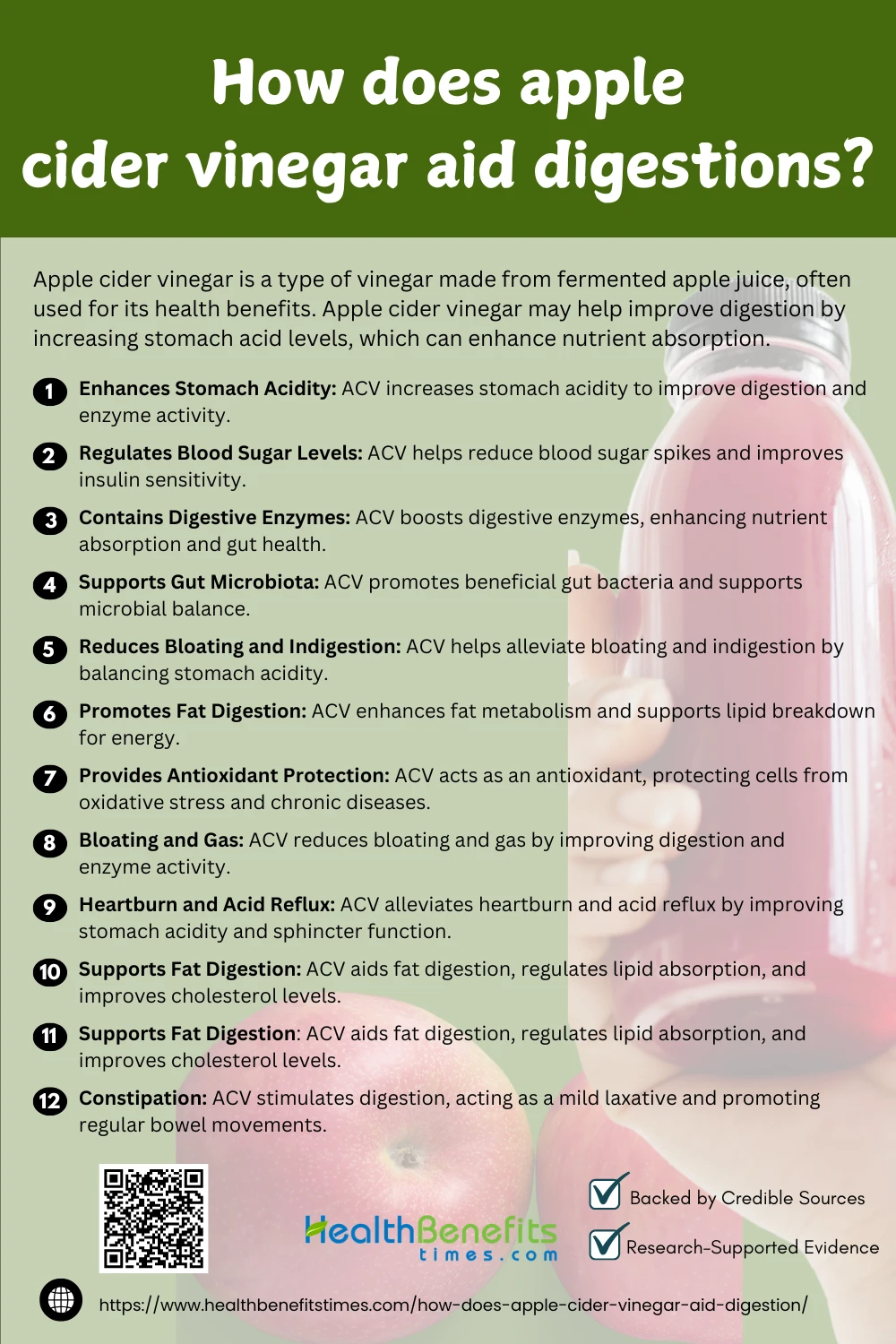
How does apple cider vinegar support digestion?
If you’ve ever wondered how apple cider vinegar (ACV) can give your digestion a boost, you’re not alone. Known as a versatile kitchen staple, ACV isn’t just for salad dressings—it’s packed with health benefits that can transform your gut health. Let’s explore the top reasons why this tangy tonic deserves a spot in your daily routine.
1. Enhances Stomach Acidity
Apple cider vinegar (ACV) has been shown to enhance stomach acidity and improve digestion through its acetic acid content, which aids in breaking down food more effectively. Research highlights its potential in managing delayed gastric emptying in diabetics. (10) Studies also support ACV’s protective role against gastric ulcers by increasing acid secretion and enzyme activity. ACV’s impact extends to metabolic health, improving fatty acid oxidation and glucose metabolism. (11) Further, systematic reviews detail its safety and benefits for gut health and body weight regulation. (12) In animal studies, ACV has enhanced digestive enzyme activity and immunity. (13) Effervescent ACV formulations have shown promise in reducing obesity-related complications. (14) Lastly, a clinical trial confirmed ACV’s effects on acidity and dosage variations. (15)
2. Regulates Blood Sugar Levels
Apple cider vinegar (ACV) demonstrates significant potential in regulating blood sugar levels. Studies show its ability to reduce postprandial glucose by improving insulin sensitivity. (5) ACV’s acetic acid content inhibits carbohydrate digestion, lowering glycemic spikes. (11) Clinical trials confirm its efficacy in improving HbA1c levels and lipid profiles. (16) Regular ACV consumption has also shown a positive impact on metabolic markers. (17) Systematic reviews further underscore its benefits for glycemic control 19, particularly in diabetes management. (18)
3. Contains Digestive Enzymes
Apple cider vinegar (ACV) is known to enhance the activity of digestive enzymes, promoting effective nutrient absorption. Studies reveal its role in stimulating intestinal enzymes like protease and amylase, improving digestion. (19) ACV has been observed to increase enzyme secretion in fish diets, indicating similar digestive benefits in humans. (20) Research shows ACV’s potential in reducing glucose absorption via enzyme modulation. (21) Additionally, it supports gut health by regulating pH and aiding microbiota balance. Its antioxidant properties further protect enzyme integrity during digestion. (22) (23) Moreover, ACV’s organic acids enhance digestive system performance, making it a vital supplement for digestive health. (24) (25)
4. Supports Gut Microbiota
Apple cider vinegar (ACV) is recognized for supporting gut microbiota through its acetic acid content, which promotes a healthy intestinal environment. Research demonstrates its ability to enhance beneficial bacterial activity and suppress harmful pathogens. (24) ACV aids in regulating gut pH, fostering microbial balance and improving metabolic health. (12) It also boosts the activity of gut-associated immune cells, which improve overall gut health. (11) Studies confirm its role in optimizing microbial diversity, particularly Lactobacillus species. (21) Moreover, ACV’s fermentation process supports acetic acid bacteria essential for gut ecology. (26) Additionally, it enhances gut resilience through anti-inflammatory properties. (27)
5. Reduces Bloating and Indigestion
Apple cider vinegar (ACV) is an effective natural remedy for reducing bloating and indigestion. Studies show its ability to balance stomach acidity, preventing indigestion and discomfort. (11) Research highlights its effectiveness in reducing gastrointestinal distress. (23) Its prebiotic properties foster beneficial gut bacteria, further improving digestion. (27) ACV also supports nutrient absorption, enhancing digestive health. (12)
6. Promotes Fat Digestion
Apple cider vinegar (ACV) has been found to promote fat digestion and improve lipid metabolism. Its acetic acid content enhances fatty acid oxidation, aiding in the breakdown of fats for energy. (11) Research shows ACV reduces lipid accumulation in high-fat diets by regulating metabolic pathways. (28) It also stimulates digestive enzymes essential for efficient fat breakdown. (19) Additionally, it supports the production of short-chain fatty acids, critical for fat metabolism. (29) Regular ACV consumption has shown to optimize fat utilization while reducing obesity risks. (12)
7. Provides Antioxidant Protection
Apple cider vinegar (ACV) is a potent source of antioxidants, which help protect cells from oxidative stress. Studies show ACV enhances antioxidant enzyme activity, reducing lipid peroxidation and promoting cellular health 35. (30) Research highlights its role in mitigating oxidative damage in neurological disorders. (31) ACV is also effective in protecting against chronic diseases by neutralizing free radicals. (32) Further, it boosts systemic antioxidant defenses, particularly in high-fat diets. (28) Experimental models have shown its capacity to regulate oxidative stress markers. (33) Additionally, ACV aids in maintaining a healthy lipid profile while reducing oxidative damage. (34)
8. Bloating and Gas
Apple cider vinegar (ACV) is an effective remedy for alleviating bloating and gas by balancing stomach acid levels and supporting digestion. Studies highlight its ability to reduce gastrointestinal discomfort by improving enzyme activity and reducing fermentation-related gas. (35) Furthermore, it eases intestinal discomfort associated with fibromyalgia. 21
9. Heartburn and Acid Reflux
Apple cider vinegar (ACV) provides significant relief for heartburn and acid reflux by balancing stomach acidity and improving digestion. ACV has been demonstrated to alleviate discomfort from gastroesophageal reflux disease (GERD). 36 Research highlights its role in promoting the lower esophageal sphincter’s function, minimizing acid backflow. 10 Regular ACV consumption has shown positive effects on post-meal acid reflux. 37 Moreover, it benefits patients with functional dyspepsia, enhancing gastric emptying. 37
10. Constipation
Apple cider vinegar (ACV) has been shown to alleviate constipation by stimulating digestive processes and promoting gut motility. Its acetic acid content enhances gastric acid production, improving bowel movements. 38 ACV also acts as a mild laxative, easing stool passage and reducing straining. 21 Effervescent ACV formulations improve digestive health, addressing constipation effectively. 14 Studies highlight ACV’s role in enhancing gut microbiota, further aiding digestion. 10 Its prebiotic properties support beneficial bacteria, essential for regular bowel movements. 35 Regular use of ACV may contribute to overall gut health and relief from chronic constipation. 39
11. Supports Fat Digestion
Apple cider vinegar (ACV) is effective in supporting fat digestion and improving lipid metabolism. Research shows that ACV enhances fatty acid oxidation, aiding in the breakdown of fats for energy. 11 Studies confirm its ability to regulate lipid absorption and improve cholesterol levels. 21 ACV stimulates digestive enzymes essential for efficient fat digestion. 19 Its role in balancing intestinal pH and supporting gut microbiota enhances digestion and nutrient uptake. 40 ACV also mitigates oxidative stress associated with high-fat diets. 28 Furthermore, it helps manage postprandial lipid levels, supporting overall metabolic health. 10
12. Eases Irritable Bowel Syndrome (IBS)
Apple cider vinegar (ACV) is effective in easing symptoms of Irritable Bowel Syndrome (IBS) by balancing stomach acidity and promoting digestive health. Its acetic acid content helps regulate gut pH, alleviating symptoms like bloating and discomfort. 35 Studies highlight its role in reducing intestinal fermentation and gas production. 41
1. Diluted in Water for Better Digestion
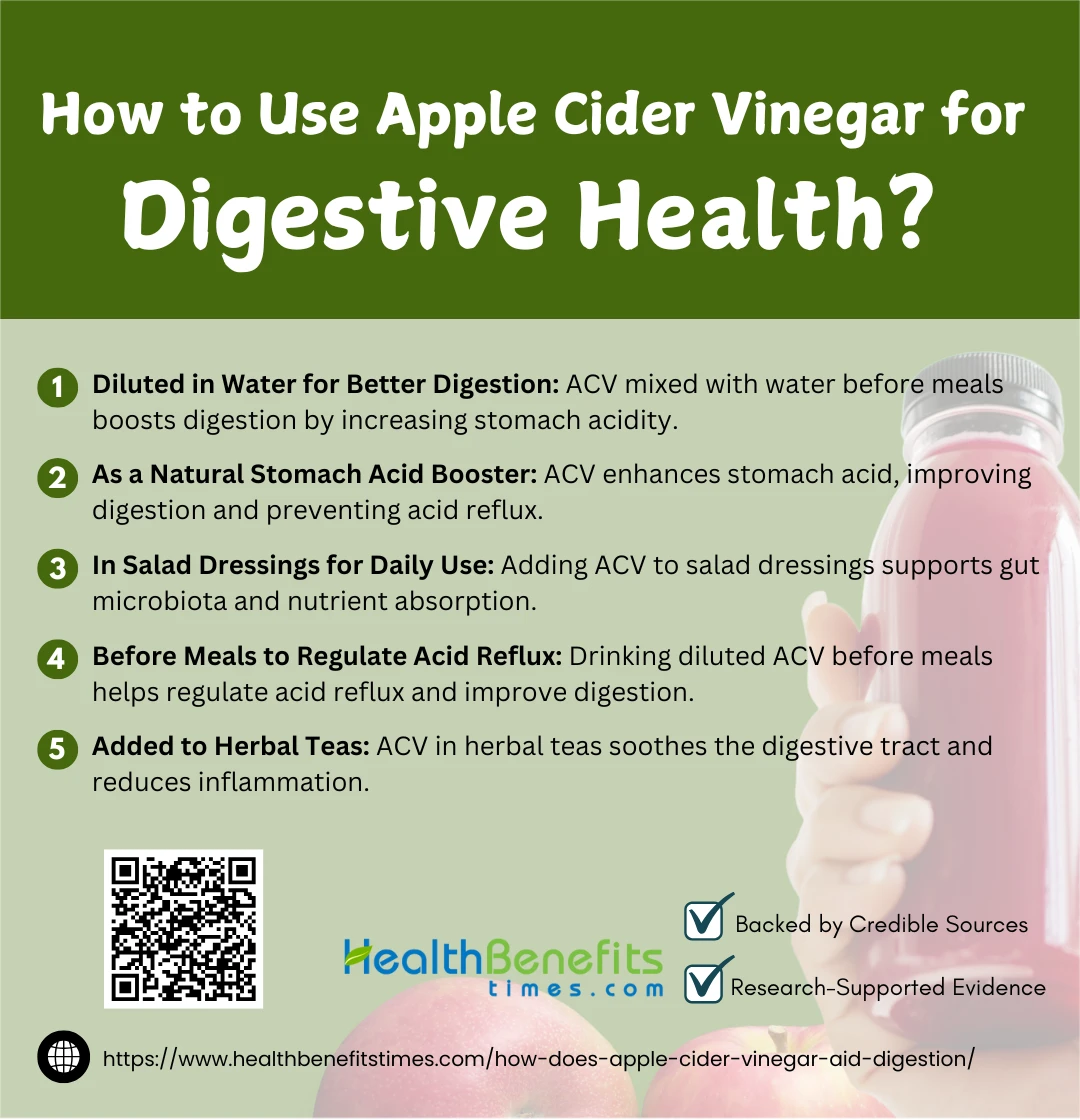
Mixing 1-2 tablespoons of apple cider vinegar (ACV) in water and drinking it before meals can enhance digestion by boosting stomach acidity. 42
2. As a Natural Stomach Acid Booster
Apple cider vinegar (ACV) effectively boosts stomach acid, aiding digestion and preventing acid reflux by balancing gastric pH levels. 43 Studies confirm its role in enhancing enzymatic activity for better nutrient absorption. 40
3. In Salad Dressings for Daily Use
Adding apple cider vinegar (ACV) to salad dressings supports daily digestive health by enhancing gut microbiota and promoting nutrient absorption.
4. Before Meals to Regulate Acid Reflux
Drinking diluted apple cider vinegar (ACV) before meals helps regulate acid reflux by balancing stomach acidity and reducing symptoms of GERD. Studies confirm its effectiveness in improving digestion. 10
5. Added to Herbal Teas
Adding apple cider vinegar (ACV) to herbal teas soothes the digestive tract, reduces inflammation, and enhances gut health by fostering beneficial microbiota. 24 Studies support its anti-inflammatory properties in digestion. 42
- Tooth Enamel Erosion
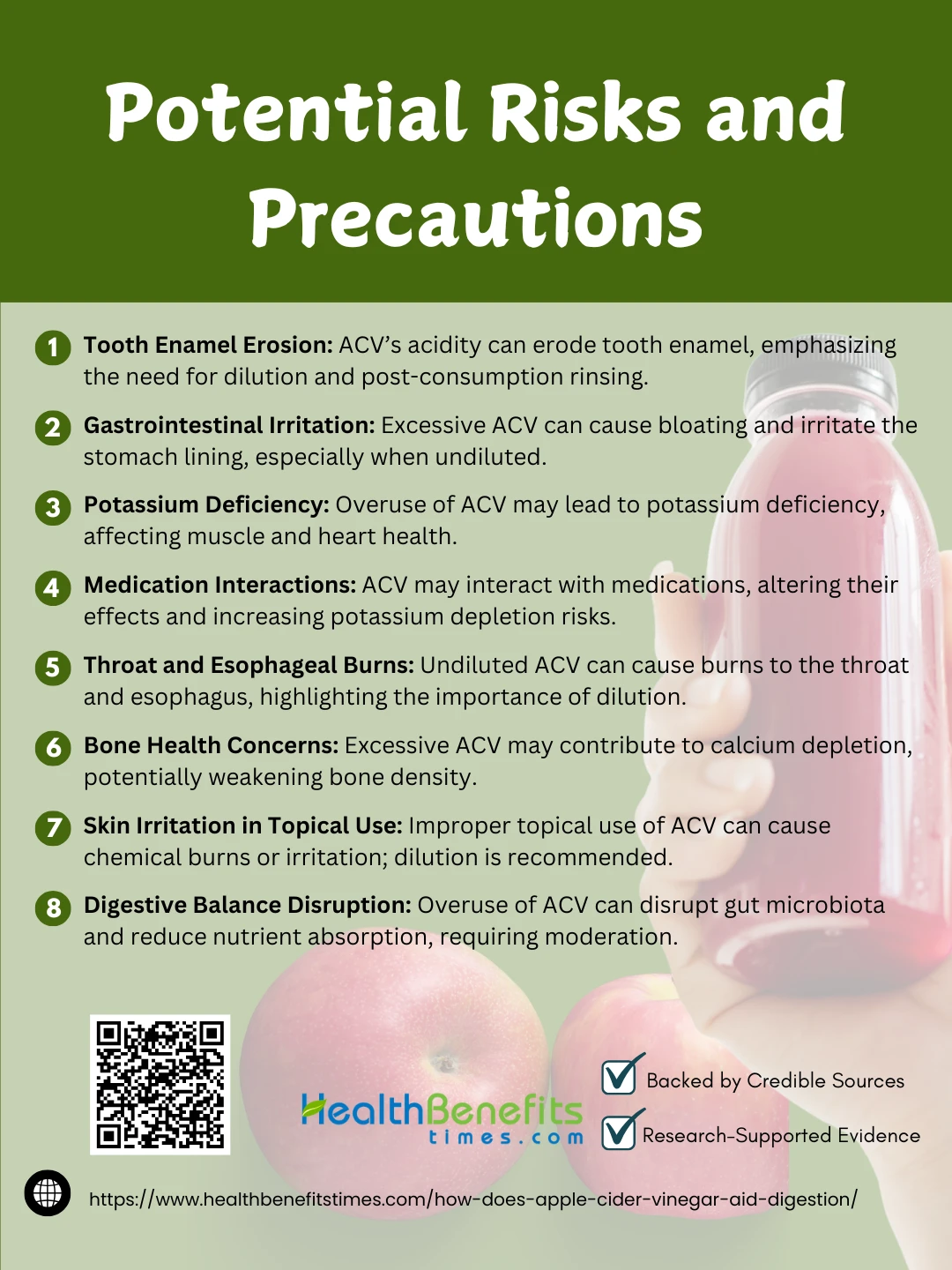
Apple cider vinegar (ACV), while beneficial, poses risks such as tooth enamel erosion due to its high acidity. Studies show that frequent exposure to acidic solutions like ACV can weaken enamel integrity, leading to dental sensitivity and decay 48. 44 Research indicates that ACV’s acetic acid exacerbates enamel erosion when undilute. 45 Studies in dental journals emphasize preventive measures, such as dilution, to minimize harm. 46 Experts recommend rinsing the mouth with water after consuming ACV. 47 Additionally, the role of fluoride treatments in mitigating enamel loss is highlighted. 48 Professionals urge limiting direct contact with teeth to preserve enamel. 49 - Gastrointestinal Irritation
Excessive consumption of apple cider vinegar (ACV) may cause gastrointestinal irritation, including bloating and discomfort, due to its high acidity. 12 Studies suggest it can aggravate stomach lining issues if consumed undiluted. 21 - Potassium Deficiency
Long-term overconsumption of apple cider vinegar (ACV) may lead to potassium deficiency, potentially affecting muscle function and heart health. Research shows excessive ACV lowers potassium levels, causing hypokalemia symptoms. 50 - Medication Interactions
Apple cider vinegar (ACV) can interact with medications such as diuretics, insulin, and heart drugs, potentially increasing potassium depletion or altering medication effects. 12 Research highlights risks of heightened drug toxicity when ACV reduces potassium levels. 21 Additionally, studies stress careful usage for those on chronic prescriptions. 51 - Throat and Esophageal Burns
Consuming apple cider vinegar (ACV) improperly can cause throat irritation and esophageal burns. Research documents chemical burns resulting from undiluted ACV consumption or tablets lodged in the esophagus 55. {% %} Diluting ACV in water mitigates these risks. 21 - Bone Health Concerns
Excessive use of apple cider vinegar (ACV) may negatively impact bone health by contributing to calcium depletion and reduced bone density over time 12. 12 Proper moderation and dietary calcium intake mitigate such effects. 21 - Skin Irritation in Topical Use
Improper topical use of apple cider vinegar (ACV) can cause skin irritation or burns due to its high acidity. Studies highlight cases of chemical burns when ACV is applied undiluted. 52 Topical applications require careful testing on small skin areas first.. 53 Medical reviews document severe irritation from prolonged exposure. 54 Combining ACV with protective moisturizers reduces irritation risks.. 55 - Digestive Balance Disruption
Excessive apple cider vinegar (ACV) use may disrupt digestive balance by altering gut microbiota composition and impairing nutrient absorption. Research highlights potential over-acidity effects on beneficial gut bacteria. 12 Studies suggest that prolonged use can decrease stomach pH, affecting enzyme functionality. 11 Moderation is critical to maintain microbial equilibrium. 56 Including prebiotic foods supports healthy gut recovery. 55
- White Vinegar
A commonly used alternative with similar acidity, effective for digestive and cleaning purposes. 57 - Lemon Juice
Rich in vitamin C, it serves as a natural acidifier and digestive aid. 11 - Balsamic Vinegar
Known for its milder acidity and antioxidant properties, it can enhance gut health. 56 - Kombucha
A fermented tea, kombucha contains probiotics beneficial for digestion. 20 - Rice Vinegar
This vinegar, with a milder flavor, is useful for cooking and offers digestive support Google Books. - Coconut Vinegar
A lesser-known alternative, it provides similar gut-friendly benefits due to its prebiotic content. 58 - Ginger Water
Known for its soothing effects on digestion, ginger water can replace acidic vinegar for sensitive stomachs. 12 - Pomegranate Vinegar
Offers antioxidants and supports metabolic health with milder acidity. 12 - Raw Sauerkraut Juice
Rich in probiotics, this is excellent for digestive health. 55 - Honey and Warm Water
A natural remedy for digestion and immunity, it can replace the need for ACV in certain uses. 21
Conclusion
In conclusion, apple cider vinegar (ACV) demonstrates a broad spectrum of benefits for digestive health, making it a popular natural remedy. Its ability to enhance stomach acidity, support gut microbiota, regulate blood sugar levels, and promote enzymatic activity contributes to improved digestion and nutrient absorption. Additionally, ACV’s prebiotic and probiotic properties foster a balanced intestinal environment, reducing discomforts like bloating and indigestion. However, while the potential health advantages are promising, the use of ACV should be approached with caution due to risks such as enamel erosion, gastrointestinal irritation, and interactions with certain medications. Moderation, proper dilution, and informed use are essential to maximize its benefits while minimizing potential adverse effects. Further research will continue to shed light on the mechanisms and long-term impacts of ACV on digestive health.
Comments
comments