

What Is Meditation?
Meditation is a practice of focused attention, awareness, and mental clarity that fosters relaxation and personal insight. It has been used for centuries in spiritual and health contexts. There are several types of meditation, each designed to cater to different needs. Mindfulness meditation, rooted in Buddhist practices, involves maintaining a non-judgmental awareness of the present moment and has been shown to reduce stress. (4) Transcendental meditation, focusing on the repetition of a mantra, is widely recognized for its calming effects. (5) Guided meditation and yoga-based meditations also integrate visualization and movement to enhance mental and physical well-being. (6)
How does meditation help in reducing anxiety?
Anxiety, characterized by persistent worry, fear, and physical tension, is one of the most common mental health challenges today. Meditation, a practice rooted in mindfulness and focus, has been shown to significantly alleviate anxiety by reducing stress hormones, calming the nervous system, and enhancing emotional regulation. Research highlights that regular meditation not only improves mental clarity but also rewires the brain to respond more calmly to stress, making it a powerful tool for managing anxiety.
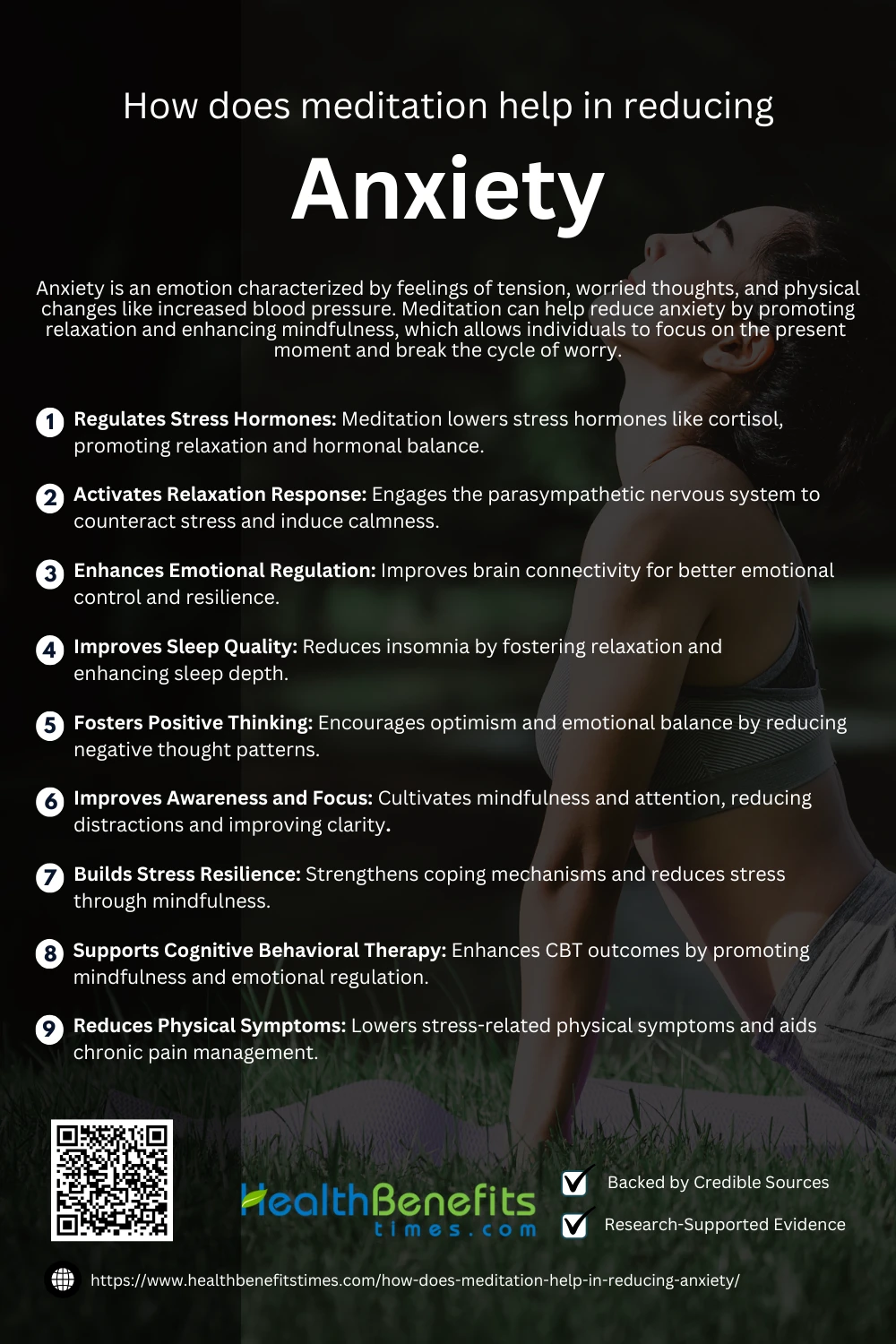
Meditation effectively regulates stress hormones such as cortisol by activating the parasympathetic nervous system, promoting relaxation and reducing physiological stress responses. Mindfulness practices have been shown to decrease cortisol levels significantly. (7) Additionally, regular meditation practices improve the body’s hormonal balance, contributing to overall mental and physical health.
2. Activates Relaxation Response
Meditation activates the relaxation response by engaging the parasympathetic nervous system, which helps counteract the stress-induced “fight or flight” reaction. Mindfulness meditation and breathing exercises are particularly effective in lowering heart rate and cortisol levels while promoting physiological relaxation. (8) Research also highlights its role in reducing muscle tension and inducing calmness, enhancing overall well-being. (9) Meditation creates a meditative state that fosters deep relaxation and mental clarity. (10)
3. Enhances Emotional Regulation
Meditation significantly enhances emotional regulation by improving the connectivity between brain regions responsible for emotional control, such as the prefrontal cortex and the amygdala. Mindfulness practices like meditation increase self-awareness and reduce reactive behaviors, enabling individuals to process emotions more effectively. (11) Studies have shown that meditation reduces cortisol levels, fostering resilience to stress and promoting emotional stability. (12) Additionally, it cultivates mindfulness and present-moment awareness, which are essential for managing challenging emotions. (13)
4. Improves Sleep Quality
Meditation improves sleep quality by promoting relaxation and reducing stress-related insomnia. Practices like Yoga Nidra and mindfulness meditation are shown to decrease sleep latency and enhance sleep depth. (14) Additionally, guided meditations lower cortisol levels and calm the mind before bedtime, fostering restorative sleep. (15) Research highlights that meditative therapies also improve sleep among patients with chronic conditions, demonstrating broad applicability. (16)
5. Fosters Positive Thinking
Meditation fosters positive thinking by enhancing self-awareness, reducing negative thought patterns, and promoting emotional resilience. Practices like mindfulness meditation help cultivate optimism by focusing on the present moment and reducing rumination. (17) Studies show that meditation encourages emotional balance and boosts well-being, fostering a constructive outlook even in challenging situations. (18) Incorporating meditation into daily routines helps individuals build resilience and adopt a more optimistic mindset. (19)
6. Improves Awareness and Focus
Meditation improves awareness and focus by cultivating mindfulness and present-moment attention, which are essential for cognitive clarity. Techniques like mindfulness-based stress reduction (MBSR) enhance the brain’s ability to regulate distractions and improve attention spans. (20) Transcendental meditation also fosters deep concentration, reducing mental clutter. (21) Additionally, breathing exercises paired with meditation improve self-awareness, leading to better emotional regulation and focus. (2)
7. Builds Stress Resilience
Meditation builds stress resilience by strengthening emotional regulation, improving self-awareness, and reducing physiological stress responses. Practices like mindfulness meditation help individuals better manage adversity and develop coping mechanisms. (22) Guided meditations and breathing exercises lower cortisol levels and foster a calmer mental state. (23) Furthermore, integrating meditation into daily routines enhances long-term emotional resilience, especially for those in high-stress environments. (24)
8. Supports Cognitive Behavioral Therapy
Meditation supports cognitive behavioral therapy (CBT) by enhancing mindfulness, reducing rumination, and fostering emotional regulation. Mindfulness-based cognitive therapy (MBCT), which integrates meditation, effectively addresses anxiety and depression, reinforcing CBT outcomes. (25) Meditation improves attention and relaxation, critical components of CBT, and helps patients adapt to stressors more effectively. (26) Additionally, meditation-based CBT techniques show significant improvement in managing chronic mental health conditions. (27)
9. Reduces Physical Symptoms
Meditation effectively reduces physical symptoms by lowering stress hormone levels, improving pain management, and promoting relaxation. Mindfulness practices such as guided meditations help decrease cortisol levels, leading to reduced symptoms of stress and anxiety. (15) Meditation has also shown significant benefits in managing chronic pain conditions by improving body awareness and emotional regulation. (28) Additionally, integrative approaches incorporating yoga and meditation address both physical and mental well-being, leading to enhanced overall health. (29)
Methods and types of Meditation
Here is a listicle on the types of meditation based on common practices and sources:
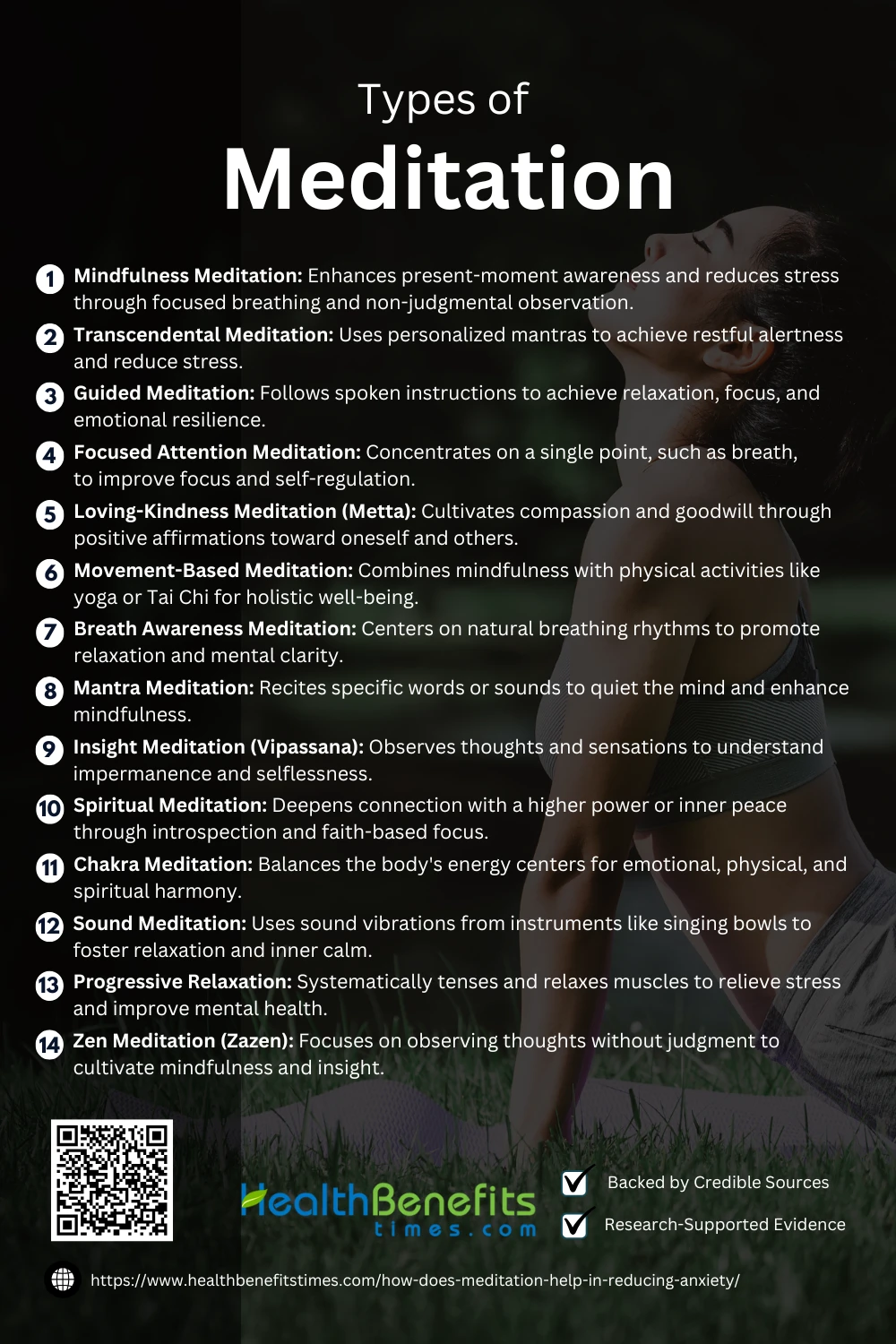
Mindfulness meditation is a psychological practice rooted in Buddhist traditions, emphasizing the cultivation of present-moment awareness and non-judgmental acceptance. This practice allows individuals to focus on their thoughts, emotions, and physical sensations as they occur, fostering a deeper understanding of the self and a heightened state of mindfulness. (30) Scientific research has demonstrated its effectiveness in reducing stress, improving emotional regulation, and enhancing mental clarity. (31) Mindfulness-Based Stress Reduction (MBSR) programs, widely used in clinical settings, incorporate this practice for therapeutic purposes. (32)
How Mindfulness Meditation is performed
- Choose a location with minimal distractions to begin your practice.
- Sit with your back straight, either on a chair or a meditation cushion, ensuring that you are both alert and relaxed. (33)
- Direct your attention to your breath, noticing its natural rhythm and flow without attempting to control it. (34)
- When your mind wanders, gently redirect your focus back to your breathing or a chosen anchor point. (35)
- Beginners can use audio or video guides to help maintain focus and build consistency. (36)
- Practice scanning your body or observing the environment while maintaining a non-judgmental stance.
- Start with short sessions, such as five to ten minutes, and gradually increase the duration as you build your practice. (32)
2. Transcendental Meditation
Transcendental Meditation (TM) is a simple, natural, and effortless technique designed to promote a state of restful alertness and reduce stress. Rooted in ancient Vedic traditions of India, TM involves silently repeating a specific mantra to help transcend ordinary thought processes and achieve a state of pure consciousness. (37) Research highlights its profound effects on reducing stress and anxiety while improving physiological markers such as blood pressure and heart rate. (38) Unlike other forms of meditation, TM requires instruction from a certified teacher to ensure the correct technique is learned and practiced. (39)
How Transcendental Meditation is performed
- Proper instruction is vital for learning the personalized mantra. (40)
- Choose a quiet environment and sit in a relaxed position with your eyes closed. (41)
- Focus on the mantra provided during instruction to naturally let go of distractions. (42)
- Unlike mindfulness meditation, TM involves no active focus or control over thoughts. (43)
- Sessions typically last 15–20 minutes, performed in the morning and evening. (44)
- The mind effortlessly transitions into a state of restful alertness. (45)
3. Guided Meditation
Guided meditation is a structured form of mindfulness practice that incorporates spoken words, often delivered by a teacher or via a recording, to direct the participant through a meditation experience. This method is designed to help individuals achieve relaxation, focus, and deeper mental awareness. Research indicates that guided meditation can improve cognitive performance and emotional resilience, reduce anxiety levels, and foster overall mental well-being. (46) (47)
How Guided Meditation is Performed
- Sit in a quiet and comfortable space. Ensure minimal distractions. (48)
- Follow an audio or video guide that leads you into a relaxed state.
- Engage in controlled breathing exercises to center your focus. (49)
- Imagine serene or motivating imagery as instructed. (50)
- Gradually shift attention across different body parts for relaxation. (51)
- Listen to affirmations to reinforce positivity. (52)
- Gently return to full awareness and reflect on the experience. (53)
- Some sessions incorporate additional sensory aids like music or VR for deeper engagement.
4. Focused Attention Meditation
Focused Attention Meditation (FAM) is a mindfulness technique that involves directing one’s concentration onto a single object, thought, or sensation, such as the breath, to anchor the mind. This practice aims to enhance self-regulation, improve cognitive functions, and reduce stress. Research demonstrates that FAM can sharpen focus and reduce symptoms of depression, while promoting emotional resilience and self-awareness. (54) (55) Additionally, its ability to cultivate mental clarity and diminish the effects of automatic constraints on thought has been documented. (56)
How Focused Attention Meditation is Performed
- Choose a quiet environment and sit comfortably with a straight back. (57)
- Select a focus object, such as the breath or a mantra, to direct attention. (58)
- Actively keep the mind on the chosen focal point, returning to it whenever distractions arise. (59)
- Inhale and exhale deeply to synchronize physical and mental calmness. (60)
- Gradually integrate awareness of bodily sensations to deepen focus.
- Start with short sessions (5–10 minutes) and gradually increase as comfort improves.
- Conclude by reflecting on the session’s impact on mental clarity and emotional state.
- Employ guided instructions or visualizations for additional support. (61)
5. Loving-Kindness Meditation (Metta)
Loving-Kindness Meditation (Metta) is a Buddhist practice designed to cultivate feelings of compassion, love, and goodwill toward oneself and others. This form of meditation involves systematically directing positive intentions and affirmations toward oneself, loved ones, acquaintances, and eventually all beings. Research shows that Metta enhances emotional well-being, reduces stress, and increases empathy. (62) Additionally, it has been effective in promoting psychological resilience and emotional recovery from trauma. (63)
How Loving-Kindness Meditation is Performed
- Sit comfortably in a quiet space, close your eyes, and relax your body (66). (64)
- Begin by silently reciting affirmations for your own happiness, such as “May I be happy, may I be healthy, may I live with ease”. (65)
- Direct similar affirmations toward close friends and family. (66)
- Focus on people you feel neutral about, extending positive wishes to them. (63)
- Send thoughts of goodwill to individuals you may have conflicts with. (67)
- Finally, extend loving-kindness to all living beings, imagining a world filled with peace. (64)
- Incorporate deep breathing to enhance focus and relaxation throughout. (68)
- Gently transition out of meditation and reflect on the feelings of warmth and connection. (63)
6. Movement-Based Meditation
Movement-based meditation combines physical motion with meditative focus to promote mental clarity, emotional balance, and physical well-being. Unlike static meditation, it integrates practices such as yoga, Tai Chi, and walking meditation, fostering a harmony of body and mind. This approach has been shown to reduce stress, improve heart rate variability, and enhance mental well-being. (69) Research supports its ability to provide mindfulness benefits while catering to individuals who find stillness challenging (70). (70)
How Movement-Based Meditation is performed
- Select a movement modality such as yoga, walking meditation, or Tai Chi. (71)
- Find a quiet and spacious area to enable free movement. (72)
- Synchronize breath with movements to enhance awareness. (73)
- Pay attention to the sensations and flow of each movement. (74)
- Begin the session with a clear intention, such as stress relief or relaxation. (69)
- Follow video instructions or attend classes to refine techniques. (70)
- Practice regularly for 10–30 minutes to experience cumulative benefits. (75)
- End the session by reflecting on physical and mental changes. (71)
7. Breath Awareness Meditation
Breath Awareness Meditation is a mindfulness technique focusing on the natural rhythm of breathing to anchor attention and cultivate a state of relaxation and heightened awareness. This practice is simple yet profound, fostering mental clarity, emotional regulation, and stress reduction. Research highlights its role in enhancing emotional intelligence and self-awareness, particularly among athletes, and its effectiveness in reducing symptoms of anxiety and improving attention spans. (2) (76)
How Breath Awareness Meditation is Performed
- Sit or lie down in a quiet place, ensuring a relaxed posture. (77)
- Bring attention to the natural inhalation and exhalation, avoiding any deliberate control.
- Notice sensations like the air entering your nostrils or your chest rising, without attempting to alter the rhythm. (78)
- Whenever the mind wanders, gently bring focus back to the breath. (79)
- To deepen focus, count breaths in cycles of ten. (80)
- Start with 5–10 minutes daily and gradually increase as comfort and focus improve. (81)
- End by reflecting on the sensations and any changes in emotional or mental state. (20)
8. Mantra Meditation
Mantra Meditation is a contemplative practice that involves the repetitive chanting or silent recitation of specific words, phrases, or sounds (mantras) to promote concentration and mindfulness. This ancient practice aims to quiet the mind, foster relaxation, and elevate self-awareness. Scientific studies reveal that mantra meditation can reduce stress, enhance psychological resilience, and improve cognitive clarity. (82) The Gayatri Mantra, for example, has shown notable benefits in enhancing emotional well-being. (83)
How Mantra Meditation is Performed
- Choose a mantra that resonates with you, such as “Om” or a specific phrase. (84)
- Sit comfortably with a straight back in a quiet, distraction-free environment. (85)
- Repeat the mantra aloud or silently in your mind, synchronizing with your breath. (86)
- Gently bring your attention back to the mantra whenever the mind wanders. (87)
- Begin with 5–10 minutes, gradually increasing as comfort grows. (88)
- Synchronize mantra repetition with deep breathing to deepen relaxation. (89)
- Use meditation aids like mala beads or background music to enhance focus. (90)
- Conclude with silent reflection, appreciating the calm state achieved.
9. Insight Meditation (Vipassana)
Insight Meditation, commonly referred to as Vipassana, is a Buddhist meditative practice aimed at cultivating awareness and deep insight into the true nature of existence. By observing thoughts, emotions, and sensations nonjudgmentally, practitioners develop a clearer understanding of impermanence, suffering, and selflessness. Research supports Vipassana’s benefits in improving emotional regulation, reducing stress, and fostering overall mental well-being. (91) The practice integrates mindfulness with analytical insight, making it a cornerstone of Buddhist mental cultivation. (92)
How Insight Meditation is Performed
- Begin with calming meditation (Samatha) to stabilize the mind before transitioning to insight-focused observation. (93)
- Sit in a comfortable position in a quiet, distraction-free environment. (94)
- Use the breath as an anchor to maintain present-moment awareness. (95)
- Pay attention to bodily sensations, thoughts, and emotions as they arise, practicing non-reactivity. (96)
- Contemplate the impermanent nature of experiences to deepen insight. (97)
- Start with short sessions (15–20 minutes) and gradually extend to enhance focus and introspection. (98)
- Participate in guided retreats for immersive practice. (99)
- Conclude by reflecting on the meditation session and its effects on mental clarity.
10. Spiritual Meditation
Spiritual meditation is a reflective practice designed to deepen one’s connection with a higher power or the universe, often involving a focus on inner peace, self-awareness, and transcendence. Rooted in various religious and philosophical traditions, it serves as a pathway to explore one’s spirituality and existential purpose. Studies highlight its benefits in promoting mental clarity, reducing anxiety, and fostering emotional resilience, as well as enhancing mindfulness through a blend of introspection and faith-based focus. (100) (101)
How Spiritual Meditation is Performed
- Find a quiet, serene environment to practice, minimizing external distractions.
- Set a clear purpose for your meditation, such as seeking guidance or inner peace. (102)
- Focus on a mantra, prayer, or visualization of a spiritual symbol. (103)
- Incorporate deep and mindful breathing to center your thoughts. (104)
- Contemplate spiritual teachings or personal experiences to deepen the meditative state. (105)
- Start with brief sessions of 10–15 minutes and extend gradually. (106)
- End the practice with a moment of gratitude or a concluding prayer. (107)
11. Progressive Relaxation
Progressive relaxation, also known as progressive muscle relaxation (PMR), is a technique aimed at reducing physical tension and psychological stress through systematic tensing and relaxing of various muscle groups. This method promotes a deep state of relaxation by engaging the mind and body in focused, step-by-step muscle release. Research shows PMR can alleviate symptoms of anxiety, improve sleep quality, and manage chronic pain and is particularly effective in reducing hypertension and stress-induced health issues. (108) (109)
How Progressive Relaxation is Performed
- Find a calm space where you can lie or sit comfortably. (110)
- Begin with slow, deep breaths to settle the mind and body. (111)
- Starting from the feet, sequentially tense each muscle group for 5–10 seconds, then release. (112)
- Gradually work through the calves, thighs, abdomen, chest, arms, and neck, focusing on each area. (113)
- Imagine stress leaving the body as each muscle group relaxes.
- Observe physical sensations and the contrast between tension and relaxation. (114)
- Practice for 15–30 minutes, adjusting as needed. (108)
- Finish with a few minutes of calm breathing or mindfulness. (115)
12. Zen Meditation (Zazen)
Zen Meditation, also known as Zazen, is a core practice of Zen Buddhism focused on seated meditation to cultivate mindfulness and deep insight into the nature of existence. Zazen emphasizes observing the flow of thoughts without judgment, fostering an awareness of the present moment. The practice is central to Soto Zen and Rinzai Zen traditions, offering profound benefits for mental clarity, emotional balance, and stress reduction (113). (116) Research highlights its positive impact on improving resilience and focus in high-pressure settings, such as healthcare and education. (117)
How Zen Meditation (Zazen) is Performed
- Choose a serene environment with minimal distractions. (118)
- Sit cross-legged on a cushion or chair, keeping the back straight and hands resting in a specific mudra. (119)
- Pay attention to the natural rhythm of your breathing, particularly the sensations in the nostrils.
- Observe thoughts as they arise and let them pass without attachment or judgment. (120)
- Keep your gaze softly focused on a point in front of you, or slightly downcast. (116)
- Start with 10–20 minutes daily, gradually increasing to deepen the practice. (118)
- Incorporate Zazen into your routine for cumulative benefits. (119)
- Conclude with a moment of gratitude or quiet reflection on the session.
13. Chakra Meditation
Chakra meditation focuses on aligning and balancing the body’s energy centers, known as chakras, which correspond to specific physical, emotional, and spiritual aspects. These seven chakras run along the spine, starting at the base and culminating at the crown of the head. Chakra meditation aims to harmonize these energy centers, promoting overall well-being and self-awareness. Studies suggest that this practice can help alleviate stress, enhance emotional regulation, and improve overall mental health. (121) The systematic approach integrates mindfulness, visualization, and vibrational therapies to maximize benefits. (122)
How Chakra Meditation is Performed
- Select a calm space with minimal distractions. (123)
- Sit or lie down in a relaxed posture, ensuring proper spinal alignment. (122)
- Begin with deep, rhythmic breathing to calm the mind and prepare for meditation. (124)
- Mentally focus on each chakra, starting from the root and moving upward to the crown, imagining them as spinning wheels of energy.
- Incorporate sound frequencies like singing bowls or chant specific mantras for activation (121)
- Visualize each chakra’s associated color and symbol to deepen the connection. (125)
- Recite affirmations aligned with each chakra’s qualities, such as “I feel grounded and secure” for the root chakra (123). (126)
- Dedicate 15–30 minutes daily to enhance balance and energy flow. (127)
- Conclude the session by reflecting on feelings of balance and wholeness.
14. Sound Meditation
Sound meditation, also known as sound therapy or sound healing, utilizes vibrational sounds from instruments like singing bowls, tuning forks, or gongs to promote relaxation and emotional balance. This practice encourages the participant to focus on auditory stimuli, fostering a meditative state and deep inner calm. Research highlights the efficacy of sound meditation in reducing stress, improving mood, and supporting mental clarity. (122) Additional studies underline its benefits in alleviating symptoms of anxiety and promoting better sleep patterns. (54)
How Sound Meditation is Performed
- Select a quiet and comfortable space where you can remain undisturbed. (111)
- Incorporate sound-producing instruments like singing bowls, gongs, or tuning forks to create a soothing auditory experience.
- Close your eyes and direct your attention to the sound vibrations, observing how they resonate within your body. (126)
- Align deep breathing with the sound to deepen the meditative state. (128)
- Imagine the sound waves clearing stress and negativity from your mind. (52)
- Start with short sessions of 10–15 minutes, gradually extending as comfort increases. (129)
- Participate in guided group sound meditations for enhanced energy dynamics. (90)
- Conclude with a few minutes of silence, reflecting on the experience. (130)
How much time does meditation take to reduce anxiety?
Meditation is an effective tool for reducing anxiety, with research indicating that as little as 10–20 minutes of daily practice can yield significant benefits. A study highlighted the positive effects of short-duration meditation sessions, particularly 11–22 minutes, in reducing state anxiety. (131) Similarly, interventions lasting eight weeks, with daily practices of 15–20 minutes, show consistent anxiety reduction among participants. (132) Regular mindfulness-based practices have also been linked to improvements in emotional regulation and stress management. (133) These findings emphasize the potential for even brief, consistent meditation sessions to impact anxiety positively.
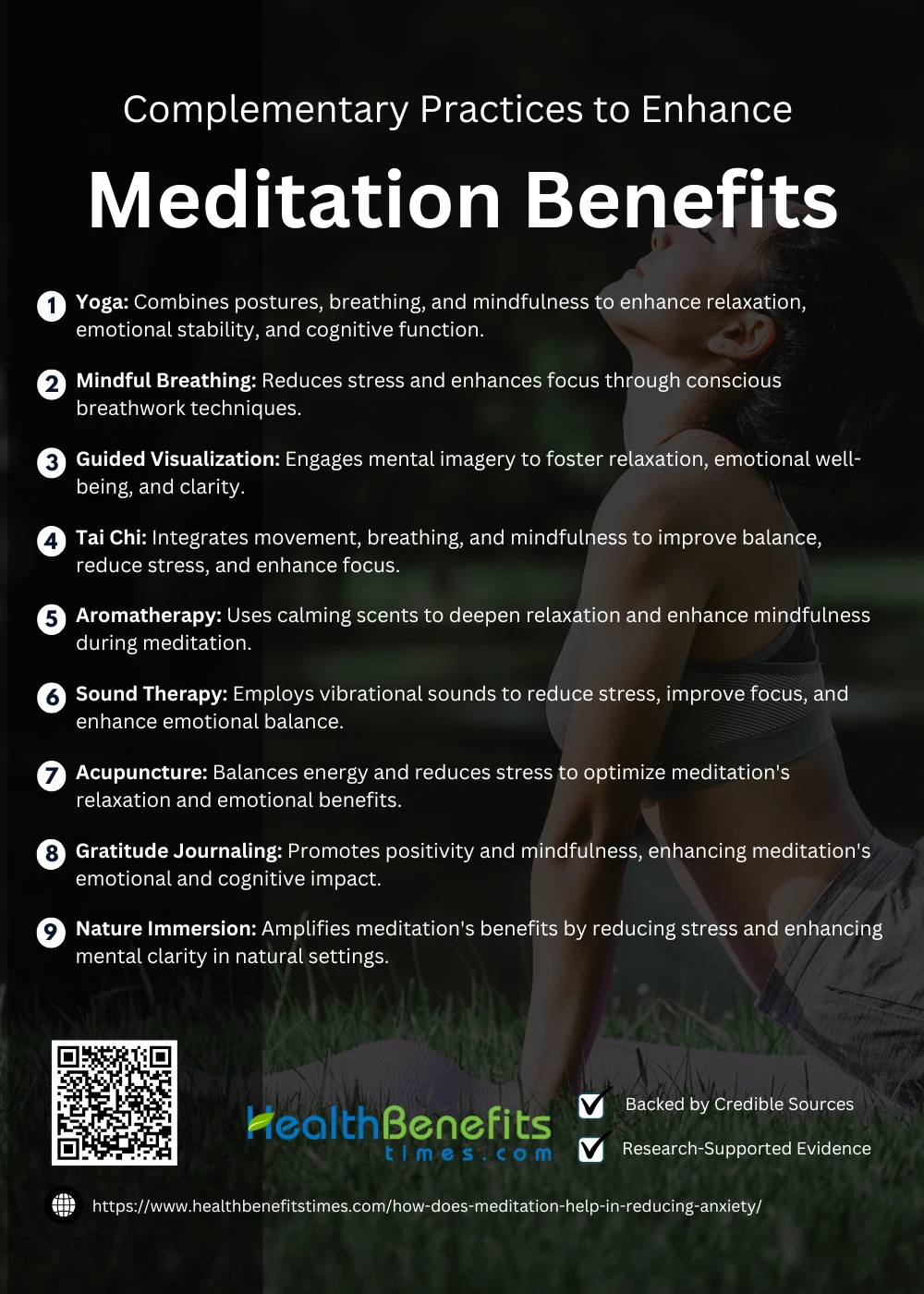
Additional Practices to Enhance Meditation Benefits
1. Yoga
Yoga complements meditation by integrating physical postures, breathing exercises, and mindfulness to improve mental clarity and physical resilience. Studies have shown that yoga enhances the relaxation response and reduces stress through better regulation of cortisol levels. (134) Yoga Nidra, a form of guided meditation within yoga, has demonstrated remarkable benefits in alleviating stress and enhancing overall well-being. (14) Additionally, the synergistic practice of yoga and meditation supports emotional stability and cognitive function, making it a powerful holistic approach. (135)
2. Mindful Breathing
Mindful breathing complements meditation by enhancing focus, reducing stress, and fostering emotional balance. Breathing techniques like diaphragmatic and alternate-nostril breathing activate the parasympathetic nervous system, which promotes relaxation. (136) Practicing conscious breathwork alongside meditation helps in managing anxiety and improving overall mental clarity. (137)
3. Guided Visualization
Guided visualization complements meditation by engaging the mind in creating vivid mental images, which enhances relaxation and focus. This practice has been shown to alleviate stress, improve emotional well-being, and support healing processes in various health conditions. (138) By combining visualization with meditative practices, individuals can experience heightened clarity and a deeper connection to their goals and aspirations.
4. Tai Chi
Tai Chi complements meditation by incorporating slow, deliberate movements with focused breathing and mindfulness, enhancing physical and mental balance. Studies show that Tai Chi significantly reduces stress, improves emotional stability, and enhances overall well-being through its meditative aspects. (139) Tai Chi’s integration with meditative reflections fosters a deeper mind-body connection, benefiting both mental clarity and physical health. (140) Furthermore, it has been shown to provide immediate benefits in reducing anxiety and enhancing focus when practiced alongside traditional meditation. (141)
5. Aromatherapy
Aromatherapy complements meditation by using essential oils to create a calming environment, enhance focus, and deepen relaxation. Scents such as lavender and sandalwood have been shown to reduce stress and promote a sense of tranquility, which aligns seamlessly with meditation practices. (142) When paired with meditation, aromatherapy enhances mindfulness by stimulating the olfactory system, which directly impacts mood regulation and emotional well-being.
6. Sound Therapy
Sound therapy enhances meditation benefits by using vibrational sounds, such as Tibetan singing bowls and chanting, to deepen relaxation, improve focus, and reduce stress. Studies indicate that sound frequencies stimulate brain activity, fostering a meditative state and emotional balance. (143) Complementing meditation with sound therapy has been shown to improve mood, reduce tension, and support overall well-being. (144) Chanting practices, like AUM, integrate sound and meditation to enhance cognitive and emotional health (144). (145)
7. Acupuncture
Acupuncture complements meditation by enhancing relaxation, improving energy balance, and alleviating stress. The combination of these practices is known to optimize emotional and physical well-being. Research shows that acupuncture reduces cortisol levels, enhancing the relaxation benefits achieved through meditation. (146) Additionally, acupuncture stimulates endorphin release, which supports emotional regulation when paired with mindfulness techniques. (139) Furthermore, it improves sleep and reduces anxiety, making it an effective complementary practice. (147)
8. Gratitude Journaling
Gratitude journaling complements meditation by fostering a positive mindset, enhancing emotional well-being, and reducing stress. This practice encourages reflection on positive experiences, which aligns with meditation’s goal of mindfulness and inner calm. Studies indicate that maintaining a gratitude journal enhances mood and improves overall mental health when combined with meditative practices. (148) It has also been shown to increase resilience and emotional regulation. (149) Furthermore, integrating gratitude journaling with mindfulness improves attention and focus, amplifying meditation’s cognitive benefits. (150)
9. Nature Immersion
Nature immersion enhances the benefits of meditation by fostering a profound connection to the environment, reducing stress, and improving mental clarity. Research shows that meditating in natural settings increases mindfulness and emotional resilience, significantly boosting overall well-being. (151) Studies also highlight that combining meditation with nature-based experiences amplifies its restorative effects on mood and cognition. (152) Additionally, engaging in guided meditation surrounded by natural elements enhances focus and reduces mental fatigue. (153)
Limitations and Challenges
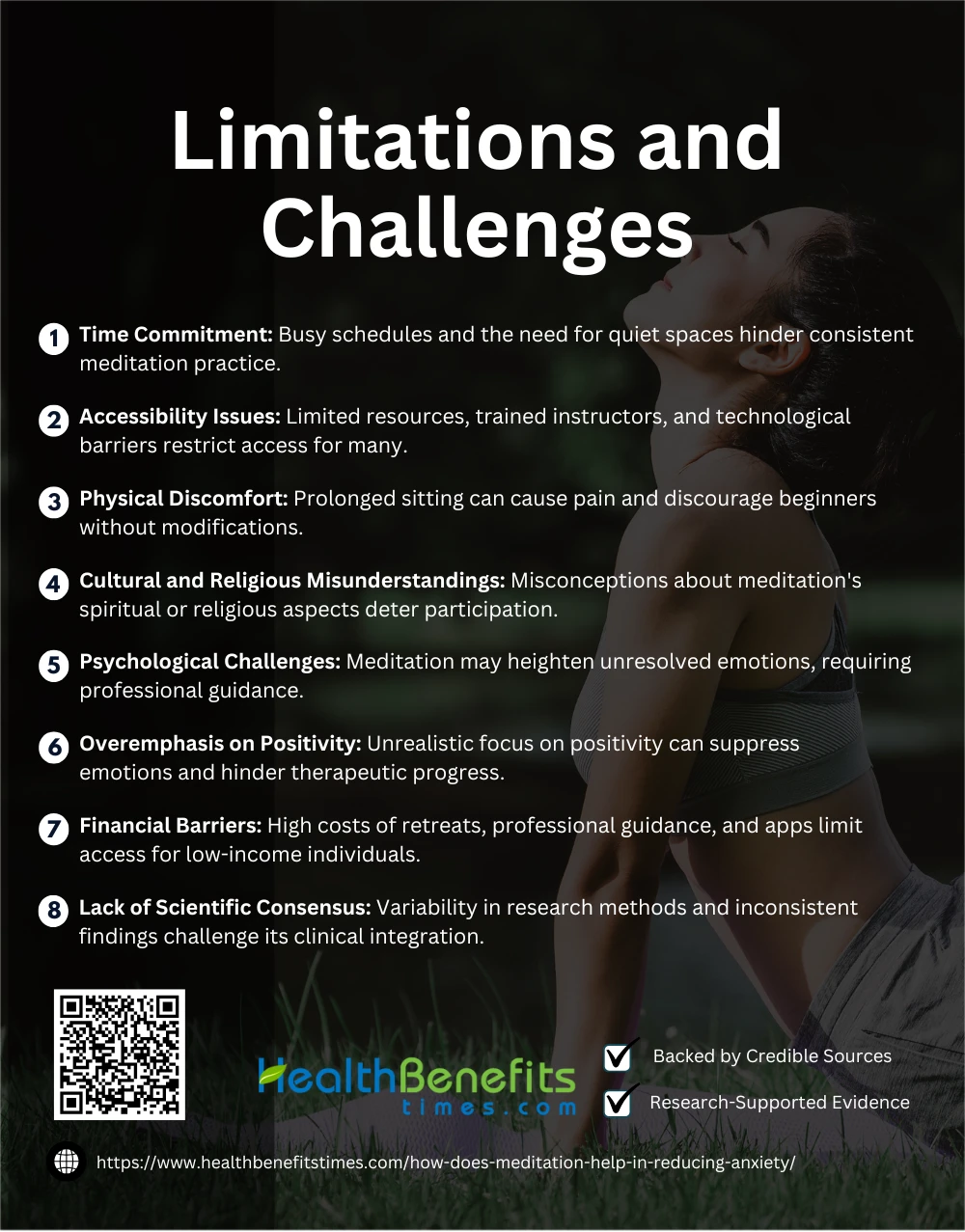
1. Time Commitment
The time commitment required for effective meditation practice poses a significant challenge for many individuals. Regular meditation, often suggested for 20–30 minutes daily, can be difficult to integrate into busy schedules, particularly for working professionals and caregivers. (154) This limitation can deter consistency, which is crucial for achieving the mental clarity and stress reduction benefits associated with meditation. Additionally, the need for a quiet and uninterrupted space to practice adds to the difficulty. (155)
2. Accessibility Issues
Accessibility issues hinder many from engaging in meditation practices, particularly those in underserved communities or with limited resources. Challenges include inadequate access to trained instructors, lack of culturally appropriate resources, and financial barriers to joining retreats or programs. (156) Innovative solutions like virtual reality-based meditation aim to address these limitations, but such technologies often require substantial investments. (157) Smartphone-based mindfulness apps provide some accessibility but are not universally inclusive due to language and internet connectivity barriers. (158)
3. Physical Discomfort
Physical discomfort is a common barrier to sustained meditation practice, particularly for beginners or individuals with physical limitations. Prolonged sitting postures can lead to back pain, joint stiffness, and muscular discomfort, which may discourage regular practice. (14) Modifications, such as using supportive seating or adjusting positions, can help alleviate these issues. (29) Moreover, integrating gentle movement exercises like yoga before meditation has been shown to reduce discomfort and enhance focus. (157)
4. Cultural and Religious Misunderstandings
Meditation practices often face cultural and religious misunderstandings, leading to misconceptions about their intent and applications. In Western contexts, meditation is sometimes perceived as being exclusively spiritual or religious, which can deter participation. (159)
5. Psychological Challenges
Meditation can bring psychological challenges, especially for individuals dealing with unresolved trauma or deep-seated emotional issues. Some practitioners experience heightened anxiety or depressive symptoms during sessions, particularly in early stages of practice. (156) Long-term meditation can lead to an increased awareness of negative emotions that may require professional guidance. (160) Moreover, psychological fatigue from consistent meditation practices is a concern for individuals with mental health vulnerabilities. (100)
6. Overemphasis on Positivity
The overemphasis on positivity within meditation practices can lead to the suppression of genuine emotions and the avoidance of difficult yet necessary psychological processes. This skewed focus can create unrealistic expectations about the effectiveness of meditation in addressing complex mental health issues. (161) Overpromising results, particularly for individuals with trauma, can hinder their therapeutic journey by glossing over critical emotional challenges. (162) Additionally, this approach risks alienating practitioners who feel disconnected from the pervasive positive messaging associated with mindfulness practices. (163)
7. Financial Barriers
Financial barriers can significantly restrict access to meditation practices, especially when it comes to specialized retreats, professional guidance, or app subscriptions. High costs associated with meditation retreats and certified instructors create challenges for low-income individuals. (29) Digital solutions like mobile apps aim to bridge this gap but often require paid subscriptions, limiting accessibility. (157) Furthermore, the lack of free or affordable meditation programs in underserved communities perpetuates inequities in mental health care. (164)
8. Lack of Scientific Consensus
The lack of scientific consensus around meditation’s efficacy stems from inconsistent methodologies and variable outcomes in research studies. Variations in study designs, participant diversity, and meditation techniques contribute to conflicting results. (154) Additionally, the absence of standardized metrics for assessing meditation’s impacts on mental health complicates the comparison of findings. (160) This disparity in evidence creates challenges in integrating meditation into clinical practice as a reliable therapeutic tool. (159)
Conclusion
Meditation serves as a powerful, holistic tool for alleviating anxiety, offering benefits that span emotional, psychological, and physical dimensions. Through the regulation of stress hormones, activation of the relaxation response, and enhancement of emotional regulation, meditation fosters resilience and promotes mental clarity. Its practices improve sleep quality, encourage positive thinking, and build stress resilience, all of which contribute to a more balanced and fulfilling life. Despite challenges such as time commitment, accessibility issues, and misconceptions, the growing body of evidence underscores meditation’s transformative potential in modern mental health care. As an accessible and adaptable practice, meditation continues to empower individuals in managing anxiety and achieving overall well-being.
Comments
comments