

How to Boost Collagen Naturally
1. Dietary Intake of Vitamin C
How it may help
Vitamin C is a vital nutrient that actively helps the body produce collagen. It functions as a necessary tool for specific cellular enzymes that build and connect collagen fibers, ensuring the final protein maintains its firm and stable structure throughout the skin and tissues 4.
What research says
Clinical research concludes that adequate vitamin C is strictly required for the natural creation of collagen 3. Studies confirm that a severe lack of this nutrient halts new collagen formation, while sufficient dietary intake successfully maintains skin elasticity and prevents structural tissue breakdown 5.
How to use it safely
You should aim to obtain vitamin C through a balanced diet containing citrus fruits, tomatoes, bell peppers, and broccoli. For most healthy adults, the recommended daily amount is 75 to 90 milligrams, which is easily achieved through normal daily meals rather than taking heavy supplements 6.
Potential precautions or side effects
Consuming excess vitamin C, generally above 2,000 milligrams daily, can cause stomach cramps, nausea, and diarrhea 6. Individuals with a history of kidney stones should avoid high-dose supplements.
2. Consumption of Protein-Rich Foods
How it may help
Eating protein-rich foods supplies the specific amino acids required to create new collagen. When digested, dietary protein breaks down into essential building blocks, primarily glycine and proline, which the body directly uses to construct strong, resilient collagen fibers in the skin, joints, and bones 1.
What research says
Scientific studies conclude that an adequate intake of dietary protein is essential for maintaining normal collagen production and ongoing tissue repair 7. Research confirms that a severe lack of dietary protein significantly impairs the body’s natural ability to synthesize new collagen, leading to delayed healing and weakened structural tissues 8.
How to use it safely
You should include high-quality protein sources, such as poultry, fish, eggs, soy, and legumes, in your daily meals. For healthy adults, the recommended dietary allowance is 0.8 grams of protein per kilogram of body weight to properly support tissue maintenance and cellular repair 9.
Potential precautions or side effects
Consuming excessively high amounts of protein may place an unnecessary burden on the kidneys 10. Individuals with pre-existing kidney disease must strictly monitor their protein intake 11.
3. Protection Against Ultraviolet (UV) Sunlight
How it may help
UV protection preserves existing collagen rather than creating it. Shielding the skin prevents penetrating ultraviolet radiation from actively destroying underlying structural proteins. By blocking these rays, the body avoids the rapid breakdown of collagen networks, successfully maintaining skin thickness and preventing premature sagging 12.
What research says
Clinical studies conclude that chronic exposure to UV radiation causes severe structural damage to human skin, specifically accelerating the fragmentation of collagen fibers 13. Research confirms that regular, daily application of broad-spectrum sunscreen effectively stops this protein degradation and protects against long-term structural tissue loss 14.
How to use it safely
You should apply a broad-spectrum sunscreen with a Sun Protection Factor (SPF) of 30 or higher to all exposed skin daily. Reapply it every two hours when outdoors, and utilize protective clothing like wide-brimmed hats to maximize your defense against UV rays 15.
Potential precautions or side effects
Specific chemical sunscreen ingredients might cause mild skin irritation or allergic contact dermatitis in sensitive individuals 16. You should switch to mineral-based sunscreens containing zinc oxide if irritation occurs.
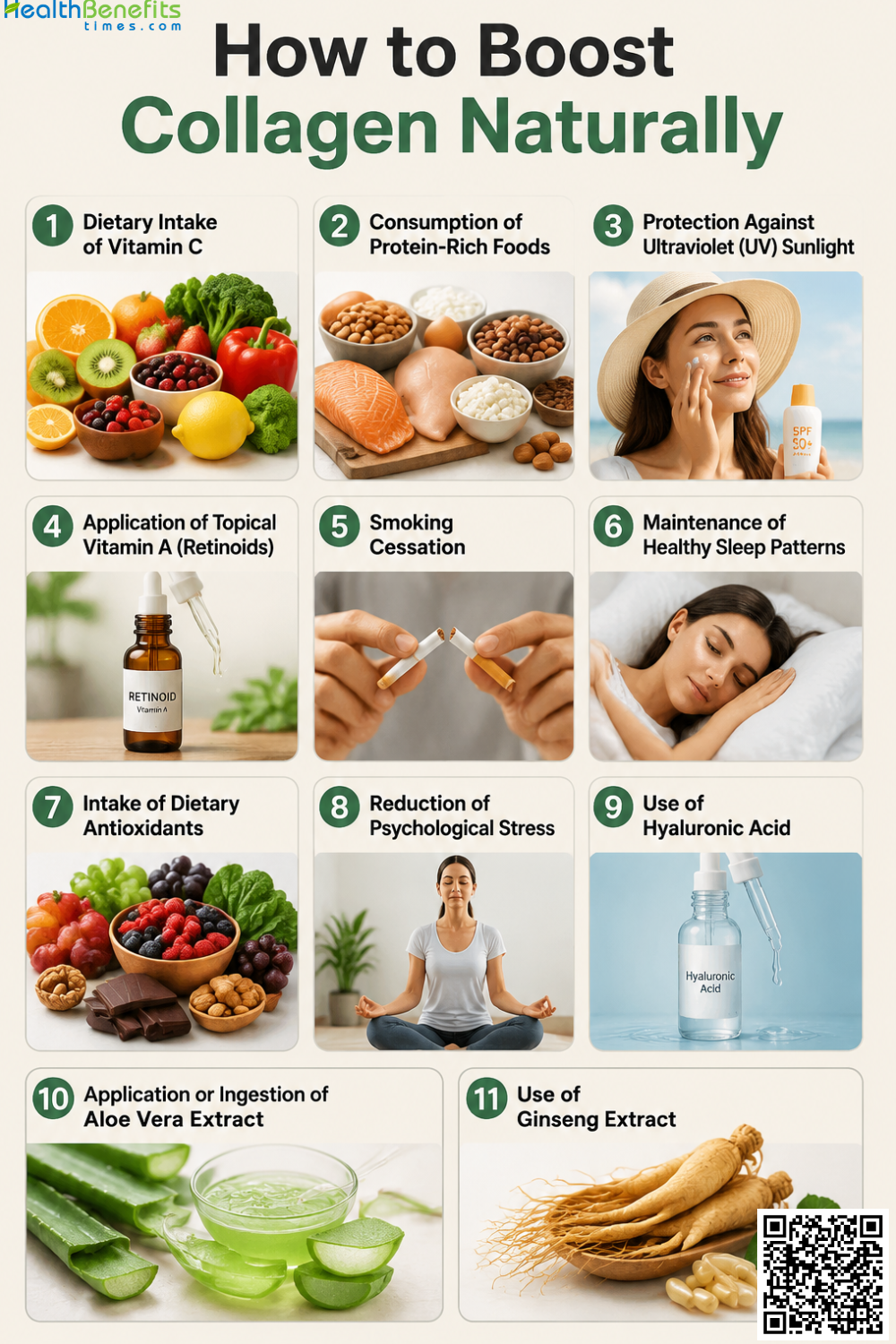
4. Application of Topical Vitamin A (Retinoids)
How it may help
Topical vitamin A, commonly known as retinoids, directly penetrates the skin to stimulate the cellular structures responsible for producing new proteins. It also actively blocks the specific enzymes that break down existing collagen, effectively repairing damaged tissue and restoring overall firmness to the skin 17.
What research says
Clinical trials conclude that applying topical retinoids significantly increases natural collagen production 17. Research confirms that consistent application over several months successfully rebuilds depleted collagen networks, resulting in measurably thicker skin and a reduction in structural tissue degradation 18.
How to use it safely
You should start by applying a low-concentration retinoid cream only two or three nights a week to build tolerance. Because vitamin A increases skin sensitivity to ultraviolet light, always apply the product at bedtime and wear broad-spectrum sunscreen daily 17.
Potential precautions or side effects
Retinoids frequently cause temporary redness, dryness, and peeling. You must strictly avoid using these topical products if you are pregnant or breastfeeding due to potential fetal risks 19.
5. Smoking Cessation
How it may help
Quitting smoking directly halts the introduction of toxic chemicals that actively destroy structural proteins. By eliminating these toxins, normal blood flow returns to the skin, delivering the oxygen and nutrients required to resume natural collagen production and repair previously damaged tissues 20.
What research says
Clinical research concludes that tobacco smoke heavily increases the release of specific enzymes that aggressively break down existing collagen networks 21. Studies confirm that smoking cessation successfully stops this rapid protein degradation, allowing the body to naturally rebuild structural support and prevent premature tissue aging 22.
How to use it safely
You should approach quitting by consulting a healthcare provider to develop a structured cessation plan. Utilizing approved treatments like nicotine replacement patches or prescribed medications effectively reduces cravings and safely manages physical withdrawal symptoms during the quitting process 23.
Potential precautions or side effects
Nicotine withdrawal frequently causes temporary anxiety, irritability, and headaches 24. If you use nicotine replacement therapies, you might experience mild skin irritation from patches or slight nausea from chewing gums.
6. Maintenance of Healthy Sleep Patterns
How it may help
Sleep provides the necessary biological downtime for the body to enter a deep restorative state. During this period, the system releases human growth hormone, which directly signals cells to repair damaged tissues and build new collagen fibers, successfully restoring structural strength to the skin and joints overnight 25.
What research says
Clinical studies conclude that chronic sleep deprivation significantly elevates cortisol, a stress hormone that actively breaks down existing collagen networks 26. Research confirms that adequate rest successfully lowers these stress hormones and improves tissue recovery, allowing for optimal structural protein synthesis and preventing premature skin aging 27.
How to use it safely
You should aim for seven to nine hours of uninterrupted sleep each night to properly support cellular repair 28. Maintain a consistent bedtime schedule, avoid electronic screens before sleeping, and keep your bedroom dark and cool to promote deep rest 29.
Potential precautions or side effects
Relying on prescription sleep medications can cause daytime drowsiness, chemical dependency, and dizziness 30. You should consult a healthcare provider for chronic insomnia rather than utilizing unprescribed pharmacological aids.
7. Intake of Dietary Antioxidants
How it may help
Dietary antioxidants actively protect the body by neutralizing unstable molecules called free radicals, which normally damage cellular structures. By stopping these harmful molecules, antioxidants prevent the rapid breakdown of existing collagen networks and maintain a stable biological environment for producing new structural proteins 5.
What research says
Clinical research concludes that high levels of oxidative stress directly accelerate the fragmentation of collagen fibers 31. Studies confirm that consuming a steady diet of naturally occurring antioxidants successfully prevents this protein degradation and actively preserves the structural integrity of the skin and tissues 18.
How to use it safely
You should consume antioxidants naturally through a daily diet filled with dark leafy greens, berries, nuts, and green tea. For most individuals, obtaining these nutrients from whole foods provides the safest and most effective cellular protection against structural damage 32.
Potential precautions or side effects
Taking high-dose artificial antioxidant supplements can cause toxicity and may dangerously interact with specific medications 32. You should avoid heavy supplementation unless explicitly prescribed by a medical professional.
8. Reduction of Psychological Stress
How it may help
Reducing psychological stress lowers the body’s production of cortisol, a primary stress hormone. Elevated cortisol actively degrades existing collagen networks and severely impairs the cellular synthesis of new structural proteins 25. Managing mental stress successfully stabilizes this hormonal environment, allowing tissues to naturally repair themselves.
What research says
Clinical research concludes that chronic psychological stress significantly accelerates structural tissue aging by sustaining high cortisol levels, which directly block normal collagen production 25. Studies confirm that effectively lowering mental stress reduces this hormonal disruption, successfully preserving skin thickness and promoting continuous collagen synthesis 33.
How to use it safely
You should incorporate evidence-based relaxation techniques, such as daily meditation, deep breathing exercises, or routine physical activity, to effectively lower systemic stress hormones 34. For chronic psychological distress, consult a licensed mental health professional for structured therapeutic interventions 35.
Potential precautions or side effects
Relying on alcohol or unprescribed sedatives to manage stress frequently causes chemical dependency and severely worsens hormonal imbalances, ultimately accelerating further tissue degradation 36.
9. Use of Hyaluronic Acid
How it may help
Hyaluronic acid naturally surrounds structural cells, binding to water to keep skin and joints deeply hydrated. This constant hydration creates an optimal biological environment for the specific cells responsible for building proteins, directly supporting their ability to synthesize and maintain healthy collagen networks 37.
What research says
Clinical studies conclude that hyaluronic acid actively stimulates the cellular production of new collagen while preventing the loss of existing structural proteins 38. Research confirms that maintaining high levels of this acid successfully improves tissue elasticity and deeply hydrates the skin’s structural foundation 39.
How to use it safely
You should apply topical hyaluronic acid serums directly to damp skin daily to maximize moisture absorption 37. If considering oral supplements to support joint or skin health, choose standard doses of 120 to 240 milligrams per day after consulting a medical professional 40.
Potential precautions or side effects
Hyaluronic acid is highly safe. However, applying topical serums in extremely dry climates without a sealing moisturizer can occasionally draw moisture out of your skin, causing temporary dryness 37.
10. Application or Ingestion of Aloe Vera Extract
How it may help
Aloe vera contains active plant compounds that directly stimulate fibroblasts, the specific cells responsible for creating new structural proteins. Whether applied to the skin or consumed orally, these natural compounds accelerate tissue repair and actively promote the continuous synthesis of fresh collagen networks 41.
What research says
Clinical trials conclude that both topical application and oral ingestion of aloe vera significantly increase collagen production 41. Research confirms that specific molecules within the plant, known as sterols, successfully stimulate cells to generate higher amounts of structural proteins, measurably improving skin elasticity and reducing deep wrinkles 42.
How to use it safely
You should apply pure, unscented aloe vera gel directly to clean skin daily. If consuming it orally, strictly use purified, decolorized aloe vera juice and adhere to the product’s recommended serving size to safely support cellular repair without digestive distress 43.
Potential precautions or side effects
Ingesting unpurified aloe latex causes severe abdominal cramping and diarrhea 43. You must perform a small patch test before applying topical gel to prevent potential allergic skin reactions.
11. Use of Ginseng Extract
How it may help
Ginseng root contains active compounds that directly stimulate the specific cells responsible for building new structural proteins. By increasing blood circulation and providing strong cellular protection against environmental damage, this extract actively promotes the natural synthesis of collagen and helps preserve existing tissue elasticity 44.
What research says
Clinical studies conclude that the primary components in ginseng, known as ginsenosides, significantly increase natural collagen production in human skin 44. Research confirms these compounds successfully block the specific enzymes that break down structural proteins, effectively slowing tissue aging and preventing wrinkle formation 45.
How to use it safely
You should look for skin creams containing standardized ginseng extract for daily topical use. If consuming oral ginseng supplements, strictly follow the manufacturer’s dosage guidelines and limit continuous daily use to short periods, typically two to three weeks, to ensure safety 46.
Potential precautions or side effects
Oral ginseng frequently causes sleep disturbances and headaches 46. You must consult a doctor before use if you take blood-thinning medications or drugs to manage diabetes.
Comments
comments