

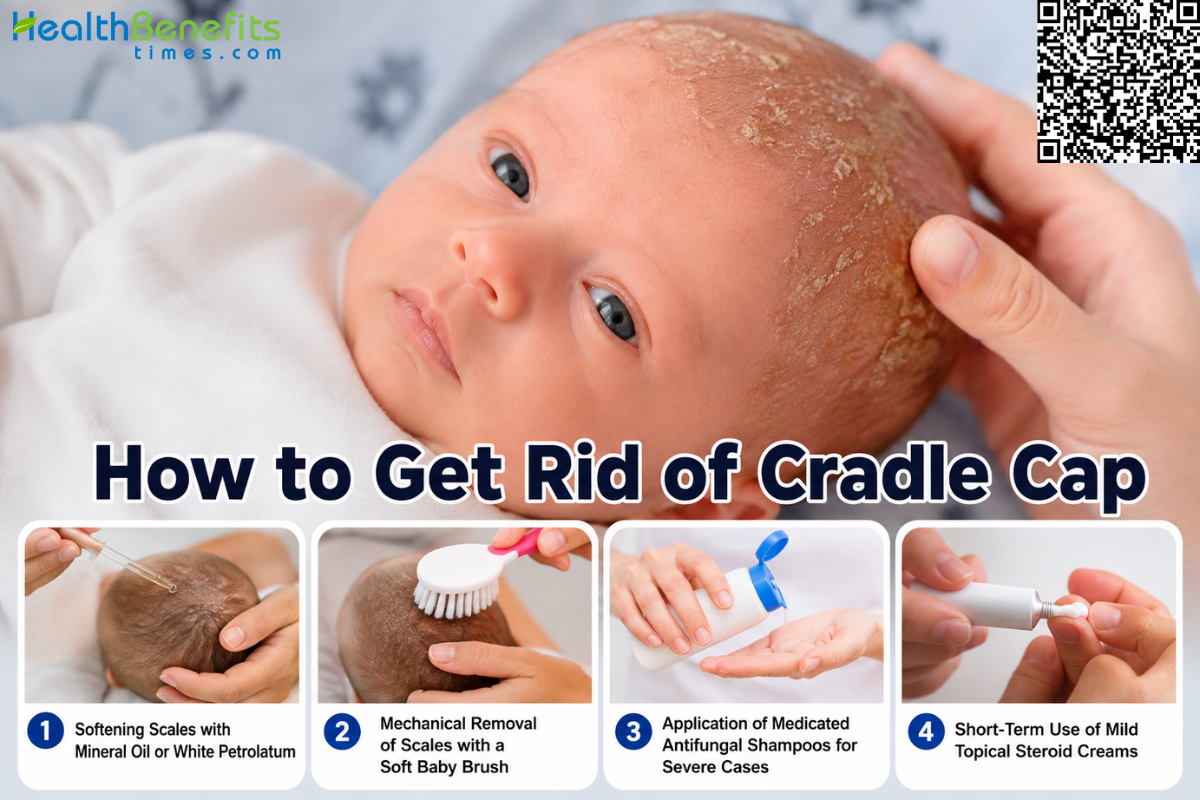
Causes of Cradle Cap
- Overactive Oil Glands: The condition is heavily linked to the excessive production of sebum, a natural oil in the skin, which prevents dead skin cells from shedding normally and causes them to stick to the scalp 2.
- Maternal Hormones: Clinical research indicates that residual hormones passed from the mother to the infant during pregnancy overstimulate the baby’s oil glands, leading to this temporary build-up during the first few months of life 3.
- Yeast Colonization: A naturally occurring type of fungus or yeast called Malassezia, which thrives in the oily secretions on the skin, is known to trigger a mild inflammatory response that contributes to the crusty scaling 2.
- Unrelated Factors: Medical consensus confirms that the condition is not caused by poor hygiene, inadequate bathing, bacterial infections, or allergic reactions to fabrics and soaps 1.
Symptoms of Cradle Cap
- Thick, Greasy Crusts: The most prominent sign is the development of thick, oily, yellow or brownish patches that firmly attach to the scalp and hair 1.
- Flaky Scales: Affected areas frequently display white or yellowish skin flakes that resemble severe dandruff and may peel off naturally over time 2.
- Lack of Discomfort: Unlike eczema or other allergic skin rashes, this condition is benign and does not typically cause the infant any pain, irritation, or itching 2
- Mild Redness: The skin directly underneath the scaly patches may appear slightly red or flushed, particularly if the crusts are accidentally rubbed or peeled away prematurely 3.
- Temporary Hair Loss: As the heavy scales naturally shed or are gently washed from the scalp, they may take some strands of hair with them, causing mild and temporary hair loss that regrows fully once the condition resolves 2.
How to Get Rid of Cradle Cap
1. Observation and Natural Resolution Over Time
How it may help
Because infantile seborrheic dermatitis is a benign and self-limiting condition, observing it without medical intervention allows the issue to resolve naturally. Over time, the maternal hormones that overstimulate the infant’s oil glands diminish, stopping the excessive sebum production that creates the crusty scales 2.
What research says
Clinical guidelines state that conservative management through watchful waiting is the primary recommendation for mild cases. Research confirms that the condition spontaneously clears without treatment within weeks or a few months, with most cases fully resolving by the time the child is one year old 2.
How to use it safely
To practice safe observation, maintain your baby’s standard hygiene routine without aggressively scrubbing the scalp. You should gently wash their hair with a mild baby shampoo during regular baths, allowing the crusts to dry and shed naturally at their own pace 1.
Potential precautions or side effects
Never pick or scratch the scales, as this increases the risk of bacterial skin infections 2. Consult a pediatrician if patches bleed, spread, or appear heavily inflamed.
2. Daily Hair Washing with Mild Baby Shampoo
How it may help
Washing an infant’s scalp regularly with a gentle cleanser helps remove the excess oils that cause dead skin cells to stick together. This continuous cleansing softens the crusty patches, allowing the thick scales to gradually loosen and wash away without damaging the underlying skin 2.
What research says
Pediatric clinical guidelines establish frequent, non-medicated scalp hygiene as the standard first-line treatment for uncomplicated cases. Medical consensus confirms that routine cleansing with a mild, tear-free baby shampoo effectively manages the condition and prevents the accumulation of new oily scales while the disorder naturally resolves 3.
How to use it safely
You should wash your baby’s hair once a day using a small amount of mild baby shampoo. Gently massage the lather into the scalp with your fingertips or a soft washcloth to loosen the flakes, then rinse the area completely with warm water 1.
Potential precautions or side effects
Avoid using adult shampoos or harsh soaps, as these can severely dry out a baby’s delicate skin and exacerbate irritation 2. Reduce washing frequency if the scalp becomes red.
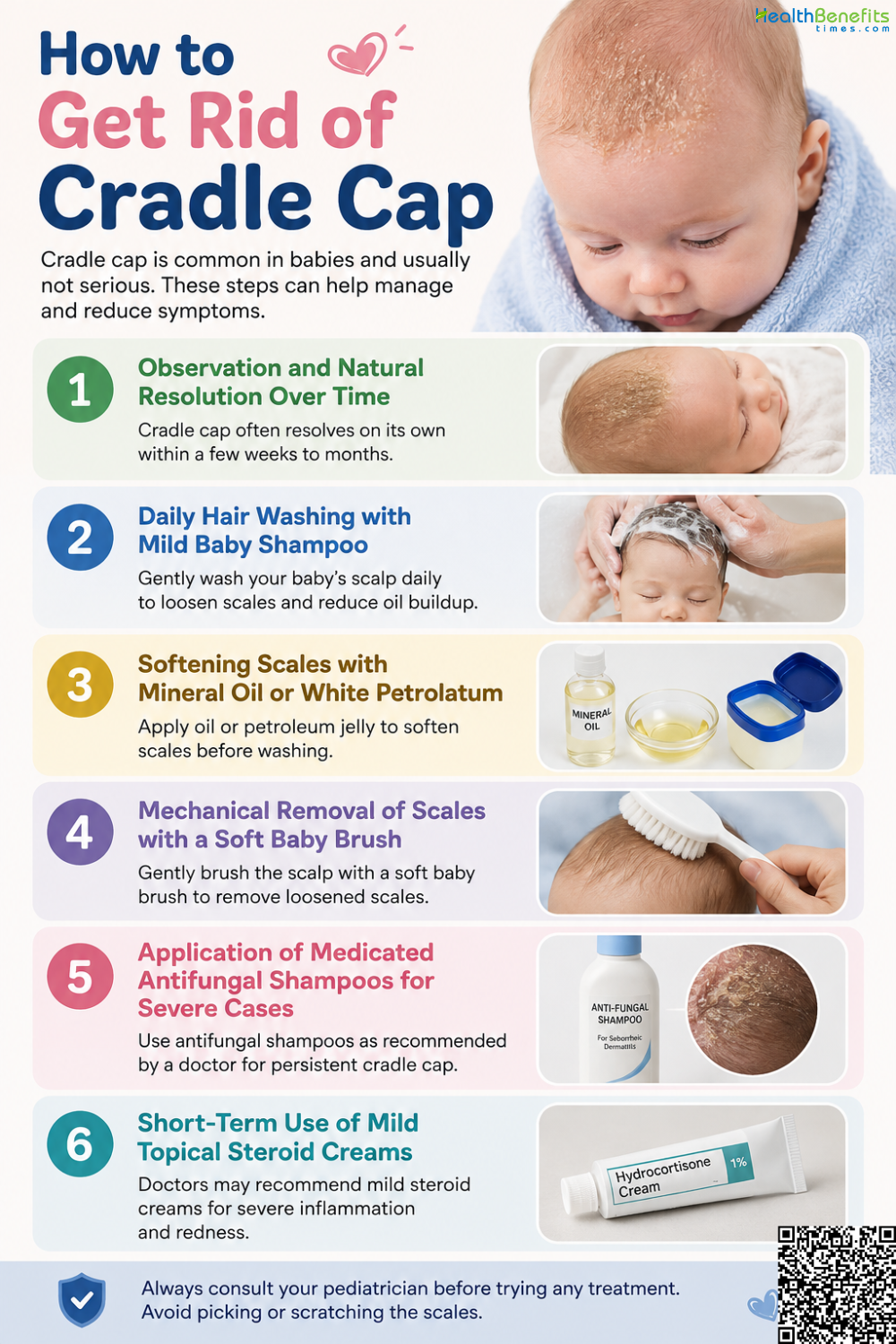
3. Softening Scales with Mineral Oil or White Petrolatum
How it may help
Applying mineral oil or white petrolatum acts as a heavy emollient that hydrates thick, stubborn crusts on an infant’s scalp. These substances penetrate the rigid outer layers of the patches, breaking down and softening the tightly adhered skin cells so they can be easily loosened without irritating the underlying skin 4.
What research says
Clinical dermatology guidelines support using non-medicated emollients, specifically mineral oil or white petrolatum, as an effective, conservative therapy for persistent scaly patches. Medical experts confirm that softening the hardened lesions before washing safely facilitates scale removal and frequently eliminates the need for prescription medical treatments in young infants 4.
How to use it safely
You should apply a small amount of mineral oil or white petrolatum directly to the tough patches. Allow it to sit for up to an hour to soften the crusts. Afterward, carefully brush the scalp and thoroughly wash the hair with baby shampoo to remove all excess oil 1.
Potential precautions or side effects
You must wash the emollient out completely after use. Leaving residual oil on the scalp can further clog oil glands, trap natural skin yeasts, and worsen the scaly buildup 1.
4. Mechanical Removal of Scales with a Soft Baby Brush
How it may help
Using a soft-bristled baby brush provides gentle mechanical exfoliation that lifts the thick, greasy patches away from the scalp. This physical action separates the dead skin cells from the healthy skin underneath, making it easier to rinse the flakes away during a bath without causing trauma to the infant’s head 4.
What research says
Pediatric dermatologists and clinical protocols recommend gentle mechanical removal as a primary, non-medicated treatment for infant seborrheic dermatitis. Medical guidelines confirm that physically loosening the scales with a soft brush or fine-toothed comb, especially during shampooing, safely and effectively clears the crust buildup 1.
How to use it safely
After applying baby shampoo or a softening oil, you should gently stroke your baby’s scalp using a soft-bristled brush, a clean washcloth, or a fine-toothed rubber comb. Brush lightly in a single direction to carefully loosen the flakes before thoroughly rinsing the head with warm water 1.
Potential precautions or side effects
You must avoid scraping or forcefully peeling scales with your fingernails. Aggressive brushing can cause open sores, bleeding, and increase the risk of bacterial skin infections 2.
5. Application of Medicated Antifungal Shampoos for Severe Cases
How it may help
Medicated antifungal shampoos target and eliminate Malassezia, a naturally occurring yeast on the skin that drives the inflammatory response in severe seborrheic dermatitis. By reducing this yeast population, these specialized shampoos decrease scalp inflammation, slow the overproduction of skin cells, and stop the formation of heavy, greasy crusts 2.
What research says
Clinical studies establish that topical antifungals, particularly two percent ketoconazole shampoo, are highly effective and safe for persistent infantile seborrheic dermatitis that resists standard hygiene routines. Medical consensus confirms these treatments resolve severe scaling rapidly without causing significant systemic absorption or adverse effects in infants 3.
How to use it safely
You should only use medicated shampoos if prescribed by a pediatrician. Apply a small amount to your baby’s scalp, lather gently, and leave it on for the specific time directed by your doctor before rinsing completely. You must be extremely careful to avoid getting the medication in their eyes 2.
Potential precautions or side effects
These shampoos can occasionally cause mild scalp dryness, stinging, or localized redness 3. You must stop using the product and contact a doctor immediately if severe irritation or rash develops.
6. Short-Term Use of Mild Topical Steroid Creams
How it may help
Mild topical steroid creams reduce inflammation and calm the local immune response in the skin. When applied to severely red or irritated patches on the scalp, these medications quickly relieve the underlying inflammation that drives the overproduction of greasy scales and crusts 2.
What research says
Clinical guidelines establish low-potency corticosteroids, such as one percent hydrocortisone cream, as a highly effective secondary treatment for resistant or intensely inflamed cases. Medical research confirms that a brief application period rapidly clears severe symptoms with an excellent safety profile for infants 3.
How to use it safely
You should use topical steroids only under the direct supervision of a pediatrician. Apply a very thin layer exclusively to the inflamed patches once or twice daily. You must strictly limit this treatment to a few days or up to one week to prevent adverse skin reactions 2.
Potential precautions or side effects
Prolonged use of steroid creams can cause permanent skin thinning and potentially disrupt a baby’s hormone levels. You must never apply them to healthy skin or open sores 4.
Foods to Avoid When You suffer from Cradle Cap
While caregivers frequently suspect dietary triggers, clinical research confirms that infantile seborrheic dermatitis is driven by overactive oil glands and skin yeast rather than food allergies, meaning no specific foods require avoidance 2. However, caregivers often mistakenly restrict the following:
1. Dairy Products
Restricting dairy for an infant or nursing mother is clinically unnecessary, as medical evidence confirms the condition stems from skin flora, not milk allergies 2.
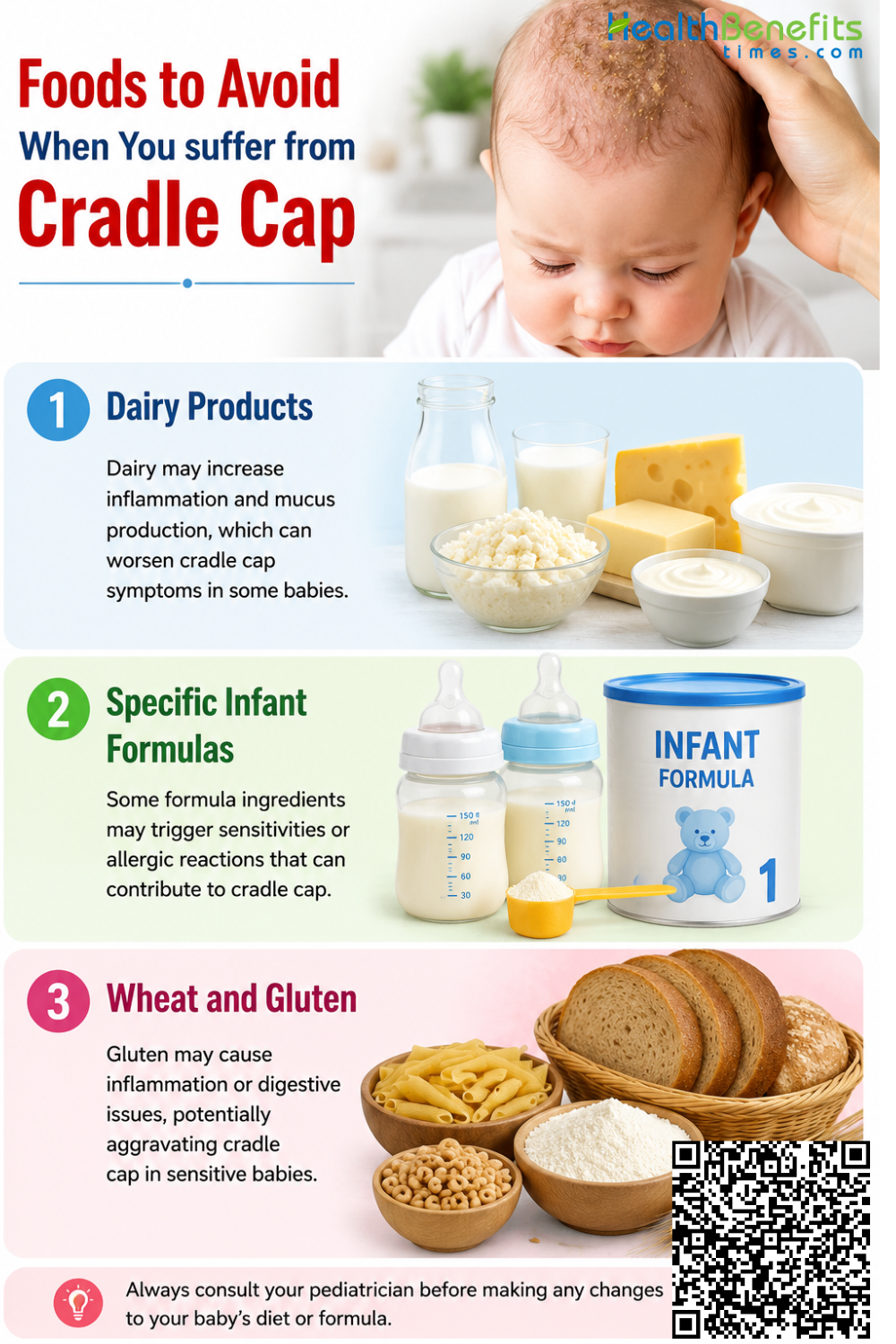
2. Specific Infant Formulas
Avoiding standard formulas does not resolve the condition. Research proves the scales result from overactive sebaceous glands rather than any nutritional or allergic reaction 5.
3. Wheat and Gluten
There is no medical requirement to avoid gluten. Pediatric guidelines demonstrate that these crusty patches are completely unrelated to food intolerances or digestive issues 2.
When to See a Doctor When You Struggle from Cradle Cap
While the condition is typically harmless and resolves independently, certain clinical symptoms require professional medical evaluation to rule out infections or other underlying skin disorders.
1. Signs of Infection
If the affected areas become severely red, warm to the touch, or begin weeping fluid or pus, it indicates a secondary bacterial infection requiring prompt treatment 2.
2. Extensive Spreading
You should consult a pediatrician if the scaly patches rapidly spread beyond the scalp to cover large areas of the face, neck, or body folds 1.
3. Lack of Improvement
Medical assessment is necessary if standard home care routines, such as regular washing and brushing, fail to improve the crusty buildup after several weeks 2.
4. Bleeding or Open Sores
If the underlying skin cracks, develops open sores, or bleeds after scales shed, a doctor must evaluate the infant to prevent further skin barrier damage 4.
5. Noticeable Discomfort
Because this condition is fundamentally benign, you should seek medical advice if your baby excessively scratches the area, as itching usually indicates eczema rather than cradle cap 1.
Comments
comments