


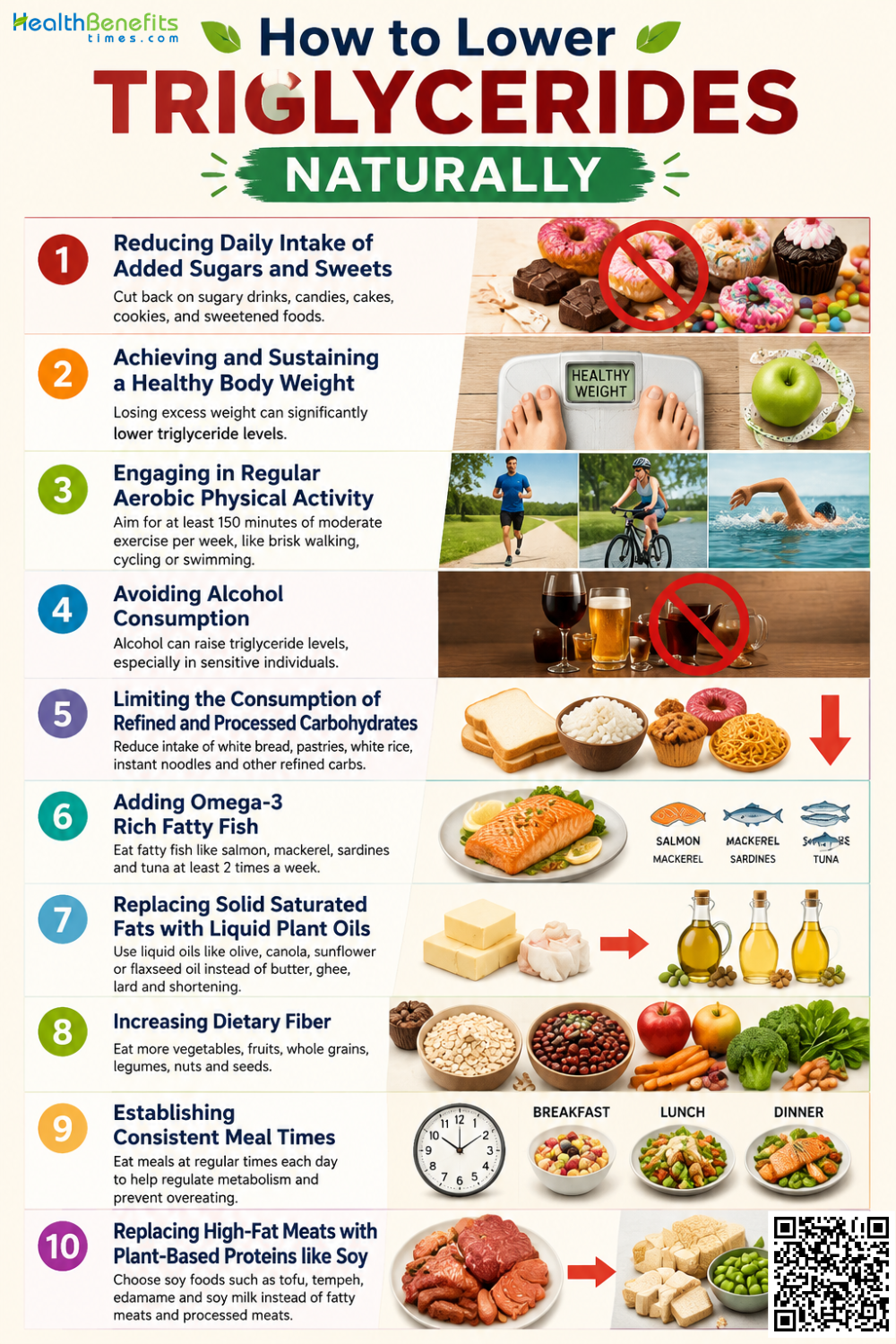
How to Lower Triglycerides Naturally
1. Reducing Daily Intake of Added Sugars and Sweets
How it may help
When a person consumes more sugar than the body needs for immediate energy, the liver directly converts the excess fructose and glucose into triglycerides. The body then releases these newly formed fats into the bloodstream for long-term storage, which directly elevates overall blood triglyceride levels 2.
What research says
Clinical research demonstrates a strong, direct link between diets high in added sugars and significantly elevated blood triglycerides. Health authorities conclude that restricting added sugars to less than 10 percent of total daily calories drastically reduces fasting triglyceride levels and lowers the overall risk of heart disease 5.
How to use it safely
To safely reduce your intake, carefully read nutrition labels to identify and avoid hidden added sugars, such as high-fructose corn syrup. Replace sugary beverages like soda with plain water, and satisfy sweet cravings by eating whole, fresh fruits that contain beneficial dietary fiber 6.
Potential precautions or side effects
Suddenly cutting all sugar can cause temporary withdrawal symptoms like headaches or irritability. Additionally, be cautious of overusing artificial sweeteners, which may still trigger strong sweet cravings 7.
2. Achieving and Sustaining a Healthy Body Weight
How it may help
Carrying excess body weight often causes insulin resistance, which alters how the body processes dietary fats and sugars. Losing weight restores insulin function and signals the body to burn stored fat for energy. This metabolic shift directly reduces the liver’s production of triglycerides and clears them from the bloodstream.
What research says
Clinical guidelines state that individuals who are overweight can significantly lower their blood triglyceride levels by losing just 5 to 10 percent of their total body weight 2. Medical research confirms that sustaining this moderate weight loss provides long-lasting improvements to blood lipid profiles 8.
How to use it safely
To lose weight safely, aim for a gradual reduction of one to two pounds per week by moderately decreasing calorie intake and increasing physical activity 9. Focus on building sustainable, lifelong healthy eating habits rather than attempting severely restrictive fad diets.
Potential precautions or side effects
Avoid extreme calorie restriction and rapid weight loss, as these practices can cause nutritional deficiencies, dangerous muscle depletion, and a high risk of developing gallstones 10.
3. Engaging in Regular Aerobic Physical Activity
How it may help
Aerobic exercise increases the body’s energy demands, prompting muscles to burn circulating triglycerides for fuel. It also stimulates specific enzymes that break down these fats, effectively clearing them from the bloodstream and directly lowering overall triglyceride levels.
What research says
Clinical guidelines conclude that regular aerobic exercise consistently lowers blood triglyceride levels. Studies confirm that completing at least 150 minutes of moderate-intensity physical activity weekly significantly improves overall blood lipid profiles and reduces the long-term risk of cardiovascular disease 2.
How to use it safely
To start safely, begin with low-impact activities like brisk walking, cycling, or swimming. Gradually build up to 30 minutes a day, five days a week. Always include a brief warm-up and cool-down to prevent muscle strain 11.
Potential precautions or side effects
Consult a doctor before starting an exercise routine if you have underlying medical conditions. Stop immediately if you experience chest pain, severe shortness of breath, or dizziness 12.
4. Avoiding Alcohol Consumption
How it may help
Alcohol is calorie-dense and stimulates the liver to produce triglycerides. When the body metabolizes alcohol, it prioritizes processing these calories, which leads to an accumulation of fat in the blood. Reducing or eliminating alcohol consumption decreases this production, directly resulting in lower blood triglyceride levels.
What research says
Clinical research consistently confirms that even moderate alcohol consumption can trigger significant elevations in blood triglycerides. Health authorities conclude that for individuals with high triglyceride levels, avoiding alcohol is a primary, evidence-based strategy to improve lipid profiles and prevent cardiovascular complications 2.
How to use it safely
To manage your levels, prioritize total avoidance of all alcoholic beverages. If you currently drink, you must discuss a safe, gradual reduction plan with your healthcare provider to avoid withdrawal complications 13.
Potential precautions or side effects
If you consume alcohol heavily, do not stop abruptly without medical supervision, as sudden cessation can trigger severe withdrawal symptoms, including tremors, seizures, and dangerous cardiovascular stress 13.
5. Limiting the Consumption of Refined and Processed Carbohydrates
How it may help
Refined carbohydrates, such as white bread, pasta, and pastries, are quickly broken down into sugar. This causes rapid spikes in blood glucose, triggering the liver to produce excess triglycerides. By limiting these foods, the body manages blood sugar more effectively and significantly reduces the amount of fat synthesized and released into the blood.
What research says
Clinical research concludes that diets high in refined carbohydrates and low in fiber are directly associated with elevated triglyceride levels. Health authorities recommend replacing these processed starches with whole grains and complex carbohydrates to improve insulin sensitivity and lower blood fat concentrations effectively 2.
How to use it safely
To use this safely, replace white grains with high-fiber whole grain alternatives like brown rice, oats, and quinoa. Focus on eating vegetables and legumes, which provide complex carbohydrates that break down slowly, preventing the sharp sugar and fat spikes associated with refined, processed foods 14.
Potential precautions or side effects
Severely restricting all carbohydrates can lead to low energy and nutritional gaps. Ensure you replace refined items with high-quality, nutrient-dense whole foods rather than removing them entirely 2.
6. Adding Omega-3 Rich Fatty Fish
How it may help
Omega-3 fatty acids found in fatty fish work by signaling the liver to decrease its production of triglyceride-carrying particles. These healthy fats also increase the rate at which the body breaks down and removes existing triglycerides from the bloodstream, leading to a direct and effective reduction in overall circulating fat levels.
What research says
Clinical evidence confirms that omega-3 fatty acids, specifically EPA and DHA, significantly lower blood triglyceride levels. Authoritative health organizations conclude that consuming these essential fats through a diet rich in fatty fish provides clear, measurable benefits for improving lipid profiles and supporting long-term heart health 15.
How to use it safely
To use this safely, include at least two servings of fatty fish—such as salmon, mackerel, sardines, or lake trout—in your weekly diet. Choose these options prepared by baking, broiling, or grilling rather than frying to ensure you maximize the heart-health benefits without adding unhealthy, extra fats 16.
Potential precautions or side effects
Choose fish low in mercury, such as salmon or sardines, to avoid toxin exposure. High-dose supplements can increase bleeding risks and should only be taken under medical guidance 15.
7. Replacing Solid Saturated Fats with Liquid Plant Oils
How it may help
Solid saturated fats, such as butter, lard, and coconut oil, can negatively impact lipid metabolism and contribute to higher triglyceride levels. Replacing these with liquid plant oils rich in unsaturated fats improves how the body processes blood lipids, helping to reduce the overall concentration of triglycerides circulating in the bloodstream.
What research says
Clinical guidelines strongly recommend replacing dietary saturated fats with unsaturated fats to improve cardiovascular outcomes. Research concludes that these healthier fats are more efficiently metabolized by the liver, which directly supports the maintenance of healthy triglyceride levels compared to diets high in saturated fat 17.
How to use it safely
Substitute butter or solid fats with heart-healthy liquid oils like olive, canola, or avocado oil when cooking. Use these oils in moderation for sautéing or as dressing bases. Always store oils in a cool, dark place to prevent oxidation and maintain their beneficial properties 2.
Potential precautions or side effects
All dietary oils are high in calories. You must use them in strictly limited portions to avoid unwanted weight gain, which can counteract their heart-health benefits 17.
8. Increasing Dietary Fiber
How it may help
Soluble fiber slows the absorption of sugar and fat in the digestive tract. By preventing rapid spikes in blood glucose, it reduces the amount of excess energy the liver must convert into triglycerides. This process effectively lowers the amount of fat released into the bloodstream after meals, helping to maintain healthy lipid levels.
What research says
Clinical research concludes that a high-fiber diet, particularly one rich in soluble fiber, is consistently associated with lower blood triglyceride levels. Health authorities recommend increasing fiber intake through whole grains, legumes, and vegetables as a primary dietary intervention to improve metabolic health and reduce overall cardiovascular risk factors 17.
How to use it safely
To increase fiber safely, add more beans, oats, lentils, and fresh produce to your daily diet. You must increase your intake gradually over several weeks to allow your digestion to adjust, and always drink plenty of water to prevent digestive blockages 18.
Potential precautions or side effects
Increasing fiber too quickly can cause temporary bloating, gas, and abdominal discomfort. Consuming adequate water is essential to help fiber move through your system without causing digestive strain 19.
9. Establishing Consistent Meal Times
How it may help
Eating meals at consistent times helps regulate the body’s internal clock and improves insulin sensitivity. By stabilizing glucose and insulin responses throughout the day, the liver is less likely to synthesize and release excess triglycerides into the bloodstream, which helps maintain a more stable and healthy lipid profile.
What research says
Clinical research indicates that meal irregularity is associated with impaired glucose metabolism and higher post-meal triglyceride levels. Health authorities conclude that maintaining a stable eating rhythm supports better metabolic regulation, which can help prevent the wide fluctuations in blood sugar and fat often linked to increased cardiovascular risk 14.
How to use it safely
To apply this, schedule your meals and snacks at roughly the same time each day. Avoid skipping meals, as this often leads to overeating later, which can cause significant spikes in blood triglycerides. Focus on balanced portions at each scheduled eating time to maintain steady energy levels.
Potential precautions or side effects
There are no significant side effects to eating consistently. However, avoid late-night snacking, as consuming high-calorie meals shortly before sleep can interfere with metabolic recovery and elevate overnight triglyceride levels.
10. Replacing High-Fat Meats with Plant-Based Proteins like Soy
How it may help
High-fat animal meats are significant sources of saturated fat, which can raise triglyceride levels. By replacing these meats with soy-based proteins, you eliminate the intake of unhealthy saturated fats. Soy is naturally low in fat and rich in plant-based nutrients that support better lipid metabolism and help reduce circulating fat in the bloodstream.
What research says
Clinical research indicates that substituting animal proteins with soy protein can contribute to improved blood lipid profiles. Health authorities note that soy is a complete protein source, and incorporating it as a replacement for high-fat meat products helps in lowering overall triglyceride levels without compromising essential nutritional intake 20.
How to use it safely
To use this safely, choose minimally processed soy options like tofu, tempeh, and edamame. Incorporate these into your meals as direct replacements for red or processed meats. Ensure your overall diet remains balanced with a variety of other whole plant foods to support sustained heart health.
Potential precautions or side effects
Individuals with soy allergies must avoid these products entirely. Otherwise, soy is widely considered safe, though some people may experience mild, temporary digestive changes when increasing their intake.
Comments
comments