

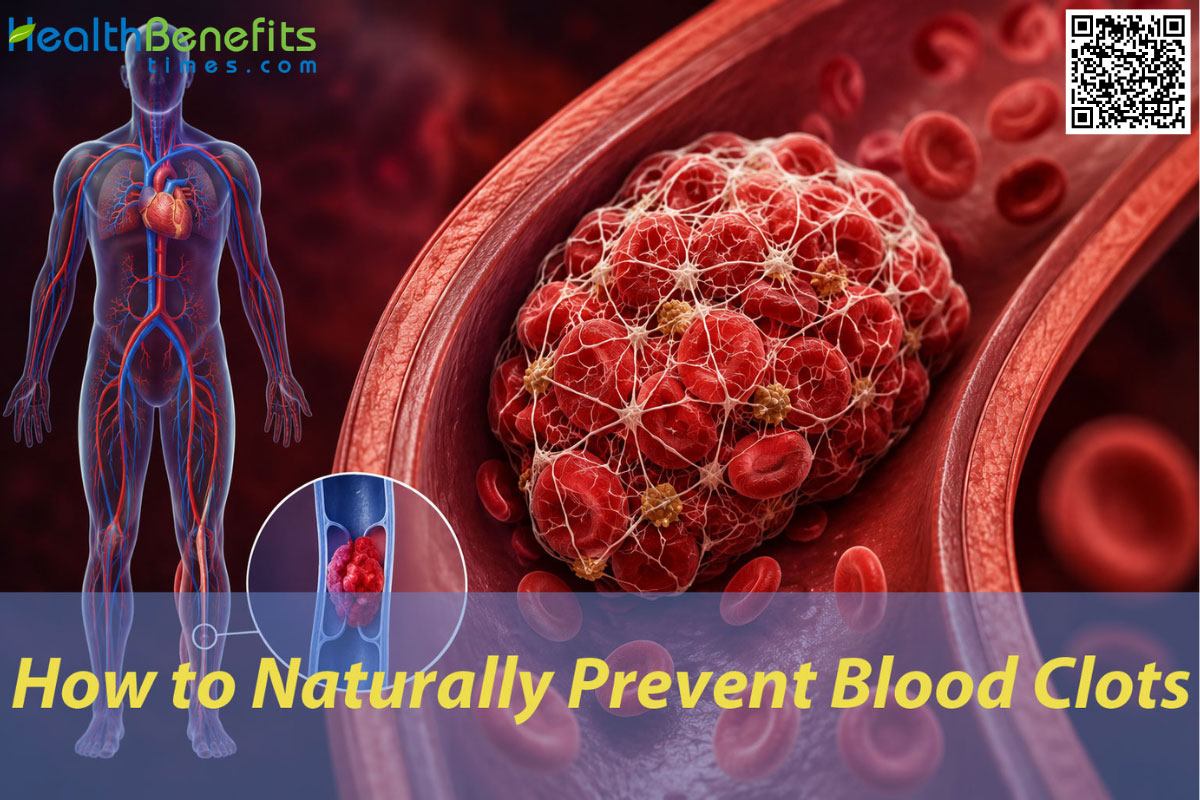
Causes of Blood Clots
Sometimes, the body’s natural defense systems get a little confused by our modern lifestyles or underlying health issues. A variety of different triggers can cause the blood to thicken and form unnecessary blockages inside the deep veins.
1. Sitting Still for Too Long
Remaining in one position for hours slows down normal circulation. When the legs do not move during a long flight, a long car ride, or a lengthy hospital stay, blood pools heavily in the calves and becomes much more likely to clump together 4.
2. Not Drinking Enough Water
Failing to drink enough fluids leads to dehydration, which physically changes the consistency of the blood. Without enough water, blood becomes thicker and more viscous, moving sluggishly through the veins and increasing the chances of a blockage forming 5.
3. Major Surgeries and Injuries
Any severe physical trauma or major operation acts as a loud alarm bell for the body’s healing system. Surgeries involving the hips, pelvis, or abdomen naturally damage local blood vessels, which aggressively stimulates the body to form clots as a protective response 6.
4. High Levels of Estrogen
Hormones play a surprisingly large role in how blood behaves. Higher estrogen levels from pregnancy, birth control pills, or hormone replacement therapies subtly alter blood chemistry, making the liquid naturally more prone to solidifying 7.
5. Underlying Illnesses and Genetics
Chronic health struggles often keep the body in a constant state of inflammation. Conditions like active cancer, lung disease, or an inherited genetic trait that causes sticky blood can permanently keep the body’s clotting system on high alert 8.
Symptoms of Blood Clots
Knowing what to look out for can empower anyone to seek help swiftly. Because these blockages can happen in the legs or the lungs, the warning signs look very different depending on where the problem is located.
- Unexplained swelling that usually happens in just one leg or one arm, rather than both at the same time 9.
- A persistent, deep ache, heaviness, or cramping pain in the calf or thigh that does not go away with rest 10.
- Patches of skin over the affected area that feel noticeably warmer to the touch than the rest of the body.
- Visible changes in skin color, often appearing unusually red, purplish, or slightly blue near the painful swelling.
- A sudden and terrifying feeling of being out of breath that happens without any hard exercise 11.
- Sharp, stabbing chest pain that feels much worse when trying to take a deep breath or when coughing.
- A sudden, unexplained cough that might bring up specks of blood or bloody mucus.
- Feeling extremely dizzy, lightheaded, or suddenly passing out without warning.
Blood Clots Facts
Sorting through medical information is much easier when the details are laid out clearly. Here is a simple, straightforward look at the most important facts everyone should know about this condition.
| Category | Details |
| Symptoms |
|
| Causes |
|
| Types of Blood Clots |
|
| How does spread |
|
| Age Group |
|
| You might be at a higher risk for exposure of this disease if you: 3 |
|
| How doctors diagnose |
|
| Other facts |
|
How to Naturally Prevent Blood Clots
You hold a lot of power when it comes to keeping your blood flowing smoothly and your veins healthy. By adding a few natural, heart-friendly ingredients and habits into your daily routine, you can gently support your circulatory system.
1. Spice Up Meals with Turmeric
The bright yellow spice that gives curry its beautiful color has been cherished in traditional wellness for generations. Turmeric contains an active compound called curcumin, which scientists believe acts as a very mild, natural blood thinner 14. This gentle spice helps soothe inflammation inside the body and may keep blood cells from clumping together too easily.
Note: This vibrant spice is commonly cooked into warm curries, blended into golden milk teas, or taken as a dietary supplement to calm inflammation and support heart health.
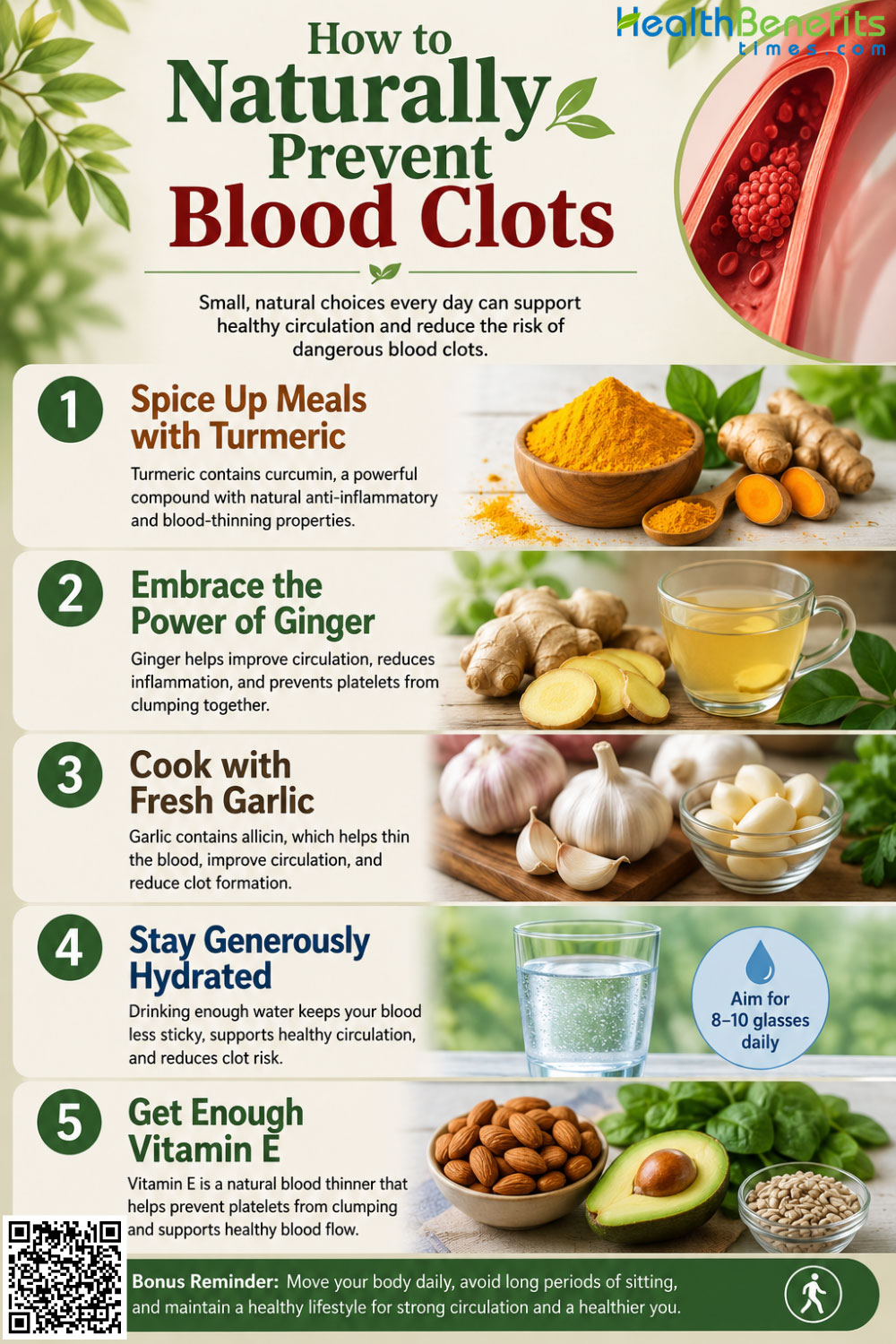
2. Embrace the Power of Ginger
Looking closely at the produce aisle, you will find another fantastic root that shares a family tree with turmeric. Ginger contains natural plant chemicals called salicylates, which are actually the exact same compounds used to make synthetic aspirin 15. These plant-based chemicals offer wonderful protection for the heart by discouraging sticky blood cells from clumping up on the walls of your veins.
Note: Fresh ginger root is commonly grated into stir-fries, steeped in boiling water to make a soothing tea, or chewed to naturally boost digestion and blood flow.
3. Cook with Fresh Garlic
Adding robust flavor to your dinner can also do wonders for your cardiovascular system. Fresh garlic has been extensively studied for its ability to naturally modify how blood platelets function, effectively making the blood less sticky 16. When you crush or chop a garlic clove, it releases a beneficial compound called allicin, which is highly praised for keeping blood vessels relaxed and circulation strong.
Note: Garlic is commonly eaten raw, roasted, or minced into daily savory dishes to safely lower blood pressure and help prevent poor circulation.
4. Stay Generously Hydrated
Drinking plain water might seem too simple to be a medical remedy, but it is actually your best defense against sticky blood. When you do not drink enough fluids, your blood volume drops, making the liquid thick, slow, and much more likely to form a blockage 17. Keeping a glass of water nearby and sipping constantly ensures your blood remains thin and easy for your heart to pump.
Note: Plain water is commonly consumed continuously throughout the day as the ultimate natural remedy to prevent dehydration and keep the circulatory system running perfectly.
5. Get Enough Vitamin E
Enjoying a handful of nuts is a great way to protect your cells from the inside out. Vitamin E is an essential nutrient that acts as a very mild anticoagulant, subtly interfering with the body’s clotting enzymes to prevent the blood from solidifying too quickly 18. It also works as an antioxidant, protecting the delicate inner lining of your veins from everyday wear and tear.
Note: Vitamin E is commonly eaten through a diet rich in sunflower seeds, almonds, and avocados to naturally protect blood vessels and keep coagulation safely balanced.
Is there any exercise or physical activities to prevent blood clots
Moving your body is truly the ultimate enemy of poor circulation. The deep veins in your legs do not have their own strong pumps; they rely entirely on the squeezing action of your leg muscles to push blood all the way back up to your heart.
1. Take Frequent Walking Breaks
Making time for a short stroll is the most effective way to keep your leg veins happy. Every time you take a step, the large muscles in your calves contract and squeeze the veins, forcefully pushing pooled blood upward 19. Health experts recommend adults aim for at least 150 minutes of moderate activity like walking each week.
Note: To do this, simply stand up from your chair every two hours and take a brisk, five-minute walk around your house or office building.
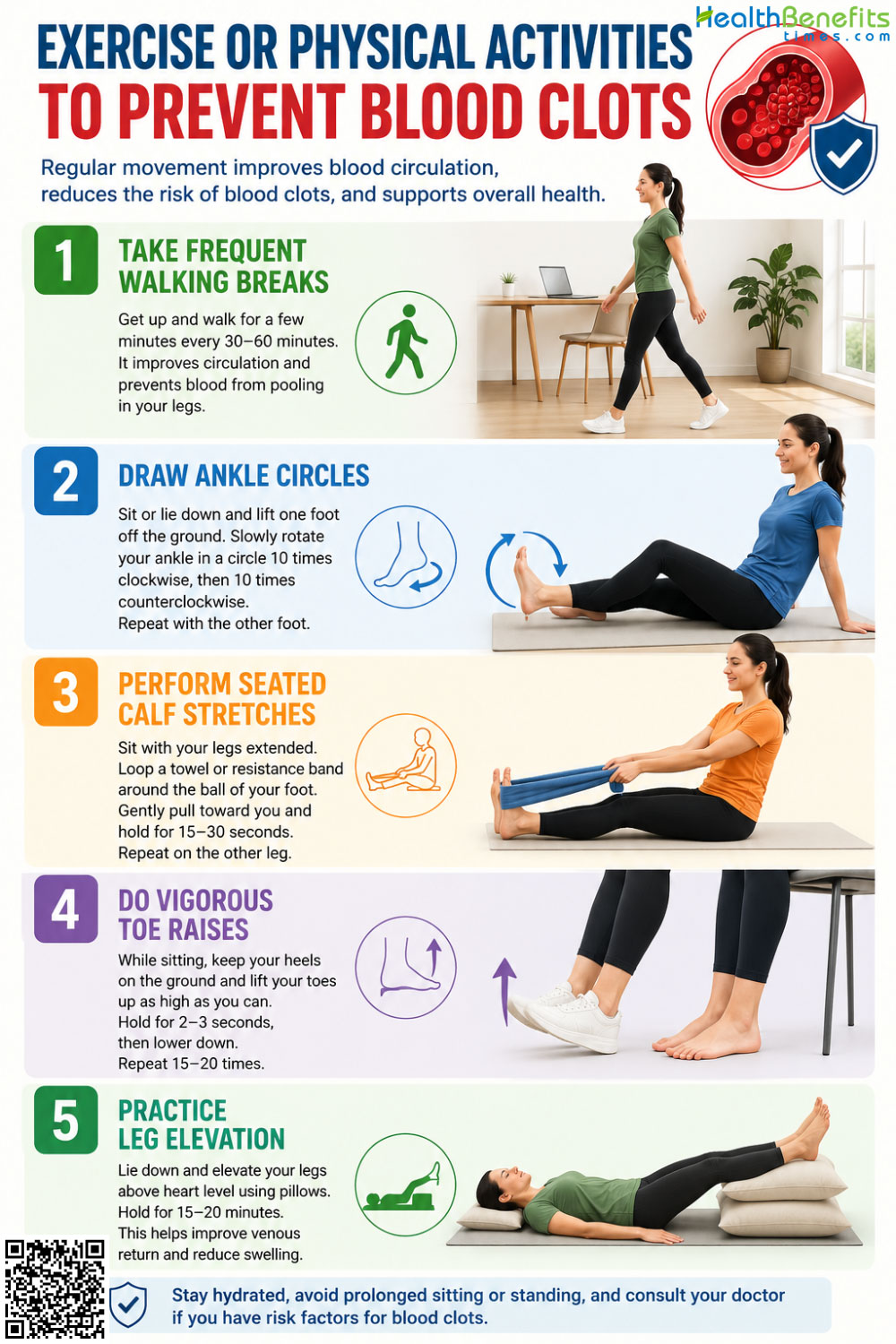
2. Draw Ankle Circles
Sitting trapped in an airplane seat or at a tiny desk does not mean your legs have to suffer. Ankle circles are a brilliant, quiet exercise that isolates the lower leg muscles, creating just enough movement to keep blood from settling heavily in your feet 4.
Note: To do this, lift your feet slightly off the floor and slowly draw large circles in the air with your toes, doing ten circles clockwise and ten counterclockwise.
3. Perform Seated Calf Stretches
Tight muscles restrict the flow of fresh blood. Stretching your calves gently pulls the muscles and opens up the vascular pathways, allowing any trapped, heavy blood to escape your lower legs 20. This feels especially wonderful after waking up or during a long car ride.
Note: To do this while sitting, stick your legs straight out in front of you and pull your toes backward pointing toward your knees, holding the stretch for ten seconds.
4. Do Vigorous Toe Raises
Waking up your feet requires very little effort but yields great rewards. Toe raises mimic the natural pumping action of walking without requiring you to actually stand up. This frequent flexing acts as a miniature pump for the smallest veins resting near your ankles.
Note: To do this, keep your heels firmly glued to the floor while lifting the front of your feet as high as you can, flapping them up and down rapidly for thirty seconds.
5. Practice Leg Elevation
Letting gravity do the hard work for you is a perfectly valid and relaxing strategy. Elevating your lower body completely reverses the downward pull that causes blood to pool in your feet in the first place 21. This requires absolutely no energy but provides instant relief for tired, swollen veins.
Note: To do this, lie flat on your back on a bed or sofa, prop your feet up on a tall stack of pillows so they are higher than your heart, and rest for fifteen minutes.
Foods and Activities to Avoid When You suffer from Blood Clots
Making smart health choices also means knowing exactly what bad habits to skip. Certain daily routines can accidentally sabotage your circulation, so you will want to actively avoid these common triggers.
1. Sleeping in a Recliner or Chair
Falling asleep sitting up is surprisingly hard on your veins. When you sleep in a chair, your knees stay bent for hours, which physically pinches the major blood vessels behind your knees and traps blood in your lower legs.
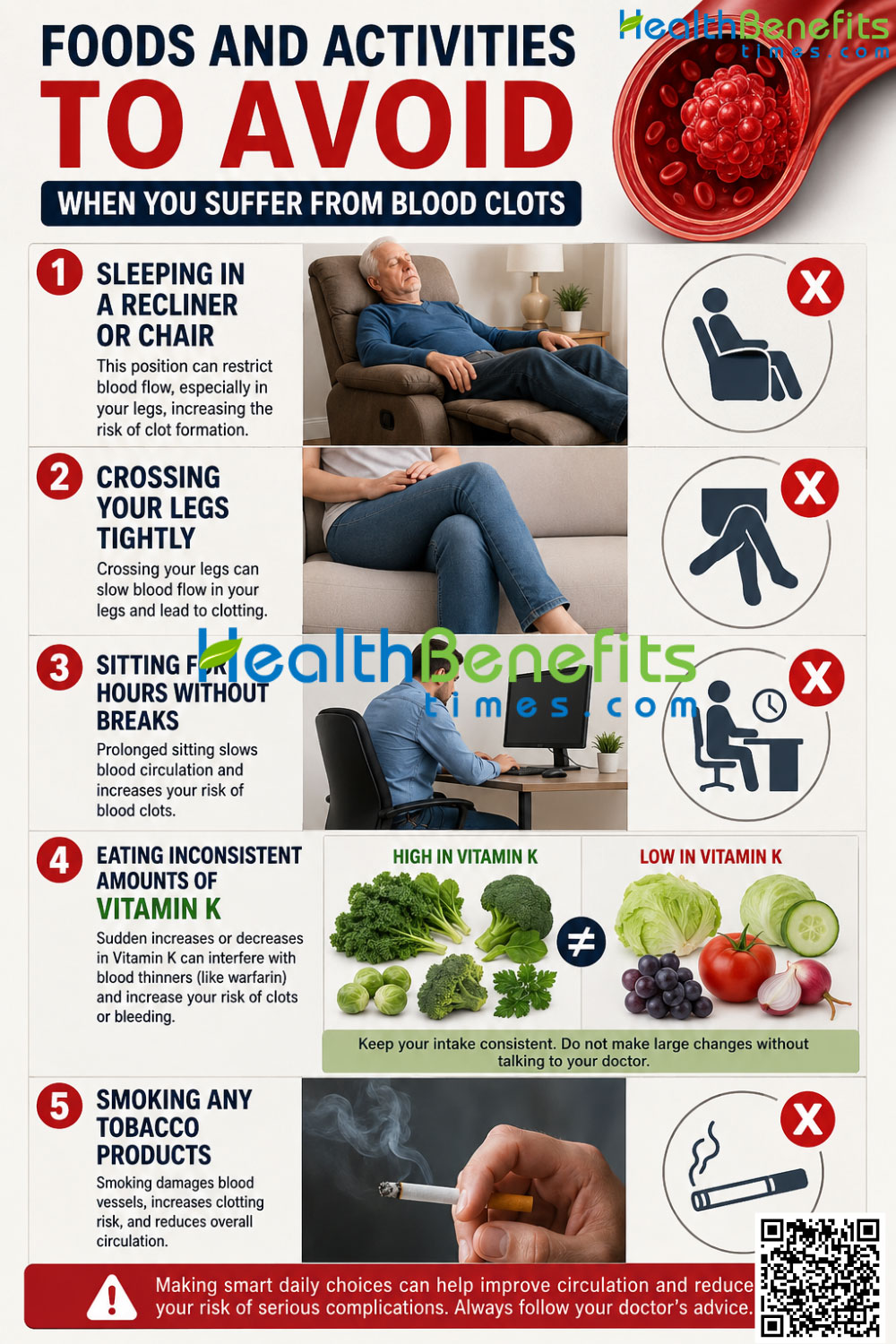
2. Crossing Your Legs Tightly
Sitting with one knee crossed over the other acts just like a tight rubber band around your leg. It squashes the delicate veins and heavily restricts blood from flowing back up to your heart, so it is always better to sit with both feet flat on the floor.
3. Sitting for Hours Without Breaks
Binge-watching television or working at a computer without standing up is a major risk factor. The longer you sit perfectly still, the slower your blood moves, creating the perfect environment for a clot to form 22.
4. Eating Inconsistent Amounts of Vitamin K
If your doctor has prescribed you the blood thinner warfarin, you must be very careful with leafy greens. Huge, sudden bowls of spinach or kale are packed with Vitamin K, which can instantly cancel out your medication. You do not have to avoid them completely, but you must eat the exact same amount every week 23.
5. Smoking Any Tobacco Products
Breathing in cigarette smoke dumps toxic chemicals directly into your bloodstream. These toxins damage the smooth inner walls of your blood vessels and make your blood cells incredibly sticky, drastically increasing your risk of a dangerous blockage 24.
Myths and Misconceptions
People love to share health advice, but sometimes well-meaning rumors are simply not true. Let’s clear up some of the most common misunderstandings about this condition so you have the correct facts.
| Myth | Reality |
| A clot in my leg will travel to my brain and cause a stroke. 13. | This is a very common mix-up. A deep vein clot in the leg travels to the lungs to cause a pulmonary embolism, not the brain. Clots that cause strokes form in the arteries, not the deep veins. |
| Only senior citizens need to worry about poor circulation. | This is entirely false. While getting older does increase the risk, perfectly healthy young adults, pregnant women, and athletes can develop blockages, especially after a sports injury or a long airplane flight. |
| If my leg is swollen and hurts, a deep tissue massage will fix it. | If you actually have a clot, a vigorous massage is extremely dangerous. Pushing hard on the muscle can easily break the clot loose, sending it shooting through your bloodstream straight toward your lungs. |
| Natural herbs and spices are always 100% safe to take. | Natural does not mean harmless. Taking massive doses of herbal supplements like garlic or turmeric can thin your blood so much that you might experience severe, uncontrollable bleeding, especially if you already take medicines. |
Special Considerations
Every stage of life brings its own unique health challenges and vulnerabilities. The human body reacts to clotting risks differently depending on age and underlying health, meaning doctors have to adjust their advice for different groups of people.
1. Children
While it is quite rare for healthy kids to experience this issue, it is a known risk for children who are very sick in the hospital 25. The most common cause in children is the use of a central venous catheter, which is a long plastic tube placed in a main vein to give medicine 26. The tube can irritate the vein and cause a blockage.
2. Pregnancy
The beautiful journey of having a baby puts a lot of stress on a mother’s circulation. Pregnant women are up to five times more likely to develop a blockage because the body naturally thickens the blood to prevent heavy bleeding during childbirth 27. Furthermore, the growing baby presses heavily on the mother’s pelvic veins, slowing down blood flow from her legs.
3. Chronic conditions
Living with an ongoing illness keeps the body’s warning systems constantly triggered. People battling cancer face very high risks because tumors release chemicals that make blood sticky, and chemotherapy can damage blood vessels. People with severe heart or lung diseases also have weaker circulation, making clots much more likely to form.
4. Elderly
As we pass the age of seventy, our veins naturally lose some of their youthful elasticity and strength 28. Older adults also tend to be less active and may spend more time resting in bed due to falls or joint pain. This combination of slower blood flow and aging blood vessels makes the elderly population particularly vulnerable to unexpected blockages.
Precaution before use of natural remedies when you have Blood Clots
Safety should always come first when trying any new health strategy. While natural remedies are wonderful, they are biologically powerful and must be treated with deep respect, especially if you have a history of circulatory issues.
1. Talk to Your Doctor First
Before swallowing handfuls of herbal pills or changing your diet drastically, you must have an honest chat with your healthcare provider. They need to know everything you are taking to make sure it will not harm you 29.
2. Watch for Easy Bruising and Bleeding
Natural blood thinners like high-dose ginger, garlic, or Vitamin E can work a little too well. If you notice large bruises appearing out of nowhere, or if a tiny paper cut bleeds for a very long time, your blood might be dangerously thin 30.
3. Never Mix Herbs with Prescription Blood Thinners
This is the most important safety rule. Mixing natural thinners with powerful prescription medicines like warfarin or aspirin doubles the thinning effect. This can lead to life-threatening internal bleeding inside your stomach or brain.
4. Stop All Supplements Before Surgery
Because surgeons need your blood to clot normally to close a wound, you must stop taking all herbal supplements at least two weeks before going to the dentist or having surgery. If you do not, you risk bleeding too much during the operation 31.
When to see Doctor
Sometimes, drinking water and stretching your legs is simply not enough. You must know when to skip the home remedies and head straight to a medical professional, as ignoring severe warning signs can be fatal.
- If your leg suddenly balloons up: If one of your legs or arms swells rapidly, feels tight, and throbs with deep pain, you need an ultrasound right away.
- If your skin turns red and hot: If the swollen area changes color to a deep red or purple and feels as hot as a fever, do not try to massage it; go to the doctor.
- If you cannot catch your breath: If you are suddenly gasping for air while just sitting on the couch, this is a massive red flag that a clot may have reached your lungs.
- If your chest hurts when you breathe: Sharp, stabbing chest pain that gets worse when you take a deep breath is a classic sign of a lung emergency.
- If you cough up blood: Hacking up pink or bloody mucus means there is severe irritation or a blockage in your lungs that requires immediate emergency room care.
Comments
comments