

Sources of Radiation
1. Terrestrial Background Radiation
Naturally occurring radioactive isotopes, such as uranium, thorium, and radon gas, are continuously emitted from the earth’s soil, water, and rock formations 4.
2. Cosmic Radiation
High-energy ionizing particles originating from the sun, distant stars, and outer space continuously penetrate the earth’s atmosphere and contribute to daily background exposure 4.
3. Internal Biological Radiation
Trace amounts of naturally occurring radioactive materials, predominantly potassium-40 and carbon-14, are permanently integrated into the human body through the normal consumption of food and water supplies 4.
4. Medical Imaging and Therapeutics
Artificial ionizing radiation is widely utilized in clinical and dental settings for diagnostic procedures, including X-rays and computed tomography (CT) scans, as well as for targeted oncological radiation therapies 5.
5. Consumer and Commercial Products
Certain commercially available goods contain trace radioactive materials, most notably americium-241 utilized in standard ionization smoke detectors, as well as specific building materials, fertilizers, and vintage luminous watch dials 4.
6. Industrial and Nuclear Facilities
Man-made radiation is generated through nuclear power plant operations, industrial radiography, uranium mining, and legacy environmental fallout from historical atmospheric nuclear weapons testing 4.
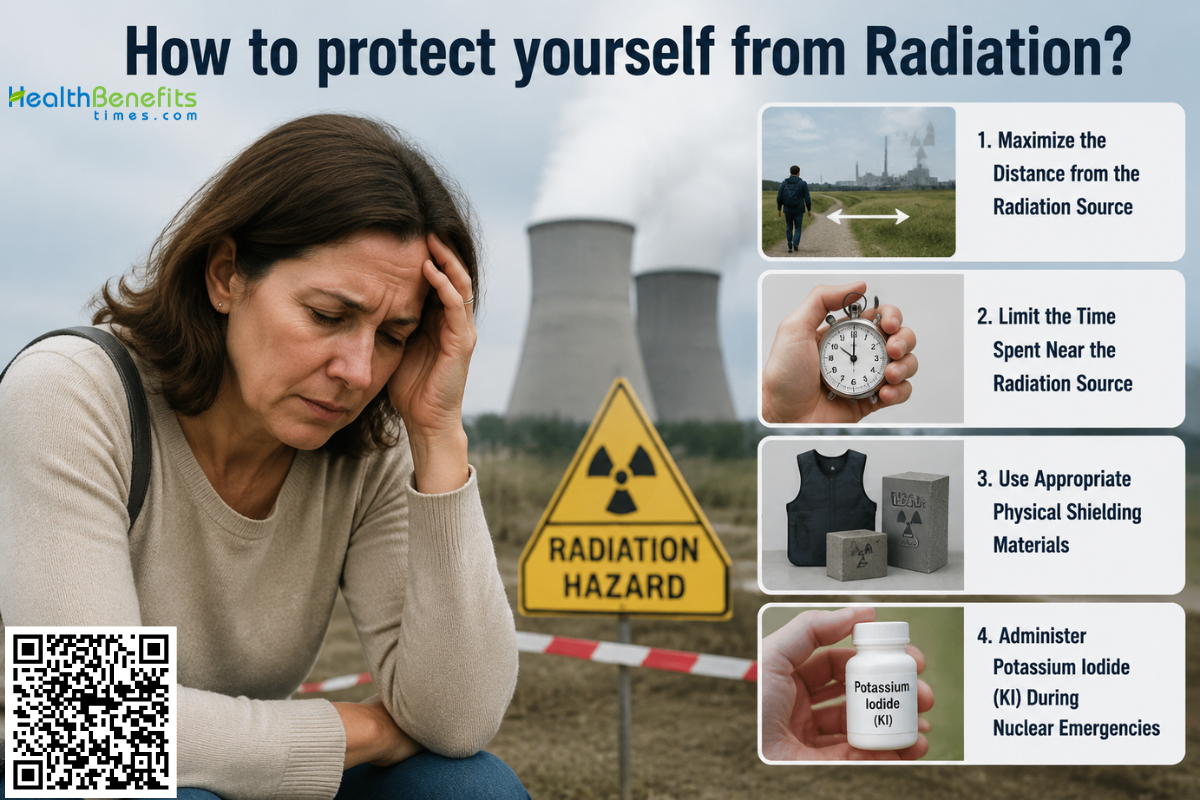
How to protect yourself from Radiation?
1. Maximize the Distance from the Radiation Source
How it may help
Increasing the physical space between a person and a radiation source rapidly decreases the intensity of exposure. Because radiation energy disperses and weakens as it travels through the air, even minor increases in distance significantly reduce the total dose absorbed by cellular tissues 6.
What research says
Radiological physics confirms that radiation exposure strictly follows the inverse square law; doubling the distance from a radioactive source reduces the exposure dose to one-quarter of its original strength 7. Guidelines establish that maximizing distance is a primary, highly effective mechanism for preventing acute tissue damage 6.
How to use it safely
If you encounter a suspected radiation hazard, evacuate the immediate area and move as far away as physically possible. During medical imaging, always step out of the room or stand strictly behind designated protective barriers if assisting a patient 8.
Potential precautions or side effects
Distancing alone does not replace the critical need for physical shielding or indoor sheltering during severe radiological emergencies involving widespread airborne contamination 9.
2. Limit the Time Spent Near the Radiation Source
How it may help
Limiting time near a radiation source directly minimizes the total cumulative dose absorbed by the body. Because cellular damage is strictly proportional to the duration of exposure, restricting time spent in a contaminated environment prevents the dangerous accumulation of ionizing energy within vulnerable tissues 6.
What research says
Radiological physics dictates that total radiation dose equals the dose rate multiplied by the time of exposure 8. Clinical guidelines consistently affirm that restricting exposure duration significantly lowers the probability of acute radiation sickness and cumulative cellular mutations over a lifespan 7.
How to use it safely
During radiological emergencies, immediately evacuate the affected area to shorten your exposure timeframe. In medical environments, complete tasks quickly and exit imaging rooms while diagnostic machines are operating, lingering only if required for essential patient support 6.
Potential precautions or side effects
Avoid panicking or moving so quickly that you risk physical injury during an evacuation. Never decline urgent, medically necessary diagnostic imaging strictly due to brief exposure concerns.
3. Use Appropriate Physical Shielding Materials
How it may help
Physical shielding creates a dense barrier that absorbs and deflects harmful radiation before it reaches the body. Heavy materials like lead, concrete, or water effectively block highly energetic particles, significantly reducing the amount of ionizing energy that penetrates sensitive cellular tissues during exposure 6.
What research says
Radiological guidelines demonstrate that dense materials dramatically attenuate radiation intensity. Evidence confirms that lead aprons and concrete walls successfully intercept high-energy X-rays and gamma rays, lowering cumulative absorbed doses and mitigating long-term risks of cellular mutations 8.
How to use it safely
Wear provided lead aprons or collars over your torso and thyroid during medical and dental X-rays. During severe radiological emergencies, seek shelter deep inside thick concrete structures, keeping as many dense walls as possible between you and the outdoors 9.
Potential precautions or side effects
Standard clothing offers no protection against high-energy radiation. Shielding materials must be sufficiently thick and dense; thin metals or standard drywall will not effectively stop penetrating gamma rays.
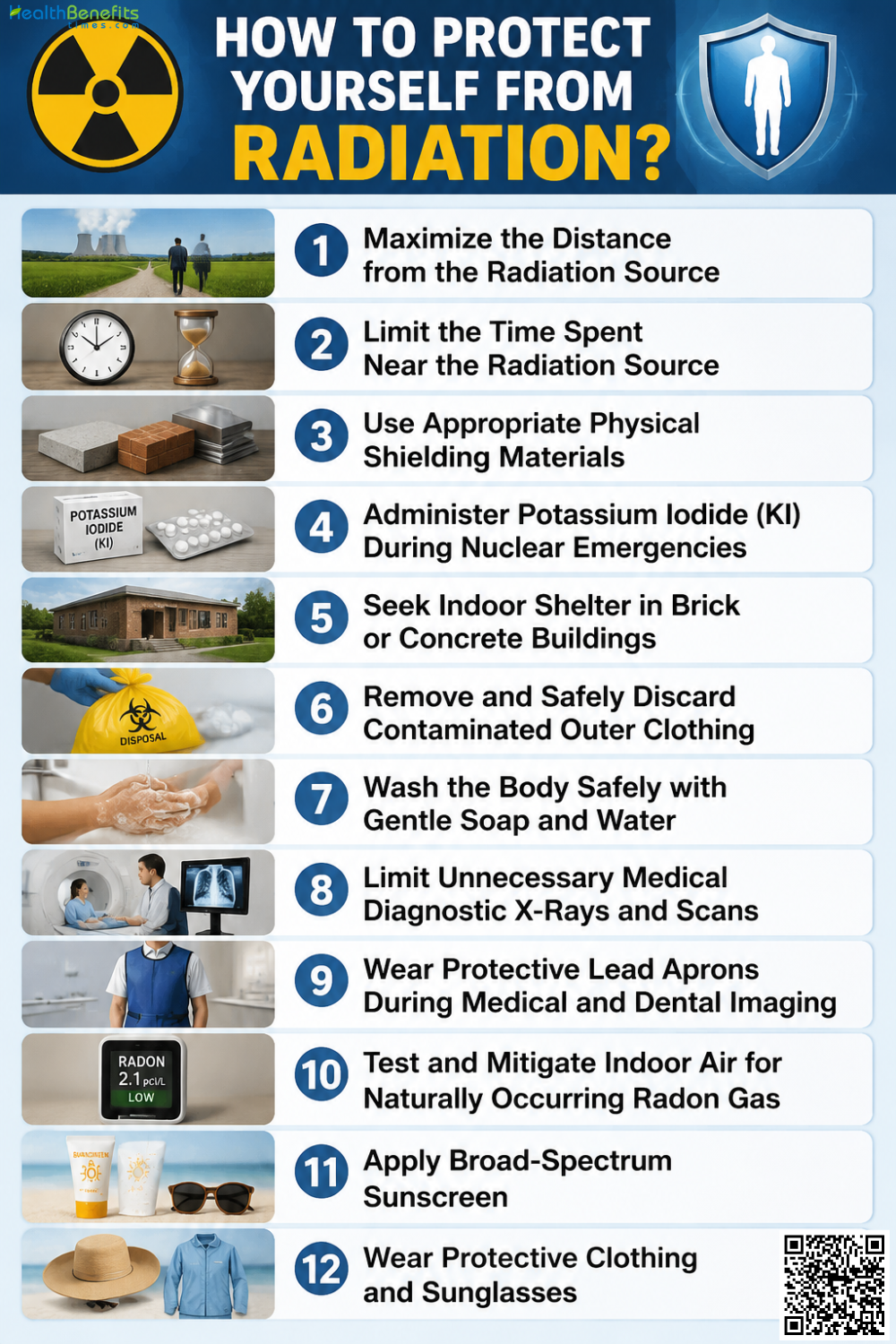
4. Administer Potassium Iodide (KI) During Nuclear Emergencies
How it may help
Potassium iodide (KI) protects the thyroid gland by saturating it with stable, non-radioactive iodine. Because the gland cannot distinguish between stable and radioactive forms, this saturation effectively blocks the absorption of harmful radioactive iodine released during severe nuclear emergencies, thereby preventing localized tissue damage 10.
What research says
Clinical evidence demonstrates that administering potassium iodide promptly before or immediately following exposure significantly reduces the risk of radiation-induced thyroid cancer 11. Public health studies confirm it is most protective for infants, children, and pregnant women, whose developing thyroid tissues are highly susceptible to radioactive iodine accumulation 10.
How to use it safely
Take potassium iodide only when explicitly directed by public health officials or emergency management authorities 10. Follow official dosage instructions strictly based on your age and weight, and do not use table salt or iodine-rich foods as a substitute for medical-grade KI supplements 11.
Potential precautions or side effects
KI only protects the thyroid, not the whole body 10. Taking it unnecessarily can cause severe allergic reactions, skin rashes, gastrointestinal distress, or dangerous salivary gland inflammation 11.
5. Seek Indoor Shelter in Brick or Concrete Buildings
How it may help
Seeking shelter in brick or concrete buildings places highly dense, heavy materials between individuals and external radioactive fallout. These solid structural barriers effectively absorb and deflect high-energy ionizing radiation, significantly minimizing the amount of airborne radioactive particles and external gamma rays that can penetrate living spaces 9.
What research says
Emergency management guidelines dictate that thick architectural materials like concrete provide substantially greater radiation attenuation than wood or drywall structures 8. Evidence confirms that remaining in underground basements or the innermost windowless rooms of such buildings dramatically reduces cumulative radiation exposure during acute nuclear fallout events 9.
How to use it safely
During a radiological emergency, enter a brick or concrete building immediately and move to the center of the structure or a basement. Close all windows, lock doors, and turn off heating, air conditioning, or ventilation systems that pull in outside air 9.
Potential precautions or side effects
Avoid sheltering in vehicles, mobile homes, or light wood-frame structures, as their thin walls offer inadequate protection against penetrating gamma rays and settling radioactive dust 9.
6. Remove and Safely Discard Contaminated Outer Clothing
How it may help
Removing contaminated outer clothing immediately eliminates radioactive dust, ash, or liquids resting on the fabric. This rapid physical separation halts ongoing external energy exposure and prevents harmful radioactive particles from being accidentally inhaled, ingested, or absorbed through the skin 12.
What research says
Public health guidelines establish that carefully removing the outermost layer of clothing instantly eliminates up to 90 percent of external radioactive contamination 12. Clinical protocols confirm this primary decontamination measure is critical for preventing acute localized skin burns and mitigating systemic internal absorption 12.
How to use it safely
Carefully remove your outer clothing without shaking it to prevent spreading radioactive dust into the air. Place the garments inside a plastic bag, seal it tightly, and store it away from living spaces until emergency authorities provide safe disposal instructions 12.
Potential precautions or side effects
Never pull contaminated shirts over your head; always cut or tear them down the seams to prevent radioactive particles from entering your eyes, nose, or mouth 12.
7. Wash the Body Safely with Gentle Soap and Water
How it may help
Washing exposed skin physically removes residual radioactive dust and microscopic particles that remain after removing contaminated clothing. This crucial decontamination step flushes away surface radiation, preventing these hazardous materials from causing localized skin burns or being accidentally absorbed into the bloodstream 12.
What research says
Public health protocols confirm that gently washing with soap and water safely eliminates superficial radiological contamination without driving particles deeper into the pores 12. Clinical decontamination guidelines emphasize that prompt dermal cleansing is highly effective in halting continuous external radiation exposure and minimizing systemic health risks 12.
How to use it safely
Take a warm shower and gently wash your body and hair with standard soap or shampoo. If a shower is unavailable, use a wet cloth to carefully wipe your face, hands, and exposed skin, making sure to clean away from your eyes and mouth 12.
Potential precautions or side effects
Never scrub the skin aggressively, as breaking the skin allows radioactive particles to enter the bloodstream. Avoid using hair conditioner, which binds radioactive material to the hair strands 12.
8. Limit Unnecessary Medical Diagnostic X-Rays and Scans
How it may help
Limiting non-essential diagnostic imaging directly reduces your lifetime cumulative exposure to artificial ionizing radiation. Because the human body retains a biological memory of total radiation absorbed over time, minimizing unnecessary scans prevents the excess cellular stress that can lead to long-term DNA mutations 13.
What research says
Clinical research confirms that repeated exposure to high-energy medical imaging, particularly computed tomography (CT) scans, slightly increases the lifetime risk of developing radiation-induced cancers 5. Medical guidelines strictly advocate for the ALARA principle—keeping doses “as low as reasonably achievable”—ensuring imaging is performed only when medically justified 14.
How to use it safely
Keep a personal record of your past medical imaging to avoid duplicate tests. Always ask your healthcare provider if a prescribed scan is absolutely necessary, and inquire whether non-ionizing alternatives like ultrasound or magnetic resonance imaging (MRI) could be used instead 13.
Potential precautions or side effects
Never refuse diagnostic imaging during acute medical emergencies, as the immediate risk of an undiagnosed severe illness far outweighs the minimal radiation exposure risk 14.
9. Wear Protective Lead Aprons During Medical and Dental Imaging
How it may help
Lead aprons provide a dense physical barrier that absorbs secondary or scattered radiation during radiological procedures. By shielding the body, these heavy garments minimize unnecessary radiation exposure to critical internal organs, protecting individuals from cumulative cellular damage over time 15.
What research says
Clinical measurements demonstrate that standard lead aprons with a 0.5-millimeter thickness effectively attenuate more than 90 percent of scatter radiation 16. However, recent guidelines indicate aprons are no longer universally recommended for modern dental X-rays, as digital imaging naturally emits negligible radiation and aprons may obscure the image 17.
How to use it safely
Wear properly fitted lead aprons that cover the front of the body from the throat to just above the knees when required during medical procedures 15. Medical personnel should wear personal radiation dosimeters to monitor ongoing occupational exposure levels 18.
Potential precautions or side effects
Lead aprons are remarkably heavy and can impose significant musculoskeletal stress, frequently leading to chronic back and neck discomfort for medical personnel during prolonged clinical use 19.
10. Test and Mitigate Indoor Air for Naturally Occurring Radon Gas
How it may help
Radon is an odorless radioactive gas that naturally seeps from the earth and accumulates inside buildings. Testing identifies hazardous indoor concentrations, while structural mitigation systems actively vent this gas outdoors, preventing the continuous inhalation of radioactive particles that can mutate cellular DNA and damage delicate lung tissue 20.
What research says
Public health research establishes that chronic indoor radon exposure is the second leading cause of lung cancer. Environmental guidelines confirm that professional mitigation systems successfully reduce indoor radioactive gas concentrations, thereby significantly lowering an individual’s lifetime risk of developing severe, radiation-induced respiratory diseases 21.
How to use it safely
Test your home using a certified radon kit. If concentrations reach or exceed four picocuries per liter, hire a licensed professional to install a permanent sub-slab venting system that safely extracts the radioactive gas from the soil and exhausts it outdoors 21.
Potential precautions or side effects
Opening windows provides only temporary reduction. Permanent mitigation requires active mechanical exhaust systems, as improper do-it-yourself sealing can inadvertently trap radioactive gases inside the home 21.
11. Apply Broad-Spectrum Sunscreen
How it may help
Broad-spectrum sunscreen creates a protective topical barrier that absorbs or reflects non-ionizing ultraviolet radiation emitted by the sun. By preventing these harmful rays from penetrating epidermal layers, sunscreen minimizes oxidative stress and shields cellular DNA from the structural damage that causes premature aging and skin cancer 22.
What research says
Dermatological studies confirm that consistent application of broad-spectrum sunscreen with a Sun Protection Factor (SPF) of 15 or higher significantly reduces the lifetime risk of developing melanoma and squamous cell carcinomas 23. Clinical evidence establishes that these formulations successfully block both UVA and UVB radiation, preventing cumulative epidermal mutations 24.
How to use it safely
Apply a thick layer of broad-spectrum sunscreen with an SPF of at least 15 to all exposed skin 15 minutes before venturing outdoors. Reapply the lotion every two hours, and immediately after swimming, sweating heavily, or drying off with a towel 23.
Potential precautions or side effects
Certain active chemical ingredients may trigger localized allergic contact dermatitis or mild skin irritation. Discontinue application and consult a medical professional if a severe rash develops 24.
12. Wear Protective Clothing and Sunglasses
How it may help
Protective clothing and ultraviolet-blocking sunglasses act as physical barriers against non-ionizing solar radiation. Tightly woven fabrics prevent harmful ultraviolet rays from penetrating the skin, while specialized lenses shield delicate ocular structures, minimizing cellular DNA damage, preventing thermal burns, and reducing the risk of progressive cataract formation 23.
What research says
Clinical studies confirm that wearing tightly woven garments significantly reduces the incidence of epidermal carcinomas and premature photo-aging 24. Furthermore, ophthalmological research establishes that sunglasses filtering 100 percent of ultraviolet rays successfully prevent cumulative photo-oxidative degradation in the crystalline lens and retina 25.
How to use it safely
Wear long-sleeved shirts, pants, and wide-brimmed hats made from tightly woven or ultraviolet protection factor (UPF) fabrics. Select wraparound sunglasses certified to block 100 percent of both UVA and UVB rays to prevent stray solar radiation from entering the sides of your eyes 23.
Potential precautions or side effects
Darkly tinted sunglasses without certified ultraviolet filters actually increase radiation exposure by causing pupils to dilate. Additionally, standard wet or light-colored clothing offers inadequate solar protection 22.
Comments
comments