

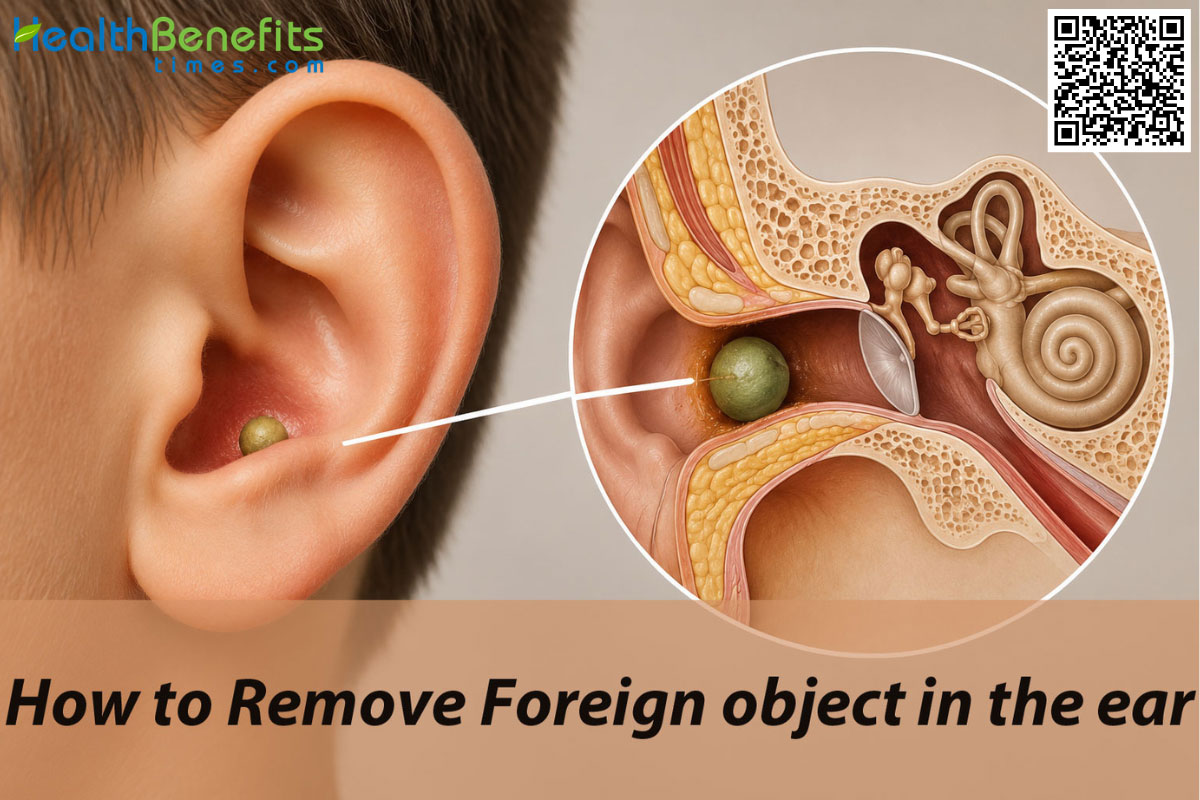
The Anatomy and Vulnerability of the Ear Canal
Understanding the physical structure of the human ear provides crucial context as to why items become stuck so easily and why extracting them requires careful precision. The external auditory canal is not a perfectly straight, uniform tube, but rather features a slight, natural curve that functions to protect the delicate eardrum from direct trauma and debris.
The outer third of this canal is composed of flexible cartilage and is lined with specialized glands that produce cerumen, commonly known as earwax 6. This waxy substance acts as a natural, self-cleaning biological barrier that traps microscopic dirt, repels water, and creates a slightly acidic environment that is actively hostile to bacterial and fungal growth. Moving deeper into the ear, the inner two-thirds of the canal abruptly transitions from yielding cartilage to rigid bone.
Skin lining this inner bony section lacks a protective subcutaneous fat layer, making it exceptionally tight, fragile, and sensitive to touch. When a solid item is pushed past the cartilaginous outer third, it frequently becomes wedged against these unyielding bony walls. Any pressure applied to this area translates directly into significant pain signals sent straight to the brain 7. Furthermore, the ear canal naturally narrows at a specific point called the isthmus, meaning items that are pushed past this bottleneck are exceptionally difficult to retrieve because they become physically blocked from falling back out.
How to know there is Foreign object in the ear
Recognizing the presence of a trapped item is the very first step toward a safe and effective resolution. While some individuals, particularly very young infants, may not be able to verbalize their distress, the human body produces several distinct warning signs.
- Sudden or Unexplained Ear Pain: Discomfort is often the most immediate indicator, ranging from a dull, persistent ache to sharp, stabbing sensations, especially if the item has jagged edges or is pressing directly against the highly innervated eardrum 8.
- Muffled Hearing or Sensation of Fullness: A physical blockade in the ear canal naturally dampens sound waves from reaching the tympanic membrane, resulting in sudden, one-sided hearing loss or a feeling that the ear is plugged and heavily congested 9.
- Visible Presence in the Canal: Frequently, the edge or base of the offending item can be seen protruding from the ear canal when examining the outer ear with a flashlight in a well-lit room.
- Drainage or Unpleasant Odor: If an item has been lodged in the ear for several days or weeks without detection, it can trigger a localized inflammatory response, which often presents as a cloudy, yellowish, or blood-tinged fluid draining from the ear 10.
- Buzzing, Fluttering, or Tickling Sensations: When a live insect crawls or flies into the ear space, the movement of its legs or wings against the sensitive eardrum causes an intense tickling, scratching, or loud buzzing sound that is highly distressing to the patient.
- Unexplained Dry Cough: Physical irritation of the ear canal can stimulate the auricular branch of the vagus nerve in a neurological phenomenon known as Arnold’s reflex, where the brain misinterprets the ear irritation as a tickle in the throat, triggering a persistent, dry cough 11.
- Bleeding from the Ear Canal: Sharp objects, or items that have been aggressively pushed during failed home removal attempts, can easily scratch the delicate skin or rupture the eardrum, leading to visible red bleeding.
Categorizing Common Ear Intruders
Healthcare providers generally classify trapped aural materials based on their physical composition. The nature of the material directly dictates the specific medical strategy required for its safe extraction, as different shapes and textures react uniquely to various tools.
| Category | Characteristics | Common Examples | Clinical Considerations |
| Inorganic, Non-Graspable | Hard, smooth, and spherical. | Beads, marbles, small pebbles, plastic toy parts. | Difficult to grasp with standard tools; smooth metal forceps often slip and inadvertently push the item deeper into the canal 12. |
| Inorganic, Graspable | Soft or irregularly shaped. | Cotton swab tips, paper wads, eraser fragments, sponge pieces. | Generally easier to grip, but extremely soft materials like cotton or sponge may tear apart or leave behind microscopic fibers. |
| Organic, Hygroscopic | Plant-based materials that absorb water. | Beans, peas, popcorn kernels, seeds, garlic cloves. | Applying water causes these natural items to absorb moisture, swell rapidly, and become tightly wedged against the bone 13. |
| Animate | Living organisms. | Cockroaches, beetles, moths, ants. | Movement causes extreme distress, meaning the organism must usually be neutralized or suffocated before physical extraction is attempted. |
| Caustic / Corrosive | Chemical-leaching items. | Button batteries (from hearing aids, watches, or toys). | Moisture in the ear completes the electrical circuit, causing liquefactive tissue necrosis within hours, making this an absolute emergency. |
How to Remove Foreign object in the ear
Taking immediate, careful action at home requires a steady hand and a clear understanding of what is safe for you to attempt. If you or a loved one has something trapped in the ear canal, it is paramount that you remain completely calm. Panic often leads to hasty decisions, such as aggressively probing the ear, which almost always worsens the situation by driving the item deeper into the narrow bony section. The following list outlines safe, conservative techniques for home management, provided you are dealing with a cooperative individual and the item is clearly visible.
1. The Gravity and Head-Tilt Method
Gravity is the absolute safest and least invasive tool at your disposal. If the item you are dealing with is small, relatively smooth, and not tightly wedged against the walls of the canal, a simple positional change can often encourage it to dislodge naturally without the need for physical tools. You should start by tilting your head directly to the side, ensuring the problem ear is facing down toward the floor 3. You can gently pull your outer ear lobe backward and slightly upward; this specific physical action helps straighten the natural anatomical curve of the ear canal, creating a clearer, wider pathway. While keeping your head tilted downward, gently shake your head from side to side to loosen the object. You must never strike the side of your head with force, and you should never aggressively shake a young child.
Note: Gravity and head positioning are commonly used for remedial benefits to naturally drain trapped bathwater and prevent swimmer’s ear.
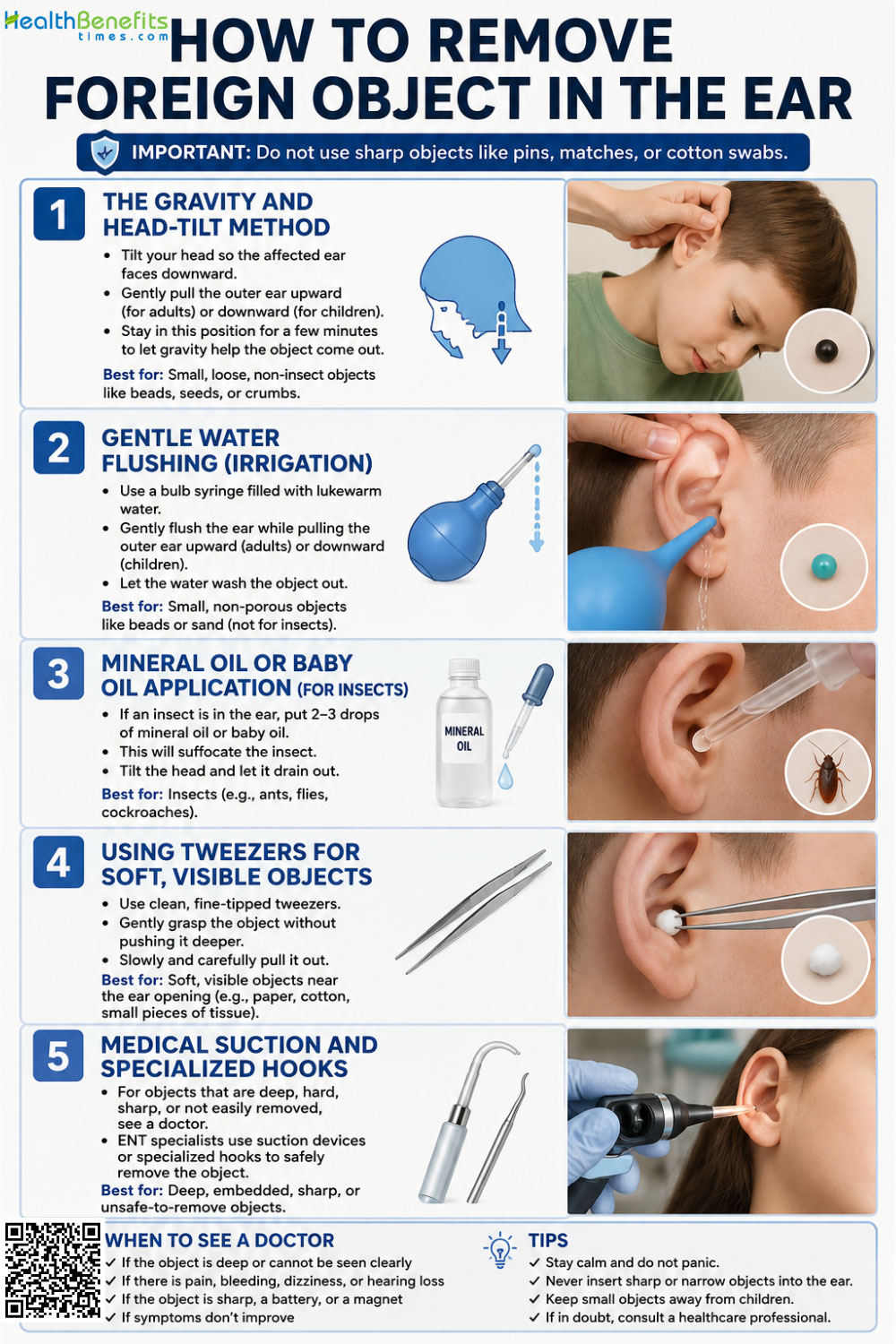
2. Gentle Water Flushing (Irrigation)
If the trapped item is small, loose, and clearly inorganic such as a tiny piece of plastic, a metal shaving, or a grain of sand gentle water irrigation can be a highly effective way for you to wash it out. You must first ensure the water is at a comfortable, lukewarm body temperature, as water that is too cold or too hot can shock the inner ear’s vestibular system, causing severe dizziness and nausea. Fill a standard rubber bulb syringe with the clean water, sit upright, and hold a towel under your ear to catch the drainage. Carefully place the very tip of the syringe just inside the outer opening of the ear, ensuring you do not push it deep into the canal. Squeeze the bulb slowly and gently to flush a soft stream of water against the wall of the ear canal, allowing the natural backflow of the water to catch the item and wash it outward 14.
Note: Warm water irrigation is commonly applied for medicinal benefits in clinical settings to safely flush out heavy, impacted earwax.
3. Mineral Oil or Baby Oil Application (For Insects)
Dealing with a live insect inside your ear is a highly distressing experience, but attempting to pluck it out with your fingers or household tweezers will likely cause the bug to panic, burrow deeper, or sting your delicate eardrum. The most effective and painless home remedy is for you to suffocate the insect first. Lie down flat on your side with the affected ear facing directly toward the ceiling. Slowly pour three to four drops of room-temperature mineral oil, baby oil, or medical-grade olive oil directly into the ear canal 15. The heavy oil smoothly coats the insect’s exoskeleton, blocking its breathing pores and neutralizing it within a few minutes. Once the fluttering or loud buzzing completely stops, you can safely tilt your head back down toward a towel to let the oil and the deceased insect naturally drain out.
Note: Mineral or olive oil is commonly applied for medicinal benefits as a natural cerumenolytic drop to soften hard earwax before a professional cleaning.
4. Using Tweezers for Soft, Visible Objects
Physical extraction with metal tools should always be your absolute last resort at home and requires ideal, controlled conditions. You should only attempt this specific method if the object is soft (like a piece of cotton wool or tissue paper), clearly visible to the naked eye, easily reachable near the outer opening, and the affected person is a calm, fully cooperative adult 16. Using a pair of clean, blunt-nosed tweezers, carefully grasp the visible edge of the soft material and pull it straight out in one fluid motion without twisting. You must not attempt this on hard, round objects like plastic beads or pebbles, as the rigid metallic jaws of the tweezers will likely slip off the smooth surface, inadvertently propelling the hard object deeper into the narrow, sensitive bony canal.
Note: Precision manual extraction with sterile forceps is commonly applied for remedial benefits by specialists to carefully remove infected debris while protecting the delicate eardrum.
5. Medical Suction and Specialized Hooks
When your careful home methods fail or are deemed unsafe, professional intervention relies on specialized medical techniques that you should not attempt to replicate. In a safe clinical environment, a physician will use a lighted otoscope to clearly illuminate and magnify your ear canal. For soft materials that crumble easily, or hard spherical objects that cannot be safely grabbed with standard tweezers, doctors frequently utilize a small medical suction catheter 17. This device acts like a miniature, highly controlled vacuum, latching onto the surface of the item to gently pull it free. Alternatively, a doctor may use a tiny right-angle hook or a wire loop curette, carefully slipping it behind a hard object to drag it outward safely without applying any inward pressure.
Note: Micro-suction technology is commonly used for medicinal benefits by doctors to painlessly clear out stubborn pus and fungal debris from severely infected ear canals.
Activities to Avoid When You have Foreign object in the ear
Instinctive reactions to ear discomfort are often the exact opposite of what medical best practices recommend. To prevent exacerbating the injury or accidentally driving the item deeper into an unreachable space, you must strictly avoid certain common behaviors.
1. Do Not Probe the Ear Canal Blindly
Using your fingers, bobby pins, unfolded paperclips, or sharp toothpicks to dig around inside your ear is highly dangerous and largely ineffective. You simply cannot see what you are doing in the dark canal, and the fragile skin is very easily lacerated, which opens the door to painful bacterial infections and severe bleeding 4.
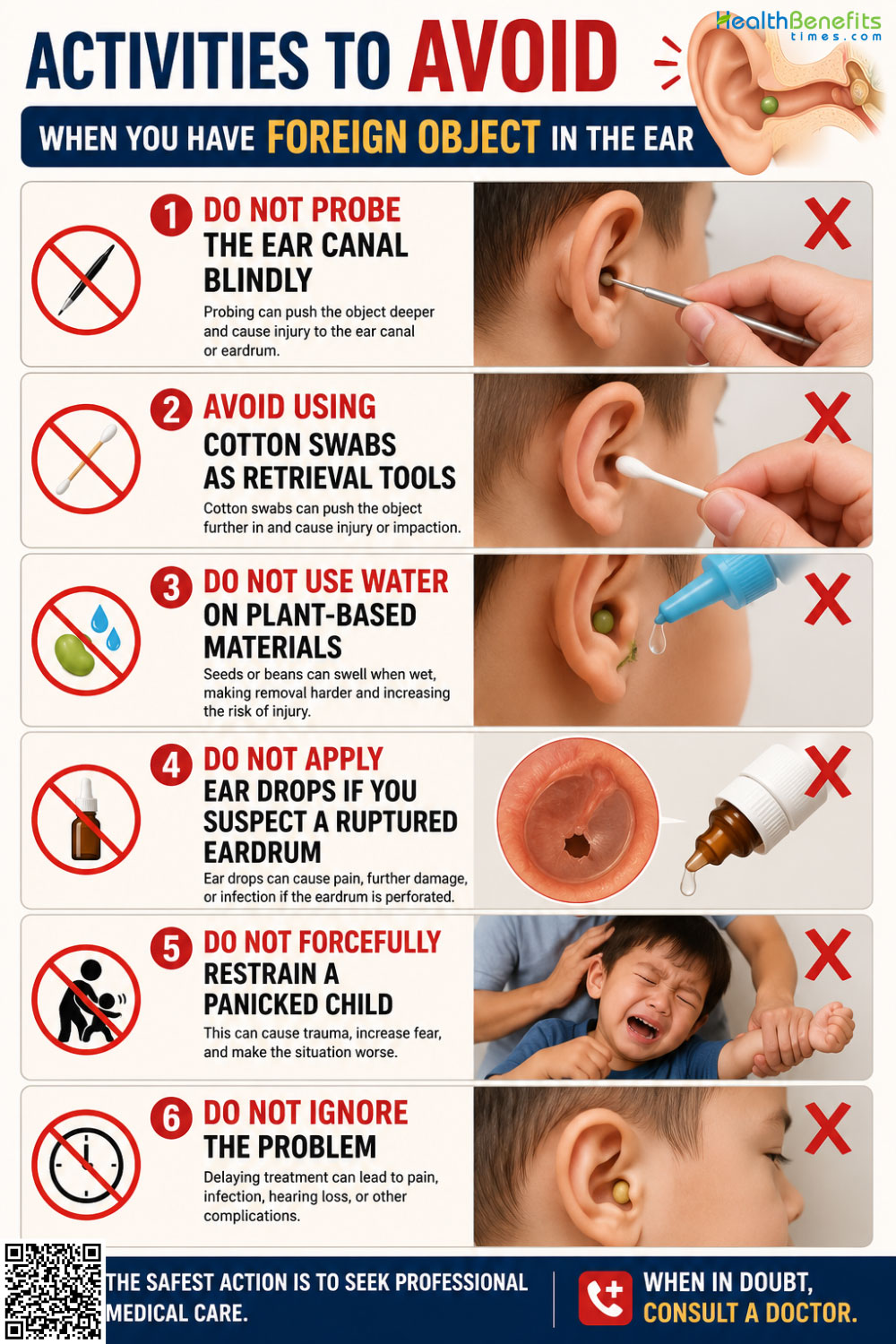
2. Avoid Using Cotton Swabs as Retrieval Tools
Cotton swabs are fundamentally too wide for the narrow human ear canal. Attempting to use them as a retrieval tool almost universally acts as a ramrod, pushing the trapped material tighter into the bony isthmus or shoving it directly against your eardrum, which can cause a painful rupture 18.
3. Do Not Use Water on Plant-Based Materials
If the trapped object is a dried bean, seed, popcorn kernel, or any organic matter, you must not attempt to flush it out with water. These organic materials are highly hygroscopic; they will absorb the liquid, swell significantly in size, and become tightly locked into your ear canal, causing immense pressure and making clinical removal incredibly difficult 19.
4. Do Not Apply Ear Drops if You Suspect a Ruptured Eardrum
If you are experiencing severe, stabbing pain, bright red bleeding, or clear fluid drainage, your eardrum may already be torn. Putting oil, water, or over-the-counter ear drops into a ruptured ear allows those fluids to wash directly into your vulnerable middle ear space, potentially causing severe dizziness, inner ear toxicity, and deep-seated infections.
5. Do Not Forcefully Restrain a Panicked Child
Trying to hold down an uncooperative, crying child to aggressively pull something out of their ear with tweezers is a recipe for physical disaster. Sudden, unpredictable head movements while a sharp metallic instrument is inside the canal can easily puncture the eardrum or permanently damage the tiny hearing bones.
6. Do Not Ignore the Problem
Assuming an object will eventually dissolve, rot away, or fall out on its own is a dangerous gamble. Prolonged retention of foreign bodies inevitably leads to severe inflammation, painful swelling of the canal tissue, and complex secondary infections that require intensive antibiotic therapy.
The Unique Danger of Button Batteries
Few household situations require more absolute urgency than a trapped button battery. These tiny, coin-shaped power cells are ubiquitous in modern living, found inside everyday items like hearing aids, musical greeting cards, small remote controls, and flashing toys. While they appear perfectly smooth, shiny, and harmless to the naked eye, their internal chemical mechanism makes them extraordinarily dangerous when lodged in a bodily orifice.
Moisture naturally present in the ear canal acts as a perfect conductive medium for the battery. When the metallic surface of the battery comes into prolonged contact with the damp tissue, it completes a localized electrical circuit. This rogue electrical current rapidly hydrolyzes natural tissue fluids, producing highly destructive hydroxide ions at the negative pole of the battery. This creates a highly concentrated, localized alkaline environment that physically burns through the sensitive skin, cartilage, and bone of the ear canal—a devastating process medically termed liquefactive necrosis.
Tissue damage from a button battery can begin to manifest within just one to two hours of insertion 20. If left untreated by medical professionals, the alkaline burn can rapidly eat through the tympanic membrane, destroy the tiny bones of the middle ear (the ossicles), and cause permanent, irreversible deafness or even facial nerve paralysis. Liquid drops, including water, mineral oil, or over-the-counter ear drops, must never be placed in an ear containing a battery, as the fluid will only accelerate the electrical discharge and significantly worsen the chemical burn. Immediate emergency medical removal is universally mandatory for these specific foreign bodies 21.
Complications of Improper Removal
While the vast majority of foreign bodies in the ear are successfully removed without long-term consequences, delayed medical attention or aggressive, misguided home extraction attempts can lead to a cascade of painful and complex otologic complications.
The most frequent complication encountered in clinics is an abrasion or laceration to the delicate skin lining the external auditory canal 22. Because this skin tissue is tightly bound to the underlying bone with virtually no cushioning, even minor scratches from fingernails or tweezers can bleed profusely and cause significant throbbing pain. When the natural skin barrier is broken, opportunistic bacteria and fungi that naturally reside on the outer ear can invade the deeper tissue, leading to acute otitis externa, commonly known as swimmer’s ear 23. This secondary condition causes the entire ear canal to swell shut, accompanied by intense itching, fiery redness, and a foul-smelling liquid discharge.
Another severe consequence of improper, forceful removal attempts is the traumatic perforation of the tympanic membrane. The eardrum is a remarkably thin, drum-like tissue barrier that safely separates the outer ear from the sterile middle ear space. If a foreign object, or the sharp tweezers used to extract it, punctures this delicate membrane, the patient will experience a sudden, sharp pop followed immediately by severe pain, bleeding, and sudden hearing loss. While many small eardrum perforations possess the ability to heal on their own over several weeks, larger traumatic tears or damage to the delicate middle ear bones positioned just behind the membrane may require complex reconstructive surgery.
In rare cases where a foreign object remains completely undetected in the ear for months or even years a scenario sometimes seen in young children, adults with cognitive impairments, or individuals with heavily neglected ear hygiene—the chronic, ongoing irritation can lead to the formation of aural polyps. An aural polyp is a fleshy, red mass of inflammatory granulation tissue that physically grows in response to constant friction or pressure 24. These inflammatory polyps can completely occlude the ear canal, bleed easily when touched, and successfully masquerade as middle ear tumors or severe chronic infections, complicating the eventual medical diagnosis.
Preventive Measures
The vast majority of aural foreign body emergencies are entirely preventable through proper education, diligent childproofing, and a fundamental shift in how you perceive routine ear hygiene. The human ear is biologically designed to be a self-cleaning organ, and interfering with this natural process often causes the very blockages you are trying to prevent 25.
The daily habit of swabbing the inside of your ear with cotton-tipped applicators is widely condemned by medical professionals across the globe. Routine swabbing artificially disrupts the natural outward migration of earwax, essentially packing the cerumen deeper into the canal until it forms a dense, impenetrable plug. Furthermore, the cotton tips themselves frequently snap off or leave fibrous residue behind, ironically becoming foreign bodies themselves. You should only clean the outer, visible portions of your ear with a soft, damp washcloth, completely avoiding the insertion of any object into the canal itself.
For parents and caregivers, daily vigilance is the primary defense against pediatric ear emergencies. Children under the age of five are naturally curious and frequently use their mouths, noses, and ears to explore tactile sensations in their environment. Your home should be rigorously surveyed for easily accessible small items like beads, dried beans, and loose pebbles. Button batteries, in particular, must be kept in securely locked containers, and battery compartments on toys and remote controls should be heavily reinforced with strong tape or secure screws 26. Educating your children early about the inherent dangers of putting toys or food into their bodily orifices is a crucial component of preventative pediatric health.
When to see Doctor
While some minor, easily accessible objects can be successfully managed at home with simple gravity or flushing, the complex anatomy of the ear dictates that most situations require the precision, bright lighting, and specialized micro-tools available only to trained medical professionals. You should immediately abandon any home removal attempts and seek urgent evaluation at an emergency department, urgent care clinic, or an Ear, Nose, and Throat (ENT) specialist if you encounter any of the following scenarios:
1. The Object is a Button Battery
This is an absolute, time-sensitive medical emergency requiring immediate, same-day extraction. Leaving a battery in the ear can lead to permanent tissue melting, severe burns, and irreversible deafness within just a few hours.
2. You Experience Severe Pain or Bleeding
Bright red blood or intense, intolerable pain strongly suggests that the delicate ear canal has been severely lacerated or the eardrum has been traumatically punctured 27. Professional medical assessment is required to prevent lasting damage.
3. Clear or Pus-Like Fluid is Draining from the Ear
The leakage of a cloudy, foul-smelling fluid indicates a secondary bacterial infection has already set in. In rare cases of severe physical trauma, clear, watery drainage could indicate a dangerous cerebrospinal fluid leak from a deep temporal bone fracture.
4. The Affected Person is an Uncooperative Child
Safe, damage-free extraction requires absolute physical stillness. Medical professionals can utilize mild liquid sedatives, specialized safety restraints, or even brief general anesthesia to safely remove objects from highly anxious children without causing psychological trauma or physical harm.
5. The Object is Organic and Swelling
If a seed, bean, or sponge has been accidentally exposed to water or ear drops, it will rapidly swell inside the canal. A doctor is required to carefully dismantle and extract these tightly wedged items using specialized medical suction or microscopic hooks.
6. Home Removal Attempts Have Already Failed
Multiple unsuccessful attempts to grasp or flush the item usually result in pushing the object much deeper into the bony portion of the canal 28. A doctor will need to prescribe topical anesthetics to numb the area and use a surgical microscope to safely navigate the inflamed tissue.
Comments
comments