

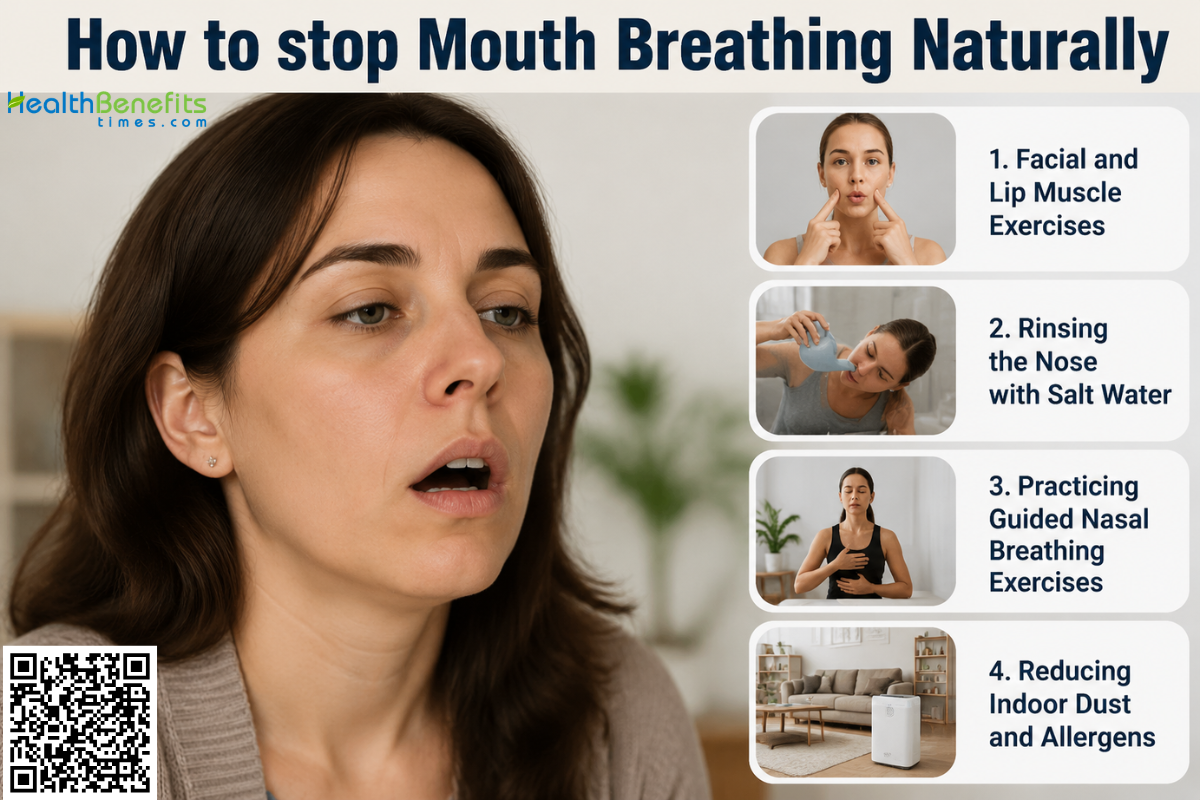
Causes of Mouth Breathing
1. Enlarged Tonsils and Adenoids
The enlargement of lymphatic tissues at the back of the throat and nasal cavity is a primary obstructive cause of mouth breathing, especially in children. When these tissues swell, they physically block the upper airway, requiring the body to bypass the nose and inhale through the mouth 4.
2. Allergic Rhinitis
Environmental allergies trigger chronic inflammation and swelling within the nasal mucous membranes. This inflammatory response increases nasal airway resistance, making nasal breathing significantly more difficult and leading to a compensatory oral breathing pattern 5.
3. Deviated Nasal Septum
When the cartilage and bone dividing the nasal cavity are crooked or noticeably off-center, the structural abnormality physically narrows one or both airway passages. This physical restriction frequently forces individuals to rely on their mouths for adequate airflow 4.
4. Nasal Polyps
Benign growths can develop along the lining of the nasal passages or sinuses due to chronic inflammation. As these polyps expand, they create a mechanical obstruction that prevents proper nasal airflow, resulting in chronic mouth breathing.
5. Prolonged Oral Habits and Functional Alterations
Mouth breathing can develop or persist as a behavioral habit due to low muscle tone in the jaw and lips. In many instances, an individual will continue to breathe through their mouth out of habit even after a primary physical obstruction has been medically or surgically resolved.
Symptoms of Mouth Breathing
1. Dry Mouth and Bad Breath
Continual airflow through the oral cavity rapidly evaporates saliva, causing chronic dryness of the mouth and lips. Because saliva is essential for neutralizing acids and washing away bacteria, this dry environment allows harmful microbes to multiply quickly, frequently resulting in persistent bad breath, or halitosis 6.
2. Dental Decay and Gum Disease
The reduction in protective saliva significantly alters the pH level within the mouth, creating an acidic environment. Clinical findings confirm that individuals who primarily breathe through their mouths have a substantially higher risk of developing tooth decay, plaque buildup, and inflamed gums, clinically known as gingivitis 6.
3. Altered Facial Development
In children, chronic mouth breathing directly impacts skeletal growth. The resting posture of an open mouth and lowered tongue encourages the development of a long and narrow face, a high-arched roof of the mouth, and a receding chin a structural pattern commonly referred to as “adenoid facies” 2.
4. Misaligned Teeth
The abnormal resting position of the tongue and lips fails to provide the natural outward pressure needed to shape the jaw properly. Research indicates this muscle imbalance frequently leads to crowded teeth, an inability to close the front teeth properly (open bite), and a narrowed upper jaw 2.
5. Snoring and Sleep Disruptions
Relying on oral breathing during sleep often causes the lower jaw and tongue to fall backward, which partially blocks the upper airway. This mechanical narrowing leads to loud snoring and serves as a major contributing factor for obstructive sleep apnea, a condition where breathing repeatedly stops and starts throughout the night 4.
6. Daytime Fatigue and Poor Concentration
Because mouth breathing during sleep frequently leads to lowered oxygen levels and restless nights, it prevents the brain from entering deep, restorative sleep stages. As a result, affected individuals commonly experience chronic morning tiredness, reduced attention spans, brain fog, and behavioral difficulties during the day 3.
How to Stop Mouth Breathing Naturally
1. Facial and Lip Muscle Exercises (Orofacial Myofunctional Therapy)
How it may help
Orofacial myofunctional therapy involves specific exercises designed to strengthen the muscles of the lips, tongue, and jaw. By improving muscle tone and coordination, this therapy helps retrain the body to maintain a closed-mouth posture and naturally encourages resting nasal breathing 2.
What research says
Clinical studies confirm that myofunctional therapy effectively restores nasal breathing in individuals who habitually breathe through their mouths. Research concludes that these targeted exercises significantly reduce the severity of sleep-disordered breathing, decrease snoring, and correct resting tongue posture 7.
How to use it safely
You should consult a trained myofunctional therapist, speech-language pathologist, or specialized dentist for a customized exercise plan. To achieve lasting results, practice the prescribed facial and tongue exercises daily exactly as directed. Consistency is necessary to retrain your muscle memory safely.
Potential precautions or side effects
If performed incorrectly, these exercises may cause mild jaw soreness or muscle fatigue. Furthermore, this therapy cannot resolve mouth breathing caused by physical airway blockages like enlarged tonsils 4.
2. Rinsing the Nose with Salt Water (Saline Irrigation)
How it may help
Nasal saline irrigation flushes out excess mucus, dust, and allergy-causing particles from the nasal passages. By clearing these blockages and moisturizing the nasal lining, this salt water wash reduces internal swelling. This opens the airway, making it much easier to breathe through the nose rather than the mouth.
What research says
Clinical evidence confirms that regular nasal saline irrigation significantly relieves nasal congestion and clears the upper respiratory tract. Research concludes that washing the nasal cavity with salt water safely lowers nasal airway resistance and improves overall nasal airflow, effectively reducing the physical need to breathe through the mouth 8.
How to use it safely
To prevent severe brain infections, you must only use distilled, sterile, or previously boiled and cooled water for the mixture 9. Lean over a sink, tilt your head sideways, and gently pour the saline solution into your upper nostril, allowing it to drain out the other side.
Potential precautions or side effects
Never use untreated tap water. Minor side effects are uncommon but may include mild nasal stinging, temporary ear fullness, or minor nosebleeds if the nasal passages are very dry.
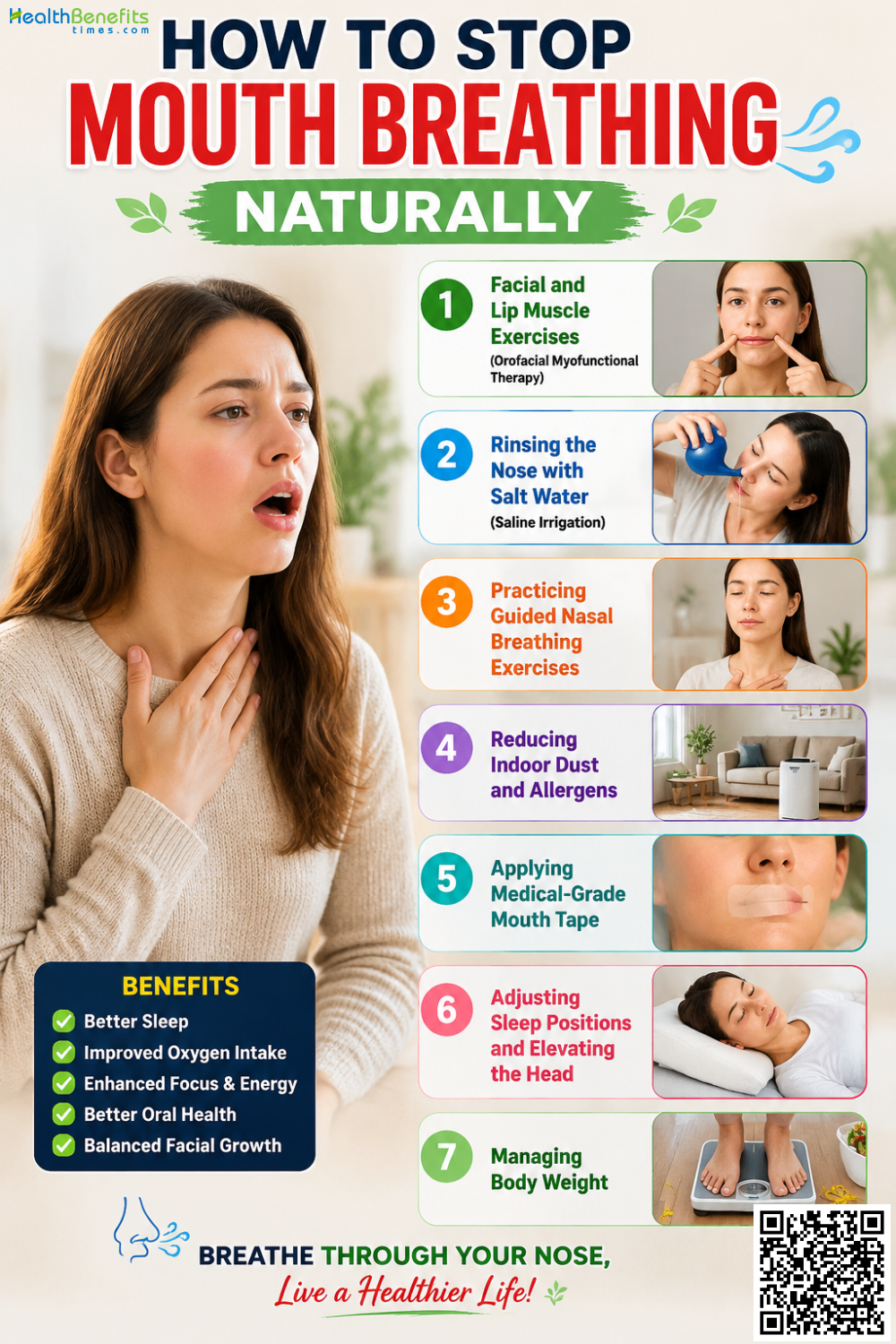
3. Practicing Guided Nasal Breathing Exercises
How it may help
Guided nasal breathing exercises train the brain and body to consciously prioritize the nasal airway. Regular practice strengthens the diaphragm, reduces the overall breathing rate, and restores natural respiratory muscle coordination, which makes it much easier to break the physical habit of mouth breathing.
What research says
Clinical studies demonstrate that targeted nasal breathing exercises successfully decrease airway resistance and increase lung efficiency. Research concludes that practicing slow, controlled nasal breathing improves blood oxygen levels, corrects abnormal breathing patterns, and effectively assists patients in overcoming chronic mouth breathing habits 10.
How to use it safely
Sit in a relaxed, upright position. Keep your mouth gently closed and slowly inhale deeply through your nose, allowing your belly to expand. Exhale slowly through your nose. Practice this controlled breathing for five to ten minutes each day to safely rebuild your natural breathing endurance.
Potential precautions or side effects
Do not force nasal breathing if you have a severe physical nasal blockage or active infection. Stop immediately if you experience dizziness, sudden anxiety, or shortness of breath.
4. Reducing Indoor Dust and Allergens
How it may help
Airborne allergens, such as dust mites, pet dander, and mold, trigger inflammation and swelling within the nasal passages. By actively reducing these indoor irritants, you decrease nasal congestion and airway resistance. This clears physical blockages, allowing for easier, more natural breathing through the nose instead of the mouth.
What research says
Clinical evidence shows that minimizing exposure to indoor allergens significantly reduces the symptoms of allergic rhinitis, such as nasal tissue swelling. Research concludes that strict environmental control measures successfully lower nasal airway inflammation, improve nasal airflow, and decrease the necessity of compensatory mouth breathing 5.
How to use it safely
To effectively clear your environment, wash bedding weekly in hot water and use allergen-proof mattress covers. Run air purifiers equipped with HEPA filters in your bedroom, and vacuum floors regularly using a machine with a HEPA filter to safely capture microscopic irritants.
Potential precautions or side effects
Deep cleaning can temporarily stir up settled dust, briefly worsening symptoms. You should wear a protective mask while dusting or have someone without allergies perform heavy vacuuming tasks.
5. Applying Medical-Grade Mouth Tape
How it may help
Applying porous, medical-grade mouth tape physically secures the lips together during sleep. This gentle mechanical closure prevents the jaw from dropping open, stopping oral airflow. Consequently, it forces the respiratory system to rely entirely on the nasal airway, helping to establish a natural habit of nocturnal nasal breathing.
What research says
Clinical studies indicate that sleeping with a porous oral patch successfully reduces snoring intensity and limits oral airflow. Research concludes that mouth taping effectively alters the breathing route from the mouth to the nose, improving sleep quality and lessening the severity of mild obstructive sleep apnea 11.
How to use it safely
You must only use hypoallergenic, medical-grade porous tape designed specifically for human skin. Before sleeping, ensure your nasal passages are completely clear. Apply a small strip vertically across the center of your lips, folding one corner over to create a quick-release tab for easy removal.
Potential precautions or side effects
Never use mouth tape if you have severe nasal congestion, nausea, or an untreated breathing disorder. Potential side effects include skin irritation, lip damage, and sudden sleep anxiety.
6. Adjusting Sleep Positions and Elevating the Head
How it may help
Sleeping flat on the back allows gravity to pull the tongue and lower jaw backward, physically narrowing the throat. Elevating the head and sleeping on the side prevents this airway collapse. Keeping the upper respiratory tract fully open naturally reduces the body’s need to breathe through the mouth.
What research says
Clinical research demonstrates that elevating the head and avoiding back-sleeping significantly reduces upper airway collapsibility. Studies conclude that these positional adjustments successfully decrease the severity of sleep-disordered breathing, lower nasal airway resistance, and minimize spontaneous mouth opening during the night 12.
How to use it safely
You should use a supportive wedge pillow or an adjustable bed base to raise your upper body by 20 to 30 degrees. Avoid simply stacking standard pillows, as this can unnaturally bend your neck and restrict airflow. Try using body pillows to comfortably maintain a side-sleeping position.
Potential precautions or side effects
Elevating your head incorrectly or at a sharp angle may cause neck stiffness and back pain. If you experience persistent spinal discomfort, you should adjust your sleeping equipment.
7. Managing Body Weight
How it may help
Excess body fat often accumulates around the neck and chest. This extra tissue physically narrows the upper airway and restricts lung expansion during sleep. Managing body weight reduces this mechanical pressure, keeping the airway open and naturally encouraging the body to breathe through the nose instead of the mouth.
What research says
Clinical studies confirm that losing excess body weight significantly decreases fat deposits surrounding the upper airway. Research concludes that weight loss effectively reduces airway collapsibility, improves nocturnal oxygen levels, and significantly lowers the frequency of sleep-disordered breathing and compensatory mouth breathing 13.
How to use it safely
You should aim for gradual, sustainable weight loss through a balanced diet and regular exercise. Consult a healthcare provider or a registered dietitian to create a personalized, safe plan. Avoid extreme, rapid weight-loss diets, which can deprive your body of essential daily nutrients.
Potential precautions or side effects
Rapid weight loss frequently causes muscle loss, nutritional deficiencies, and gallstones 14. You must consult a doctor before starting any restrictive diet or intense exercise program.
Foods to Avoid When You Suffer from Mouth Breathing
1. Sugary Foods and Beverages
Mouth breathing dries protective saliva. Consuming sugary foods in this dry environment accelerates bacterial growth and significantly increases the risk of severe tooth decay and gum inflammation 6.
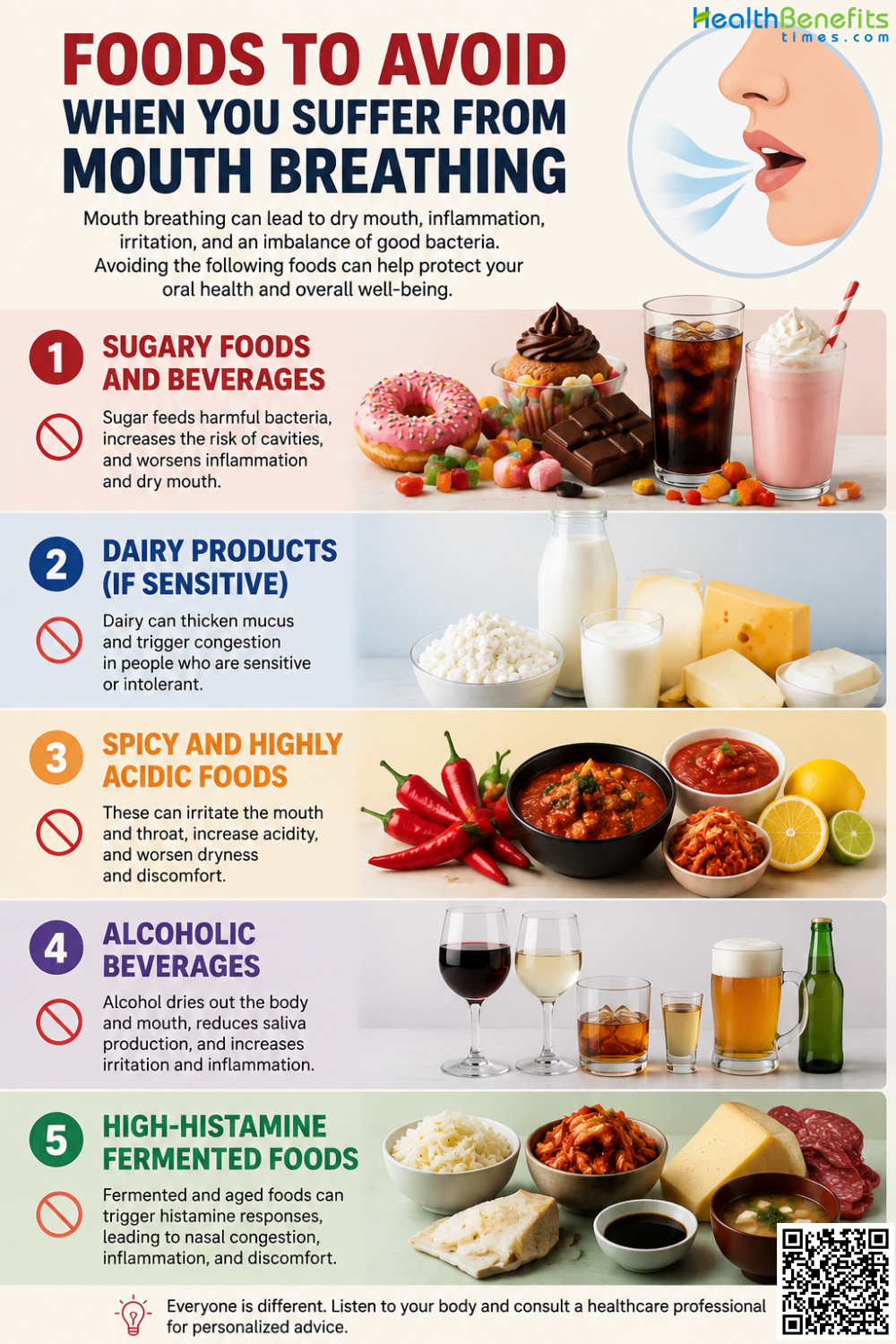
2. Dairy Products (If Sensitive)
In individuals with food sensitivities, consuming dairy triggers allergic reactions. This inflammation directly swells the nasal passages, blocking airflow and worsening compensatory mouth breathing 15.
3. Spicy and Highly Acidic Foods
These foods frequently trigger acid reflux. When stomach acid travels upward, it severely irritates the upper airway, increasing nasal resistance and forcing reliance on oral breathing 16.
4. Alcoholic Beverages
Alcohol relaxes the body’s muscles. It causes the throat and jaw muscles to collapse during sleep, which physically obstructs the nasal airway and triggers heavy mouth breathing 17.
5. High-Histamine Fermented Foods
High-histamine foods, like aged cheeses, stimulate excess mucus production. This inflammatory response swells nasal tissues, physically blocking the nose and forcing continuous mouth breathing 18.
When to See a Doctor When You Suffer from Mouth Breathing
1. Pauses in Breathing During Sleep
You should seek immediate medical evaluation if mouth breathing pairs with loud snoring, choking, or breathing pauses during sleep, as this strongly indicates obstructive sleep apnea 19.
2. Facial and Dental Changes in Children
Consult a medical professional if a child constantly breathes through their mouth, as untreated chronic airway obstruction permanently alters jaw growth, elongates the face, and misaligns teeth 2.
3. Chronic Fatigue and Behavioral Issues
Medical intervention is necessary when mouth breathing fragments sleep cycles, directly causing severe morning headaches, chronic daytime exhaustion, or sudden attention and behavioral difficulties in children 3.
4. Rapid Tooth Decay and Gum Inflammation
You must consult a dentist if continuous mouth breathing causes severe dry mouth, which eliminates protective saliva and leads to rapid cavity formation, bad breath, and inflamed gums 6.
4. Unrelenting Nasal Congestion
See an ear, nose, and throat specialist when nasal airflow remains blocked despite basic treatments, which indicates permanent physical structural obstructions like a deviated septum or enlarged adenoids 4.
Comments
comments