


Causes of Ear Eczema
- Contact Dermatitis from Chemical Irritants: Repeated exposure to allergens found in common consumer goods—such as nickel in earrings, fragrances in hair care products, or preservatives in soaps—triggers a localized immune response that damages the outer ear skin barrier 1.
- Atopic Dermatitis (Genetic Predisposition): Individuals with a genetic history of atopic dermatitis frequently suffer from a dysfunctional skin barrier, which makes the delicate ear skin naturally prone to chronic dryness, extreme sensitivity, and inflammation 1.
- Excessive Moisture and Humidity: Trapped moisture from frequent swimming, heavy sweating, or high environmental humidity softens and macerates the superficial skin layers, which disrupts the protective barrier and allows bacteria and fungi to thrive 3.
- Physical Trauma from Cleaning: The frequent use of cotton swabs or fingernails to clean the ear canal causes microscopic abrasions that remove protective natural oils, inviting irritation and inflammation to the underlying skin tissue 4.
- Seborrheic Dermatitis: This common skin condition causes excessive oil production and abnormal yeast growth on the skin surface, often resulting in red, greasy, and scaly patches specifically around the folds and opening of the ear canal 4.
- Psychological Stress: High levels of chronic stress trigger the release of inflammatory hormones that modulate immune function, which can directly cause or significantly worsen the severity and duration of existing eczema flare-ups 5.
Symptoms of Ear Eczema
- Intense, Persistent Itching: A primary symptom is an overwhelming, uncontrollable urge to scratch the outer ear and opening of the canal due to chronic inflammation of the skin nerves 1.
- Localized Skin Redness and Inflammation: The skin on the outer ear and inside the canal frequently appears bright red, swollen, and warm as the immune system concentrates in the area 1.
- Dry, Flaky, or Scaling Skin: As the protective outer barrier fails, the skin becomes extremely dry, resulting in visible white or yellowish scales and crusting around the ear folds 1.
- Painful Cracking and Fissures: Chronic dryness leads to small, painful tears or cracks in the thin skin of the ear, which can sting significantly when exposed to water or soap 4.
- Clear Fluid Oozing or Weeping: In active, severe stages, the inflamed skin may weep clear fluid, which can dry into a crusty, sticky residue that further irritates the ear canal 3.
- Temporary Hearing Muffling: Excessive swelling of the skin lining or the accumulation of dry skin debris within the ear canal can physically obstruct sound, leading to a temporary sensation of muffled hearing 3.
- Thickened or Leathery Skin: Over time, consistent scratching and long-term inflammation can cause the skin to become tough, thickened, and leathery, a clinical change known as lichenification 4.
How to Treat Ear Eczema Naturally
1. Applying Virgin Coconut Oil
How it may help
Virgin coconut oil provides deep moisture to the dry, scaling skin associated with ear eczema. It contains lauric acid, a natural fatty acid that helps repair the broken outer skin barrier and provides mild antibacterial protection against infections that commonly complicate irritated eczema patches 6.
What research says
Clinical trials demonstrate that topically applying virgin coconut oil significantly reduces eczema severity and skin dryness compared to standard mineral oils 6. Research concludes its antibacterial properties actively decrease the presence of Staphylococcus aureus bacteria on the skin, preventing dangerous secondary infections in cracked eczema lesions 7.
How to use it safely
Wash your hands thoroughly, then use a clean fingertip to gently rub a thin layer of cold-pressed virgin coconut oil onto the dry, flaking areas of the outer ear 1. Apply this moisture barrier twice daily, ensuring you never push the oil deep into the ear canal.
Potential precautions or side effects
Stop using the oil immediately if you develop increased redness or a new rash, as some individuals experience mild allergic contact reactions to coconut-derived products 8.
2. Using Sunflower Seed Oil
How it may help
Sunflower seed oil is highly concentrated in linoleic acid, a natural fat that rebuilds the skin’s protective barrier. Applying it to the ear hydrates dry eczema patches, reduces local inflammation, and traps moisture to prevent the delicate skin from further cracking and scaling 9.
What research says
Clinical research concludes that applying sunflower seed oil effectively strengthens the outer skin barrier and improves overall hydration in eczema patients 9. Studies show it actively prevents moisture loss and reduces skin irritation without causing the redness associated with other natural remedies like olive oil 9.
How to use it safely
Choose pure, cold-pressed sunflower seed oil. Apply a few drops to your clean fingertips and gently rub it onto the dry, outer folds of your ear. Apply it twice daily immediately after washing to lock in moisture, ensuring no liquid enters the deep ear canal 1.
Potential precautions or side effects
While highly safe, sunflower oil can rarely trigger mild allergic contact dermatitis 8. Immediately stop using the oil if you notice increased redness, burning sensations, or worsening itchiness.
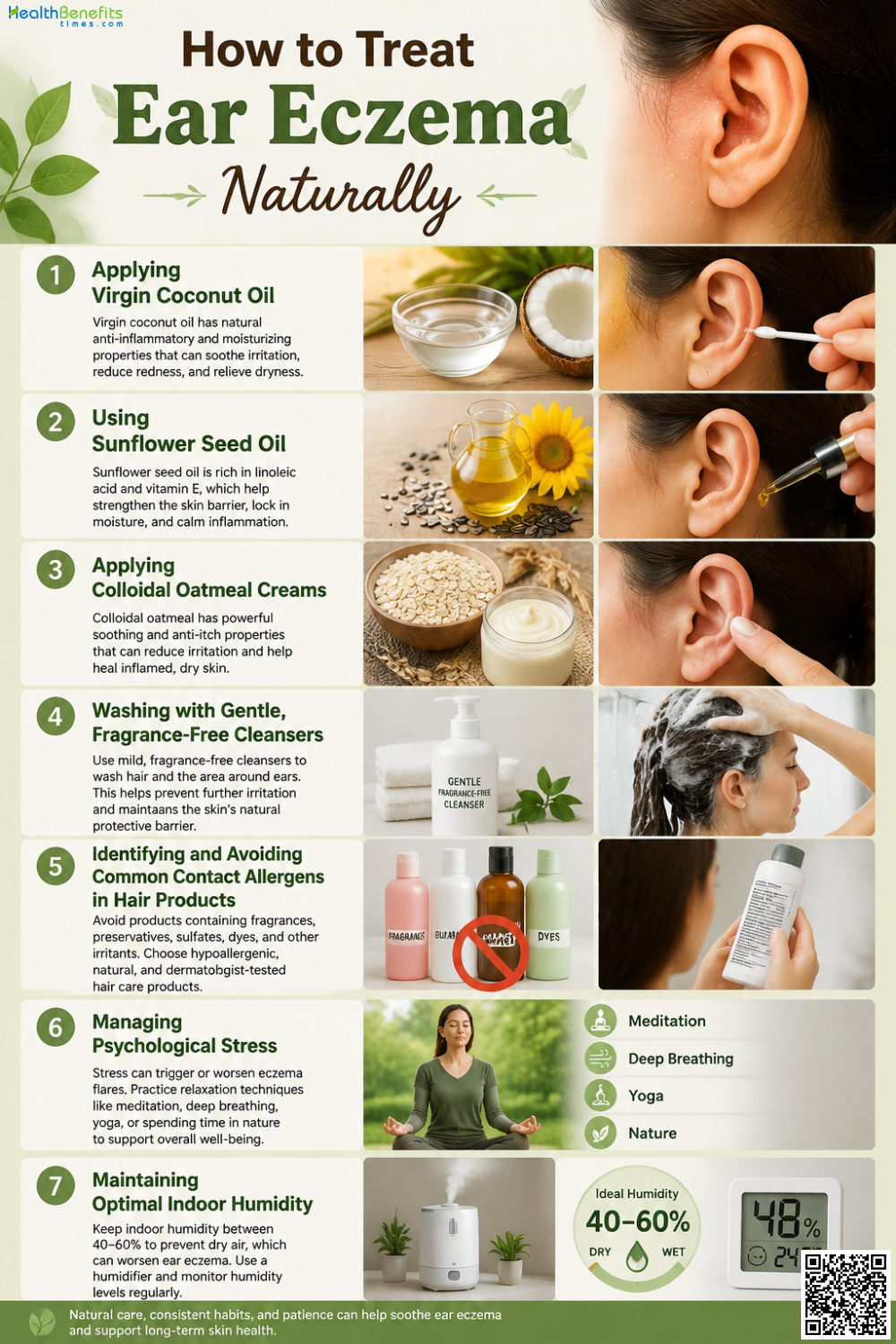
3. Applying Colloidal Oatmeal Creams
How it may help
Colloidal oatmeal consists of finely milled oats that bind to the skin, creating a protective barrier against environmental irritants. It contains natural plant compounds called avenanthramides that directly suppress inflammation. Applying this natural remedy relieves intense itching, soothes redness, and locks essential moisture into the outer ear 10.
What research says
Clinical trials confirm that topical colloidal oatmeal significantly improves skin barrier function and reduces eczema symptom severity, including dryness, scaling, and severe itching 10. Dermatological research concludes its active anti-inflammatory properties make it a highly effective and safe treatment for managing chronic atopic dermatitis flare-ups 11.
How to use it safely
Apply a thin layer of over-the-counter colloidal oatmeal cream to the affected outer folds of the ear twice daily. Rub it in gently until fully absorbed. Never insert creams directly into the ear canal, as trapped moisture can promote dangerous bacterial or fungal infections 1.
Potential precautions or side effects
Colloidal oatmeal is generally safe, but individuals with a known oat allergy may experience localized redness, stinging, or mild allergic contact dermatitis upon application 11.
4. Washing with Gentle, Fragrance-Free Cleansers
How it may help
Standard body soaps contain harsh chemicals that strip natural oils, worsening dry eczema patches. Washing with gentle, fragrance-free liquid cleansers removes dirt without disrupting the delicate moisture barrier. This prevents further irritation and helps maintain the natural acidic balance of the skin on the outer ear 12.
What research says
Clinical guidelines confirm that synthetic fragrances and harsh foaming agents are primary triggers for severe contact dermatitis 4. Dermatological research concludes that switching to low-pH, non-soap liquid cleansers significantly improves skin hydration, reduces scaling, and prevents symptom flare-ups in patients with chronic eczema 12.
How to use it safely
Wash your outer ear using lukewarm water and a small drop of fragrance-free cleanser. Gently massage the skin with your fingertips, avoiding harsh scrubbing. Rinse completely and pat the ear thoroughly dry with a soft towel, ensuring no soap enters the deep ear canal 1.
Potential precautions or side effects
Even hypoallergenic skin products can occasionally cause mild irritation. Discontinue use immediately and consult a doctor if you experience new redness, a burning sensation, or increased itching 4.
5. Identifying and Avoiding Common Contact Allergens in Hair Products
How it may help
Shampoos, conditioners, and styling products frequently leave chemical residue on the outer ears. Identifying and eliminating these specific chemical triggers stops the localized immune system reaction. This prevents new eczema flare-ups from developing and allows existing painful rashes on the sensitive ear tissue to heal naturally 1.
What research says
Clinical research identifies chemical preservatives, synthetic fragrances, and foaming agents in hair care products as leading causes of allergic contact dermatitis on the ears and scalp 4. Dermatological studies conclude that strictly avoiding these identified allergens is the most effective method to achieve long-term resolution of symptoms 13.
How to use it safely
Carefully read all ingredient labels on your shampoos, conditioners, and hair dyes. Switch to hypoallergenic products free of synthetic fragrances and harsh preservatives. When washing your hair, tilt your head back to prevent soapy water from running directly over or into your ears 1.
Potential precautions or side effects
Even hypoallergenic hair products can occasionally trigger reactions. Always perform a patch test on a small area of skin before applying new products near your sensitive ears 4.
6. Managing Psychological Stress
How it may help
Managing psychological stress directly reduces the body’s production of cortisol and other inflammatory hormones. Lowering these chemical signals decreases widespread skin inflammation, preventing severe ear eczema flare-ups. It also minimizes the subconscious urge to aggressively scratch the sensitive outer ear, allowing damaged tissues to naturally heal.
What research says
Clinical research confirms a direct correlation between high psychological stress and the worsening of atopic dermatitis. Studies conclude that chronic stress impairs the outer skin barrier function and hyperactivates the immune system, leading to increased redness, severe itching, and delayed healing of localized eczema patches on the ears 5.
How to use it safely
Practice structured relaxation techniques, such as deep breathing exercises, mindfulness meditation, or yoga, for fifteen to thirty minutes daily. Consistently incorporating these routines lowers daily tension. If you experience chronic anxiety, consult a licensed mental health professional for personalized stress management strategies 14.
Potential precautions or side effects
While relaxation techniques are highly safe, they should not replace professional medical treatment for severe clinical anxiety or depression. Always seek medical guidance for debilitating mental health conditions.
7. Maintaining Optimal Indoor Humidity
How it may help
Dry indoor air constantly draws natural moisture away from the skin. Using a humidifier adds water vapor back into the environment. This prevents the delicate skin on the outer ear from drying out, cracking, and scaling, providing continuous relief from severe eczema itchiness during harsh weather or in air-conditioned rooms.
What research says
Clinical studies show that low environmental humidity severely weakens the outer skin barrier and increases water loss, directly triggering eczema flare-ups. Dermatological research confirms that maintaining indoor humidity levels between forty and sixty percent significantly improves skin hydration and reduces the severity of chronic atopic dermatitis symptoms 4.
How to use it safely
Place a cool-mist humidifier in your bedroom while you sleep. Keep the humidity level between forty and fifty percent. You must empty, wash, and dry the water tank daily to prevent harmful mold and bacteria from growing and spreading into the air you breathe 15.
Potential precautions or side effects
Allowing indoor humidity to rise above sixty percent creates a damp environment that encourages dust mites and indoor mold growth, which can severely trigger asthma and other airborne allergic reactions 16.
Foods to Avoid When You Suffer from Ear Eczema
While specific foods do not directly cause ear eczema, clinical evidence indicates that dietary choices significantly influence systemic skin inflammation. Consuming highly inflammatory foods or unrecognized allergens can trigger overactive immune responses. This internal inflammation worsens existing skin barrier dysfunction, leading to increased redness, severe scaling, and intense itching on the sensitive outer ear tissue 17.
1. High-Sugar Foods and Beverages
Consuming excessive sugar triggers rapid insulin spikes that promote widespread systemic inflammation. This inflammatory response worsens chronic eczema symptoms, increasing itching and redness on the outer ear 18.

2. Ultra-Processed Foods
Heavily processed foods contain artificial additives and trans fats that disrupt healthy gut bacteria. This imbalance weakens immune function and triggers severe skin inflammation and eczema flare-ups 19.
3. Common Food Allergens
For some individuals, common food allergens like cow’s milk or gluten trigger abnormal immune responses. This allergic reaction frequently manifests as severe, localized eczema flare-ups on sensitive skin 17.
4. Foods High in Saturated Fats
Diets heavy in saturated fats from red meats elevate inflammatory markers in the bloodstream. This chronic inflammation compromises the outer skin barrier, worsening existing ear eczema symptoms 18.
5. Excessive Alcohol
Consuming excessive alcohol dehydrates the body, drawing essential moisture away from the skin. It also dilates blood vessels, visibly increasing the redness and itching of existing eczema patches 20.
When to see Doctor when you suffer from Ear Eczema
While mild ear eczema often responds to natural remedies, severe or persistent cases require professional medical evaluation to prevent complications. Clinical guidelines emphasize that untreated chronic inflammation structurally damages the ear canal skin, significantly increasing the risk of secondary bacterial or fungal infections that can temporarily impair hearing 3. Prompt dermatological or otolaryngological assessment is necessary to confirm the exact diagnosis and prescribe targeted medical treatments when specific physical warning signs develop 1.
1. Signs of Secondary Infection
Seek immediate medical care if eczema patches develop yellow crusts or ooze pus. These signs indicate a secondary staphylococcal bacterial infection requiring prescription antibiotics to heal 1.
2. Intense Pain and Swelling
Consult a physician if the ear becomes severely swollen, warm, or intensely painful. This indicates the inflammation has progressed into a deeper bacterial infection needing urgent medical treatment 3.
3. Ear Canal Blockage and Hearing Loss
Schedule an evaluation if flaking skin or swelling blocks the ear canal. This obstruction causes temporary hearing loss and requires professional debris removal and prescribed medical treatments 3.
4. Unresponsive to Natural Treatments
See a dermatologist if symptoms persist after a week of home care. Chronic eczema requires prescription-strength topical corticosteroids to effectively suppress the localized, overactive immune response 1.
5. Spreading Rash
Seek medical assessment if the itchy rash spreads beyond the ear to the face. Widespread contact dermatitis often requires short-term oral corticosteroids to halt systemic allergic inflammation 1.
Comments
comments