

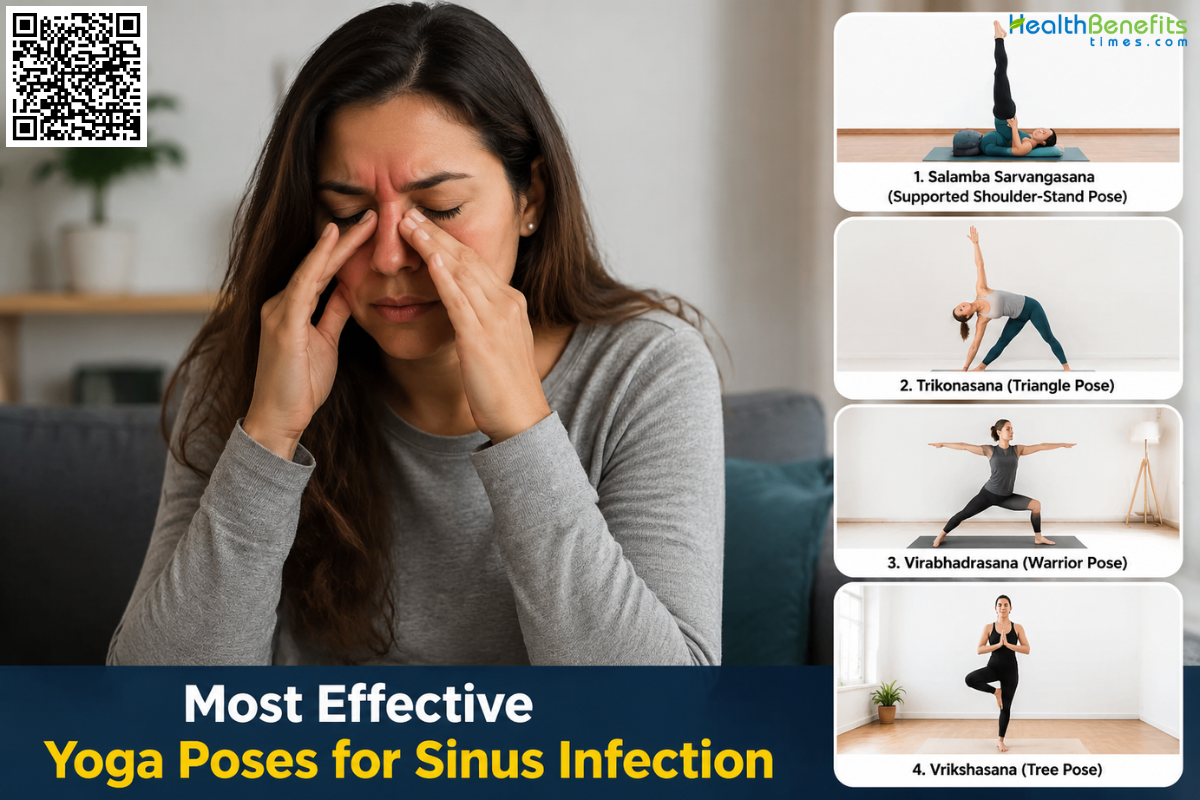
Causes of Sinus Infection
- Viral Infections: The vast majority of sinus infections are caused by common cold viruses. When a virus infects the upper respiratory tract, it causes the nasal tissues to swell and produce extra mucus, which blocks the sinus openings and traps fluid 1.
- Bacterial Infections: Bacteria are a less frequent cause but can multiply in the trapped fluid resulting from an initial viral cold or severe allergies. Bacterial sinusitis usually persists longer than viral infections and is more likely to require specific medical treatments 2.
- Allergies: Seasonal or year-round allergies, such as hay fever, trigger severe inflammation inside the nose. This allergic reaction swells the nasal lining and restricts natural mucus drainage, creating an environment where sinus infections can easily develop 3.
- Nasal Polyps: These are soft, non-cancerous growths that form on the lining of the sinuses or nasal passages. If these tissue growths become large enough, they can physically obstruct the sinus openings, preventing normal airflow and trapping fluid 4.
- Deviated Nasal Septum: The thin wall of bone and cartilage separating the left and right nostrils is called the septum. When this wall is significantly crooked or off-center, it can narrow or block the sinus drainage pathways on one side, increasing the risk of repeated infections 5.
Symptoms of Sinus Infection
- Nasal Congestion and Discharge: A severely blocked or stuffy nose is a primary symptom, frequently accompanied by thick, yellow or green mucus draining from the nostrils 1.
- Facial Pain and Pressure: Inflammation causes the sinus cavities to swell, creating pressure and a dull, aching pain around the eyes, cheeks, forehead, and bridge of the nose that often worsens when bending over 2.
- Postnasal Drip: Excess mucus continuously drains down the back of the throat, irritating the delicate tissues and triggering a persistent sore throat and cough that typically worsens while lying down at night 3.
- Reduced Sense of Smell: Severe swelling and physical blockages in the nasal passages prevent airborne odor particles from reaching the scent receptors, resulting in a temporary loss of smell and a muted sense of taste 6.
- Tooth and Jaw Pain: Because the roots of the upper teeth rest extremely close to the lower sinus cavities, severe sinus inflammation can cause aching pain that radiates directly into the upper jaw and teeth 3.
- Bad Breath: The constant presence of thick mucus dripping into the throat, combined with the underlying viral or bacterial activity, frequently produces noticeably bad breath 2.
Most Effective Yoga Poses for Sinus Infection
1. Jala Neti (Yogic Nasal Irrigation)
How it may help
Jala Neti, also known as nasal irrigation, mechanically flushes out thick mucus, allergens, and infectious particles from the nasal passages. By clearing these physical blockages, the saline solution helps reduce tissue swelling inside the sinuses, promotes better airflow, and restores the natural drainage function of the nasal cavity.
What research says
Clinical evidence supports nasal irrigation as a highly effective treatment for sinus infections. Research confirms that regular saline washes significantly improve sinus symptoms, enhance quality of life, and reduce the need for antibiotics or nasal steroid sprays in patients with both acute and chronic sinusitis 7.
How to do it safely
To perform nasal irrigation safely, you must strictly use distilled, sterile, or previously boiled and cooled water. Lean over a sink, tilt your head sideways, and gently pour the saline mixture into the upper nostril, allowing it to drain out the lower nostril. Wash the device thoroughly after use 8.
Potential precautions or side effects
Never use untreated tap water, due to the risk of life-threatening amoebic brain infections 8. Minor side effects include temporary nasal stinging or a feeling of ear fullness.
2. Bhramari Pranayama (Humming Bee Breathing Technique)
How it may help
Bhramari Pranayama involves making a continuous humming sound that creates strong physical vibrations throughout the nasal passages and facial cavities. These internal vibrations help loosen trapped mucus and significantly increase airflow between the sinuses and the nasal tract, which relieves pressure and improves natural sinus ventilation.
What research says
Scientific research demonstrates that humming increases the production of nitric oxide in the paranasal sinuses up to 15-fold compared to quiet breathing 9. This essential gas improves sinus ventilation and possesses strong antibacterial and antiviral properties that help fight infections, reduce inflammation, and relieve congestion.
How to do it safely
Sit comfortably with an upright spine. Close your eyes and use your index fingers to gently plug your ears. Inhale deeply through your nose. As you exhale slowly, keep your mouth closed and make a steady, low-pitched humming sound like a bee. Repeat this cycle for several minutes.
Potential precautions or side effects
Avoid pressing forcefully on your ears or face. If you have an active ear infection, skip this practice entirely, as the internal pressure changes may cause sharp pain or discomfort.
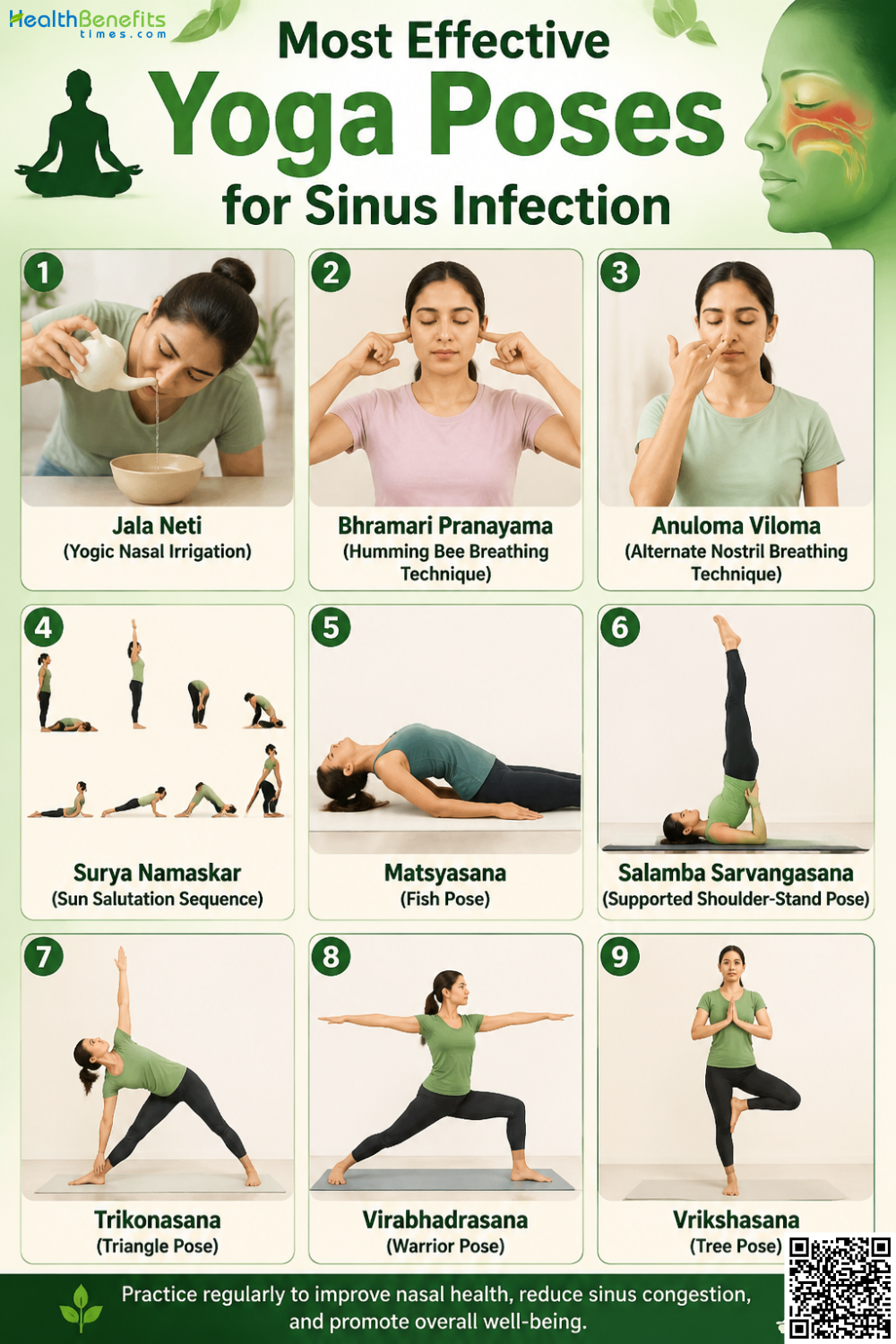
3. Anuloma Viloma (Alternate Nostril Breathing Technique)
How it may help
Anuloma Viloma, or alternate nostril breathing, helps balance airflow between the left and right nasal passages. By consciously directing the breath, this technique warms the nasal cavities, loosens thick mucus, and improves overall sinus ventilation. It also calms the nervous system, which can help reduce stress-induced airway inflammation.
What research says
Clinical studies indicate that regular practice of alternate nostril breathing significantly improves respiratory function and lowers nasal airway resistance 10. Researchers conclude that this specific breathing exercise enhances lung ventilation and helps clear blocked nasal passages by promoting balanced, steady airflow through both sides of the nose.
How to do it safely
Sit comfortably with your spine straight. Use your right thumb to close your right nostril and inhale deeply through the left. Next, close your left nostril with your ring finger, release your thumb, and exhale through the right. Inhale through the right nostril and reverse the pattern.
Potential precautions or side effects
Do not force the breath if one nostril is completely blocked, as this can create painful ear pressure. If you feel dizzy or lightheaded at any point, stop the exercise.
4. Surya Namaskar (Sun Salutation Sequence)
How it may help
Surya Namaskar is a dynamic sequence of postures that generates body heat and increases blood circulation. This physical warming helps thin thickened mucus in the nasal passages. Additionally, the continuous linking of movement with deep breathing naturally expands the chest, promoting better airflow and assisting in clearing congested sinuses.
What research says
Clinical studies demonstrate that regular practice of Surya Namaskar significantly improves pulmonary function and respiratory muscle strength 11. Researchers conclude that this sequence enhances lung capacity and ventilation, which helps the respiratory system clear blocked airways more efficiently and reduces the overall severity of upper respiratory tract symptoms.
How to do it safely
Perform the sequence slowly in a well-ventilated room. Stand tall, inhale deeply while raising your arms, and exhale smoothly as you bend forward. Move through the twelve connected postures at a comfortable, steady pace, ensuring that your breathing remains synchronized with each physical transition without forcing the breath.
Potential precautions or side effects
Avoid forward-bending postures if you experience severe facial pressure or dizziness. Individuals with high blood pressure, vertigo, or severe back injuries should consult a doctor before attempting this sequence.
5. Matsyasana (Fish Pose)
How it may help
Matsyasana, or Fish Pose, actively stretches the neck and opens the chest cavity, which encourages deeper breathing and better lung expansion. By gently tilting the head backward, this posture helps drain congested nasal passages, relieves physical pressure in the sinus cavities, and reduces tension throughout the upper respiratory system.
What research says
Clinical studies indicate that yoga postures focusing on active chest expansion significantly enhance lung capacity and overall pulmonary function 12. Researchers note that these specific physical stretches strengthen respiratory muscles and improve airway clearance, making them beneficial for managing upper respiratory congestion and related breathing difficulties.
How to do it safely
Lie flat on your back with your legs straight. Slide your hands underneath your hips, press your forearms into the floor, and lift your chest toward the ceiling. Gently tilt your head backward until the crown of your head lightly touches the floor, maintaining steady, deep breaths.
Potential precautions or side effects
Avoid this posture if you have a neck or back injury, or experience severe dizziness. Release the pose immediately if you feel sharp pain or extreme lightheadedness.
6. Salamba Sarvangasana (Supported Shoulder-Stand Pose)
How it may help
Salamba Sarvangasana, or Supported Shoulder-Stand, is an inverted posture that changes how gravity affects the body. This position increases blood circulation toward the chest, neck, and head. Opening the chest encourages deeper breathing, which can help loosen trapped mucus in the respiratory tract and temporarily ease congestion.
What research says
Clinical evidence demonstrates that comprehensive yoga practices, including inverted postures, significantly improve respiratory muscle strength and lung function 11. Researchers conclude that these physical movements enhance airway clearance and improve blood circulation, supporting the body’s natural ability to clear respiratory tract congestion.
How to do it safely
Lie on your back with a folded blanket under your shoulders. Slowly lift your legs and hips upward, supporting your lower back with your hands. Keep your elbows close together. Breathe steadily, hold briefly, and then gently roll your spine back down to the floor.
Potential precautions or side effects
Avoid this pose if you have neck injuries, high blood pressure, or glaucoma. Inverting during an active, painful sinus infection may temporarily worsen head and facial pressure.
7. Trikonasana (Triangle Pose)
How it may help
Trikonasana, or Triangle Pose, involves a deep lateral stretch that actively expands the chest cavity and lungs. This physical expansion encourages deeper, more efficient breathing. By opening the chest and increasing blood flow, this posture helps relieve tension in the upper body and supports the respiratory system in clearing congestion.
What research says
Clinical studies demonstrate that regular practice of standing yoga postures focusing on chest expansion significantly improves pulmonary function and lung capacity 12. Researchers conclude that these stretches strengthen respiratory muscles, enhance overall breathing mechanics, and assist the body in naturally clearing upper respiratory tract congestion.
How to do it safely
Stand with your feet wide apart and turn your right foot outward. Extend your arms parallel to the floor, hinge at your right hip, and reach your right hand toward your shin. Stretch your left arm straight up toward the ceiling. Hold the pose, breathe deeply, and switch sides.
Potential precautions or side effects
Avoid this posture if you have severe neck injuries, low blood pressure, or experience vertigo. If looking upward causes dizziness or neck pain, keep your gaze directed straight ahead.
8. Virabhadrasana (Warrior Pose)
How it may help
Virabhadrasana, or Warrior Pose, is an active standing posture that stimulates blood circulation and builds internal body heat. This increased circulation and physical warmth help thin nasal mucus. Additionally, lifting the arms and keeping the torso upright expands the chest, encouraging deeper breathing and improving overall sinus ventilation.
What research says
Clinical evidence demonstrates that practicing standing yoga postures focused on upper body expansion significantly enhances pulmonary function and respiratory muscle strength 12. Researchers conclude that these active poses improve lung capacity and airflow, which helps the respiratory system clear blocked airways and manage upper respiratory congestion.
How to do it safely
Stand straight and step your left foot far back, turning it slightly outward. Bend your right knee so it aligns directly over your right ankle. Keep your torso upright and raise both arms straight toward the ceiling. Breathe deeply, hold the posture, and then switch sides.
Potential precautions or side effects
Avoid looking up if you experience dizziness or neck pain. Individuals with high blood pressure, balance issues, or severe hip injuries should modify this pose or consult a doctor.
9. Vrikshasana (Tree Pose)
How it may help
Vrikshasana, or Tree Pose, promotes physical balance and focus, which helps calm the nervous system. This calming effect can reduce stress-induced inflammation in the respiratory tract. Furthermore, maintaining an upright, elongated spine naturally opens the chest cavity, encouraging smooth, deep breathing that assists in maintaining clear nasal passages.
What research says
Clinical studies indicate that practicing standing yoga postures significantly improves respiratory muscle function and promotes better nervous system balance 12. Researchers conclude that reducing physical stress while keeping the chest actively expanded enhances overall lung capacity, helping the body clear congestion and manage respiratory symptoms more efficiently.
How to do it safely
Stand straight and shift your weight onto your left leg. Place the sole of your right foot against your inner left thigh or calf, strictly avoiding the knee joint. Press your palms together at your chest. Keep your gaze steady, breathe deeply, and then switch sides.
Potential precautions or side effects
Never place your foot directly on the knee joint to prevent injury. If you experience dizziness or balance issues due to sinus pressure, stand near a wall for support.
When to See a Doctor for a Sinus Infection
- Prolonged Symptoms: Symptoms lasting more than 10 days without any sign of improvement typically indicate a bacterial infection requiring clinical evaluation 1.
- Rebounding Illness: If symptoms initially improve but suddenly worsen with a new fever or severe pain, it suggests a secondary bacterial infection 3.
- Severe Facial Pain: Intense, unmanageable pain or pressure around the eyes, forehead, or upper teeth necessitates immediate medical attention to rule out complications 2.
- Persistent Fever: A fever higher than 102°F (38.9°C) or one that persists for more than three to four days requires professional medical assessment 1.
- Vision Changes: Any visual disturbances, such as double vision or noticeable swelling and redness around the eyes, indicate a potential medical emergency 3.
Comments
comments