


Causes of Vitamin B12 deficiency
1. Pernicious anemia
An autoimmune condition where the immune system mistakenly attacks the stomach cells that produce intrinsic factor, a specific protein required to absorb Vitamin B12 from the digestive tract 1.
2. Dietary insufficiency
A lack of adequate B12 intake, primarily affecting individuals on strict vegan or vegetarian diets, because this nutrient naturally occurs almost exclusively in animal-based foods like meat, fish, eggs, and dairy 4.
3. Stomach conditions and surgeries
Medical situations that alter stomach anatomy or function, such as weight-loss surgeries (gastric bypass) or atrophic gastritis (a condition that thins the stomach lining and reduces acid), impair the body’s mechanical ability to separate the vitamin from food proteins 3.
4. Intestinal diseases
Chronic inflammatory conditions affecting the small intestine, specifically Crohn’s disease and untreated celiac disease, damage the cellular lining where nutrient absorption takes place, allowing the vitamin to pass through the body unused 1.
5. Medication interference
Long-term use of certain common prescription drugs can block nutrient absorption, specifically metformin used for blood sugar control, and acid-suppressing medications like proton pump inhibitors and H2 blockers used for acid reflux 4.
Symptoms of Vitamin B12 deficiency
- Fatigue and physical weakness: An overwhelming sense of tiredness and low energy, which occurs because the body cannot produce enough mature red blood cells to adequately deliver oxygen to tissues and organs 3.
- Nerve dysfunction: Uncomfortable “pins and needles” sensations, numbness, or burning feelings that typically begin in the hands and feet, caused by gradual damage to the myelin sheath, which is the protective covering surrounding the nerves 1.
- Mobility challenges: Difficulty walking, maintaining physical balance, or a general unsteadiness, a complication that can become permanent if severe nerve damage progresses without treatment 4.
- Cognitive and psychological changes: Trouble with memory, mental confusion, behavioral changes, or symptoms of depression, developing because the brain relies heavily on this nutrient for proper neurological function and chemical signaling 1.
- Oral inflammation: A swollen, painful, and abnormally smooth, bright red tongue, a clinical condition known as glossitis, which can also be accompanied by small mouth ulcers and a diminished sense of taste 2.
- Skin color changes: A pale or slightly yellowish tinge to the skin and the whites of the eyes, which happens when fragile, improperly formed red blood cells break down easily inside the body 3.
Natural Food sources for Vitamin B12 deficiency
1. Clams and Other Shellfish
How it may help
Clams and other bivalve shellfish provide exceptionally high concentrations of this nutrient, making them highly effective for correcting nutritional shortfalls. The vitamin is naturally bound to the protein in the muscle tissue, allowing the digestive system to efficiently extract and absorb it to rebuild healthy red blood cells 4.
What research says
Clinical nutrition data confirms that clams offer the highest dietary density of this essential nutrient. A standard three-ounce serving of cooked clams delivers over eighty micrograms of the vitamin, which far exceeds adult daily requirements and rapidly replenishes depleted bodily stores to support recovery 4.
How to use it safely
To consume shellfish safely, you must cook them thoroughly to an internal temperature of 145 degrees Fahrenheit to destroy harmful marine bacteria. Purchase clams from certified markets and discard any shells that remain closed after the cooking process 5.
Potential precautions or side effects
Individuals with shellfish allergies must avoid clams to prevent severe anaphylactic reactions. Furthermore, eating raw shellfish significantly increases the risk of dangerous bacterial food poisoning 6.
2. Organ Meats: Beef and Chicken Liver
How it may help
Organ meats, specifically beef and chicken liver, serve as the primary storage centers for this nutrient in animals. Eating these meats delivers an extremely concentrated dose of the vitamin. This high density allows the human body to rapidly absorb the nutrient, correct internal shortages, and restore normal red blood cell production 4.
What research says
Nutritional data confirms that beef liver ranks among the most potent dietary sources available. Federal health databases indicate that a standard three-ounce serving of cooked beef liver supplies approximately seventy micrograms of this vitamin. This massive concentration far exceeds the basic daily requirement necessary to maintain healthy neurological function 4.
How to use it safely
To consume organ meats safely, you should restrict your intake to no more than one serving per week. Always cook liver thoroughly to a safe internal temperature of 160 degrees Fahrenheit to destroy harmful bacteria, and ensure you purchase these products from verified, high-quality agricultural suppliers 7.
Potential precautions or side effects
Liver contains extremely high amounts of preformed Vitamin A. Consuming excessive quantities can trigger dangerous Vitamin A toxicity, which poses severe risks of serious birth defects during pregnancy 8.
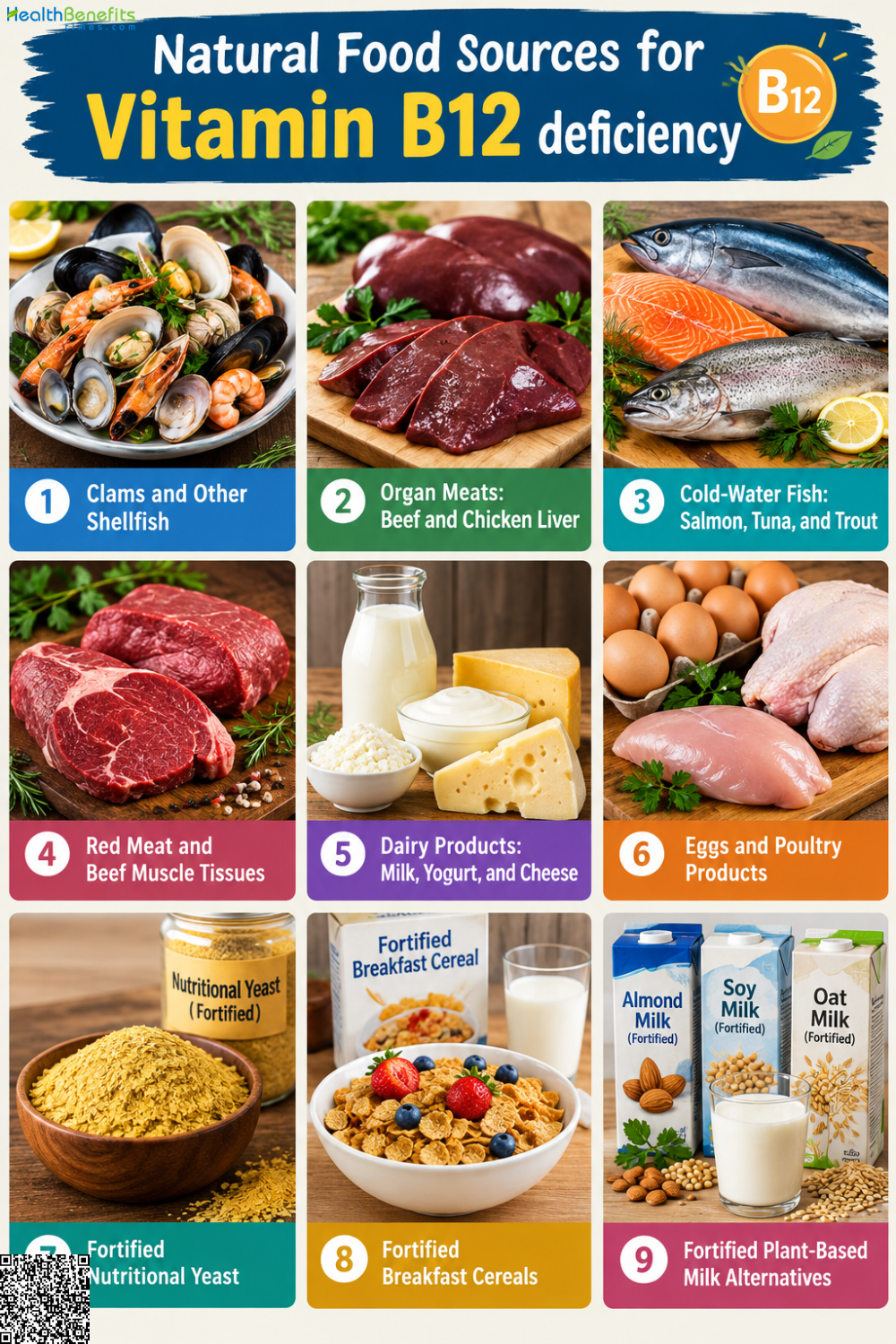
3. Cold-Water Fish: Salmon, Tuna, and Trout
How it may help
Cold-water marine fish, including salmon, tuna, and trout, provide substantial amounts of this vital nutrient alongside healthy proteins. Consuming these fish enables the digestive system to extract the vitamin efficiently, which then supports neurological health and assists the bone marrow in generating healthy red blood cells 4.
What research says
Clinical databases confirm that cold-water fish are excellent dietary sources of this nutrient. A standard three-ounce serving of cooked Atlantic salmon delivers approximately double the daily recommended intake for adults. Similar servings of trout and canned light tuna also provide high concentrations required to reverse nutrient shortages 4.
How to use it safely
You should aim to eat two to three servings of these fish per week. Always cook seafood to an internal temperature of 145 degrees Fahrenheit to eliminate harmful marine parasites, and select canned tuna packed in water to limit excess dietary fat 6.
Potential precautions or side effects
Certain large fish contain elevated mercury levels. Pregnant individuals and young children must limit consumption of albacore tuna to prevent potential neurological toxicity from heavy metal exposure 9.
4. Red Meat and Beef Muscle Tissues
How it may help
Red meat and beef muscle tissues supply a highly bioavailable form of this essential nutrient. When digested, stomach acids release the vitamin from meat proteins, allowing the human body to absorb it effectively to support proper nerve function and rebuild healthy red blood cells 3.
What research says
Federal nutritional databases demonstrate that lean beef muscle tissue consistently provides substantial concentrations of this vitamin. A standard three-ounce serving of cooked beef delivers approximately one hundred percent of the recommended daily adult requirement needed to maintain healthy bodily functions and prevent deficiency 4.
How to use it safely
To consume beef safely, you should select lean cuts to minimize saturated fat intake. Always cook ground beef to an internal temperature of 160 degrees Fahrenheit to ensure the complete destruction of harmful foodborne pathogens before eating 7.
Potential precautions or side effects
Consuming excessive quantities of red meat increases the long-term risk of developing cardiovascular disease and certain gastrointestinal cancers due to elevated saturated fat levels 10.
5. Dairy Products: Milk, Yogurt, and Cheese
How it may help
Dairy products, including cow’s milk, yogurt, and cheese, provide a highly absorbable form of this vital nutrient. The human digestive system processes the vitamin found in dairy more easily than the form found in meat, allowing for efficient correction of nutrient shortages to support continuous red blood cell production 4.
What research says
Clinical studies indicate that the absorption rate of the vitamin from dairy products significantly exceeds that from meat or fish. Federal nutritional data confirms one cup of low-fat cow’s milk provides approximately half of the daily adult requirement necessary to prevent severe neurological decline 4.
How to use it safely
To consume dairy safely, you should exclusively select pasteurized milk, yogurt, and cheese products to avoid dangerous foodborne bacterial infections. Choose low-fat or fat-free varieties to protect cardiovascular health while still receiving the full concentration of the vitamin 11.
Potential precautions or side effects
Individuals with lactose intolerance or dairy allergies must avoid these foods to prevent severe gastrointestinal distress, digestive cramping, and dangerous systemic allergic reactions 12.
6. Eggs and Poultry Products
How it may help
Whole eggs and poultry provide a consistent daily supply of this essential nutrient. The vitamin is primarily concentrated within the egg yolk, allowing the digestive system to extract it efficiently to maintain healthy nerve tissues and support ongoing red blood cell production 4.
What research says
Federal nutritional databases demonstrate that two large whole eggs deliver nearly half of the required daily adult intake for this vitamin. Furthermore, clinical data indicates that lean poultry, such as chicken and turkey, consistently provides the meaningful dietary concentrations required to prevent severe neurological complications 4.
How to use it safely
To consume these products safely, you must cook all poultry to an internal temperature of 165 degrees Fahrenheit. Additionally, always cook eggs until both the yolk and white are completely firm to prevent dangerous salmonella bacterial infections 7.
Potential precautions or side effects
Individuals with diagnosed egg or poultry allergies must strictly avoid these foods to prevent severe, potentially life-threatening anaphylactic allergic reactions involving systemic inflammation and respiratory distress 13.
7. Fortified Nutritional Yeast
How it may help
Fortified nutritional yeast provides a concentrated, vegan-friendly supply of this essential nutrient. Because the vitamin is added during manufacturing and not bound to animal proteins, the human digestive system absorbs it rapidly. This efficient absorption helps quickly correct shortages, supporting normal neurological function and continuous red blood cell production 4.
What research says
Clinical nutritional databases confirm that fortified yeast is highly effective for individuals following strict plant-based diets. Research demonstrates that a standard two-tablespoon serving delivers well over one hundred percent of the daily adult requirement, providing a reliable, bioavailable method to prevent severe neurological decline without consuming animal products 4.
How to use it safely
To use this product effectively, you must carefully read the nutrition label to verify it is specifically fortified, as unfortified yeast lacks this vitamin. Store the container in a cool, dark place to prevent light from degrading the nutrients, and sprinkle it over your meals 4.
Potential precautions or side effects
Individuals with diagnosed yeast allergies must avoid this product to prevent systemic inflammatory reactions. Excessive consumption may also cause mild gastrointestinal distress, including unusual bloating and digestive cramping 13.
8. Fortified Breakfast Cereals
How it may help
Fortified breakfast cereals provide a highly accessible, synthetic form of this essential vitamin. Because the nutrient is added directly to the food rather than bound to animal proteins, the human stomach absorbs it rapidly without requiring strong digestive acids. This allows the body to easily utilize the vitamin to support healthy nerve function and prevent anemia 4.
What research says
Federal nutritional databases indicate that fortified cereals are an effective dietary intervention, particularly for vegetarians and older adults with decreased stomach acid. Clinical data confirms that a single serving of heavily fortified cereal can provide over one hundred percent of the daily adult requirement, significantly reducing the risk of severe neurological decline 4.
How to use it safely
To use this food source effectively, you must read the product’s nutrition label to confirm it is specifically fortified with this nutrient. You should choose whole-grain cereals with low added sugars to protect your metabolic health while meeting nutritional requirements 14.
Potential precautions or side effects
You should avoid heavily processed, high-sugar cereals, which can significantly increase the risk of developing type 2 diabetes and cardiovascular disease when consumed excessively over long periods 15.
9. Fortified Plant-Based Milk Alternatives
How it may help
Fortified plant-based milk alternatives, such as soy, almond, or oat milk, provide an easily absorbable, synthetic form of this essential nutrient. Because the vitamin is not bound to animal proteins, the digestive system processes it rapidly. This efficient absorption helps correct dietary shortages, supporting healthy nerve tissues and normal red blood cell production 4.
What research says
Federal nutritional databases confirm that fortified plant milks are highly effective dietary interventions for individuals following strict vegan diets. Clinical data demonstrates that one cup of fortified soy milk typically delivers over one hundred percent of the daily adult requirement, providing reliable blood level restoration to prevent severe neurological decline 4.
How to use it safely
To use this product effectively, you must vigorously shake the carton before pouring, as added vitamins often settle at the bottom. Always verify the nutrition label confirms specific fortification, and choose unsweetened varieties to minimize excessive sugar intake 14.
Potential precautions or side effects
Individuals with diagnosed nut or soy allergies must strictly avoid specific plant milks to prevent severe, potentially life-threatening anaphylactic allergic reactions involving systemic inflammation 13.
Foods to Avoid When You Suffer from Vitamin B12 deficiency
1. Alcoholic beverages
Heavy alcohol consumption damages the stomach lining, severely reducing the production of intrinsic factor and stomach acid required to absorb this nutrient from meals 4.
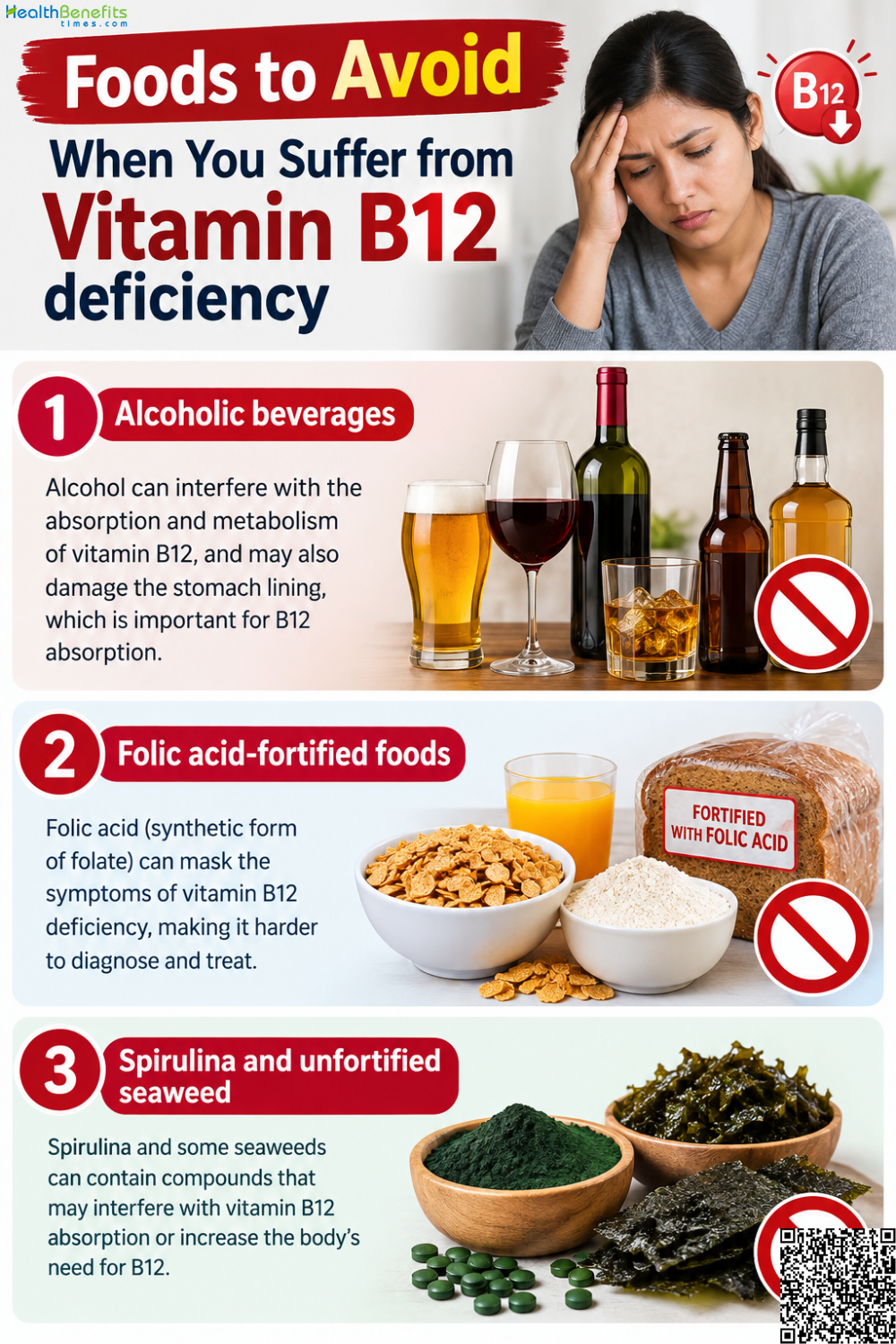
2. Folic acid-fortified foods
Consuming excessive folic acid corrects anemia but dangerously masks the deficiency, allowing irreversible nerve damage to silently progress completely undetected 4.
3. Spirulina and unfortified seaweed
These plant foods contain inactive pseudovitamin B12. The human body cannot use this false nutrient, which may actively block the absorption of genuine vitamin B12 4.
When to see Doctor when you struggle from Vitamin B12 deficiency
- Persistent neurological symptoms: Seek immediate care if you experience continuous numbness, tingling, or burning sensations in your hands or feet, as untreated nerve damage can become permanent 1.
- Mobility and balance issues: Consult a doctor if you develop physical unsteadiness, difficulty walking, or a loss of balance, which indicate a severe progression of neurological decline 4.
- Cognitive and memory changes: Medical evaluation is critical if you notice sudden mental confusion, severe memory loss, or depressive symptoms, because the brain requires this vitamin for basic function 1.
- Severe physical fatigue: Schedule an appointment if you experience overwhelming exhaustion, shortness of breath, or a rapid heart rate, which strongly suggest advanced vitamin deficiency anemia 3.
- Noticeable oral inflammation: See a healthcare provider if your tongue becomes unusually smooth, swollen, bright red, and painful, a specific clinical sign of this nutritional shortage 2.
Comments
comments