


Experiencing a sudden, sharp tightness in a limb can be incredibly startling, yet it is a widely understood and very common bodily response. A leg cramp is essentially an involuntary, highly localized, and intensely painful contraction of a skeletal muscle, most frequently striking the calf area at the back of the lower leg 1. These unpredictable spasms happen entirely without warning, locking the muscle into a rigid position that can last anywhere from a few fleeting seconds to ten agonizing minutes 2. Health professionals note that nocturnal leg cramps those that disrupt sleep during the night are particularly prevalent, affecting approximately one-third of the general adult population over the age of fifty 3. From a biological perspective, these cramps are thought to arise from a temporary dysfunction in the body’s spinal stretch reflex arc, where a disruption in the delicate balance between activating and calming nerve signals causes the muscle to misfire and sustain a tight contraction 4. While many instances of leg cramping are considered idiopathic, meaning they occur without a clear underlying medical cause, they can also be closely associated with specific temporary states such as pregnancy, intense athletic exertion, or underlying imbalances in fluid and minerals 5.
Causes of Leg Cramps
Finding the exact reason behind a sudden muscle spasm sometimes feels like solving a complex puzzle. Medical literature points to a variety of everyday triggers and bodily changes that can cause the delicate mechanisms of muscles and nerves to temporarily malfunction.
1. Muscle Fatigue and Overexertion
Pushing the body too hard during physical activity is the most frequent culprit for exercise-associated spasms. When muscles are subjected to unaccustomed stress, heavy lifting, or prolonged repetitive motion, they become deeply fatigued, which directly disrupts the neural control of the muscle fibers 6.
2. Dehydration and Fluid Loss
Water is absolutely vital for healthy, smooth muscle function. Losing significant amounts of fluid, whether from exercising in hot weather or simply failing to drink enough water throughout the day, compromises the muscle tissue’s ability to contract and relax properly 7.
3. Electrolyte Imbalances
Nerves and muscles rely on a precise biological balance of minerals specifically magnesium, potassium, calcium, and sodium to transmit their electrical signals. When the levels of these crucial minerals drop too low in the bloodstream, the risk of involuntary muscle spasms increases significantly 8.
4. Prescription Medications
Various common drugs have muscle cramping listed as a known, documented side effect. For instance, diuretics prescribed for high blood pressure can aggressively flush essential minerals from the body, while statins used to lower cholesterol can occasionally cause direct muscle irritation 9.
5. Pregnancy
Expectant mothers frequently experience leg cramps, especially as they progress into the second and third trimesters. The exact mechanisms involve a combination of normal weight gain altering lower leg circulation, increased demand for minerals, and the physical pressure of the growing baby on pelvic nerves 2.
6. Nerve Compression and Structural Issues
Physical problems in the spine, such as spinal stenosis or a pinched nerve in the lumbar region, can send faulty, erratic electrical signals down the legs. This nerve compression mimics a localized muscle issue but actually originates from the central nervous system 10.
7. Poor Blood Circulation
When the blood vessels supplying the legs become narrowed due to peripheral vascular disease, or when a person holds a limb in an awkward position for too long, the muscles do not receive adequate oxygen, which can prompt them to cramp painfully 1.
8. Alcohol Consumption
Regular, heavy consumption of alcoholic beverages has been strongly linked to a heightened risk of nocturnal leg cramps. Alcohol acts as a diuretic and alters the body’s toxin balance, which can irritate nerve endings and muscle tissue over time 11.
9. Underlying Medical Conditions
Certain chronic health issues fundamentally alter nerve and muscle communication. Conditions such as an underactive thyroid, kidney failure, or neurological disorders like Parkinson’s disease often feature cramps as a frustrating secondary symptom 12.
Symptoms of Leg Cramps
Recognizing the specific sensations associated with a leg cramp can help distinguish it from other types of leg pain, strains, or joint injuries. The physical experience of a true muscle spasm is usually unmistakable and highly localized.
- Sudden, Intense Pain: The primary hallmark of a cramp is a sharp, gripping pain that strikes entirely without warning, completely immobilizing the affected limb temporarily 13.
- Hard, Bulging Muscle Tissue: Touching the cramped area usually reveals that the muscle feels rock-hard and knotted, and there may even be a visible distortion or lump under the skin where the fibers are tightly locked 10.
- Brief but Severe Duration: The acute, active spasm generally lasts from a few short seconds to a maximum of about ten minutes before the muscle naturally releases its grip 3.
- Specific Anatomical Locations: While a cramp can happen in almost any voluntary muscle, they overwhelmingly target the calf muscles located at the back of the lower leg, as well as the arches of the feet and the hamstrings 7.
- Persistent After-Soreness: Even after the intense contraction has subsided, the affected muscle often feels deeply tender, bruised, or fatigued, with this residual soreness sometimes lingering for up to twenty-four hours 14.
- Severe Sleep Disruption: For individuals suffering from nocturnal cramps, the sudden onset of pain causes immediate waking, leading to distress, prolonged insomnia, and daytime exhaustion 2.
- Uncontrolled Posture Changes: In particularly severe cases, the sheer strength of the contracting muscle may force the foot or toes into an unusual, rigid posture such as pointing tightly downward until the neurological misfire is resolved 15.
Leg Cramps Facts Table
| Fact Category | Details |
| Symptoms |
|
| Causes |
|
| Types of Leg Cramps |
|
| How does spread |
|
| Age Group |
|
| You might be at a higher risk for exposure of this disease if you: |
|
| How doctors diagnose |
|
| Other facts |
|
Natural remedies for Leg Cramps
Navigating the world of natural treatments can be highly empowering when you are looking for gentle, effective ways to handle muscle spasms. It is reassuring to remember that while your body is complex, it often just needs a specific kind of nutritional or physical support to overcome the misfiring nerves that cause cramping. You should focus on methods that restore a healthy balance to your body’s internal chemistry and calm your nervous system.
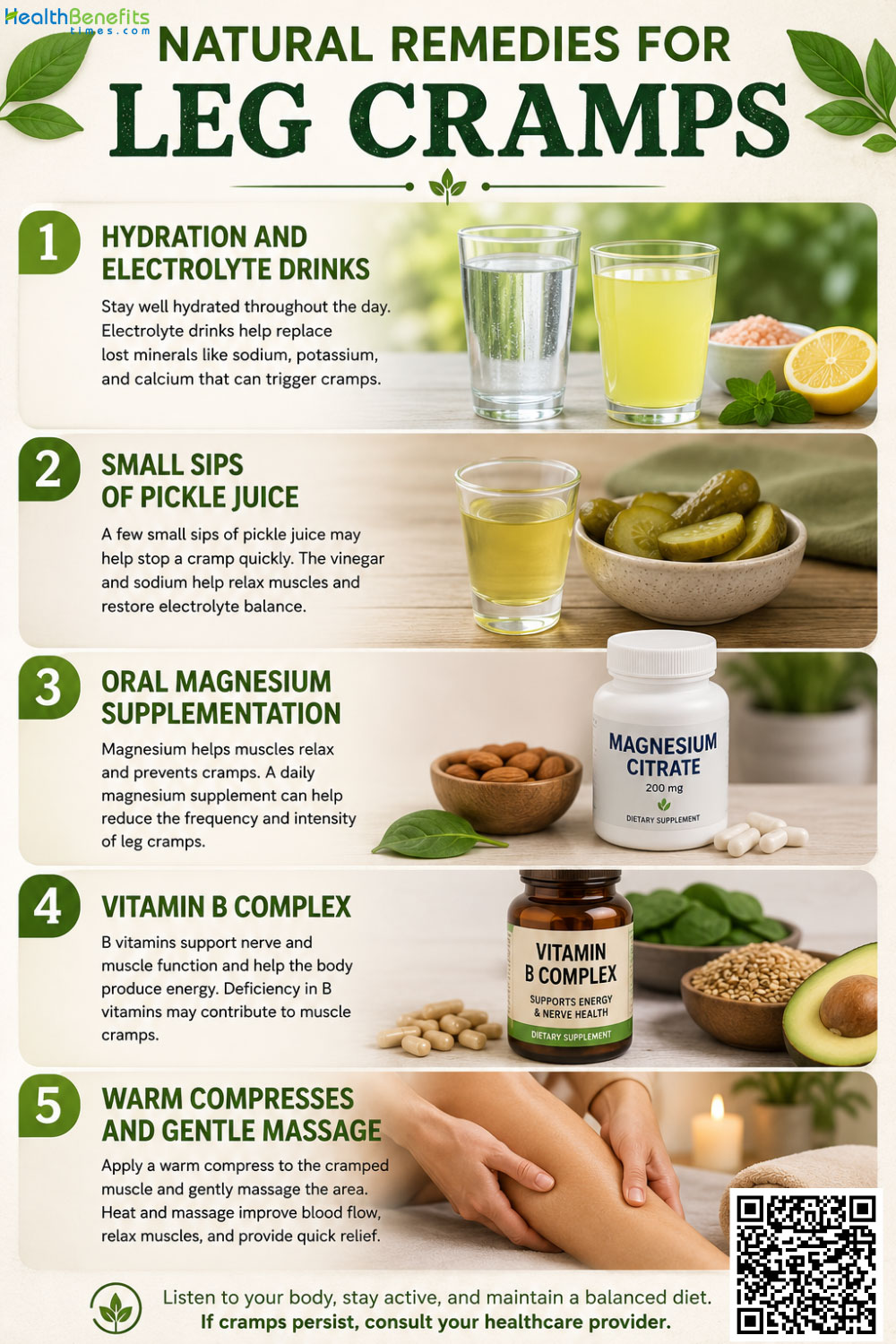
1. Hydration and Electrolyte Drinks
Giving your body the exact fluids it desperately needs is often the very first line of defense against muscle tension. When you sweat or go long periods without drinking, you lose water along with crucial minerals like sodium, potassium, and chloride. While drinking plain water is always important, if you have been very active, water alone might not be enough to stop a cramp. Consuming fluids that contain a specific balance of electrolytes and a small amount of glucose has been shown to make muscles far more immune to cramping than plain water alone 16.
Note: This is commonly used as a daily oral beverage to swiftly replenish lost sodium and potassium, supporting healthy electrical signaling in your muscles.
2. Small Sips of Pickle Juice
Reaching for a jar of pickles might sound like a highly unusual strategy for leg pain, but it is actually supported by fascinating neurological science. For years, athletes have sworn by drinking a tiny amount of pickle juice to instantly cure a cramp. Research has proven that drinking just a small volume of this salty brine can inhibit electrically induced muscle cramps much faster than drinking normal water 17. Interestingly, this rapid relief does not happen because the juice travels to the muscle. Instead, the sharp, acidic taste of the vinegar triggers a neural reflex in the back of your throat, which sends an immediate signal to your spinal cord telling the hyperactive nerves to shut down and relax.
Note: This remedy is commonly applied by taking a very small sip (a few ounces) directly from the jar to trigger a soothing neurological reflex in the throat for immediate cramp relief.
3. Oral Magnesium Supplementation
Nourishing your system with magnesium can be particularly beneficial for specific groups of people facing frequent muscle spasms. Magnesium is a vital mineral that is biologically responsible for helping muscle fibers relax after they contract. If you are pregnant, your body’s demand for magnesium increases, and falling short can lead to agonizing nighttime cramps. Clinical evaluations have shown that taking an oral magnesium supplement, such as magnesium bisglycinate chelate, can significantly reduce both the frequency and the intense pain of pregnancy-induced leg cramps 18.
Note: This is commonly consumed as a daily pill or a powder dissolved in water to support prolonged muscle relaxation and overall cellular energy.
4. Vitamin B Complex
Looking toward nervous system support, taking a Vitamin B complex has emerged as a surprisingly effective tool, particularly for older adults suffering from severe, persistent nighttime cramps. Vitamins like B1, B6, and B12 are absolute requirements for maintaining a healthy protective coating on your nerves. When your nerves are degraded or lacking these vitamins, they can become hyper-irritable. Studies have demonstrated that treatment with a vitamin B complex significantly reduces the frequency, intensity, and duration of nocturnal leg cramps in older patients 19.
Note: This is commonly taken as a daily oral capsule to nourish nerve endings, reduce hyper-irritability, and lower the overall frequency of nocturnal spasms.
5. Warm Compresses and Gentle Massage
Turning to physical touch and temperature manipulation offers a comforting, immediate way to soothe a distressed muscle. Applying heat to a cramped leg works by expanding the local blood vessels, which rushes fresh, oxygen-rich blood to the starved muscle tissue. You can use a warm towel, a heating pad, or even step into a warm bath. Combining this heat with a gentle, kneading massage helps to physically lengthen the tight muscle fibers, encouraging the tissue to release its grip and clearing away the metabolic byproducts that cause lingering soreness 20.
Note: This is applied directly to the skin over the tight muscle using hands or a heat pad to physically loosen fibers and encourage soothing blood flow.
Exercise for Leg Cramps
Moving your body in deliberate, targeted ways can serve as both an immediate rescue technique during a cramp and an excellent long-term prevention strategy. You do not need to be an athlete to benefit from these specific movements; you simply need to understand how to gently communicate with your nervous system to tell the muscle to lengthen and let go.
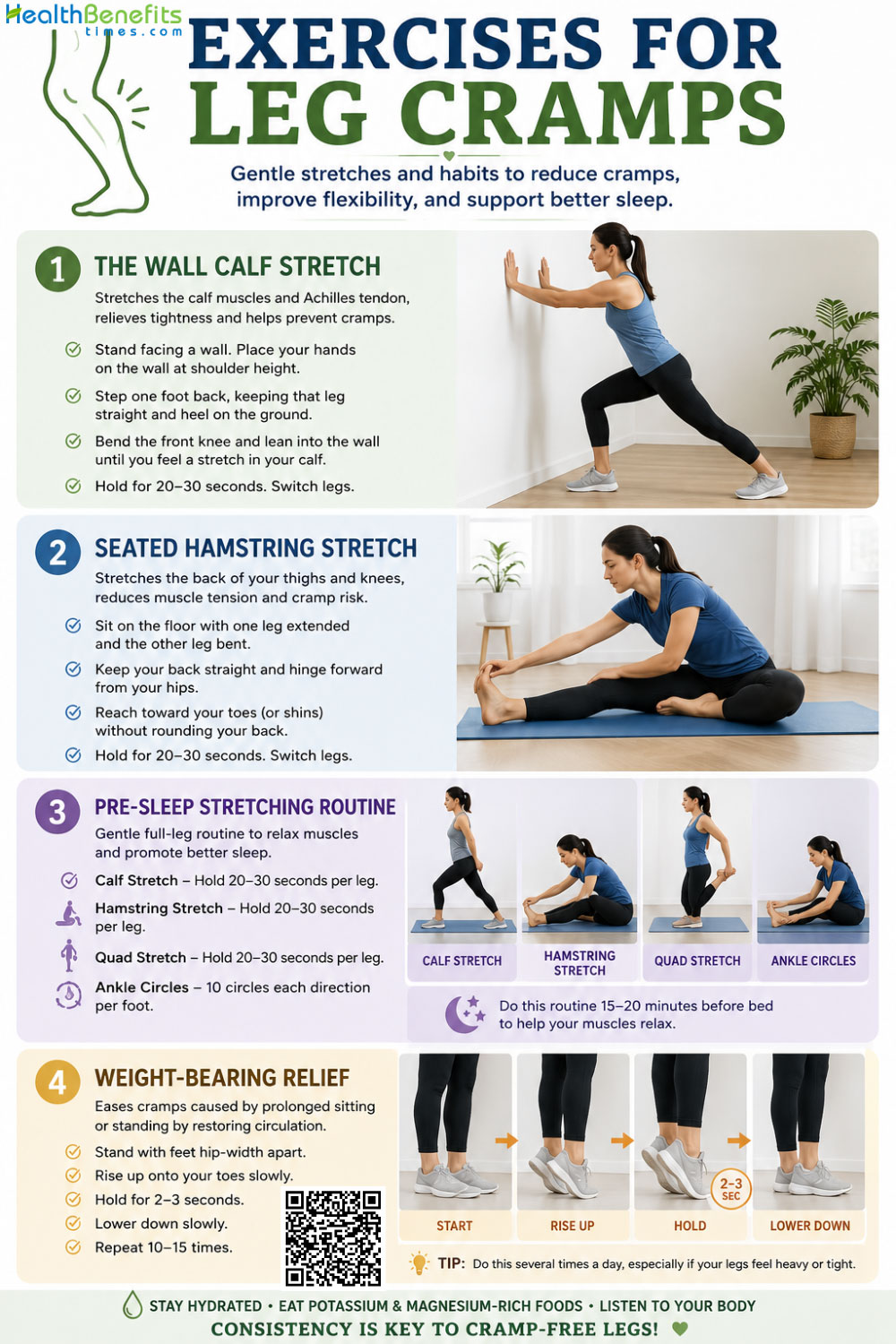
1. The Wall Calf Stretch
Focusing on the back of your lower leg is essential, as the calf muscle is the most frequent site of severe cramping. The primary goal of this stretch is to manually overcome the spasm by forcing the muscle into an elongated state. Doing this regularly can also train the muscle spindles to be far less reactive to sudden movements.
Note: To do this, stand facing a wall, stretch your arms out to press your hands against it, keep both feet flat on the floor, and lean forward gently until you feel a deep stretch in the back of your lower legs. Hold for a few seconds, stand straight, and repeat 21.
2. Seated Hamstring Stretch
Targeting the large muscles along the back of your thighs is another excellent way to promote overall leg flexibility, which reduces the structural tension that can pull on your calves and feet. Tight hamstrings can disrupt your posture and walking mechanics, leading to secondary fatigue in your lower legs that ultimately triggers cramps.
Note: To do this, sit comfortably on the floor with your legs extended straight out in front of you. Keeping your back relatively straight, gently reach your hands toward your toes until you feel a mild pulling sensation in the back of your thighs, and hold the stretch 22.
3. Pre-Sleep Stretching Routine
Creating a calming nightly habit of lengthening your leg muscles has been clinically proven to protect your sleep. Research on older adults has shown that performing simple calf and hamstring stretches immediately before getting into bed significantly reduces both how often nocturnal cramps occur and how painful they are when they do strike 23.
Note: To do this, dedicate three to five minutes every single night right before sleep to perform gentle standing wall stretches and seated hamstring reaches to prime your leg muscles for deep relaxation 24.
4. Weight-Bearing Relief
Using your own body weight is sometimes the absolute fastest way to break a severe, active cramp. When a calf muscle locks up tightly, the sheer physical force of gravity combined with your body mass can forcefully stretch the muscle fibers back out, overriding the neurological spasm that is causing the pain.
Note: To do this, immediately stand up from your bed or chair when a cramp strikes and place your full body weight firmly onto the affected leg, keeping your heel completely flat on the floor until the muscle releases its grip 25.
Foods and Activities to Avoid When You suffer from Leg Cramps
Protecting your body from specific environmental and dietary triggers is just as important as knowing how to treat a cramp once it starts. You can significantly reduce your risk of suffering from unexpected spasms by being highly mindful of what you consume and how you treat your body in your daily life.
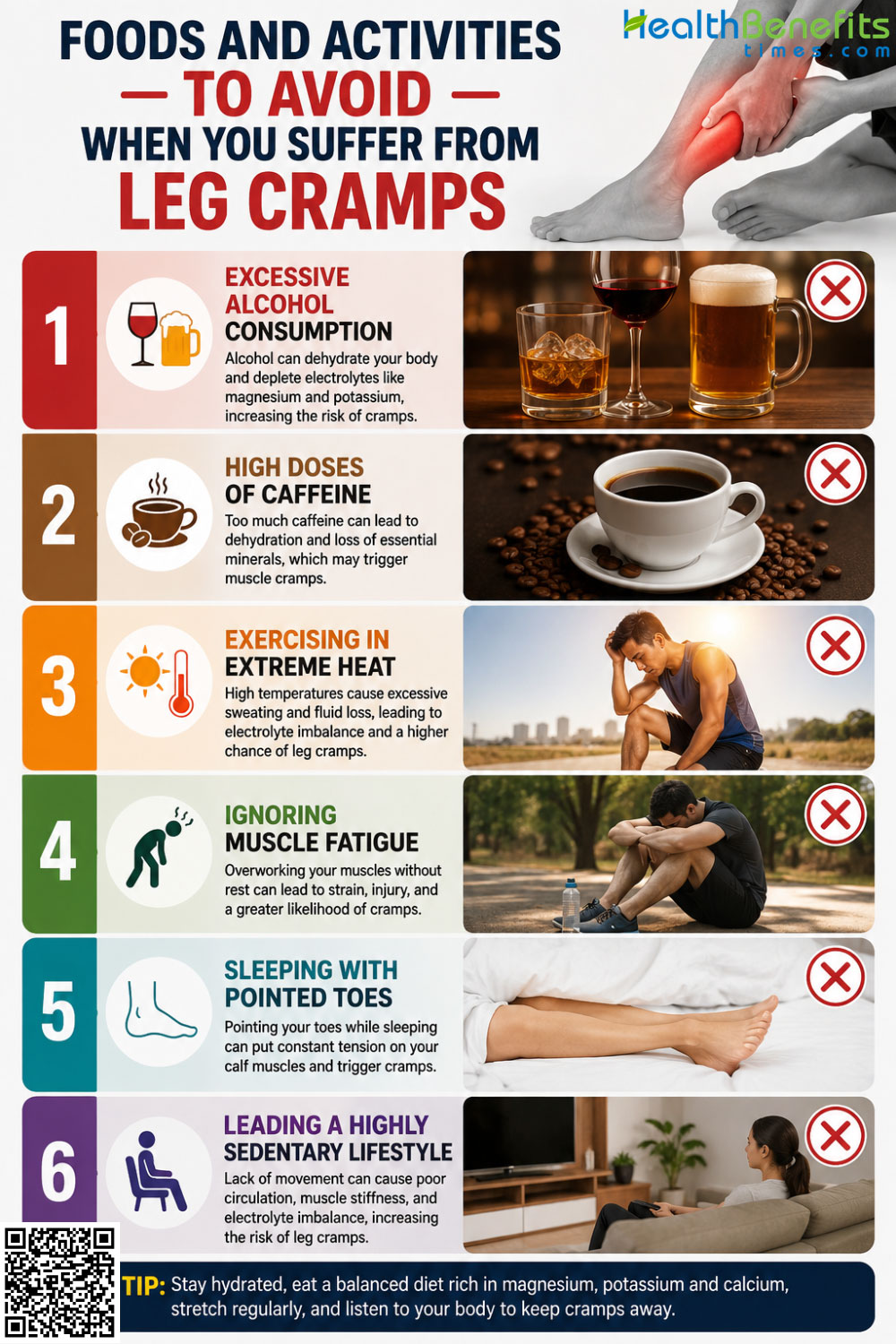
1. Excessive Alcohol Consumption
You should carefully monitor your daily or weekly alcohol intake. Studies have identified a very strong, measurable association between drinking alcoholic beverages and suffering from nocturnal leg cramps 26. Alcohol acts as a systemic diuretic, dehydrating your muscle tissues, and it can also interfere with your liver’s ability to process natural bodily toxins, both of which severely stress your nervous system.
2. High Doses of Caffeine
You might want to consider cutting back on heavy coffee, strong tea, or energy drink consumption. Caffeine is a powerful central nervous system stimulant. In large amounts, it can make your nerve endings hyper-excitable, leading to an increased likelihood of random muscle twitches and full-blown cramps 27.
3. Exercising in Extreme Heat
You must avoid pushing your body through vigorous, highly demanding workouts during peak heat or high humidity without taking immense precautions. Heat drastically increases how much you sweat, rapidly depleting your body of both water and the vital sodium required to keep your muscle contractions smooth and perfectly controlled 28.
4. Ignoring Muscle Fatigue
You should never force a tired, aching muscle to keep working beyond its normal capacity. Extreme overexertion is the leading cause of exercise-associated muscle cramps. If you are starting a new physical activity, you should always increase the intensity gradually rather than shocking your muscles with sudden, heavy demands 6.
5. Sleeping with Pointed Toes
You should carefully evaluate your preferred sleeping posture. Lying on your stomach, or on your back with heavy, tightly tucked blankets pressing your feet downward, forces your ankles into a position called plantar flexion. Holding the calf muscle in this shortened, contracted position for hours during sleep makes it highly susceptible to suddenly locking into a cramp 12.
6. Leading a Highly Sedentary Lifestyle
You should consciously avoid sitting entirely still for most of the day. A sedentary lifestyle reduces the natural, healthy blood flow to your lower extremities. Adjusting for alcohol consumption, research shows a massive association between nocturnal leg cramps and living a sedentary lifestyle 11. Regular, light physical activity is absolutely necessary to keep your vascular system healthy.
Myths and Misconceptions
| Myth | Reality |
| Drinking massive amounts of plain water is the ultimate cure for all muscle cramps. 4 | While hydration is undeniably important, drinking large volumes of plain water without replacing lost salt (sodium) can actually dilute your blood and make exercise-induced cramps worse. Electrolytes matter just as much as fluid volume. |
| Quinine is the best, safest, and most effective medicine to stop leg cramps. 2 | Although quinine used to be incredibly popular for cramps, global health authorities no longer recommend it. It carries a severe risk of dangerous adverse effects, including serious blood disorders, making it entirely unsafe for routine cramp prevention. |
| Muscle cramps are always a direct sign of a severe, underlying disease. 29 | In the vast majority of cases, leg cramps are entirely benign, meaning they are harmless. While they are incredibly painful, they are usually just a result of temporary fatigue, mild dehydration, or minor nerve irritation, not a serious medical emergency. |
| Taking massive, unregulated doses of Vitamin B6 will guarantee healthy nerves and stop cramps forever. 30 | Taking extremely high doses of Vitamin B6 (well over 100 mg a day) is actually toxic to the human body. Paradoxically, Vitamin B6 toxicity can cause permanent, severe nerve damage and neuropathy, making leg pain and movement difficulties significantly worse. |
| Stretching regimens work perfectly to cure night cramps for every single person. 31 | While stretching before bed is highly recommended and works wonderfully for many older adults, research shows the results can be somewhat mixed. Some clinical trials show it drastically reduces severity, while others show it may not completely stop the frequency of the cramps for everyone. |
Special Considerations
Grasping how muscle cramps affect entirely different groups of people helps ensure that care is tailored safely and appropriately. The root causes and the ideal, safest treatments for a muscle spasm can vary dramatically depending on a person’s age, life stage, and overall health status.
1. Children
Witnessing a young child wake up crying with severe leg pain in the middle of the night can be deeply distressing for any parent. In children, especially those between the active ages of 3 and 12 years old, intermittent aches and spasms in the legs are very commonly referred to as “growing pains” 32. Despite the traditional name, these pains are not actually caused by the physical growth of bones. They are generally benign, self-limiting, and most often occur in the late afternoon or middle of the night following a highly active day of running and playing 33. It is crucial for parents and pediatricians to approach these events with reassurance, utilizing gentle massage, warm heat application, and sometimes a simple muscle stretching exercise program to alleviate the discomfort 34. However, medical professionals must carefully differentiate normal growing pains from more persistent issues, such as restless leg syndrome, which can persist into adulthood, or rare genetic conditions where spontaneous muscle cramps begin in early childhood due to uniquely fragile blood vessels {% https://pmc.ncbi.nlm.nih.gov/articles/PMC1557982/, https://medlineplus.gov/genetics/condition/hereditary-angiopathy-with-nephropathy-aneurysms-and-muscle-cramps-syndrome/ %}.
2. Pregnancy
Bringing a new life into the world places extraordinary, complex demands on a woman’s body, and severe leg cramps are a notoriously common complaint, particularly as the mother enters the later stages of pregnancy 10. These sudden cramps almost always strike at night and can cause intense sleep disruption and daytime fatigue. The physiological shifts of pregnancy including massive changes in blood circulation, the physical weight of the growing baby pressing directly on delicate pelvic nerves, and rapidly fluctuating mineral demands all heavily contribute to this painful phenomenon 35. Many obstetricians look toward oral magnesium supplementation as a highly safe, gentle intervention. Clinical studies have shown that oral magnesium supplements can safely improve both the frequency and the agonizing intensity of these pregnancy-induced leg cramps, offering expectant mothers much-needed relief without significant side effects like nausea 36.
3. Chronic Conditions
Dealing with persistent, underlying health issues often brings unpredictable muscle cramps along as an exhausting secondary burden. For example, individuals suffering from advanced kidney failure who require regular renal dialysis experience extreme, rapid shifts in their body’s fluid and electrolyte balance during their treatment sessions. This rapid shift makes dialysis-related muscle cramps an incredibly frequent and agonizing complication that must be carefully managed 2. Furthermore, neurological diseases that inherently disrupt how the brain communicates with the body such as multiple sclerosis, Parkinson’s disease, or motor neurone disease (MND) frequently feature uncontrollable muscle spasms and cramps as the damaged nervous system misfires 37. In some rare genetic instances, disorders like dystonia cause muscles to become stiff, twist unusually, and fail to relax normally, requiring highly specialized, lifelong neurological care rather than simple at-home remedies 38.
4. Elderly
The natural process of aging brings a unique set of physiological changes that make the older population particularly vulnerable to suffering from nocturnal leg cramps. In fact, medical statistics show that up to 33% of the general population over the age of 50 frequently suffers from these sudden nighttime spasms 3. The root causes in the elderly are highly multifactorial, ranging from natural age-related muscle loss and subtle neurological changes to the cumulative side effects of daily medications used to manage blood pressure or high cholesterol 13. Because older adults are already more prone to poor sleep quality, the severe insomnia caused by recurrent leg cramps can have a profound negative impact on their overall quality of life and physical activity levels during the day. For frail older adults, implementing a simple, supervised six-week stretching regimen of the calves and hamstrings right before bed has proven to be a highly feasible, safe, and effective way to significantly reduce both the occurrence and the pain intensity of these nighttime disruptions 39.
Precaution before use of natural remedies when you have Leg Cramps
Taking charge of your personal health with natural remedies is an excellent step, but you must always proceed with an abundance of caution, respect, and self-awareness. “Natural” does not always mean entirely harmless, and your body’s unique internal chemistry must be respected at all times.
1. Beware of Vitamin B6 Toxicity
If you choose to take Vitamin B complex supplements to treat your cramps, you must strictly monitor your daily dosage. Consuming high doses of Vitamin B6 (pyridoxine) specifically anything over 100 to 200 mg per day for extended periods can cause a paradoxical and highly severe toxic reaction. This specific toxicity presents as peripheral sensory neuropathy, leading to potentially irreversible nerve damage, numbness in the extremities, and difficulty walking 40.
2. Monitor Magnesium if You Have Kidney Issues
You should absolutely consult your primary doctor before taking any form of magnesium supplement if you have been diagnosed with chronic kidney disease (CKD). Because your kidneys are primarily responsible for filtering out excess magnesium from your blood, impaired kidney function can lead to toxic hypermagnesemia, a dangerous buildup of the mineral that requires immediate medical intervention and dialysis 41.
3. Check for Dangerous Medication Interactions
You must carefully review your current prescriptions before adding daily electrolyte drinks, salt tablets, or heavy mineral supplements to your routine. If you are taking prescription diuretics for high blood pressure, adding extra potassium or sodium without professional medical supervision can dangerously disrupt your delicate cardiovascular system 8.
4. Avoid Over-Stretching a Cold Muscle
You should be incredibly gentle when executing stretching routines for cramp prevention. Forcefully stretching a muscle that is very cold and tight, or bouncing aggressively during a stretch, can actually cause microscopic tears in the muscle fibers. These small tears lead to physical strains that are far worse and longer-lasting than the original cramp 42.
5. Do Not Rely on Quinine
You must absolutely avoid seeking out or consuming quinine-based medications to treat standard leg cramps. While it was once a popular home remedy, the medical community and major regulatory agencies strongly warn against its use today due to the exceptionally high risk of life-threatening adverse effects, including severe, irreversible bleeding disorders 43.
When to see a Doctor
Knowing exactly when to transition from gentle home care to a professional medical evaluation is absolutely crucial for protecting your long-term health. While the vast majority of leg cramps are entirely harmless, certain clear warning signs indicate that your nervous system or circulatory system requires expert attention.
1. The Pain is Completely Unrelenting
You should seek immediate medical help if the cramps are incredibly severe and last for an abnormally long time, refusing to release even after 10 or 15 minutes of dedicated stretching, walking, and massage 7.
2. You Notice Visible, Alarming Changes
You must see a doctor immediately if the cramping is accompanied by severe swelling, significant unnatural redness, or a distinct feeling of heat and warmth radiating from the leg. These specific physical signs could indicate a highly dangerous blood clot, known as Deep Vein Thrombosis 5.
3. You Experience Unexplained Muscle Weakness
You should consult a neurologist if the cramps are accompanied by a noticeable loss of strength, visible muscle wasting (shrinking of the muscle tissue), or widespread, constant twitching under the skin (fasciculations) throughout the day, as these are major red flags for underlying nerve disorders 12.
4. Home Remedies Completely Fail You
You should definitely book a non-emergency appointment if your cramps happen very frequently, consistently ruin your sleep night after night, and show absolutely no improvement despite you drinking enough fluids, replacing electrolytes, and diligently stretching every single evening 29.
5. They Start Suddenly After a New Medication
You must contact your healthcare provider if you suddenly begin experiencing intense, new leg cramps shortly after starting a new prescription. This is particularly important if you have just been prescribed cholesterol-lowering statins or blood pressure diuretics, so your doctor can safely adjust your dosage or switch your medication 13.
Comments
comments