

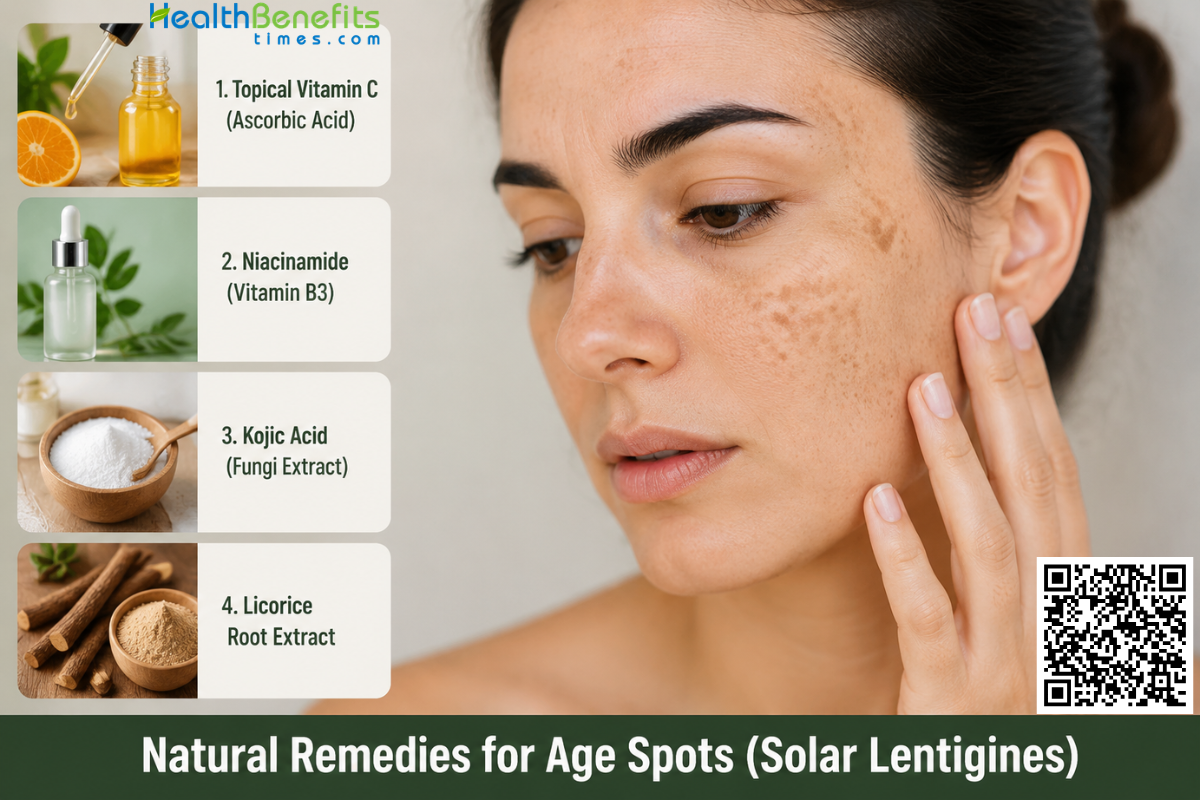
Causes of Age Spots (Solar Lentigines)
- Cumulative Ultraviolet (UV) Radiation: Prolonged and repeated exposure to sunlight is the primary driver of solar lentigines. UV radiation triggers melanocytes—the cells responsible for pigment—to produce excessive amounts of melanin, which clumps together to form visible, darkened spots on the skin surface 1.
- Intrinsic Biological Aging: As the skin ages, the number of functional melanocytes decreases, but the remaining cells often become enlarged and clustered. This age-related cellular change, combined with decades of cumulative sun damage, significantly increases the likelihood of developing these pigmented lesions 3.
- Genetic Predisposition: Individual susceptibility to developing age spots is strongly influenced by genetics. A person’s natural skin pigmentation levels and how their specific skin cells respond to ultraviolet light exposure play a major role in determining the number and prominence of lentigines that appear over time 2.
- Oxidative Stress and Inflammation: Chronic exposure to environmental stressors, including pollution and solar radiation, generates free radicals within the skin. This oxidative stress disrupts normal cellular repair processes and stimulates persistent inflammation, which further encourages the irregular distribution and accumulation of pigment 4.
Symptoms of Age Spots (Solar Lentigines)
- Distinctively Pigmented Macules: Age spots appear as flat, well-defined, and non-raised areas of skin that are darker than the surrounding tissue. These spots typically range in color from light tan to dark brown or black 1.
- Localized Pattern of Distribution: These spots occur exclusively on areas of the body that have experienced chronic, repeated exposure to ultraviolet radiation. They are most commonly identified on the face, the back of the hands, the shoulders, the upper back, and the forearms 1.
- Variable Shape and Size: Individual lesions are usually round or oval in shape. They vary in diameter, generally ranging from a few millimeters to more than a centimeter in width, and may occasionally cluster together to create larger, irregularly shaped patches of pigmentation 3.
- Absence of Surface Alterations: Unlike other skin lesions, solar lentigines do not cause changes to the skin’s texture. The surface of the spot remains smooth and matches the feel of the surrounding, non-affected skin 2.
- Chronic Stability: Once formed, these spots are permanent and do not disappear on their own. While they may gradually darken over many years due to continued sun exposure, they remain stable and do not transition into other types of skin growths without external intervention 3.
Natural Remedies for Age Spots (Solar Lentigines)
1. Topical Vitamin C (Ascorbic Acid)
How it may help
Topical vitamin C acts as a powerful antioxidant that neutralizes free radicals caused by sun damage 5. It helps fade age spots by directly blocking tyrosinase, the enzyme responsible for producing melanin, which reduces excess skin pigment and prevents new dark spots from forming 6.
What research says
Clinical trials confirm that topical vitamin C is an effective, safe compound for reducing ultraviolet-induced hyperpigmentation 7. Research shows it successfully decreases melanin content and improves skin tone evenness, making it a highly valuable treatment for reversing visible signs of photoaging like solar lentigines 7.
How to use it safely
For the best results, look for a vitamin C serum with a concentration between 10% and 20%, as higher amounts do not increase effectiveness 5. Apply it daily to clean skin, and always follow up with broad-spectrum sunscreen to protect against further ultraviolet damage 8.
Potential precautions or side effects
Vitamin C is generally well-tolerated, but highly acidic formulations may cause mild skin irritation or dryness 9. The serum degrades quickly if exposed to direct light or air 5.
2. Niacinamide (Vitamin B3)
How it may help
Niacinamide reduces age spots through a unique mechanism that blocks pigment transfer 8. Instead of halting melanin production, it prevents the already-produced dark pigment from moving into the outer skin cells where spots become visible 10. This process effectively fades existing discoloration and brightens the skin.
What research says
Clinical studies demonstrate that topical niacinamide significantly decreases hyperpigmentation and lightens solar lentigines after four weeks of continuous use 8. Research confirms it is a highly stable, effective, and safe alternative to harsher skin-lightening agents, providing consistent cosmetic improvements without damaging skin cells 10.
How to use it safely
Look for a daily serum or moisturizer containing a 2% to 5% concentration of niacinamide for the best balance of safety and effectiveness 8. Apply it to clean skin up to twice daily, and always protect your skin with broad-spectrum sunscreen during the day.
Potential precautions or side effects
Niacinamide is exceptionally gentle and safe for most skin types 8. However, applying formulas with very high concentrations can occasionally trigger mild redness, itching, or a temporary burning sensation 10.
3. Kojic Acid (Fungi Extract)
How it may help
Kojic acid, a natural compound produced by certain fungi, helps control age spots by directly inhibiting tyrosinase, the essential enzyme required for melanin production 11. By binding to this enzyme, it halts new pigment formation and allows existing darkened areas to gradually fade 12.
What research says
Clinical research confirms that kojic acid is a potent depigmenting agent that effectively reduces hyperpigmentation, including solar lentigines 13. Dermatological studies recognize it as a highly capable skin-lightening alternative, successfully decreasing melanin synthesis while providing antioxidant benefits against ultraviolet-induced cellular damage 11.
How to use it safely
For optimal results, look for topical creams or serums containing a kojic acid concentration between 1% and 4% 11. Apply the product specifically to the darkened spots. Because it increases your skin’s vulnerability to ultraviolet rays, you must always apply broad-spectrum sunscreen during the day.
Potential precautions or side effects
Kojic acid can sometimes cause local skin irritation, redness, and contact dermatitis, particularly in sensitive skin types 12. Proper storage is required, as the ingredient degrades easily.
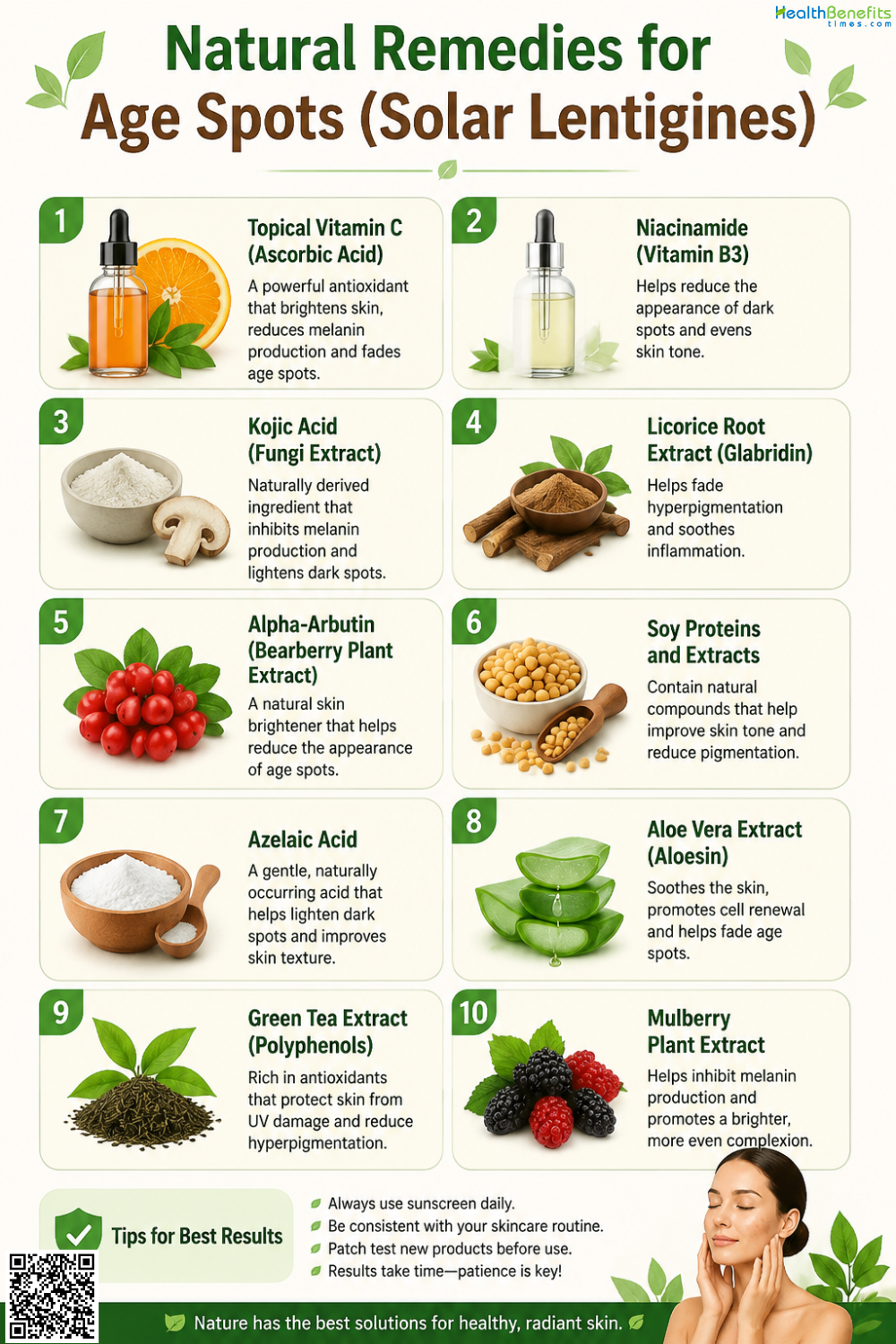
4. Licorice Root Extract (Glabridin)
How it may help
Licorice root extract, primarily through its active compound glabridin, helps fade age spots by directly inhibiting tyrosinase, the critical enzyme required for melanin production 11. It also functions as a potent antioxidant, reducing ultraviolet-induced oxidative stress and preventing pigment transfer to outer skin cells 14.
What research says
Dermatological studies confirm that glabridin is a highly effective, natural depigmenting agent for treating hyperpigmentation disorders like solar lentigines 11. Research shows it successfully decreases melanin synthesis without causing cellular toxicity, making it a reliable, non-toxic alternative to harsher synthetic skin-lightening chemicals 15.
How to use it safely
Look for topical serums formulated with licorice root extract containing 0.5% to 1% glabridin. Apply it once or twice daily directly to the darkened spots on clean skin. Consistent application for at least four weeks, always combined with broad-spectrum sunscreen, is required for visible fading 11.
Potential precautions or side effects
Licorice root extract is generally safe and well-tolerated. Rarely, individuals with highly sensitive skin might experience mild redness or irritation, making an initial patch test highly recommended 16.
5. Alpha-Arbutin (Bearberry Plant Extract)
How it may help
Alpha-arbutin, a natural compound extracted from the bearberry plant, reduces age spots by directly blocking tyrosinase, the essential enzyme responsible for melanin production 11. This continuous inhibition effectively prevents new dark pigment from forming while allowing existing sun spots to gradually lighten over time 10.
What research says
Dermatological research establishes alpha-arbutin as a highly effective and stable depigmenting agent for treating ultraviolet-induced hyperpigmentation 11. Clinical studies confirm it significantly decreases melanin synthesis and lightens solar lentigines, offering a much safer profile with lower cellular toxicity than traditional synthetic hydroquinone treatments 10.
How to use it safely
Select topical serums containing a 1% to 2% concentration of alpha-arbutin for optimal safety and effectiveness 11. Apply it directly to the darkened spots up to twice daily on clean skin. You must consistently wear broad-spectrum sunscreen during daylight hours to protect against further pigment formation.
Potential precautions or side effects
Alpha-arbutin is generally well-tolerated by most skin types, but it may occasionally cause mild redness, dryness, or contact dermatitis in sensitive individuals 10. Discontinue use if persistent irritation occurs.
6. Soy Proteins and Extracts
How it may help
Soy proteins contain specialized natural compounds, such as soybean trypsin inhibitor, that slow down the transfer of dark pigment packages from production cells to the outer skin layer. By blocking this specific pathway, soy prevents excess pigment from building up, which visibly reduces the appearance of age spots.
What research says
Double-blind clinical trials confirm that topical soy moisturizers significantly fade age spots, mottled hyperpigmentation, and uneven skin tone. Research shows that continuous use over three months leads to substantial improvements in skin clarity and overall smoothness compared to using regular moisturizers without active soy components.
How to use it safely
Choose a high-quality cream or serum formulated with unpasteurized soy extracts to ensure the active proteins remain functional. You should apply it twice daily to clean skin, once in the morning and once at night. Always pair it with broad-spectrum sunscreen to protect your skin from further sun damage.
Potential precautions or side effects
Topical soy is highly stable and safe for most skin types. However, individuals with a known soy allergy should avoid these products, as they may trigger mild skin redness or irritation.
7. Azelaic Acid
How it may help
Azelaic acid, a naturally occurring compound derived from grains, reduces age spots by directly inhibiting tyrosinase, the enzyme required for melanin production 17. It specifically targets hyperactive pigment-producing cells without damaging healthy surrounding tissues, effectively halting excess pigment synthesis and allowing darkened spots to naturally fade 8.
What research says
Clinical studies establish azelaic acid as a highly effective topical treatment for various hyperpigmentation disorders, including solar lentigines 18. Dermatological research confirms it significantly decreases melanin content and acts as a powerful antioxidant, providing comparable skin-lightening results to traditional chemical treatments but with a safer, non-toxic cellular profile 8.
How to use it safely
Apply a thin layer of cream or gel containing a 15% to 20% concentration of azelaic acid directly to the affected spots once or twice daily on clean skin 18. Always apply a broad-spectrum sunscreen during the day to protect your skin from additional ultraviolet damage.
Potential precautions or side effects
Topical azelaic acid is generally well-tolerated, though some individuals may initially experience mild, temporary skin irritation, stinging, redness, or localized dryness at the direct application site 18.
8. Aloe Vera Extract (Aloesin)
How it may help
Aloesin, an active compound extracted from the aloe vera plant, helps control age spots by directly inhibiting tyrosinase, the enzyme responsible for producing melanin 6. By blocking this crucial step, aloesin stops excess pigment synthesis at the source, preventing dark spots from worsening while allowing existing hyperpigmentation to gradually fade over time 10.
What research says
Research demonstrates that aloesin effectively suppresses ultraviolet-induced hyperpigmentation, with clinical studies showing dose-dependent reductions in melanin content 10. Dermatological trials reveal that aloesin functions as a potent depigmenting agent on its own, and its skin-lightening efficacy significantly increases when combined with other natural compounds like arbutin to treat solar lentigines 10.
How to use it safely
Apply a topical cream, gel, or serum formulated specifically with concentrated aloesin directly to the affected spots on clean skin 10. For the best results, use it consistently alongside broad-spectrum sunscreen to protect the skin from additional ultraviolet damage during the day.
Potential precautions or side effects
Topical aloesin is highly safe and generally well-tolerated by most skin types 10. However, individuals with a known aloe allergy should perform a patch test to avoid mild contact dermatitis.
9. Green Tea Extract (Polyphenols)
How it may help
Green tea extract is rich in polyphenols, particularly epigallocatechin-3-gallate, which act as potent antioxidants. These compounds neutralize free radicals generated by ultraviolet exposure, reducing the oxidative stress that triggers localized melanin overproduction. By protecting skin cells from damage, green tea extract helps prevent the development of new age spots and supports a more even skin tone 10.
What research says
Clinical evidence indicates that topical green tea polyphenols effectively protect skin integrity and reduce signs of photoaging, including hyperpigmentation. Research confirms these extracts possess significant anti-inflammatory and depigmenting properties, which assist in mitigating the long-term effects of ultraviolet radiation on skin color and structure when applied consistently to affected areas 7.
How to use it safely
Apply a serum or cream containing green tea extract to clean skin once or twice daily. Because it functions primarily to prevent further oxidative damage, you must use it in conjunction with broad-spectrum sunscreen. Consistent daily application is essential to maintain the protective antioxidant benefits for your skin.
Potential precautions or side effects
Green tea extract is generally safe for all skin types. Rare instances of mild skin irritation or allergic reactions may occur in highly sensitive individuals.
10. Mulberry Plant Extract
How it may help
Mulberry extract, particularly from Morus alba, acts as a potent inhibitor of tyrosinase, the enzyme responsible for melanin synthesis 10. By regulating this enzyme’s activity, the extract effectively slows down the production of excess pigment, which helps to lighten existing age spots and promote a more uniform skin tone 19.
What research says
Scientific literature recognizes mulberry extract as an effective, natural alternative to synthetic lightening agents for managing hyperpigmentation. Studies confirm that its active compounds successfully reduce melanin content without causing significant toxicity to healthy skin cells, establishing it as a reliable option for improving the appearance of solar lentigines over time 10.
How to use it safely
Apply topical products containing mulberry extract to clean, dry skin on the affected areas once or twice daily. To achieve and maintain visible improvements, consistent application over several weeks is necessary. Always combine its use with broad-spectrum sunscreen to protect your skin against further sun-induced pigment damage.
Potential precautions or side effects
Mulberry extract is generally well-tolerated. Rare side effects may include mild skin redness, dryness, or irritation in individuals with sensitive skin, necessitating a preliminary patch test before full application.
Foods to Avoid When You Suffer from Age Spots (Solar Lentigines)
1. Refined Sugars and Sweets
High sugar intake promotes the formation of advanced glycation end products, which damage collagen and elastin, potentially worsening skin quality and the appearance of sun-damaged spots 20.
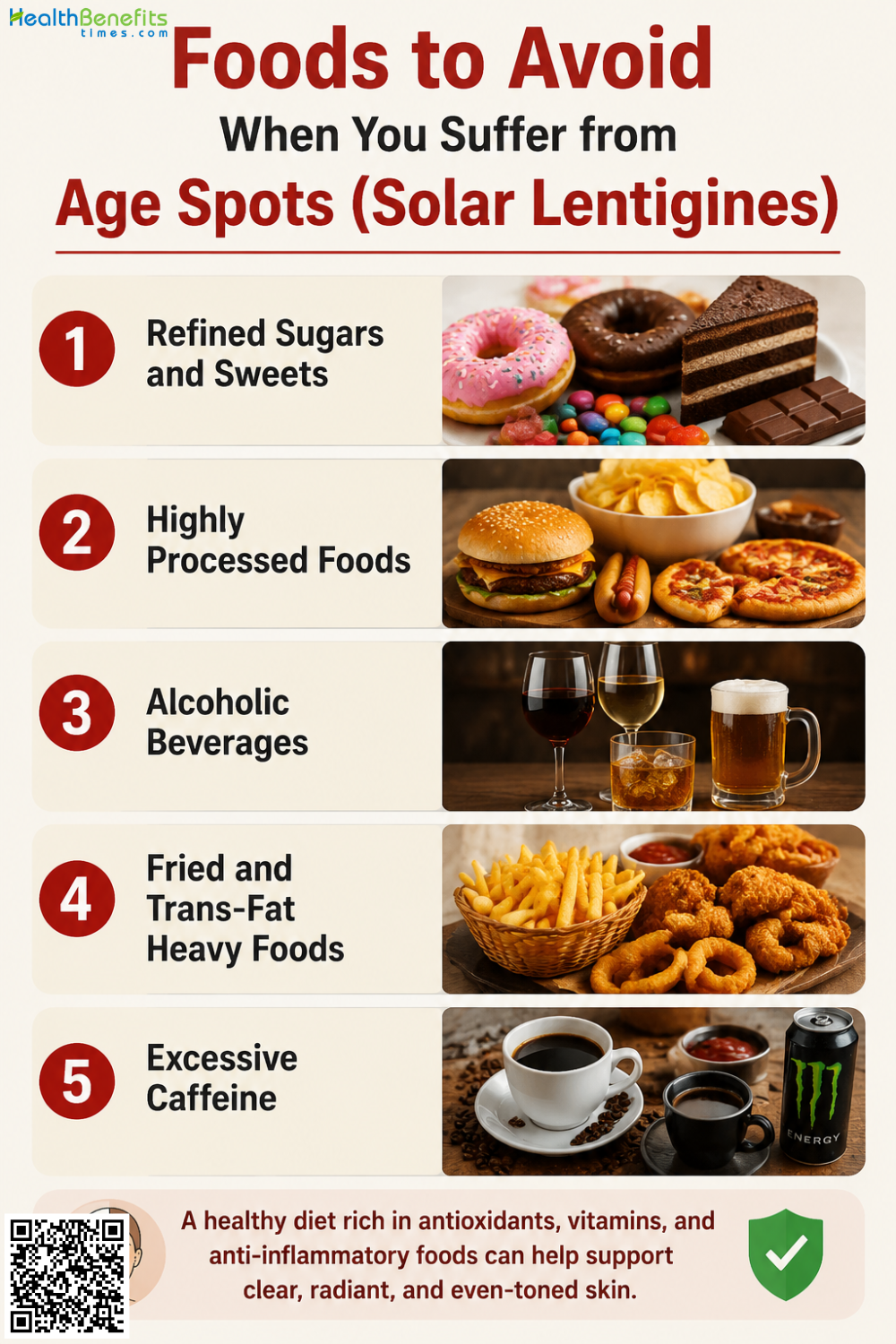
2. Highly Processed Foods
These often contain inflammatory additives and unhealthy fats that exacerbate oxidative stress. This systemic inflammation can hinder the body’s natural ability to repair ultraviolet-induced skin damage 4.
3. Alcoholic Beverages
Chronic alcohol consumption acts as a diuretic, causing skin dehydration and increasing oxidative damage, which weakens the skin barrier and impairs its capacity to maintain even pigmentation 4.
4. Fried and Trans-Fat Heavy Foods
Consuming trans fats is linked to chronic systemic inflammation, which accelerates skin aging and cellular decline, making existing solar lentigines more prominent and difficult to manage 4.
5. Excessive Caffeine
While moderate consumption is generally safe, excessive caffeine intake can contribute to skin dehydration and may interfere with healthy sleep cycles necessary for skin repair and regeneration processes 4.
When to See a Doctor Regarding Age Spots (Solar Lentigines)
- Rapid Changes in Appearance: Seek a professional evaluation if a spot changes size, shape, or color quickly, as these alterations may indicate a more serious condition like melanoma 3.
- Irregular Borders: Consult a healthcare provider if the edges of a pigmented area become jagged, blurred, or asymmetrical rather than remaining smooth and clearly defined 3.
- Unusual Pigmentation: If a spot displays multiple colors, such as shades of red, white, blue, or black within a single lesion, it requires immediate examination by a medical professional 3.
- Bleeding or Itching: Schedule an appointment if a spot begins to bleed, crust over, itch, or become tender, as these symptoms are not typical of benign solar lentigines 3.
- Diagnostic Uncertainty: If you cannot distinguish a dark spot from other skin growths, a dermatologist should perform a clinical assessment to confirm the diagnosis and rule out malignancy 3.
Comments
comments