

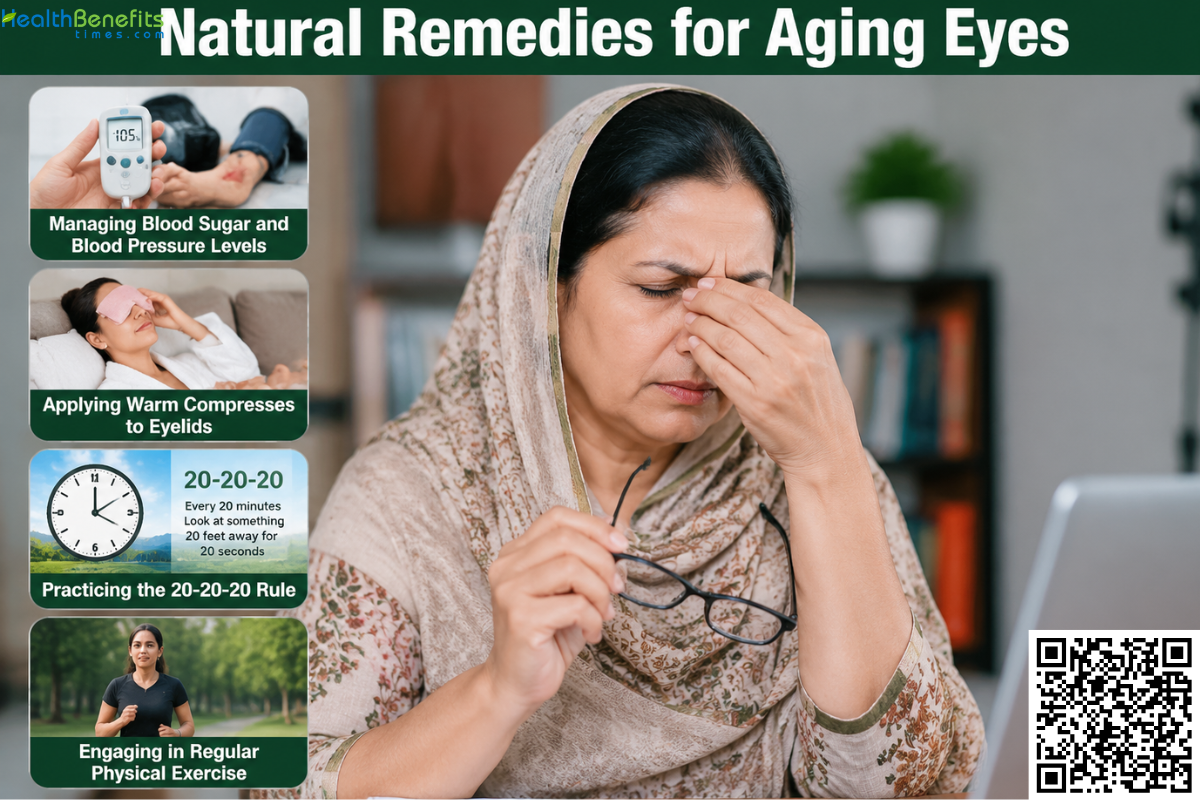
Causes of Aging Eyes
1. Lens Hardening (Presbyopia)
As the body gets older, the natural crystalline lens inside the eye slowly becomes rigid and loses its flexibility. This physical stiffening prevents the eye from changing shape to focus on close objects, causing a universal age-related condition known as presbyopia 1.
2. Protein Accumulation (Cataracts)
Over decades of life, normal proteins within the eye’s lens naturally break down and clump together. These protein clusters create cloudy, dense areas that block light from passing through the lens clearly, causing blurred vision and the progressive development of cataracts 3.
3. Reduced Tear Production
Advancing age directly affects the lacrimal glands, which are responsible for producing baseline tears. As these glands naturally decrease their fluid output, the eyes lack sufficient moisture and lubrication, frequently leading to the stinging, redness, and irritation associated with chronic dry eye syndrome 4.
4. Pupil Muscle Weakening
The tiny muscles that control the expansion and contraction of the pupil lose their strength over time. This muscular degeneration causes the resting pupil to become smaller and react much more slowly to changes in lighting, which makes it harder to see in the dark and requires older adults to need significantly more ambient light to read clearly 2.
5. Vitreous Fluid Shrinkage
The clear, gel-like substance that fills the center of the eye, known as the vitreous, gradually liquefies and shrinks as a person ages. As this gel slowly pulls away from the retina, microscopic fibers clump together and cast tiny shadows, which appear in the person’s field of vision as harmless floating spots or cobwebs 5.
6. Retinal Cell Degeneration
Normal aging process causes wear and tear on the macula, the small central portion of the retina responsible for sharp, straight-ahead vision. Over time, the thinning of these light-sensitive tissues and the buildup of waste deposits under the retina can lead to age-related macular degeneration (AMD), which slowly destroys central vision 6.
Symptoms of Aging Eyes
1. Difficulty Focusing on Close Objects
The most recognizable early sign of visual aging is the inability to read small print or focus clearly on near objects, often requiring individuals to hold reading materials at arm’s length. This physical limitation occurs because the internal lens of the eye loses its flexibility over time 1.
2. Increased Need for Bright Light
Older adults frequently require significantly more ambient light to perform standard visual tasks such as reading, sewing, or cooking. This symptom develops because the muscular structures controlling the pupil weaken with age, reducing the physical size of the resting pupil and severely limiting the amount of light that enters the eye 2.
3. Sensitivity to Glare and Halos
Bright sunlight, indoor fixtures, or the headlights of oncoming cars may suddenly cause severe visual discomfort or produce a noticeable halo effect around the light source. As the lens of the eye thickens and slowly becomes cloudy with age, it causes incoming light to scatter rather than focus sharply on the retina, complicating tasks like night driving 2.
4. Dry, Burning, or Gritty Sensations
A natural decline in basal tear production leads to a persistent stinging, burning, or gritty feeling on the surface of the eye. Conversely, the eyes may sometimes overcompensate for this severe dryness by sporadically producing excessive, watery reflex tears that stream down the face 4.
5. Appearance of Visual Floaters
Individuals may begin to see small, dark spots, specks, or thread-like structures drifting slowly across their field of vision. These visual anomalies are harmless clumps of cellular debris created when the vitreous gel inside the eye naturally shrinks and pulls away from the retinal wall 5.
6. Faded or Altered Color Perception
Over decades, the naturally clear lens of the eye progressively takes on a yellowish tint. This optical color shift acts like a filter, causing colors to appear less vivid and making it increasingly difficult for older adults to distinguish between similar shades, particularly blues, greens, and purples 7.
Natural Remedies for Aging Eyes
1. Consuming Foods Rich in Lutein and Zeaxanthin
How it may help
Lutein and zeaxanthin are essential antioxidants that naturally accumulate in the retina 8. They function as an internal light filter to absorb harmful light waves, such as ultraviolet rays and blue light. By reducing cellular oxidative stress, these nutrients help protect against age-related tissue damage and support long-term vision.
What research says
Clinical trials, notably the Age-Related Eye Disease Study 2 (AREDS2), conclude that lutein and zeaxanthin significantly reduce the risk of advanced age-related macular degeneration 9. Researchers found these nutrients provide strong protective benefits for aging eyes and serve as an effective, safer alternative to beta-carotene.
How to use it safely
To safely increase your intake, eat dark, leafy green vegetables like spinach and kale regularly. If you use dietary supplements, consult a doctor first. The proven optimal daily dosage for eye health is 10 milligrams of lutein and 2 milligrams of zeaxanthin 10.
Potential precautions or side effects
These nutrients are generally safe with no known severe side effects. However, consuming extremely high amounts through dietary supplements may cause a harmless, temporary yellowing of the skin.
2. Taking Specific Antioxidant Vitamin Supplements
How it may help
Specific antioxidant vitamins, particularly vitamins C and E, protect retinal cells from oxidative damage caused by free radicals 11. This cellular protection helps preserve the macula, slowing the progression of vision loss and supporting the overall structural integrity of aging eyes over time.
What research says
The National Eye Institute’s clinical trials confirm that a specific high-dose combination of vitamins C and E, zinc, copper, lutein, and zeaxanthin reduces the risk of advanced age-related macular degeneration by approximately 25 percent in high-risk patients 9.
How to use it safely
Consult your eye doctor before starting these high-dose supplements, as they are specifically formulated for intermediate or advanced eye disease, not routine prevention 12. If prescribed, take the daily dosage exactly as directed, preferably with meals to enhance absorption.
Potential precautions or side effects
High doses of zinc can cause minor stomach upset. Smokers must avoid formulas containing beta-carotene due to an increased lung cancer risk, opting strictly for the AREDS2 formulation 9.
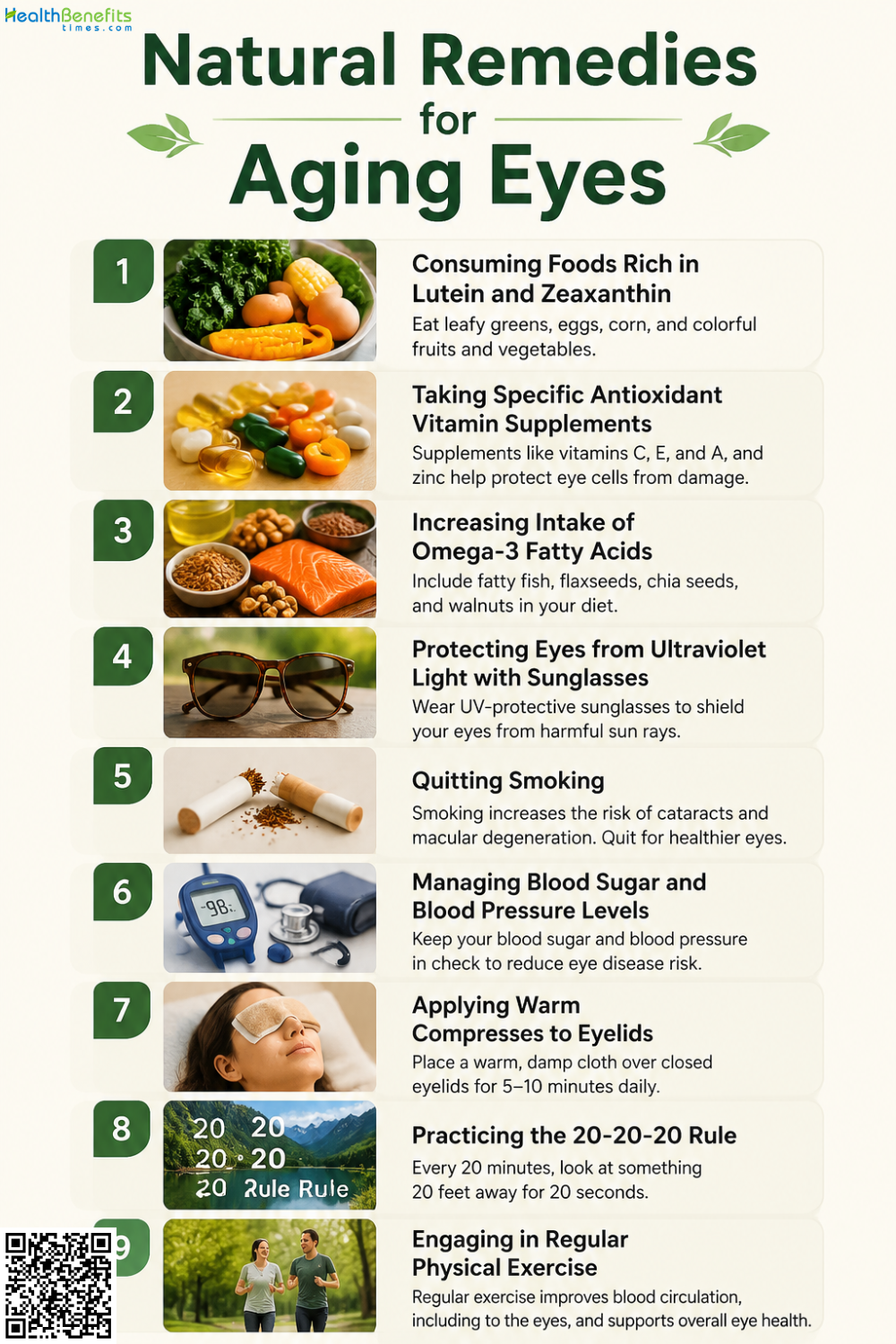
3. Increasing Intake of Omega-3 Fatty Acids
How it may help
Omega-3 fatty acids, specifically DHA and EPA, are crucial structural components of the retina that maintain cellular function 13. They help reduce systemic inflammation and stabilize the eye’s tear film, which protects ocular tissues from age-related dryness and preserves overall vision health.
What research says
Research concludes that while omega-3 supplements do not further slow advanced macular degeneration progression 9, consistent dietary intake strongly correlates with a lower initial risk of developing the condition. Clinical evidence also shows dietary omega-3s effectively relieve dry eye symptoms by improving tear production 14.
How to use it safely
To obtain these benefits safely, incorporate fatty fish like salmon, mackerel, or sardines into your diet twice a week. If you prefer fish oil supplements, consult your doctor first to determine a safe dosage that fits your specific health profile 15.
Potential precautions or side effects
High doses of omega-3 supplements may increase bleeding risks and interact dangerously with blood-thinning medications 13. Mild side effects can include bad breath, heartburn, and gastrointestinal discomfort.
4. Protecting Eyes from Ultraviolet Light with Sunglasses
How it may help
Ultraviolet radiation accelerates cellular aging in the eyes by generating free radicals that damage the lens and retina 16. Wearing protective sunglasses acts as a physical barrier, preventing this harmful radiation from penetrating ocular tissues and subsequently delaying age-related vision decline.
What research says
Clinical studies confirm that chronic, unprotected exposure to UVA and UVB rays significantly increases the risk of developing cataracts and macular degeneration 17. Researchers conclude that consistent use of UV-blocking lenses effectively reduces cumulative ultraviolet damage to the eye’s internal structures.
How to use it safely
Always select sunglasses explicitly labeled as blocking 100 percent of UVA and UVB rays, often marked as UV400 18. Wear them consistently outdoors during daylight, even on overcast days. For maximum defense, choose wraparound styles to prevent peripheral light infiltration.
Potential precautions or side effects
Never wear dark-tinted glasses lacking verified UV protection. Dark lenses cause the pupils to dilate, allowing dangerously high amounts of ultraviolet radiation to enter the eye 19.
5. Quitting Smoking
How it may help
Tobacco smoke introduces heavy metals and toxins that constrict blood vessels and increase oxidative stress in the retina 20. Quitting smoking restores normal blood flow and significantly reduces ongoing cellular damage, protecting the structural integrity of the eyes as they age.
What research says
Clinical evidence demonstrates that smokers are twice as likely to develop cataracts and up to four times more likely to develop age-related macular degeneration 21. Research concludes that discontinuing tobacco use progressively lowers this elevated risk, ultimately helping prevent severe, age-related vision loss.
How to use it safely
To quit smoking safely, consult a healthcare provider to develop a tailored cessation plan. Utilize approved nicotine replacement therapies, such as patches or gums, alongside behavioral counseling to safely manage withdrawal symptoms and increase your long-term success 22.
Potential precautions or side effects
Discontinuing tobacco triggers temporary nicotine withdrawal symptoms, including severe cravings, irritability, and anxiety. Additionally, nicotine replacement products may cause mild localized skin irritation, nausea, or sleep disturbances 22.
6. Managing Blood Sugar and Blood Pressure Levels
How it may help
Proper vascular health directly impacts long-term ocular function. Chronically elevated blood sugar and high blood pressure damage the delicate blood vessels supplying the retina 23. Maintaining these metrics within normal ranges prevents structural vessel swelling and fluid leakage, thereby preserving healthy blood flow and protecting against premature vision decline.
What research says
Extensive clinical studies demonstrate that strict control of blood glucose levels significantly reduces the onset and progression of diabetic retinopathy 24. Similarly, research confirms that successfully managing hypertension lowers the risk of developing hypertensive retinopathy and slows the deterioration of overall visual acuity in aging populations 25.
How to use it safely
Work closely with your primary care physician to establish personalized target ranges. Monitor your blood pressure and blood glucose regularly at home. Adopt a low-sodium, low-glycemic diet and strictly adhere to any prescribed medications to safely maintain stable levels 26.
Potential precautions or side effects
Over-correcting can dangerously lower blood sugar (hypoglycemia) or blood pressure (hypotension). These drastic drops may cause dizziness, fainting, or sudden visual disturbances, requiring immediate medical adjustment 27.
7. Applying Warm Compresses to Eyelids
How it may help
Applying a warm compress improves the function of the meibomian glands located in the eyelids. The localized heat melts hardened oils within these glands, allowing them to flow freely into the tear film 4. This stabilizes the tear layer and effectively relieves age-related dryness and irritation.
What research says
Clinical research concludes that applying a warm compress significantly improves lipid layer thickness and tear film stability in patients with meibomian gland dysfunction 28. Experts confirm this direct physical therapy provides measurable relief for the chronic dry eye symptoms highly prevalent in aging populations.
How to use it safely
Soak a clean washcloth in warm water and wring out the excess. Place the damp cloth gently over your closed eyelids for five to ten minutes 29. Reheat the cloth as needed to maintain a consistent, soothing temperature without scalding the skin.
Potential precautions or side effects
Water that is excessively hot can cause thermal burns or severely irritate the delicate eyelid skin 30. Never apply excessive pressure directly to the eyeballs during this treatment.
8. Practicing the 20-20-20 Rule
How it may help
Staring at digital screens reduces the eye’s natural blink rate and forces focusing muscles to contract constantly 31. Practicing the 20-20-20 rule relaxes the internal ciliary muscle and encourages regular blinking, which replenishes the protective tear film and relieves digital eye strain in aging eyes.
What research says
Clinical studies demonstrate that incorporating systematic visual breaks significantly decreases symptoms of computer vision syndrome, such as dryness and blurred vision 32. Experts conclude that the 20-20-20 rule effectively interrupts prolonged visual stress, mitigating cumulative muscular fatigue in the structures of aging eyes.
How to use it safely
Set a timer during extended screen use or reading. Every 20 minutes, deliberately shift your gaze to an object at least 20 feet away for a full 20 seconds 31. This brief pause allows your eye muscles to fully relax and reset.
Potential precautions or side effects
This behavioral exercise is entirely safe. However, it does not correct underlying refractive errors or structural age-related conditions like presbyopia, which require professional medical evaluation 1.
9. Engaging in Regular Physical Exercise
How it may help
Regular physical activity enhances cardiovascular health and improves systemic blood circulation, ensuring adequate oxygen and nutrient delivery to the retina and optic nerve. Furthermore, aerobic exercise actively lowers intraocular pressure, reducing physical strain on the eye’s internal structures and protecting against age-related vascular damage 33.
What research says
Clinical studies demonstrate that physically active individuals have a significantly lower risk of developing severe age-related macular degeneration and glaucoma 34. Researchers conclude that regular aerobic exercise directly reduces baseline intraocular pressure and prevents systemic vascular issues that accelerate chronic visual decline in older adults.
How to use it safely
Engage in at least 150 minutes of moderate-intensity aerobic exercise, such as brisk walking or swimming, each week 35. Consult your primary care physician before beginning any new fitness routine, especially if you have pre-existing cardiovascular conditions or significant vision impairments.
Potential precautions or side effects
Heavy weightlifting or inverted exercises, such as specific yoga poses, can dangerously spike intraocular pressure. Avoid holding your breath during physical exertion to prevent sudden ocular pressure increases 36.
Foods to Avoid When You suffer from Aging Eyes
Certain dietary choices accelerate ocular aging by promoting systemic inflammation, vascular damage, and cellular oxidative stress. Limit or eliminate the following items to preserve long-term vision.
1. Refined Carbohydrates
Diets high in refined carbohydrates rapidly spike blood sugar, significantly increasing the long-term risk and progression of age-related macular degeneration 37.
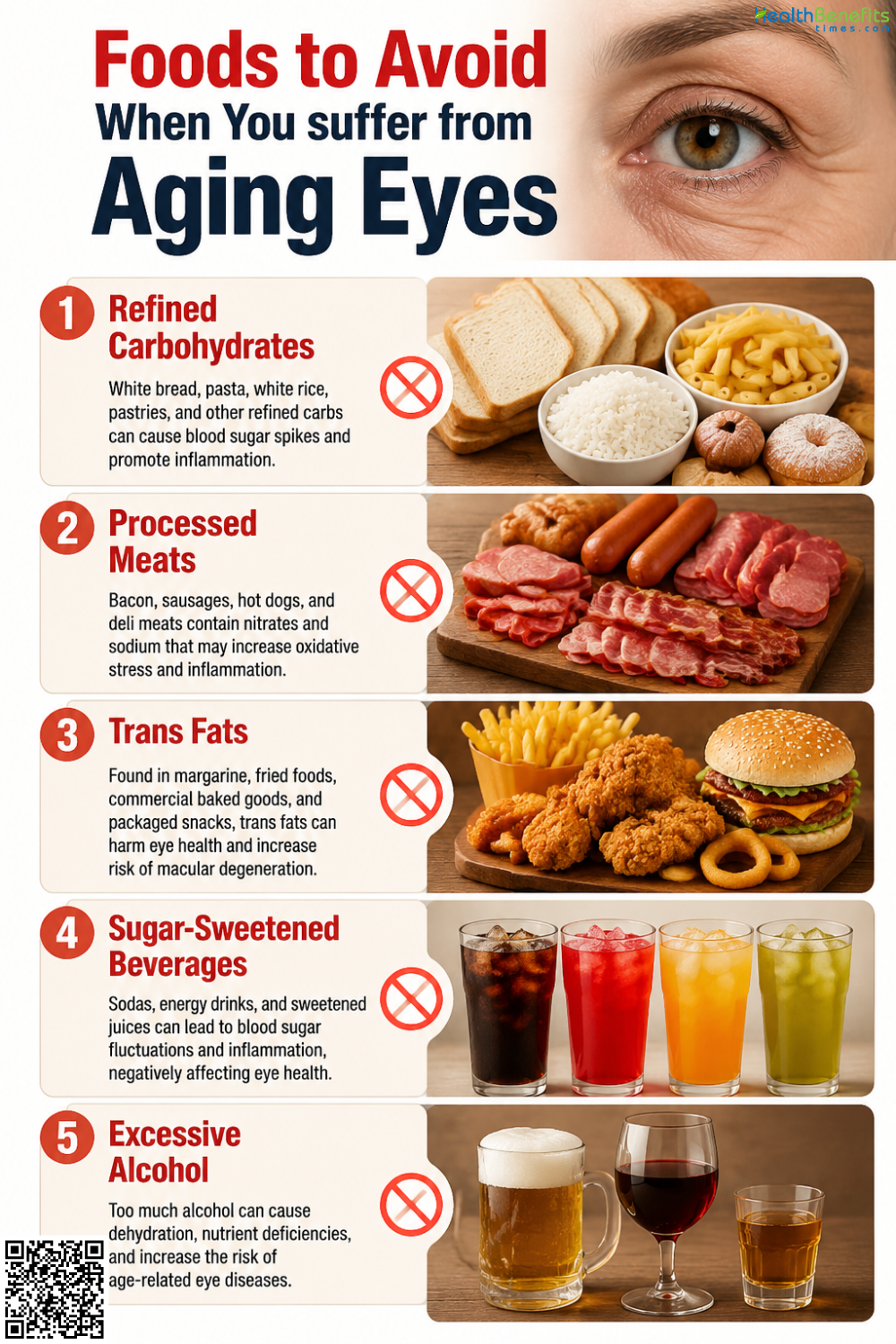
2. Processed Meats
Processed meats contain excessive sodium that chronically elevates blood pressure, damaging the retina’s delicate blood vessels and accelerating hypertensive retinopathy 25.
3. Trans Fats
Industrial trans fats trigger systemic inflammation and elevate harmful cholesterol, which severely restricts healthy blood flow to the eyes and promotes macular decline 38.
4. Sugar-Sweetened Beverages
Consuming sugary drinks drastically raises the risk of developing type 2 diabetes, a primary physiological trigger for diabetic retinopathy and irreversible blindness 23.
5. Excessive Alcohol
Heavy alcohol consumption generates extensive cellular toxicity and free radicals in ocular tissues, directly correlating with accelerated, severe cataract formation 39.
When to see a Doctor when you struggle from Aging Eyes
While gradual visual decline naturally accompanies the aging process, certain acute symptoms indicate severe underlying ocular diseases that require immediate medical intervention to prevent permanent blindness.
- Sudden Flashes and Floaters: A sudden increase in dark spots, cobweb-like floaters, or bright flashes of light strongly signals a medical emergency, such as a detached retina, requiring immediate surgical evaluation 40.
- Distorted or Wavy Vision: Visual distortion where straight lines appear bent, wavy, or missing entirely is a primary clinical indicator of advanced age-related macular degeneration that necessitates prompt clinical imaging 6.
- Loss of Peripheral Vision: Rapidly losing side vision, often described as tunnel vision, indicates dangerously high intraocular pressure and advanced optic nerve damage, characteristic of severe glaucoma requiring urgent intervention 41.
- Severe Eye Pain and Redness: Acute, severe eye pain accompanied by intense redness, nausea, or halos around lights indicates a critical spike in eye pressure, known as acute angle-closure glaucoma 42.
- Sudden Loss of Vision: Any sudden, painless drop in visual clarity, completely clouded vision, or a dark curtain falling across your visual field requires immediate emergency care to prevent irreversible tissue damage 43.
Comments
comments