

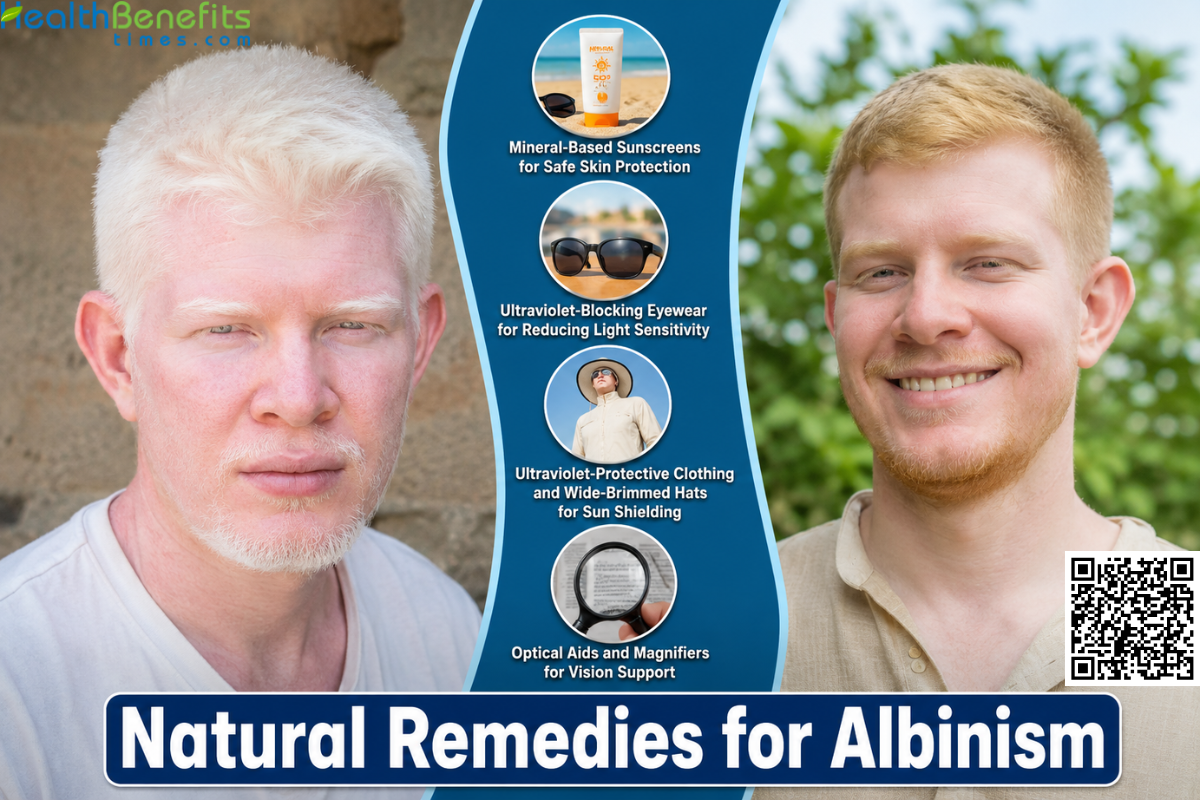
Causes of Albinism
1. Oculocutaneous Albinism (OCA) Gene Mutations
OCA is the most common form of albinism. It occurs when a person inherits two altered copies of specific genes—most commonly TYR, OCA2, TYRP1, or SLC45A2—from their parents. These genes provide instructions for producing melanin. When they are mutated, the body cannot produce normal amounts of pigment, resulting in very light skin, hair, and eyes 4.
2. Ocular Albinism (OA) Gene Mutations
This type primarily affects the pigment in the eyes, while skin and hair color remain largely unaffected. It is usually caused by a mutation in the GPR143 gene, which controls how cells in the eyes create and store pigment. Because this gene is located on the X chromosome, this specific genetic cause almost exclusively affects males 5.
3. Hermansky-Pudlak Syndrome Defects
This rare cause of albinism involves mutations in one of at least 11 different HPS genes. Alongside the severe lack of pigment seen in typical albinism, these specific genetic defects prevent cells in the blood and organs from functioning normally. This leads to additional, severe health complications such as bleeding disorders, bruising, and lung disease 6.
4. Chediak-Higashi Syndrome Defects
This exceptionally rare cause of albinism stems from a mutation in the LYST gene. While it causes the characteristic lack of skin, eye, and hair color, this specific mutation also severely impairs the body’s white blood cells. Because the immune system cannot function properly, this genetic defect leaves individuals highly vulnerable to frequent and severe bacterial and viral infections 7.
Symptoms of Albinism
1. Visual Impairments and Eye Abnormalities
The most profound symptoms of albinism involve the eyes, as melanin is essential for proper visual development. Symptoms frequently include involuntary, rapid back-and-forth eye movements (nystagmus), an inability of both eyes to stay directed at the same point or crossed eyes (strabismus), and extreme sensitivity to bright light (photophobia). Additionally, individuals often experience significantly reduced sharpness of vision, which cannot be fully corrected with standard glasses, due to an underdeveloped central retina and abnormal routing of the optic nerve to the brain 8.
2. Extremely Light Skin and Severe Sun Vulnerability
The hallmark physical symptom is exceptionally light or milky-white skin. Because the body lacks melanin—a pigment that naturally protects the skin from ultraviolet (UV) radiation—individuals experience extreme sun sensitivity. This lack of protection results in a high susceptibility to severe sunburns and drastically increases the lifetime risk of developing skin cancers, including squamous cell carcinoma and melanoma.
3. Distinctive Hair Color
Hair color is notably lighter than expected for an individual’s family background. Depending on the specific genetic mutation and the residual amount of melanin the body can produce, hair color can range from entirely white to pale yellow, blonde, or occasionally light brown and reddish shades.
4. Changes in Eye Color
The iris, which is the colored part of the eye, typically has very little pigment, resulting in a pale blue or light gray appearance. Because the iris is somewhat translucent in albinism, it cannot fully block light from entering the eye. Under certain lighting conditions, the eyes may even appear pink or reddish because the blood vessels at the back of the eye become visible through the unpigmented tissue.
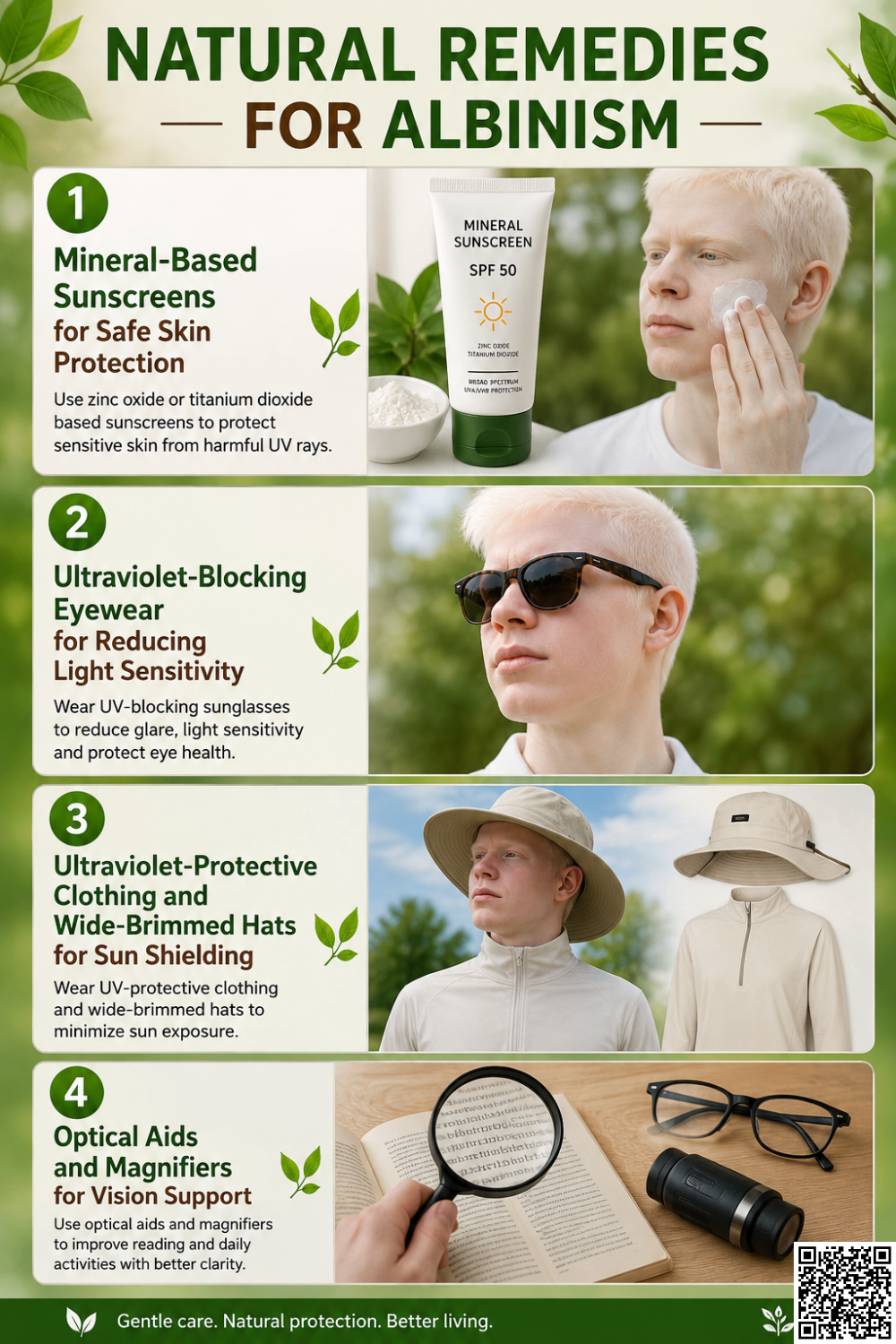
1. Mineral-Based Sunscreens for Safe Skin Protection
How it may help
Because people with albinism lack melanin, their skin has no natural defense against ultraviolet (UV) radiation. Mineral sunscreens containing zinc oxide or titanium dioxide sit on the skin’s surface and physically reflect these harmful rays, creating an essential barrier that prevents severe sunburns and chronic skin damage.
What research says
Clinical guidelines emphasize that rigorous, lifelong sun protection is mandatory for individuals with albinism. Research confirms that consistent use of broad-spectrum sunscreens significantly reduces the disproportionately high risk of developing severe skin cancers, such as squamous cell carcinoma, which are primary health threats in this population.
How to use it safely
Apply a broad-spectrum mineral sunscreen with an SPF of 30 or higher to all exposed skin. You should apply it generously before going outdoors and must reapply every two hours, or immediately after swimming or sweating, to maintain continuous protection 9.
Potential precautions or side effects
Mineral sunscreens are widely recommended for sensitive skin because they rarely cause allergic reactions. However, they can leave a thick, white residue on the skin and occasionally cause mild dryness.
2. Ultraviolet-Blocking Eyewear for Reducing Light Sensitivity
How it may help
In albinism, the lack of pigment in the iris allows excess light to enter the eye, causing severe light sensitivity. Ultraviolet-blocking eyewear acts as a physical shield. It immediately improves comfort in bright environments and protects the internal structures of the eye from cumulative light damage.
What research says
Clinical evidence establishes that specialized optical interventions, particularly ultraviolet-absorbing lenses, are essential for managing light sensitivity in albinism. Eye specialists confirm that consistent use of tinted eyewear drastically improves visual comfort and helps prevent long-term ultraviolet-induced retinal injury.
How to use it safely
You should wear sunglasses that block 100% of both UVA and UVB rays whenever you are outdoors during daylight hours. For maximum protection, choose wrap-around frames and consider polarized or photochromic lenses that adapt to changing light conditions.
Potential precautions or side effects
Extremely dark lens tints can reduce visual sharpness in low-light indoor environments. To prevent impaired vision, individuals may need to switch to lighter tints or remove sunglasses when indoors.
3. Ultraviolet-Protective Clothing and Wide-Brimmed Hats for Sun Shielding
How it may help
Protective clothing and wide-brimmed hats create a reliable physical barrier against ultraviolet (UV) radiation. Because individuals with albinism lack protective melanin, fully covering the skin is the most effective method to prevent immediate sunburns and shield highly exposed areas like the face, neck, and scalp from intense sunlight.
What research says
Public health guidelines emphasize that physical barriers are essential for skin cancer prevention. Clinical consensus indicates that clothing manufactured with a high Ultraviolet Protection Factor (UPF) blocks UV rays more consistently than sunscreen alone, drastically reducing the long-term risk of severe skin damage in highly vulnerable populations.
How to use it safely
You should wear tightly woven, long-sleeved shirts, long pants, and a hat with a wide brim that shades your face, ears, and neck. For maximum protection, specifically choose clothing labeled with a UPF of 50 or higher whenever you are outdoors.
Potential precautions or side effects
Wearing dense or heavy clothing can increase the risk of overheating. To prevent heat exhaustion, always choose lightweight, breathable, and moisture-wicking protective fabrics when spending time in hot environments.
4. Optical Aids and Magnifiers for Vision Support
How it may help
Albinism often causes low vision due to an underdeveloped retina. Optical aids, such as handheld magnifiers, specialized glasses, and digital screen-enlarging software, increase the size of text and images. By making details easier to see, these tools help individuals read and perform daily tasks with greater independence and less eye strain.
What research says
Clinical ophthalmology guidelines confirm that while optical aids cannot correct the underlying structural eye defects caused by albinism, they are highly effective at maximizing a person’s remaining sight. Research concludes that early and consistent use of low-vision devices significantly improves educational outcomes and overall quality of life.
How to use it safely
You should consult a low-vision specialist to determine the exact devices suited for your specific visual needs. Always ensure you use optical aids alongside appropriate, glare-free lighting to maximize their effectiveness and prevent unnecessary eye fatigue during prolonged use 10.
Potential precautions or side effects
Using incorrectly prescribed optical devices can cause headaches, dizziness, or severe eye strain. Additionally, highly magnified lenses often significantly narrow your field of view, requiring careful adjustments during movement.
When To See a Doctor When You Suffer From Albinism
1. New or Changing Skin Lesions
Albinism significantly increases skin cancer risk. You should see a dermatologist immediately if you notice new moles, changing freckles, or skin sores that do not heal.
2. Worsening Vision Problems
Regular eye exams are crucial. Contact an ophthalmologist if you experience declining vision, severe light sensitivity, or new difficulties navigating tasks, to adjust your optical aids.
3. Unexplained Bruising or Bleeding
Seek medical care for frequent nosebleeds or easy bruising. This may indicate Hermansky-Pudlak syndrome, a rare albinism subtype that causes dangerous blood clotting defects.
4. Frequent or Severe Infections
Consult a doctor if you suffer from unusually severe or recurrent bacterial infections. This can signal Chediak-Higashi syndrome, an albinism variant that severely weakens the immune system.
Comments
comments