

Causes of Amblyopia (Lazy Eye)
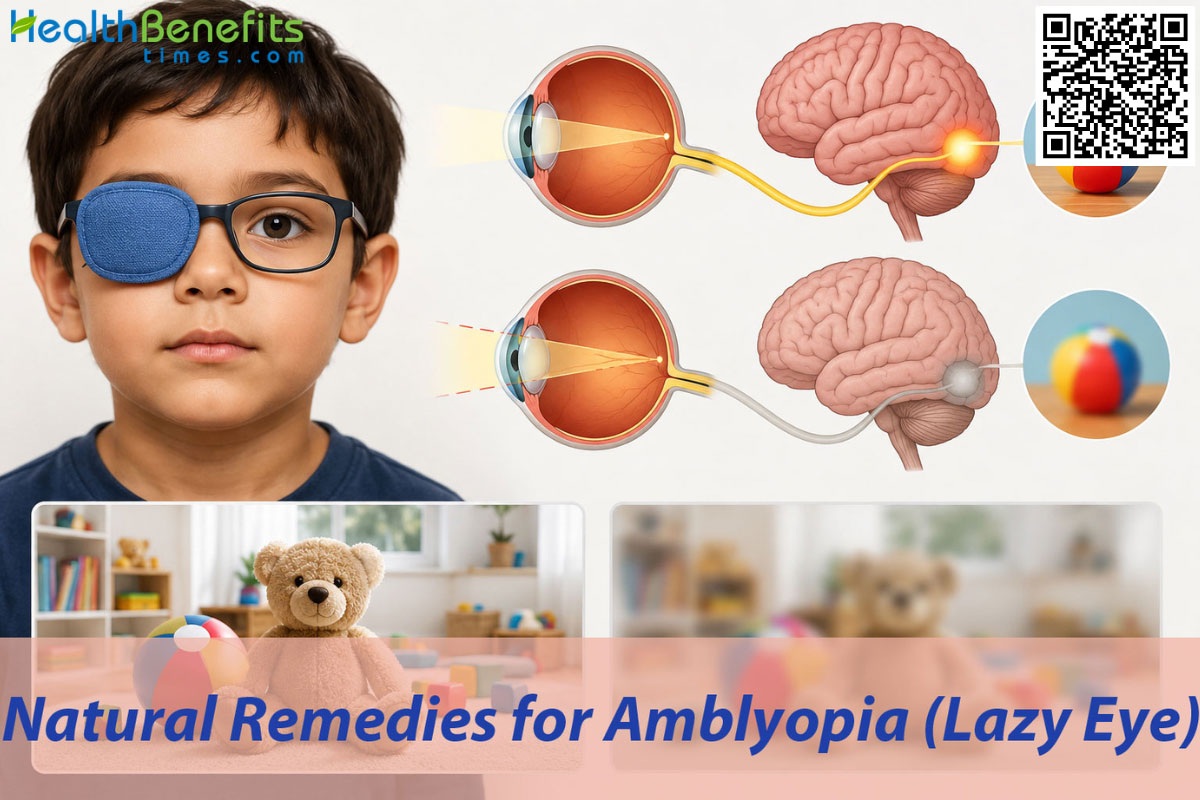
Discovering the root triggers of this condition helps clarify why the brain begins to ignore one eye. Amblyopia usually develops as a secondary complication from other underlying visual or physical barriers.
- Strabismus (Crossed or Misaligned Eyes): This is the most frequent cause, occurring when the eyes point in two different directions, such as one eye focusing straight ahead while the other turns inward, outward, upward, or downward 3. To avoid the disorienting effect of seeing double, the infant brain reflexively “turns off” the visual input from the misaligned eye.
- Anisometropia (Unequal Refractive Errors): Some individuals are born with a severe difference in prescription strength between their two eyes, meaning one eye may be significantly more nearsighted, farsighted, or astigmatic than the other 4. Because the brain struggles to merge a perfectly clear image with a highly blurred one, it defaults to relying exclusively on the eye with the sharpest focus.
- Visual Form Deprivation (Physical Obstruction): Anything that physically blocks light from entering a child’s eye during crucial developmental years can cause severe amblyopia 5. Common examples include congenital cataracts (a clouding of the eye’s naturally clear lens) or ptosis, a condition where the upper eyelid droops low enough to cover the pupil.
Symptoms of Amblyopia (Lazy Eye)
Detecting the early warning signs can be challenging, as children rarely realize their vision is abnormal and their visual system seamlessly compensates by using the stronger eye. However, careful observation may reveal several behavioral cues:
- Noticeably favoring one eye when looking at distant objects or reading a book 6.
- A persistent tendency to bump into objects, doorframes, or furniture, usually on the same side as the weaker eye.
- Poor depth perception, making it difficult to catch a ball, navigate stairs, or judge distances accurately.
- Frequent head tilting, turning, or assuming unusual neck postures to view objects clearly.
- Squinting, shutting one eye in bright sunlight, or rubbing the eyes continuously to clear away blurry images 7.
Amblyopia (Lazy Eye) Facts Table
Consolidating medical data provides a clear, at-a-glance understanding of how this condition operates and who it impacts the most.
| Category | Details |
| Symptoms |
|
| Causes |
|
| Types of Amblyopia (Lazy Eye) |
|
| How does spread |
|
| Age Group |
|
| You might be at a higher risk for exposure of this disease if you: |
|
| How doctors diagnose |
|
| Other facts |
|
Natural Remedies for Amblyopia (Lazy Eye)
Nutritional intervention serves as a supportive foundation for overall visual health. While vitamins cannot physically realign a wandering eye or alter the shape of a cornea, targeted nutrition optimizes the retinal environment and supports the neurological pathways essential for healing.
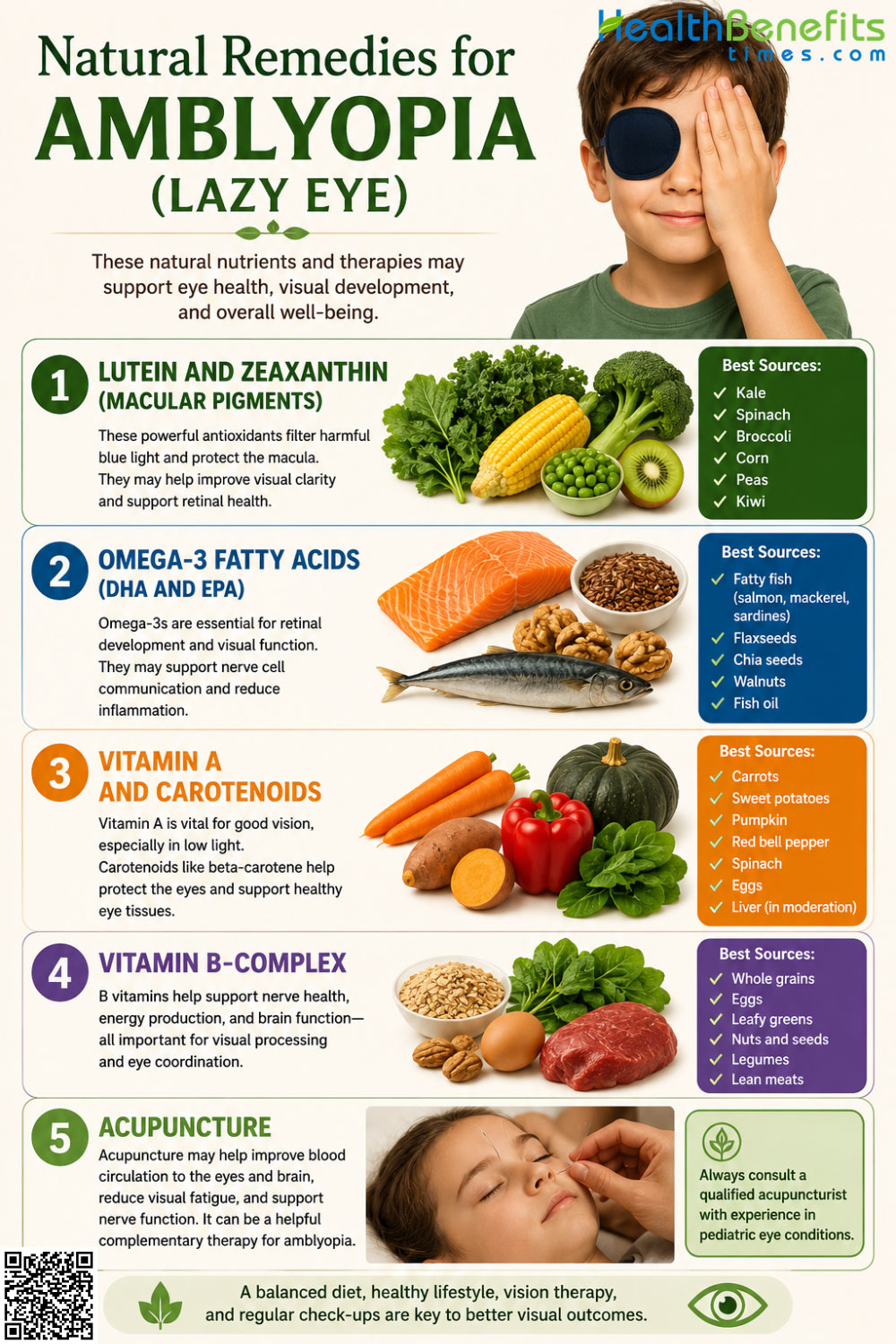
1. Lutein and Zeaxanthin (Macular Pigments)
Deep within the retina lies the fovea, the central region responsible for sharp, detailed vision. This area is rich in macular pigments formed primarily by two powerful antioxidants: lutein and zeaxanthin 10. Clinical observations have demonstrated that eyes affected by amblyopia often display a significantly decreased macular pigment optical density compared to normal, healthy eyes 11. Restoring these carotenoids through targeted intake helps protect the retinal photoreceptors from oxidative stress and short-wavelength blue light damage, creating an optimal biochemical environment for visual recovery.
Note: You can easily increase your daily intake by eating generous portions of dark, leafy greens like spinach, kale, and turnip greens, or by taking a high-quality ocular health supplement under your doctor’s supervision.
2. Omega-3 Fatty Acids (DHA and EPA)
The neurological nature of amblyopia makes brain and nerve health a critical focus. Docosahexaenoic acid (DHA) is a primary structural component of the human brain, cerebral cortex, skin, and retina, meaning a robust supply ensures that neural synapses communicate efficiently 12. Furthermore, deficiencies in these essential fats have been linked to abnormal electroretinogram readings, indicating that poor lipid profiles can negatively impact how the retina processes light signals. Omega-3s also possess profound anti-inflammatory properties that support the tear glands, preventing the ocular fatigue that often accompanies vision disorders.
Note: You should aim to consume fatty fish like wild-caught salmon, mackerel, or sardines at least twice a week, or take a daily pharmaceutical-grade fish oil supplement specifically high in DHA and EPA.
3. Vitamin A and Carotenoids
Visual processing begins when light hits the retina and triggers a chemical reaction. Vitamin A is indispensable for the formation of rhodopsin, a light-sensitive receptor protein required for normal vision. A deficiency in this crucial nutrient directly impairs the visual cycle, potentially leading to night blindness and an overall decline in visual acuity 13. When a lazy eye is already struggling to send clear images to the brain, ensuring the retina has ample raw materials to capture light is a vital supportive measure.
Note: You can support your eye’s light-processing abilities by eating bright orange and yellow vegetables—such as sweet potatoes, carrots, and butternut squash which are rich in beta-carotene that your body naturally converts into Vitamin A.
4. Vitamin B-Complex
The optic nerve operates as a high-speed data cable, transmitting massive amounts of visual information every second. The B-vitamin family is essential for maintaining the protective myelin sheath surrounding these fragile nerves. Poor absorption or inadequate intake of B-vitamins can result in nutritional amblyopia, a specific condition characterized by blurred vision and degraded nerve signaling 14. Supporting the nervous system with a full spectrum of B-vitamins ensures that whatever signals the weaker eye manages to capture are transmitted efficiently to the brain.
Note: You can naturally boost your B-vitamin levels by incorporating lean meats, eggs, fortified nutritional yeast, and whole grains into your daily meals.
5. Acupuncture
Traditional therapies sometimes look beyond standard Western medicine. Recent clinical trials suggest that acupuncture, when combined with conventional treatments, produces an equivalent or statistically superior treatment effect for certain types of amblyopia compared to patching alone 15. By stimulating specific acupoints around the eyes and body, this modality may enhance local blood circulation and stimulate the visual cortex, offering a sustainable adjunctive effect.
Note: You must only seek this treatment from a licensed, certified acupuncturist who has specific experience dealing with pediatric or neurological vision disorders.
Is there any exercise or physical activities for Amblyopia (Lazy Eye)?
Physical therapies and guided exercises—often referred to as vision therapy or orthoptics are the gold standard for actively rewiring the brain-eye connection. These activities force the brain to acknowledge the ignored eye, gradually rebuilding neuroplasticity and binocular coordination.
1. Traditional Occlusion Therapy (Eye Patching)
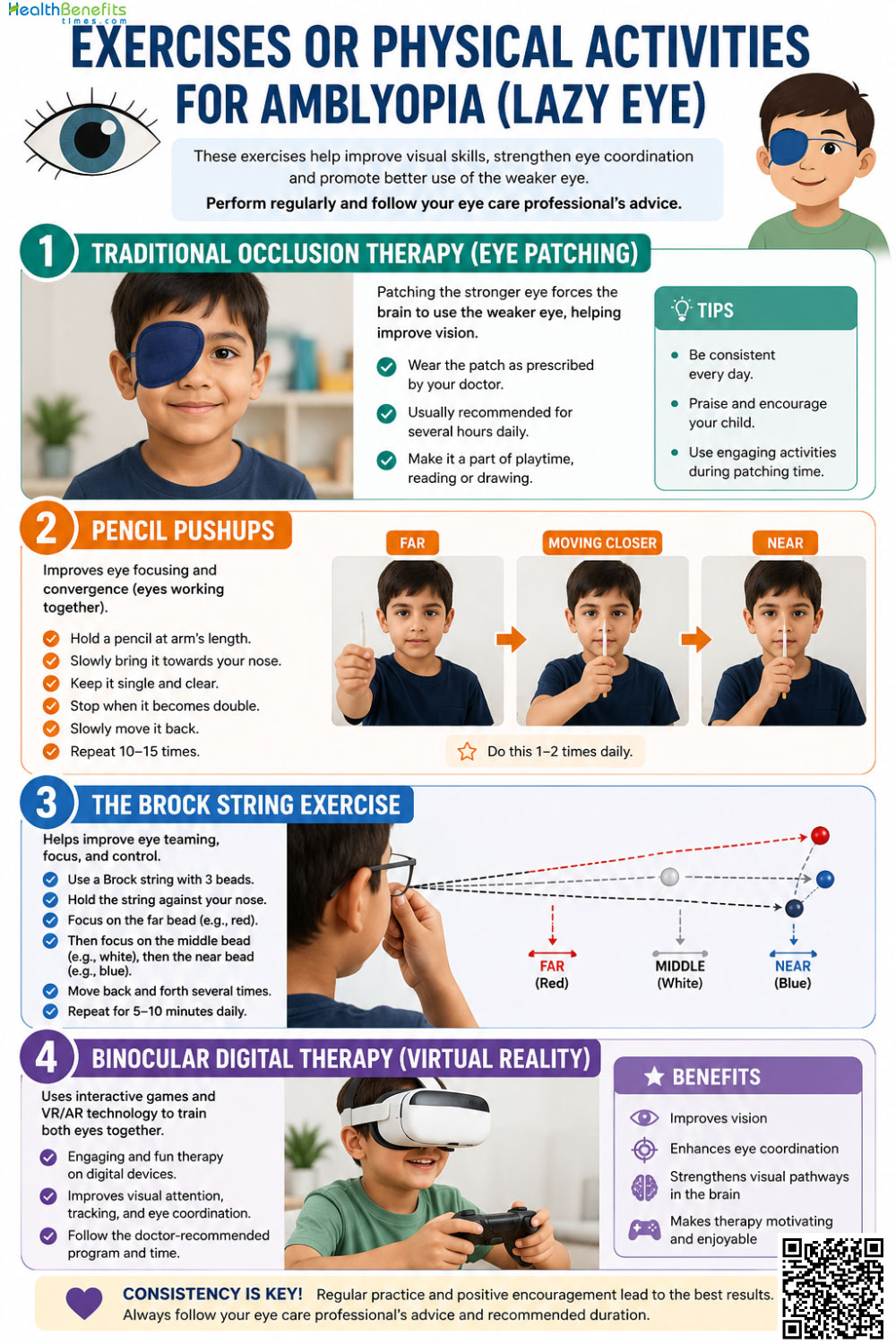
Decades of clinical application have proven that the most direct way to stimulate a lazy eye is to physically block the brain’s access to the dominant eye. By placing an opaque adhesive patch over the stronger eye, the visual cortex is forced to process the input from the amblyopic eye, actively strengthening the dormant neural pathways. Historically, patients patched for brief periods, but evidence suggests that extending daily patching durations to six hours a day is highly effective at treating stubborn, persistent cases 16.
Note: You must apply an adhesive medical patch directly to the skin over your stronger eye for the exact number of hours prescribed by your specialist, ensuring no light or peripheral images can bypass the barrier.
2. Pencil Pushups
This highly practical, home-based physical activity targets convergence insufficiency, a specific muscular and neurological failure where the eyes struggle to turn inward together to focus on near objects. Pencil pushups train the extraocular muscles and the brain to maintain binocular alignment as an object approaches the face. Consistent performance of this active focus training has been shown to significantly reduce the angle of outward eye deviation and improve near-point convergence 17.
Note: You should hold a pencil at arm’s length, focus intently on a specific letter printed on its side, and slowly draw the pencil directly toward the bridge of your nose until the letter blurs or doubles; hold for a few seconds, then push it back out to arm’s length and repeat.
3. The Brock String Exercise
Pioneered by early vision therapists, the Brock string is a profound tool for providing immediate, tactile feedback regarding how the two eyes work together in physical space. It typically consists of a simple white string equipped with three movable colored beads. This spatial exercise interrupts the brain’s habit of suppressing one eye and rapidly promotes the divergence and convergence of the eyes 18.
Note: You need to tie one end of the string to a stationary object at eye level, hold the other end to the tip of your nose, and systematically shift your absolute focus from the closest bead to the farthest bead, pausing to ensure you see the illusion of two strings crossing directly through the bead you are looking at.
4. Binocular Digital Therapy (Virtual Reality)
Recent advancements have modernized physical eye training through the application of virtual reality headsets. Rather than simply punishing the strong eye by covering it in the dark, these digital therapies utilize specialized algorithms to modify streaming television shows or games. The device presents a perfectly clear image to the amblyopic eye while simultaneously blurring or making certain parts of the video invisible to the strong eye 19. To comprehend the full picture, the brain is forced to actively combine the puzzle pieces from both eyes simultaneously.
Note: You must wear the prescribed virtual reality headset and actively engage with the visual content for the specified duration usually an hour a day, six days a week—allowing the software to seamlessly train your brain while you enjoy the entertainment.
Foods and Activities to Avoid
Protecting visual health means recognizing that removing obstacles to healing is just as critical as applying remedies. Certain dietary habits and behaviors can significantly hinder visual recovery or exacerbate underlying neurological issues.
Foods to Avoid When You Suffer from Amblyopia (Lazy Eye)
- Excessive Alcohol: You should strictly avoid high alcohol consumption, as it directly damages the delicate communication between brain neurotransmitters and eye muscles. Long-term alcohol abuse can lead to toxic amblyopia, a severe chemical neuropathy that degrades the optic nerve and causes blurred vision 20.
- High Omega-6 Processed Oils: You need to limit your intake of industrial seed oils (like soybean and corn oil) commonly found in ultra-processed foods. These heavily skewed fats promote systemic inflammation, counteracting the healing, tear-stabilizing benefits of healthy Omega-3s.
- High-Glycemic Sugars: You must minimize refined sugars, which cause extreme blood glucose spikes. Chronic high blood sugar damages the fragile microvasculature supplying oxygen and nutrients to the retina and optic nerve, slowing any natural healing process.
Activities to Avoid When You Suffer from Amblyopia (Lazy Eye)
- Skipping Patching Sessions: You should never allow inconsistent patching schedules. The brain requires repetitive, daily neurological stress to build new visual pathways; skipping days resets this delicate progress and extends the overall treatment timeline 21.
- Prolonged Near-Work Without Breaks: You must avoid staring at digital screens or reading closely for hours on end without resting. This causes severe eye-focusing fatigue, further stressing an already misaligned visual system.
- Using Improper “Pirate” Patches: You should avoid using cloth patches with elastic bands that sit away from the face. These allow the user to easily peek around the edges to use their strong eye, rendering the therapy completely ineffective.
Myths and Misconceptions
Public misunderstanding of visual development has led to widespread myths that often delay or prevent individuals from seeking appropriate care.
| Myth | Reality |
| It is impossible to treat after age seven. | While early childhood offers the highest neuroplasticity, modern clinical research proves that the adult brain retains significant plasticity. Many older children and adults successfully improve their vision through dedicated binocular vision therapies and advanced digital treatments 22. |
| “Lazy Eye” means the eyeball is physically damaged or broken. | The eye itself is usually perfectly healthy and structurally sound. The problem lies entirely in the software the neurological connection between the eye and the visual cortex of the brain is out of sync. |
| Surgery alone is a complete cure. | Eye muscle surgery can beautifully correct the cosmetic alignment of crossed eyes (strabismus), but it does not fix the brain’s habit of suppressing the image. Post-surgical brain-training and patching are almost always required to restore true vision. |
| Eating lots of carrots will quickly fix a lazy eye. | While carrots provide Vitamin A which supports general retinal health, no amount of vegetables can physically realign a wandering eye or force the brain to rewire a suppressed neural pathway without targeted vision therapy. |
Special Considerations
Because vision development is intricately tied to overall human biology, treating this condition requires tailored approaches across different stages of life and health profiles.
- Children: The human visual system undergoes explosive development during the first few years of life. For toddlers and preschoolers, time is of the essence; any visual deprivation can quickly lead to deeply entrenched neurological suppression. Treatment plans often include prescription lenses alongside patching to ensure the brain receives the clearest possible image during its most adaptable phase 23.
- Pregnancy: Fetal eye development relies heavily on the mother’s nutritional reserves. Pregnant individuals must ensure optimal intake of docosahexaenoic acid (DHA) and arachidonic acid, as these specific fatty acids provide the fundamental building blocks for the infant’s forming retina and visual cortex, offering a protective effect against visual development abnormalities 24.
- Chronic Conditions: Individuals suffering from acquired brain injuries (such as severe concussions or strokes) can suddenly develop symptoms mimicking lazy eye, such as convergence insufficiency or spatial disorientation. In these complex scenarios, the visual collapse is tied to widespread neuro-trauma, necessitating highly specialized neuro-optometric rehabilitation rather than simple patching 25.
- Elderly: Adults living with unresolved childhood amblyopia face a unique, heightened risk. If age-related diseases like macular degeneration or cataracts eventually claim the vision in their single “good” eye, they are left highly vulnerable to profound, bilateral blindness 8. Consequently, older adults must rigorously protect their dominant eye from trauma and disease.
Precaution Before Use of Natural Remedies When You Have Amblyopia (Lazy Eye)
While natural therapies and exercises are generally safe, treating a complex neurological condition requires strategic caution to avoid unintended harm.
- You must obtain an accurate clinical diagnosis first: Before attempting any home remedies or exercises, you need an eye specialist to rule out serious physical obstructions, such as undiagnosed internal tumors or congenital cataracts, which require immediate surgical intervention.
- You should not abandon prescribed medical treatments: Never replace medically supervised occlusion therapy (patching) or corrective prescription lenses with dietary supplements. Vitamins and nutrients are a supportive measure to optimize eye health, not a primary cure.
- You must monitor for reverse amblyopia: If you patch your dominant eye too aggressively or for excessive uninterrupted hours, you run the rare but real risk of degrading the vision in the previously healthy eye. Always adhere strictly to the time limits set by your doctor.
- You need to ensure physical safety during early therapy: When you first patch the strong eye, your depth perception and peripheral awareness will plummet. You should avoid navigating steep stairs, operating machinery, or playing fast-paced sports until you have adapted to relying on the weaker eye.
- You should check for skin allergies: Adhesive patches can cause severe contact dermatitis on sensitive facial skin. If you notice redness or blistering, you should immediately switch to a hypoallergenic patch brand or consult your doctor about alternative blurring eye drops.
When to See a Doctor
Early detection remains the absolute most effective weapon against permanent vision loss. You should not wait for a child to complain about their vision, as they lack the comparative experience to know their sight is abnormal.
- You should schedule an initial screening by six months of age: Ensure a pediatrician or eye doctor evaluates baseline visual tracking and ocular health during early infancy. Less than half of preschool children receive the necessary vision tests to catch these issues early 26.
- You must request a comprehensive exam by age three: Even if everything appears normal, a thorough evaluation using pupil-dilating drops is necessary to uncover hidden refractive differences before your child enters school.
- You need immediate evaluation if you notice an eye turning: If you observe an eye consistently wandering inward, outward, or drifting upward even intermittently when the child is tired seek professional assessment right away.
- You should act on behavioral red flags: If you or your child frequently bump into walls on one side, struggle to catch thrown objects, or exhibit a chronic head tilt while trying to focus, schedule an optometric evaluation.
- You must seek help for persistent visual discomfort: If you experience chronic headaches, double vision, or rapid eye fatigue during reading or computer work, a vision therapy specialist can determine if an underlying binocular disorder or undiagnosed lazy eye is to blame.
Comments
comments