

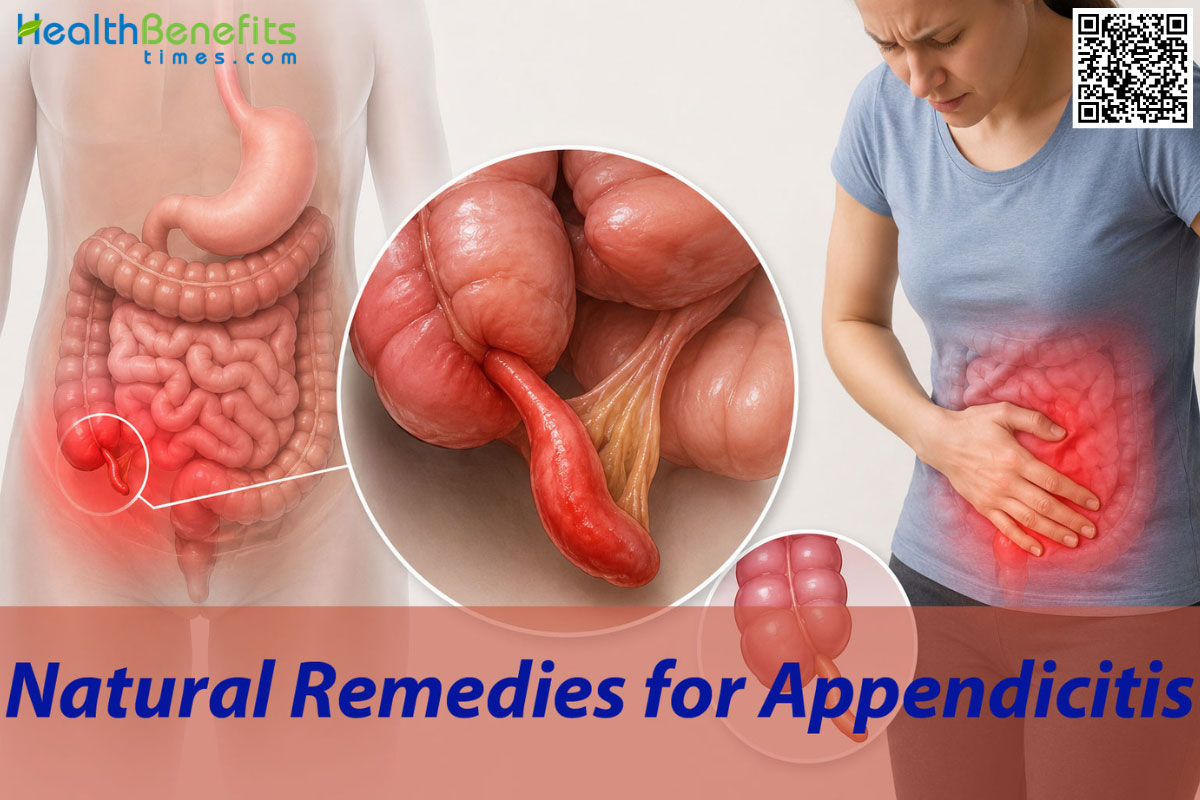
Causes of Appendicitis
Discovering exactly why this tiny organ becomes inflamed reveals a variety of common, everyday triggers that affect digestion and immunity.
1. Hardened Stool (Fecaliths)
Small pieces of stool can become rock-hard and accidentally lodge themselves inside the narrow entrance of the appendix 5. These calcified masses block the normal flow of mucus, acting as a physical plug that traps bacteria inside to multiply 6.
2. Swollen Lymph Tissue
The walls of the digestive tract contain immune tissues that help fight off infections. When the body battles a common stomach bug or respiratory virus, these tissues can swell significantly and pinch the appendix shut from the outside 7.
3. Undigested Seeds and Plant Matter
Chewing food improperly can sometimes allow intact fruit seeds, vegetable pits, or tough plant fibers to reach the lower intestine 8. Though relatively rare, these hard foreign objects can slip into the appendix cavity and create a stubborn physical blockage 9.
4. Inflammatory Bowel Disease
Chronic digestive conditions, such as Crohn’s disease or ulcerative colitis, cause long-term irritation along the intestinal lining. This persistent irritation thickens the bowel walls over time and eventually squeezes the appendiceal opening completely closed 10.
5. Tumors and Growths
Benign or cancerous growths located in the colon or the appendix itself can slowly grow large enough to block the passageway 11.
Symptoms of Appendicitis
Paying close attention to how the body feels is critical for catching this condition early before complications arise.
- A sudden, dull aching pain that starts near the belly button and gradually moves down to the lower right side of the stomach 12.
- Abdominal pain that becomes sharply worse when coughing, sneezing, taking a deep breath, or walking 13.
- A profound loss of appetite that occurs almost immediately after the stomach discomfort begins 14.
- Waves of nausea and vomiting that follow the onset of abdominal pain 15.
- A low-grade fever that slowly rises as the internal infection worsens and spreads 16.
- A noticeably swollen or hard belly, often accompanied by an inability to easily pass gas 17.
Appendicitis Facts
Gathering the essential details about this condition provides a clearer picture of how it affects the general population and how doctors identify it.
| Fact Category | Details |
| Symptoms 18 |
|
| Causes |
|
| Types of Appendicitis 20 |
|
| How does spread 2 |
|
| Age Group 21 |
|
| You might be at a higher risk for exposure of this disease if you: 22 |
|
| How doctors diagnose 4 |
|
| Other facts |
|
Natural Remedies for Appendicitis
Exploring the intersection of modern understanding and traditional healing reveals a variety of natural approaches to manage mild inflammation and support recovery. While emergency surgery is the standard treatment for a severe blockage, natural remedies offer significant benefits for uncomplicated cases, post-surgery healing, and overall digestive health.
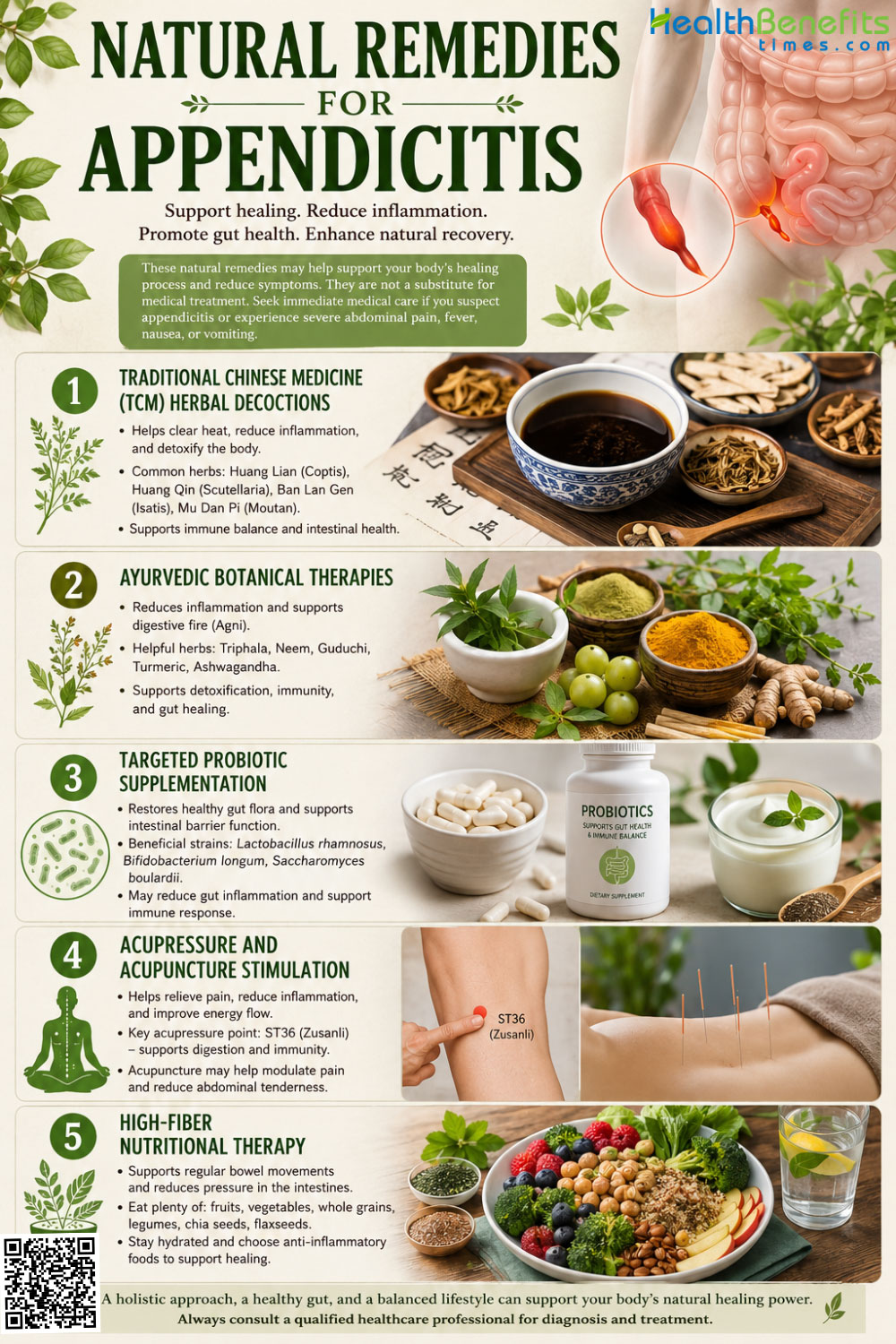
1. Traditional Chinese Medicine (TCM) Herbal Decoctions
Historical medical practices frequently rely on specific herbal mixtures to calm severe stomach irritation. Formulas like Dahuang Mudan Tang use active plant ingredients such as kaempferol and quercetin to successfully clear heat, detoxify the digestive tract, and stop massive inflammatory reactions at the cellular level 23. Another widely studied herb, Patrinia, has been used for centuries to improve blood flow, reduce swelling, and help the body fight off intestinal infections 24. These plant compounds work together to lower the levels of inflammatory chemicals circling in the bloodstream 25.
Note: You consume these specific herbal formulations as a warm liquid tea, exclusively prescribed and monitored by a certified herbalist to soothe your digestive tract safely.
2. Ayurvedic Botanical Therapies
Ancient Indian healing systems categorize sudden abdominal pain as an imbalance of natural energies and treat it with targeted root and plant powders. Blends such as Dashamula Kwatha use ten different medicinal roots to effectively calm nerve pain and ease muscle spasms in the lower belly 26. Additionally, natural mixtures like Changeryadi ghrita are heavily utilized to reduce painful bloating, clear bowel obstructions, and lower overall stomach inflammation without the need for harsh chemicals 27.
Note: You ingest these highly specialized herbal powders by mixing them with warm water or clarified butter (ghee) to calm stomach irritation, always under the guidance of an Ayurvedic practitioner.
3. Targeted Probiotic Supplementation
Modern science now recognizes that the appendix naturally acts as a safe storage house for good gut bacteria. Supplying the body with extra probiotics, specifically Lactobacilli and Bifidobacteria strains, helps dramatically in modulating the immune system and restoring a healthy balance in the intestines 28. Clinical trials confirm that patients who take probiotics experience reduced postoperative complications, shorter hospital stays, and a much faster return of normal digestive function 29.
Note: You eat these beneficial bacterial strains daily through high-quality capsules or fermented foods like yogurt to naturally rebuild your gut immunity and speed up tissue healing.
4. Acupressure and Acupuncture Stimulation
Applying specific physical pressure to nerve pathways in the body provides powerful natural pain relief. Activating the Lanwei extra point (Ex-LE7), a nerve cluster on the leg directly linked to appendix health, significantly lowers pain scores and reduces the need for chemical painkillers after an appendectomy 30. Massaging this specific point, along with others like Zusanli (ST36), also successfully blocks the nerve signals that cause post-surgery nausea and stomach cramping 31.
Note: You apply firm, steady thumb pressure to these specific nerve points on your lower leg to naturally block pain signals and relieve abdominal cramping when recovering.
5. High-Fiber Nutritional Therapy
The physical makeup of your daily diet directly impacts the mechanical functions of your lower intestine. Consuming diets that are rich in natural dietary fiber adds healthy bulk to your stool, which lowers the pressure inside the colon and prevents the formation of the hard fecal masses that trigger appendicitis 32. Scientific evaluations confirm that people who eat large amounts of natural roughage have a substantially lower risk of developing intestinal blockages compared to those on low-fiber diets 33.
Note: You incorporate this preventative remedy into your life by eating large, daily portions of fresh fruits, leafy green vegetables, and whole grains to keep your digestion soft and moving easily.
Is there any exercise or physical activities for Appendicitis
Movement plays a surprisingly vital role in healing the digestive system. While extreme physical exertion is dangerous during recovery, gentle and deliberate activities are highly recommended to wake up the bowels and prevent complications.
1. Early Intensive Mobilization
Lying completely still for days after an abdominal issue actually slows down the healing process. Medical guidelines strongly advise getting out of bed and moving around within the first 24 hours of an abdominal surgery or treatment 34. This early movement successfully stimulates the sleepy intestines to start working again and greatly reduces the risk of dangerous blood clots forming in the legs 35.
Note: You do this by slowly sitting up on the edge of your bed, standing carefully with support, and taking short, unhurried walks down the hallway several times a day.
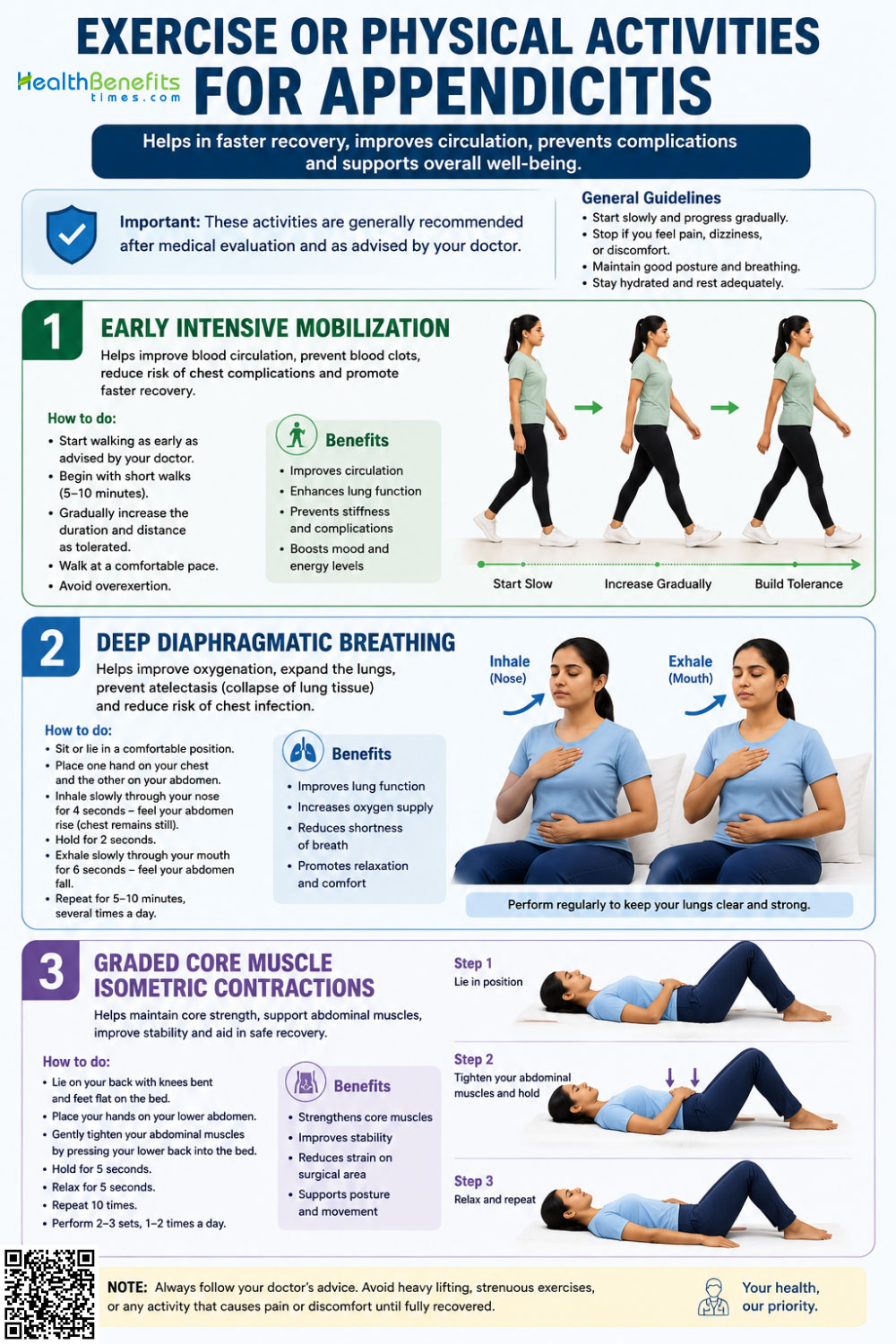
2. Deep Diaphragmatic Breathing
Because stomach pain naturally makes people take shallow breaths, the lower parts of the lungs can easily become filled with fluid or infected. Practicing deep breathing exercises, sometimes using a plastic device called an incentive spirometer, forces the diaphragm muscle to expand fully 36. This action brings rich oxygen to healing stomach tissues and helps clear lingering anesthesia out of the body safely 37.
Note: You practice this by sitting comfortably upright, breathing in deeply through your nose to expand your lower stomach, holding it for three seconds, and exhaling slowly through pursed lips.
3. Graded Core Muscle Isometric Contractions
Once the initial stomach healing is complete, usually after a week or two, the abdominal wall needs to regain its strength slowly. Instead of doing aggressive sit-ups, engaging in gentle isometric exercises helps rebuild the core muscles safely without pulling on sensitive internal healing tissues 38. These small movements tighten the stomach safely and prevent long-term weakness in the abdominal wall 39.
Note: You perform this by lying flat on your back, gently tightening your stomach muscles as if preparing to cough, holding the tension still for ten seconds, and then fully relaxing.
Foods and Activities to Avoid When You suffer from Appendicitis
Protecting your fragile digestive system means knowing exactly what to stay away from. Certain everyday habits and foods can rapidly worsen your condition or cause a healing appendix to rupture.
1. Harsh Stimulant Laxatives and Castor Oil
It is incredibly dangerous to take powerful laxatives if you think you are just constipated. Substances like castor oil force the bowel muscles to spasm violently, which easily causes a pressurized, swollen appendix to burst open instantly 40.
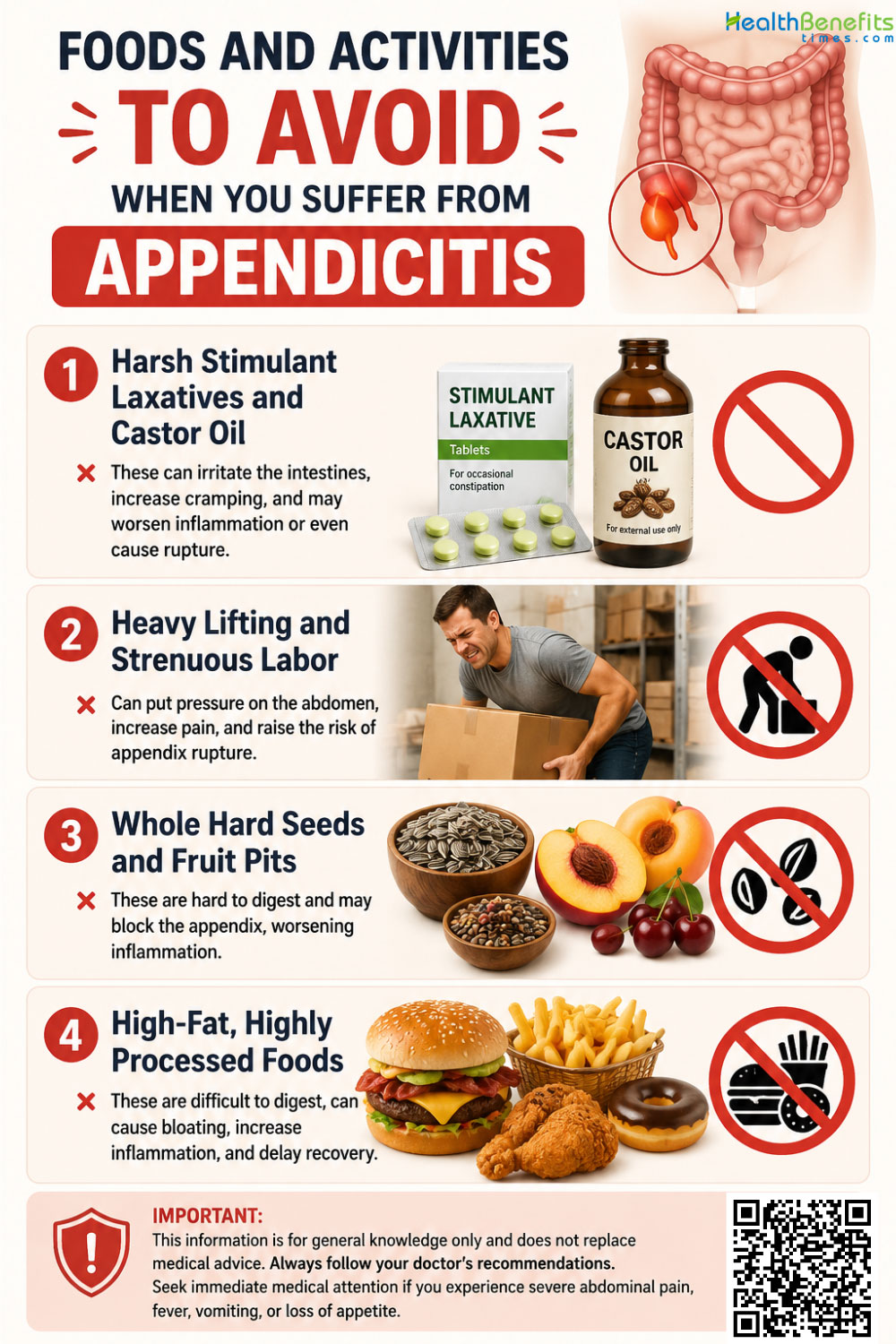
2. Heavy Lifting and Strenuous Labor
Following any abdominal pain or surgery, your stomach muscles are compromised. Picking up heavy objects sharply spikes the pressure inside your belly, heavily increasing the risk of tearing internal tissues or creating a hernia 41.
3. Whole Hard Seeds and Fruit Pits
Swallowing hard, indigestible plant materials creates a mechanical hazard for your gut. Fragments of unchewed seeds can get physically stuck inside the narrow appendix opening and make the blockage much worse 42.
4. High-Fat, Highly Processed Foods
Eating heavy meals full of saturated fats and refined sugars slows down your digestion to a crawl. This sluggish digestion promotes bad bacteria growth and creates the rock-hard stool that leads to dangerous blockages 43.
Myths and Misconceptions
Sorting through common health advice often reveals dangerous misunderstandings. Clarifying these popular myths is essential for keeping you safe and informed.
| Myth | Realty |
| Drinking a large dose of castor oil is the best way to naturally flush out a blocked appendix. 44 | Taking castor oil or any strong laxative makes the bowel forcefully squeeze, drastically increasing the chance that your inflamed appendix will violently burst. |
| Appendicitis only happens to teenagers and young adults in their twenties. 45 | While it is statistically most common in young people, this emergency happens frequently to young children, pregnant women, and the elderly. |
| If the severe pain suddenly stops on its own, it means you are completely cured. 46 | A sudden, miraculous stop to severe pain is actually a massive warning sign; it often means the appendix has ruptured, temporarily relieving the pressure before a deadly infection starts. |
| The appendix has absolutely no real function in the human body. 47 | Current science confirms the appendix serves as a highly vital storage space for beneficial gut probiotics, helping to restart your digestion after severe illnesses. |
| You must remain completely flat in bed for weeks after having stomach surgery. 34 | Waking up and walking within 24 hours of surgery is required by modern doctors because it prevents blood clots, clears the lungs, and stimulates healthy bowel movements. |
Special Considerations
Age and unique biological states completely change how the body reacts to severe stomach issues. Recognizing these differences is vital because they often hide the normal warning signs.
1. Children
Kids often lack the ability to accurately explain where their stomach hurts, which makes diagnosis very difficult. Instead of classic pain, they might just seem exhausted, refuse to eat, or have a sudden, urgent need to urinate 4. Because their internal immune tissues are still developing, children face a much higher risk of their appendix bursting quickly if parents delay a doctor’s visit 48.
2. Pregnancy
Expecting mothers experience major changes inside their bodies that move organs around. As the baby grows, the uterus pushes the appendix higher up into the stomach, meaning a pregnant woman might feel pain near her ribs instead of the lower right side 49. An inflamed appendix during pregnancy is a serious threat because the widespread infection can easily trigger premature labor or harm the baby 50.
3. Elderly
As people age, their bodies do not fight infections as loudly or noticeably as younger bodies do. Older adults frequently do not develop high fevers or show high white blood cell counts when their appendix becomes infected 51. Because their symptoms are so mild and subtle, doctors often diagnose the problem very late, which tragically leads to much higher rates of severe complications and organ rupture 52.
4. Chronic conditions
Individuals dealing with chronic illnesses like severe mental health conditions or long-term bowel diseases require special attention. Patients with conditions like schizophrenia often feel pain differently and wait longer to ask for help, leading to shockingly high rates of ruptured appendixes when they finally arrive at a hospital 53. Similarly, patients taking strong medications for other diseases might have their stomach pain entirely masked.
Precaution before use of natural remedies when you have Appendicitis
Taking care of your health with natural remedies is wonderful, but you must be incredibly cautious when dealing with an organ that can burst and threaten your life.
- Do not delay medical imaging: You must never attempt to self-diagnose severe stomach pain with herbs at home without first having a doctor perform an ultrasound or CT scan to ensure your organ is not about to burst 54.
- Beware of masking crucial pain: You should avoid taking strong natural pain relievers before seeing a doctor, because hiding your stomach pain or fever makes it incredibly difficult for medical professionals to know how sick you actually are 16.
- Understand the limits of natural healing: You must realize that natural herbs and probiotics are amazing for mild inflammation or surgery recovery, but they are completely powerless to fix an appendix that has already turned gangrenous or ruptured inside you 27.
- Monitor for bleeding risks: You should always tell your surgeon what herbs you are taking, because strong plant medicines like Patrinia can accidentally thin your blood and cause dangerous bleeding during an emergency surgery 24.
- Avoid forcing bowel movements: You absolutely must avoid using natural enemas or stimulant laxatives to relieve constipation, as forcing your bowels to move will likely cause the swollen appendix to explode 55.
When to see Doctor
Listening closely to your body’s alarm bells can save your life. You need to immediately seek emergency medical care if you experience any of these serious warning signs.
- You feel a sudden, sharp pain that starts around your belly button and decisively shifts down to the lower right side of your stomach 5.
- Your abdominal pain intensifies to a point where it wakes you out of a deep sleep or makes it physically impossible for you to stand up straight.
- You notice the stomach pain gets aggressively worse when you try to take a deep breath, cough, sneeze, or ride in a bumpy car.
- You experience a total inability to keep food or liquids down due to persistent, violent vomiting combined with your stomach hurting.
- Your belly becomes visibly swollen, hard to the touch, and is accompanied by a rising fever and sudden chills 56.
- You feel a sharp spike of pain when someone gently presses on your lower right stomach and quickly lets go, which is a classic sign of internal infection.
- You feel a frequent, painful urge to urinate or use the bathroom, but attempting to pass gas or stool gives you absolutely no relief 55
Comments
comments