

Causes of Babesiosis
1. Tick Bites
The primary cause of infection is a bite from an infected blacklegged tick, commonly known as a deer tick. The tick transmits microscopic parasites from the Babesia family, most frequently Babesia microti, into the bloodstream. These ticks are exceptionally small—often the size of a poppy seed—and typically spread the parasite during their young nymph stage, making their bites difficult to detect.
2. Contaminated Blood Transfusions
Individuals can contract the disease if they receive a blood transfusion from a donor infected with the parasite. Because the Babesia parasite lives and multiplies directly inside red blood cells, it can survive the standard collection and storage process of donated blood products.
3. Mother-to-Child Transmission
In rare cases, congenital transmission can occur. A pregnant woman who is infected with the parasite can pass the infection to her developing baby during pregnancy or at the time of delivery.
Symptoms of Babesiosis
1. Lack of Symptoms (Asymptomatic)
Many individuals infected with the parasite never feel sick or display any visible warning signs of the disease.
2. Flu-Like Illness
When symptoms do occur, they typically develop within one to several weeks of a tick bite and closely resemble a severe case of the flu. Common signs include high fever, sudden chills, drenching sweats, headaches, muscle or joint pain, and extreme exhaustion.
3. Signs of Blood Cell Destruction
As the parasites multiply, they destroy red blood cells, which can trigger a condition known as hemolytic anemia. This leads to distinct physical signs such as unusually pale skin, a yellowing of the skin and the whites of the eyes (jaundice), and dark-colored urine 3.
4. Severe Complications
In vulnerable populations—such as older adults, people without a spleen, or those with weakened immune systems—the infection can escalate rapidly. Severe symptoms include a dangerous drop in blood pressure, kidney or liver failure, and fluid accumulation in the lungs that causes severe breathing difficulty.
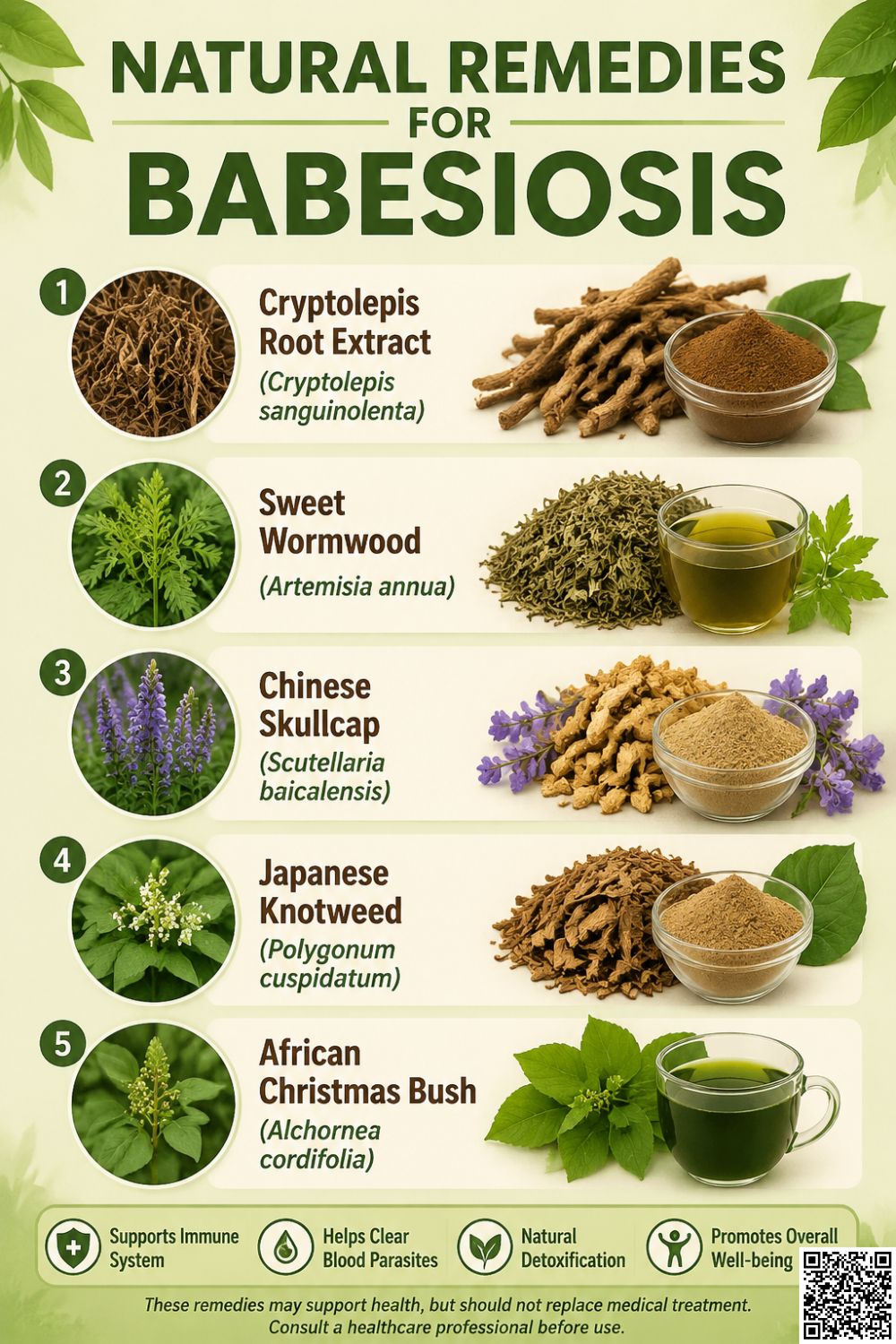
1. Cryptolepis Root Extract (Cryptolepis sanguinolenta)
How It May Help
Cryptolepis root extract contains active plant chemicals, notably cryptolepine, which possess strong natural anti-parasitic properties. This traditional botanical medicine helps combat babesiosis by directly blocking the growth and multiplication of Babesia parasites within red blood cells, functioning similarly to conventional anti-parasitic medications.
What Research Says
Laboratory studies confirm that Cryptolepis sanguinolenta extract and its active compound, cryptolepine, are highly effective against Babesia parasites. Research concludes that the extract can completely clear the infection without the parasites growing back, demonstrating an effectiveness that is comparable to or greater than standard prescription treatments like quinine and clindamycin 4 5.
How to Use It Safely
If you choose to use this herbal extract, you must do so under the strict guidance of a healthcare professional experienced in tick-borne diseases. A doctor will help determine the correct therapeutic dose, verify product purity, and ensure it does not negatively interact with your current medications.
Potential Precautions or Side Effects
You must avoid this remedy if you are pregnant due to complication risks. High doses can also trigger stomach upset, nausea, and potential drops in blood pressure.
2. Sweet Wormwood (Artemisia annua)
How It May Help
Sweet wormwood contains a potent active compound called artemisinin, which is widely recognized for treating malaria. Because the microscopic parasites that cause malaria and babesiosis are biologically similar, this botanical extract helps by damaging the parasites and preventing them from surviving and multiplying inside human red blood cells.
What Research Says
Laboratory studies demonstrate that Artemisia annua extracts effectively block the growth of Babesia parasites. Research concludes that the plant’s active compounds strongly inhibit parasite reproduction and reduce infection levels in the blood, identifying it as a highly effective botanical therapy against the disease 6.
How to Use It Safely
You should only use sweet wormwood under the direct supervision of a qualified healthcare provider. A doctor must determine the correct and safe dosage for your specific condition, verify the purity of the supplement, and monitor you to prevent dangerous interactions with prescription medications.
Potential Precautions or Side Effects
You may experience side effects such as nausea, stomach pain, or diarrhea. You must strictly avoid this remedy if you are pregnant, as it can cause serious fetal harm or miscarriage.
3. Chinese Skullcap (Scutellaria baicalensis)
How It May Help
Chinese skullcap root contains potent active plant compounds, such as baicalein, which possess strong anti-parasitic properties. This botanical medicine helps combat babesiosis by directly interfering with the ability of Babesia parasites to survive, grow, and multiply within human red blood cells.
What Research Says
Laboratory studies demonstrate that Scutellaria baicalensis extract effectively blocks the growth of Babesia parasites. Research concludes that the plant’s active compounds strongly inhibit parasite reproduction and significantly reduce infection levels in the blood, proving it to be a highly effective botanical therapy against the disease.
How to Use It Safely
You should only use Chinese skullcap under the direct supervision of a qualified healthcare provider. A doctor must determine the correct therapeutic dosage for your specific condition, verify supplement purity, and ensure it does not interact dangerously with your current prescription medications.
Potential Precautions or Side Effects
You may experience mild stomach upset. You must avoid this remedy if you are pregnant or have liver disease, as rare cases of liver damage have been reported 7.
4. Japanese Knotweed (Polygonum cuspidatum)
How It May Help
Japanese knotweed root is a rich natural source of resveratrol. This active compound acts as a powerful antioxidant and antimicrobial agent. For tick-borne illnesses, it helps by directly suppressing the growth of microscopic parasites in the blood while protecting the body’s tissues from infection-related damage.
What Research Says
Laboratory research confirms that Polygonum cuspidatum extract effectively stops the reproduction of Babesia parasites. Studies conclude that the plant’s active compounds strongly inhibit parasite growth in human red blood cells, demonstrating significant potential as a botanical treatment for the disease.
How to Use It Safely
You should strictly use Japanese knotweed under the guidance of a qualified healthcare provider. A doctor must determine the correct therapeutic dosage, monitor your progress, and ensure the herbal supplement does not negatively interact with your current prescription medications.
Potential Precautions or Side Effects
You may experience stomach upset or diarrhea. You must avoid this herb if you are pregnant, have a bleeding disorder, or take blood-thinning medications due to increased bleeding risks.
5. African Christmas Bush (Alchornea cordifolia)
How It May Help
African Christmas Bush is a traditional medicinal plant containing active compounds, such as ellagic acid, that possess strong anti-parasitic properties. For tick-borne infections, the plant extract helps by directly interfering with the survival and reproduction of microscopic parasites within the blood.
What Research Says
Laboratory studies demonstrate that Alchornea cordifolia extract effectively restricts the growth of Babesia parasites. Research concludes that its active botanical compounds can significantly inhibit parasite reproduction inside human red blood cells, highlighting its potential as an effective natural therapy against the disease.
How to Use It Safely
You must only use this botanical extract under the direct supervision of a knowledgeable healthcare provider. A doctor will determine the safest therapeutic dosage for your specific health needs and carefully monitor you to prevent any harmful interactions with prescription medications.
Potential Precautions or Side Effects
You may experience mild digestive upset or nausea. You must strictly avoid this remedy if you are pregnant or breastfeeding, as its safety for developing infants remains unproven.
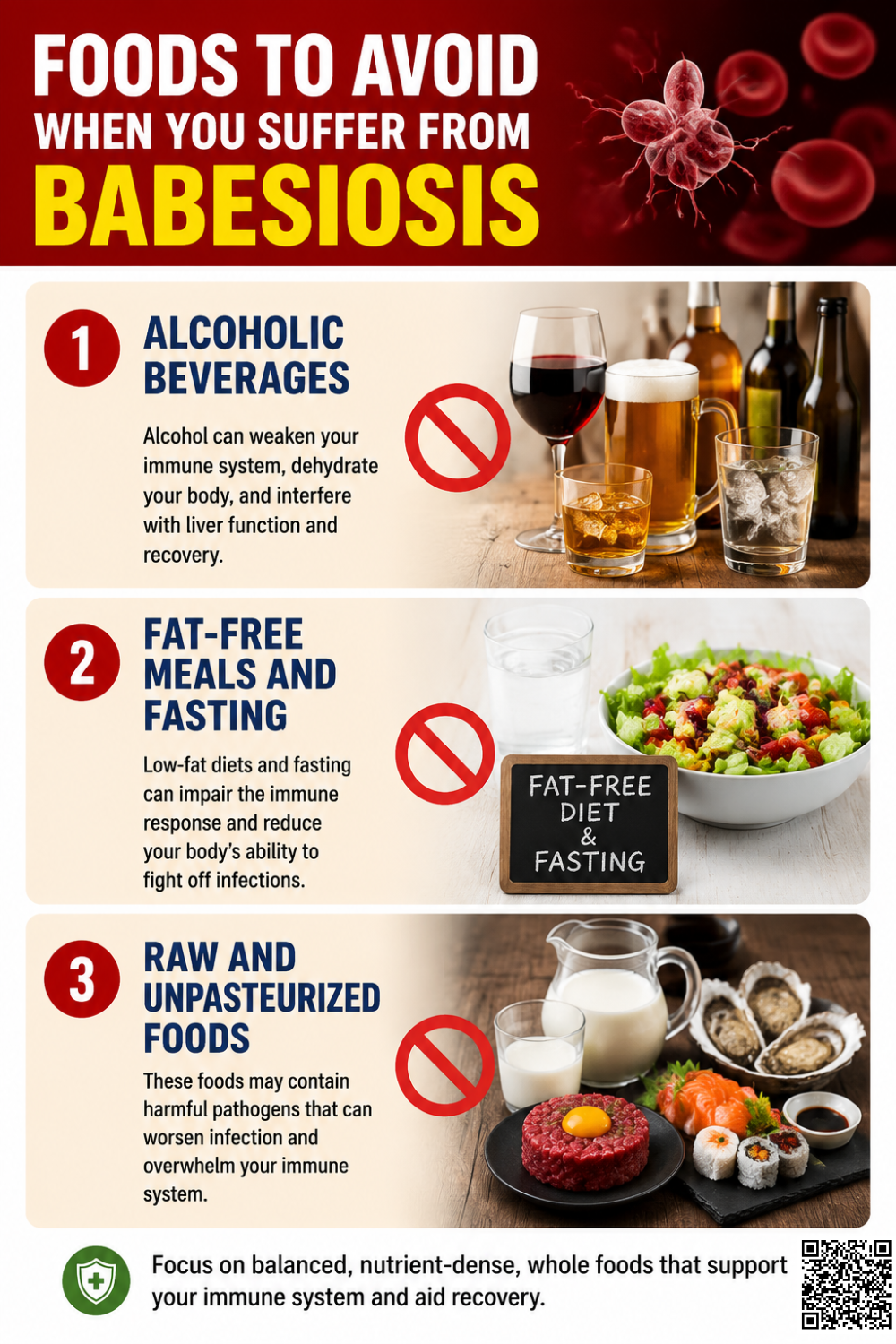
1. Alcoholic Beverages
Babesiosis infections and standard prescription treatments cause significant liver stress. You must avoid alcohol entirely to prevent severe liver toxicity and delayed recovery 8.
2. Fat-Free Meals and Fasting
If prescribed atovaquone, avoid taking it on an empty stomach. The medication requires dietary fat to absorb correctly; without food, the treatment can fail.
3. Raw and Unpasteurized Foods
Because babesiosis severely impacts those with weakened immune systems, avoid raw meats, raw seafood, and unpasteurized dairy to prevent dangerous secondary foodborne infections during your recovery.
When to See a Doctor When You Suffer From Babesiosis
1. Development of Flu-Like Symptoms
You should consult a doctor if you develop an unexplained high fever, intense body chills, or severe fatigue within weeks of a known tick bite.
2. Physical Signs of Blood Cell Destruction
Seek immediate medical care if you notice yellowing of your skin or eyes, dark urine, or extreme paleness, as these indicate rapid red blood cell loss.
3. High-Risk Medical Status
You must seek emergency care if you lack a spleen or have a weakened immune system and develop any infection symptoms, as the disease can rapidly become fatal.
4. Breathing Difficulties
Go to an emergency department immediately if you experience shortness of breath, as fluid accumulation in the lungs is a documented, severe complication of the infection.
Comments
comments