


Causes of Backache
Backaches stem from a wide range of mechanical, structural, and medical factors that affect the spine’s muscles, nerves, and bones.
- Muscle and Ligament Strain: Heavy lifting, sudden awkward movements, or poor physical conditioning frequently strain back muscles and spinal ligaments 1.
- Bulging or Ruptured Discs: The soft cushions between spinal vertebrae can bulge or rupture, pressing directly on surrounding nerves and causing sharp, radiating pain 4.
- Arthritis: Osteoarthritis frequently affects the lower back, narrowing the space around the spinal cord in a condition known as spinal stenosis 2.
- Skeletal Irregularities: Structural conditions such as scoliosis, a sideways curvature of the spine, place abnormal stress on spinal tissues and lead to chronic discomfort 1.
- Osteoporosis: Porous and brittle bones in the vertebrae can develop painful compression fractures due to diminished bone density 2.
Symptoms of Backache
Backache symptoms vary widely depending on the underlying cause, ranging from mild muscle stiffness to severe, disabling discomfort.
- Muscle Aches and Pain: A dull, aching sensation localized primarily in the lower back or muscles along the spine 1.
- Radiating Nerve Pain: Sharp, shooting pain that travels downward from the lower back through the buttocks and down into the leg 2.
- Limited Mobility: Stiffness and restricted range of motion that makes standing upright, bending, or twisting difficult and painful 3.
- Numbness and Tingling: A pins-and-needles sensation, numbness, or muscle weakness felt in the lower extremities due to nerve compression 1.
- Postural Discomfort: Pain that worsens significantly with prolonged sitting or standing, but often eases with specific changes in body position 2.
Natural Remedies for Backache
1. Applying Heat and Cold Therapy
How it may help
Applying cold therapy constricts blood vessels to reduce localized swelling and numb sharp pain. Conversely, heat therapy expands blood vessels to relax tight muscles and improve blood flow, delivering essential oxygen and nutrients to damaged spinal tissues 1.
What research says
Clinical studies conclude that superficial heat therapy provides moderate benefits for reducing short-term pain and improving back function 5. Research confirms that alternating or appropriately applying thermal packs serves as an effective, non-invasive method to manage acute back discomfort.
How to use it safely
Apply an ice pack wrapped in a towel for 15 to 20 minutes during the first 48 hours of sudden pain. Switch to a heating pad or warm bath for similar intervals afterward 1. Always protect your skin from direct exposure.
Potential precautions or side effects
Never apply ice or heat directly to bare skin, as extreme temperatures can cause tissue burns, frostbite, or permanent skin damage.
2. Engaging in Regular Physical Exercise
How it may help
Regular physical exercise strengthens the core muscles supporting the spine, improves joint flexibility, and enhances blood circulation 1. This increased physical conditioning helps stabilize the lower back, reducing mechanical strain on spinal discs and ligaments during daily movements.
What research says
Clinical reviews conclude that structured exercise programs significantly reduce chronic low back pain and prevent future recurrences 5. Research confirms that physical activity improves overall functional ability and decreases long-term disability rates among individuals suffering from backaches.
How to use it safely
Incorporate low-impact activities like walking, swimming, or stationary cycling into your routine. Start slowly and gradually increase your activity duration 1. Consult a physical therapist to design a customized exercise plan tailored to your specific spinal condition.
Potential precautions or side effects
Avoid high-impact movements, heavy lifting, or sudden twisting exercises that can worsen spinal strain and trigger acute pain flare-ups.
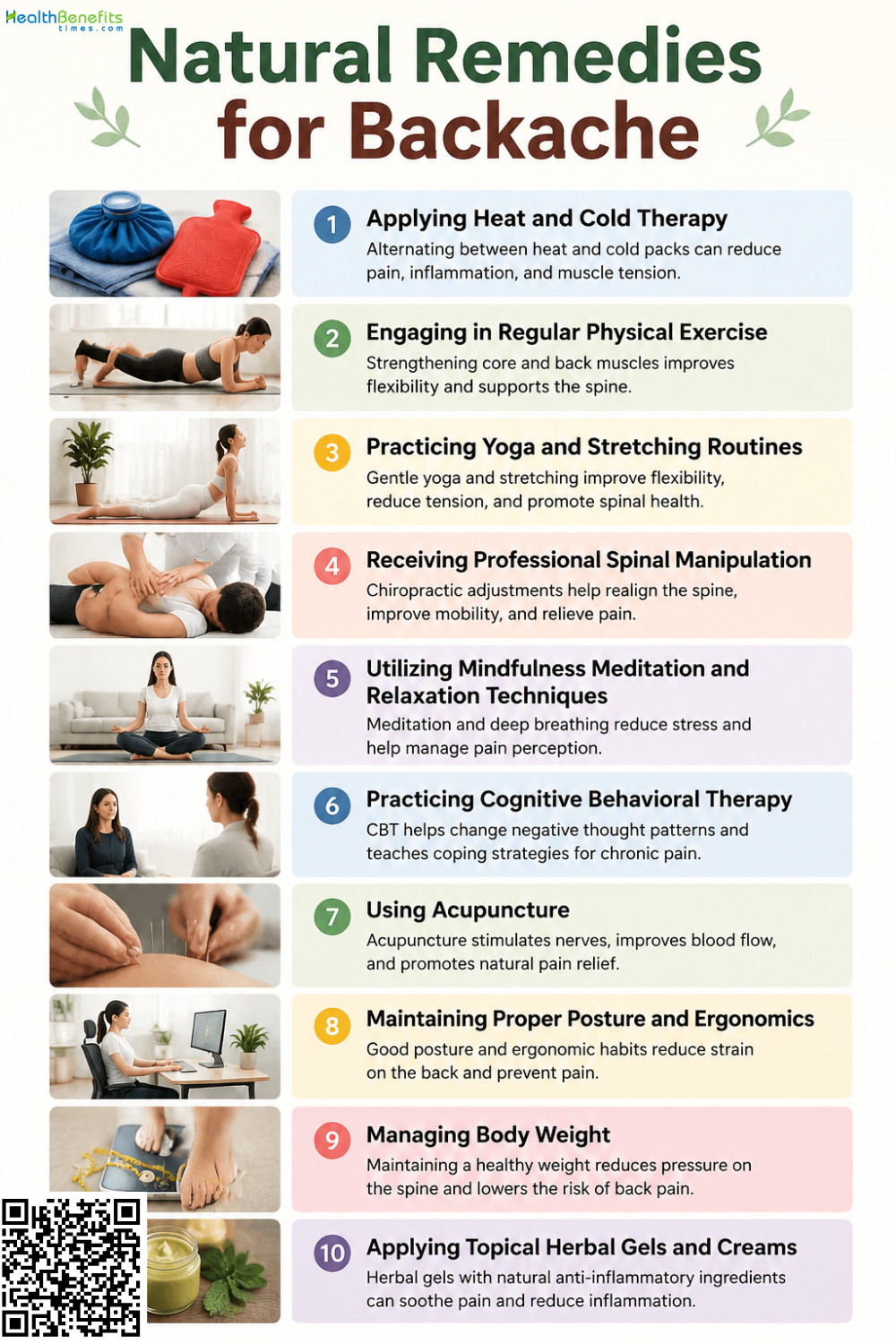
3. Practicing Yoga and Stretching Routines
How it may help
Yoga and targeted stretching lengthen tight muscles in the lower back, hips, and hamstrings while improving spinal alignment 6. This practice relieves tension, enhances range of motion, and builds core stability, reducing mechanical pressure on the spinal vertebrae.
What research says
Clinical studies conclude that regular yoga practice provides effective, short-term and long-term improvements in back function and pain reduction 5. Research confirms that yoga is as effective as standard physical therapy for treating chronic lower back pain.
How to use it safely
Join a beginner-friendly yoga class or consult a physical therapist for safe, spine-friendly stretches 6. Move slowly into each position, focus on smooth breathing, and never push your body into sharp pain.
Potential precautions or side effects
Avoid deep forward bends or aggressive twisting poses that can overstretch spinal ligaments and trigger severe back pain flare-ups.
4. Receiving Professional Spinal Manipulation
How it may help
Professional spinal manipulation involves licensed practitioners using controlled, hands-on force to adjust the vertebrae and surrounding joints 7. This physical adjustment restores proper spinal alignment, reduces muscle tension, and relieves mechanical pressure on irritated nerves.
What research says
Clinical trials conclude that spinal manipulation provides moderate, short-term improvements in pain and physical functioning for individuals with chronic lower back pain 5. Research confirms it offers effectiveness comparable to conventional treatments like standard medical care and exercise.
How to use it safely
Always seek treatment from a licensed, experienced healthcare professional, such as a chiropractor or osteopathic physician 7. Discuss your complete medical history beforehand to ensure the technique is appropriate for your specific spinal condition.
Potential precautions or side effects
Temporary side effects may include mild soreness, stiffness, or temporary discomfort around the treated area. Severe complications are extremely rare when performed correctly.
5. Utilizing Mindfulness Meditation and Relaxation Techniques
How it may help
Mindfulness meditation and relaxation techniques help calm the central nervous system and reduce stress-induced muscle tension 8. By shifting how the brain processes pain signals, these practices lower overall stress hormones and alter the perception of chronic discomfort, making backaches easier to manage.
What research says
Clinical studies conclude that mindfulness-based stress reduction provides meaningful, long-term improvements in back-related pain and overall physical functioning 5. Research confirms that mental relaxation strategies effectively decrease symptom severity and enhance daily coping mechanisms for chronic back pain sufferers.
How to use it safely
Set aside a few minutes each day to practice deep breathing exercises, guided meditation, or progressive muscle relaxation in a quiet space 8. Use reputable audio guides or apps from trusted medical institutions to maintain proper technique.
Potential precautions or side effects
These mental techniques are completely safe with no physical side effects. However, they should complement, not replace, medical treatments for structural spine issues.
6. Practicing Cognitive Behavioral Therapy
How it may help
Cognitive behavioral therapy helps individuals reframe negative thought patterns about pain 9. By altering how the brain processes discomfort and teaching effective coping strategies, this psychological approach reduces emotional distress, lessens perceived pain intensity, and improves daily functioning despite chronic backaches.
What research says
Clinical studies conclude that cognitive behavioral therapy provides meaningful, sustained improvements in pain reduction and physical disability for patients with chronic lower back pain 5. Research confirms it serves as an effective, evidence-based component of comprehensive multidisciplinary pain management programs.
How to use it safely
Work with a licensed mental health professional who specializes in chronic pain management 9. Attend scheduled sessions consistently and actively apply learned coping strategies and relaxation techniques during daily flare-ups.
Potential precautions or side effects
This psychological therapy is entirely safe with no physical side effects. However, it does not correct structural spinal issues and should complement medical treatment.
7. Using Acupuncture
How it may help
Acupuncture involves inserting extremely thin needles into specific points on the body 10. This process stimulates the central nervous system to release natural pain-relieving chemicals, reduces inflammation, and alters pain signals, helping to ease chronic back discomfort.
What research says
Clinical trials conclude that acupuncture provides meaningful short-term relief for chronic lower back pain and improves overall physical functioning 5. Research confirms it serves as a beneficial, non-pharmacological treatment option for individuals struggling with persistent backaches.
How to use it safely
Always seek treatment from a licensed, certified acupuncture practitioner 10. Ensure the practitioner uses sterile, single-use disposable needles to eliminate any risk of localized skin or tissue infections.
Potential precautions or side effects
Minor side effects may include temporary soreness, slight bruising, or minor bleeding at the needle insertion sites.
8. Maintaining Proper Posture and Ergonomics
How it may help
Maintaining proper posture and utilizing ergonomic workstations preserves the three natural curves of the spine 11. This optimal alignment minimizes abnormal mechanical stress on muscles and ligaments, effectively reducing the harmful compression forces acting on the lower back during prolonged sitting or standing 1.
What research says
Clinical studies conclude that awkward, non-ergonomic postures significantly increase the risk of developing chronic lower back pain and repetitive strain syndromes 12. Research confirms that improving workplace ergonomics and frequently alternating between sitting and standing positions effectively reduce musculoskeletal discomfort in adults 13.
How to use it safely
Adjust your workspace so your computer monitor rests at eye level and your chair firmly supports your lower back 1. Keep your feet entirely flat on the floor, consciously avoid slouching forward, and take frequent, short breaks to stretch and change your position throughout the day.
Potential precautions or side effects
Practicing good ergonomics is safe with no dangerous side effects. However, holding an overly rigid, unnatural posture all day can paradoxically increase muscle fatigue and spinal stiffness 11.
9. Managing Body Weight
How it may help
Excess body weight, particularly around the abdomen, shifts the body’s center of gravity forward and places continuous, high mechanical strain on the lower back and spinal discs 1. Managing and lowering excess weight reduces this physical burden, easing chronic stress on spinal muscles, ligaments, and joints.
What research says
Clinical studies conclude that obesity is a major, independent risk factor for the development and progression of chronic low back pain 14. Research confirms that sustainable weight loss significantly decreases spinal loading, alleviates pain intensity, and improves functional mobility in overweight individuals.
How to use it safely
Adopt a balanced, nutrient-dense diet rich in whole foods and pair it with regular, low-impact aerobic exercise 15. Consult your primary care physician or a registered dietitian to establish a safe, gradual weight loss plan tailored to your health profile.
Potential precautions or side effects
Crash diets or rapid, extreme weight loss can cause nutritional deficiencies, muscle loss, and severe fatigue, which may worsen physical weakness and exacerbate back pain.
10. Applying Topical Herbal Gels and Creams
How it may help
Topical herbal gels and creams deliver active plant compounds directly through the skin to localized pain receptors 16. These natural formulas reduce local tissue inflammation, cool or warm the affected area, and temporarily block pain signals sent from the back muscles to the central nervous system.
What research says
Clinical reviews conclude that specific herbal topicals, such as capsicum extract or arnica, provide moderate short-term relief for acute musculoskeletal discomfort 16. Research confirms they serve as effective, non-systemic alternatives to oral pain relievers for managing mild backache flare-ups.
How to use it safely
Apply a small amount of the herbal cream directly to clean, unbroken skin over the painful area 16. Wash your hands thoroughly afterward and follow all specific product labeling instructions regarding daily application frequency.
Potential precautions or side effects
Topical products can cause skin irritation, redness, or allergic contact dermatitis in sensitive individuals. Avoid applying them near open wounds or mucous membranes.
Foods to Avoid When You suffer from Backache
Certain dietary choices promote systemic inflammation, oxidative stress, and excessive weight gain, which can worsen spinal strain and intensify back pain. Limit or avoid the following items to protect your spine.
1. Refined Sugars
Diets high in added sugars trigger systemic inflammatory responses throughout the body, intensifying joint and muscle pain associated with chronic backaches 17.

2. Processed Meats
Processed meats contain high amounts of sodium and preservatives that promote vascular inflammation and fluid retention, negatively impacting overall musculoskeletal health 18.
3. Trans and Saturated Fats
Foods heavy in unhealthy fats contribute to systemic inflammation and weight gain, increasing the physical mechanical load on the lower spine 19.
4. Refined Carbohydrates
Highly processed grains rapidly elevate blood sugar and promote inflammatory pathways, which can aggravate chronic pain conditions and muscle stiffness 20.
5. Excessive Alcohol
Heavy alcohol consumption disrupts restorative sleep patterns, impairs tissue healing, and increases systemic inflammation, leading to prolonged physical recovery from back injuries 21.
When to see a Doctor when you struggle from Backache
While most backaches improve with self-care, certain symptoms indicate serious underlying medical conditions that require immediate professional evaluation to prevent permanent nerve or tissue damage.
- Progressive Neurological Deficits: Experiencing a progressive loss of strength, numbness, or a pins-and-needles sensation in your legs strongly indicates severe nerve compression that requires urgent medical assessment 1.
- Loss of Bowel or Bladder Control: Sudden loss of bowel or bladder control accompanied by lower back pain is a medical emergency signaling cauda equina syndrome, requiring immediate surgery 1.
- Pain Accompanied by Fever or Unexplained Weight Loss: Back pain combined with an unexplained fever, chills, or sudden weight loss can indicate a spinal infection, inflammation, or a systemic tumor 2.
- Severe Trauma or Injury: Back pain that follows a high-impact event, such as a major fall, car accident, or sports collision, requires immediate emergency evaluation for spinal fractures 22.
- Constant, Unrelenting Pain: Pain that persists relentlessly even when resting flat or lying down at night suggests a more complex structural pathology requiring thorough diagnostic imaging 2
Comments
comments