


Causes of Bedwetting
1. Genetics and Family History
Bedwetting is heavily influenced by inherited traits, meaning a child has a significantly higher chance of experiencing the condition if one or both parents wet the bed during their own childhood 3.
2. Excessive Nighttime Urine Production
The kidneys may produce more urine during sleep than the bladder can safely store, a process frequently resulting from a failure of the body to release enough antidiuretic hormone at night 4.
3. Reduced Functional Bladder Capacity
The bladder may be completely normal in physical size but acts as though it is smaller, signaling fullness at low volumes and triggering involuntary muscle contractions while sleeping 5.
4. Deep Sleep and Arousal Issues
A disruption in the normal communication between the nervous system and the brain prevents an individual from waking up from deep sleep when the bladder sends signals that it needs to empty.
5. Underlying Medical Conditions
Although less common, persistent bedwetting can serve as a secondary symptom of other physical health issues, such as urinary tract infections, severe constipation, type 1 diabetes, or sleep apnea.
6. Psychological or Emotional Stress
Major life disruptions, anxiety, or emotional trauma can occasionally trigger new episodes of bedwetting in children who previously maintained long-term nighttime bladder control.
Symptoms of Bedwetting
1. Nighttime Urine Release
The primary and defining symptom is the repeated, involuntary passing of urine during sleep, typically occurring at least twice a week in children older than five years of age.
2. Daytime Bladder Control Issues
Experiencing unexpected daytime leakage, a sudden and intense urge to urinate, or unusually frequent trips to the bathroom, which medically categorizes the condition as non-monosymptomatic enuresis.
3. Painful Urination
A burning sensation, pain, or general discomfort while urinating during the day, which often indicates that a urinary tract infection is the underlying cause of the nighttime accidents 6.
4. Bowel Irregularities
Infrequent, hard, or painful bowel movements, as severe constipation causes the enlarged bowel to press against the bladder, reducing its capacity to hold urine during the night.
5. Sleep Disruptions and Snoring
Chronic loud snoring, open-mouth breathing, or noticeable pauses in breathing while asleep, which are signs of obstructive sleep apnea—a condition strongly linked to increased bedwetting frequency.
6. Unusual Thirst and Fatigue
A sudden increase in severe daytime thirst, chronic exhaustion, and high volumes of urine output overall, which can be early warning signs of undiagnosed type 1 diabetes.
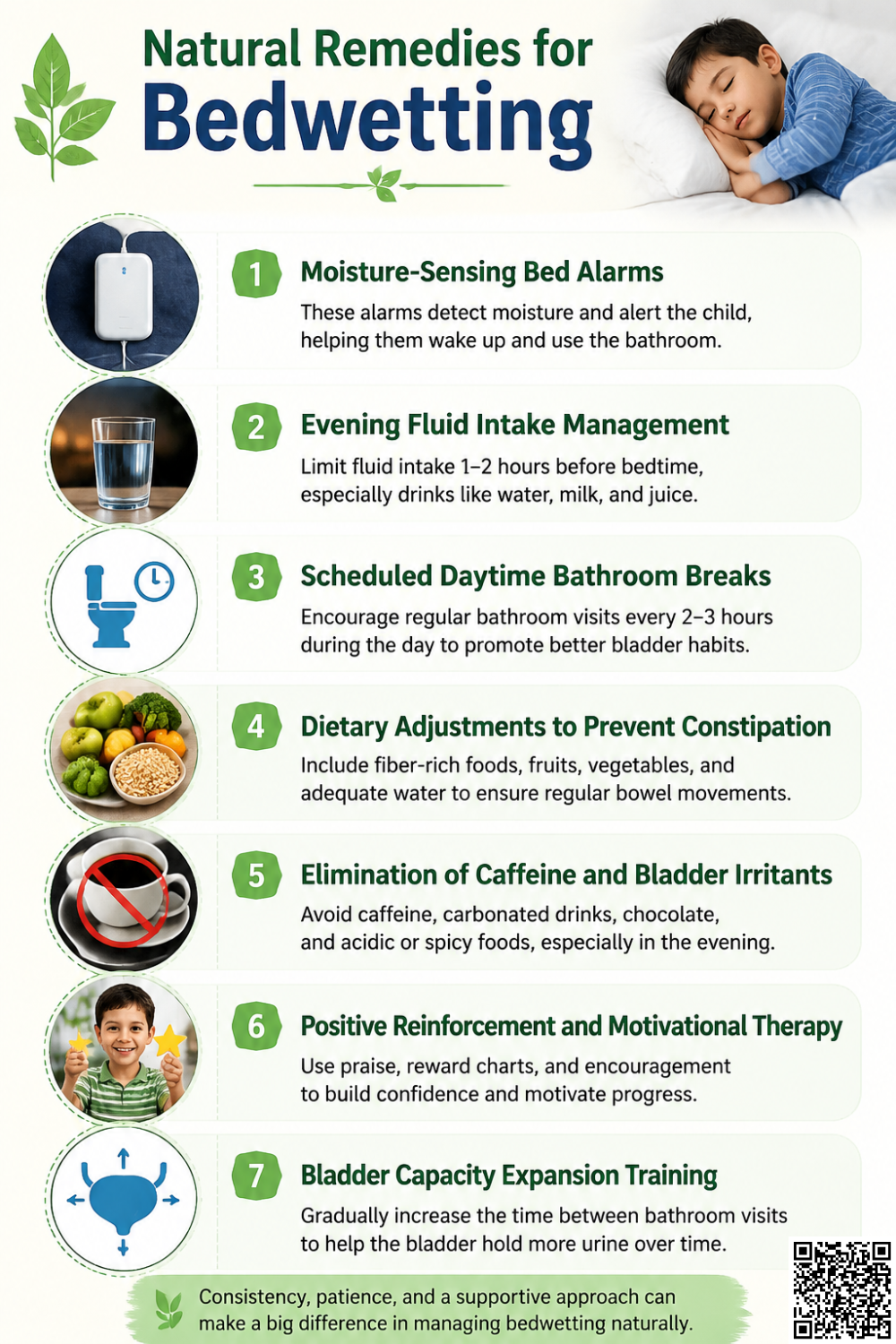
1. Moisture-Sensing Bed Alarms
How It May Help
Moisture-sensing bed alarms work by conditioning the brain to respond to a full bladder. A small sensor detects the first drops of urine and triggers a sound or vibration. Over time, this trains the nervous system to wake the individual automatically before bedwetting occurs.
What Research Says
Clinical evidence establishes bed alarms as the most effective long-term treatment for bedwetting. Research confirms that alarm therapy achieves a complete resolution of symptoms in 66% to 70% of patients, offering the lowest rates of relapse compared to prescription medications once the treatment concludes.
How to Use It Safely
Secure the sensor to your child’s underwear and attach the alarm unit to their pajama shirt. When it sounds, immediately wake your child completely, guide them to the bathroom to finish urinating, and reset the device for the rest of the night.
Potential Precautions or Side Effects
The primary drawback is significant sleep disruption for the family. It requires strict commitment and is not recommended for children facing extreme emotional stress or complex behavioral issues 7.
2. Evening Fluid Intake Management
How It May Help
Managing evening fluid intake reduces the total volume of urine the kidneys produce during sleep. By limiting liquids in the hours leading up to bedtime, the bladder is less likely to reach maximum capacity overnight, lowering the physical pressure that triggers involuntary nighttime urination.
What Research Says
Clinical guidelines endorse evening fluid restriction as a primary behavioral modification. Research indicates that redistributing daily fluid intake—consuming the majority of liquids during the morning and early afternoon—effectively reduces nighttime urine volume and decreases bedwetting frequency in children with normal bladder capacities.
How to Use It Safely
Encourage your child to drink plenty of water throughout the morning and early afternoon to maintain healthy hydration. Restrict all beverages roughly two hours before sleep, and ensure they empty their bladder completely just before getting into bed.
Potential Precautions or Side Effects
Never restrict fluids to the point of causing daytime thirst or dehydration. If your child participates in evening sports, they must drink enough water to safely rehydrate.
3. Scheduled Daytime Bathroom Breaks
How It May Help
Establishing a regular daytime bathroom schedule prevents the bladder from becoming overstretched. This consistent routine trains the bladder muscles to empty completely and maintain a normal physical capacity. By keeping the bladder relaxed, it reduces urgency and lowers the chance of involuntary spasms during sleep.
What Research Says
Clinical guidelines emphasize timed voiding as a foundational behavioral treatment, known as standard urotherapy. Research confirms that scheduling regular urination intervals significantly improves overall bladder control and reduces nighttime accidents, particularly in children who also experience daytime urinary symptoms or overactive bladders.
How to Use It Safely
Prompt your child to use the toilet every two to three hours during the day, regardless of whether they feel an urge to go. Utilizing vibrating watches or gentle alarm reminders can help them stick to this routine consistently at home and school.
Potential Precautions or Side Effects
Avoid punishing your child if they miss a scheduled break. Creating excessive pressure or stress around bathroom habits can worsen bladder retention and increase emotional anxiety.
4. Dietary Adjustments to Prevent Constipation
How It May Help
The lower bowel rests directly behind the bladder. When severe constipation occurs, trapped stool expands the bowel, pressing heavily against the bladder. This physical pressure reduces how much urine the bladder can safely hold and triggers involuntary muscle spasms, leading directly to nighttime accidents.
What Research Says
Clinical studies identify chronic constipation as a leading hidden cause of bedwetting. Research concludes that resolving underlying bowel blockages—often through dietary adjustments or prescribed laxatives—frequently cures nighttime urinary incontinence, even without utilizing additional bladder-specific treatments.
How to Use It Safely
Increase your child’s daily intake of dietary fiber by serving more fresh fruits, vegetables, beans, and whole grains. Pair these high-fiber foods with ample water throughout the daytime to soften stools, ensuring regular and painless bowel movements.
Potential Precautions or Side Effects
Do not increase dietary fiber intake too rapidly, as a sudden change can cause painful gas, stomach cramps, or bloating. Introduce new high-fiber foods gradually over several weeks.
5. Elimination of Caffeine and Bladder Irritants
How It May Help
Certain foods and drinks, especially those containing caffeine, act as diuretics that force the kidneys to produce extra urine. Furthermore, caffeine is a known bladder irritant that triggers sudden muscle spasms and increases urgency, making it difficult for the bladder to store urine calmly throughout the night.
What Research Says
Clinical management guidelines for pediatric urinary incontinence strongly advise eliminating caffeine from a child’s diet. Evidence indicates that removing caffeinated products, such as colas and energy drinks, effectively prevents artificial spikes in urine production and stabilizes bladder overactivity, directly decreasing the occurrence of nighttime accidents.
How to Use It Safely
Carefully review your child’s daily diet and remove beverages containing caffeine, such as sodas, sports drinks, and certain teas. Replace these irritants with plain water. Always read nutrition labels closely, as chocolate and some fruit-flavored sodas also contain hidden caffeine.
Potential Precautions or Side Effects
Removing caffeine abruptly can occasionally cause mild, temporary withdrawal symptoms such as headaches or mood irritability. Taper off caffeinated drinks gradually over several days to minimize any discomfort.
6. Positive Reinforcement and Motivational Therapy
How It May Help
Positive reinforcement reduces the emotional stress and anxiety associated with bedwetting. By rewarding a child for following healthy bathroom routines rather than just achieving dry nights, this approach builds self-esteem. It encourages active participation in their treatment and creates a supportive environment that reduces psychological tension.
What Research Says
Clinical guidelines recommend motivational therapy as an initial treatment, particularly for younger children. Research concludes that reward systems, such as sticker charts, provide a modest cure rate. Importantly, they significantly improve adherence to behavioral routines and prevent emotional trauma associated with the condition.
How to Use It Safely
Create a simple sticker chart to track progress. Reward your child for actionable behaviors, such as using the toilet right before bed or helping change wet sheets, rather than strictly for staying dry. Keep rewards small and focused on their daily effort.
Potential Precautions or Side Effects
Never punish, shame, or scold a child for wetting the bed. Negative reactions increase emotional distress, which frequently worsens the condition and severely damages the child’s long-term self-esteem.
7. Bladder Capacity Expansion Training
How It May Help
Bladder training helps individuals who have a small functional bladder capacity. By safely stretching the bladder muscles during the day, it gradually increases the amount of urine the organ can hold. This allows the bladder to store more liquid overnight without triggering the sudden, involuntary contractions that cause bedwetting.
What Research Says
Clinical research indicates that bladder retention training is highly beneficial for children with lower-than-average bladder capacities. Studies conclude that steadily increasing the time between daytime bathroom visits improves overall bladder control and significantly reduces the frequency of nighttime accidents when used alongside other behavioral modifications.
How to Use It Safely
When your child feels the initial urge to urinate, ask them to wait an extra five to ten minutes before going to the bathroom. Slowly increase this waiting period over several weeks to help safely stretch the bladder muscle without causing physical distress.
Potential Precautions or Side Effects
Never force a child to hold their urine to the point of pain or extreme discomfort. Excessive holding can lead to severe urinary tract infections or dysfunctional bathroom habits.

1. Caffeinated Beverages
Drinks like soda and tea act as diuretics and stimulate bladder muscles, increasing nighttime urine production and sudden urgency.
2. Chocolate
Chocolate contains caffeine and theobromine, both of which are chemical compounds that irritate the bladder lining and provoke involuntary muscle spasms during sleep.
3. Citrus Fruits and Juices
Highly acidic foods, such as oranges and grapefruits, directly irritate the bladder wall, which reduces its capacity to store urine calmly throughout the night.
4. Carbonated Drinks
The dissolved carbon dioxide in sparkling water and sodas creates physical pressure and irritation within the bladder, triggering sudden overactivity and frequent leaks.
5. Spicy Foods
Spices aggressively stimulate the bladder lining in the same way they affect the mouth, leading to heightened urgency and unexpected nighttime accidents.
6. Salty Snacks
Consuming excessive salt forces the body to retain water, which the kidneys must eventually process, resulting in unusually high volumes of urine while sleeping.
7. Excessive Dairy
In many individuals, consuming too much milk or cheese causes severe constipation, forcing the enlarged bowel to press heavily against the bladder and reduce its physical capacity.
When To See a Doctor When You Suffer from Bedwetting
1. Sudden Onset After Being Dry
Seek medical care if sudden nighttime accidents occur after a child has successfully maintained complete bladder control for at least six uninterrupted months.
2. Painful Urination or Discolored Urine
Consult a doctor immediately if bedwetting is accompanied by a burning sensation, cloudy urine, or blood, which strongly indicates an active urinary tract infection.
3. Extreme Thirst and Fatigue
Medical evaluation is required if bedwetting occurs alongside sudden, severe daytime thirst, weight loss, and chronic exhaustion, as these are primary warning signs of undiagnosed type 1 diabetes.
4. Daytime Bladder Leaks
Seek a clinical assessment if a child experiences daytime urinary incontinence, sudden intense urgency, or unusually frequent trips to the bathroom alongside nighttime bedwetting.
5. Loud Snoring or Breathing Pauses
Have a doctor evaluate the child if nighttime accidents happen alongside chronic loud snoring or paused breathing, as obstructive sleep apnea is a known medical trigger.
6. Severe Bowel Irregularities
A doctor should investigate if the individual experiences painful, infrequent, or hard bowel movements, because chronic constipation creates physical pressure that severely impairs normal bladder function.
7. Persistence Beyond Age Seven
Schedule a pediatric appointment if frequent bedwetting continues after age seven, as clinical interventions may be necessary to support bladder development and prevent emotional distress.
Comments
comments