

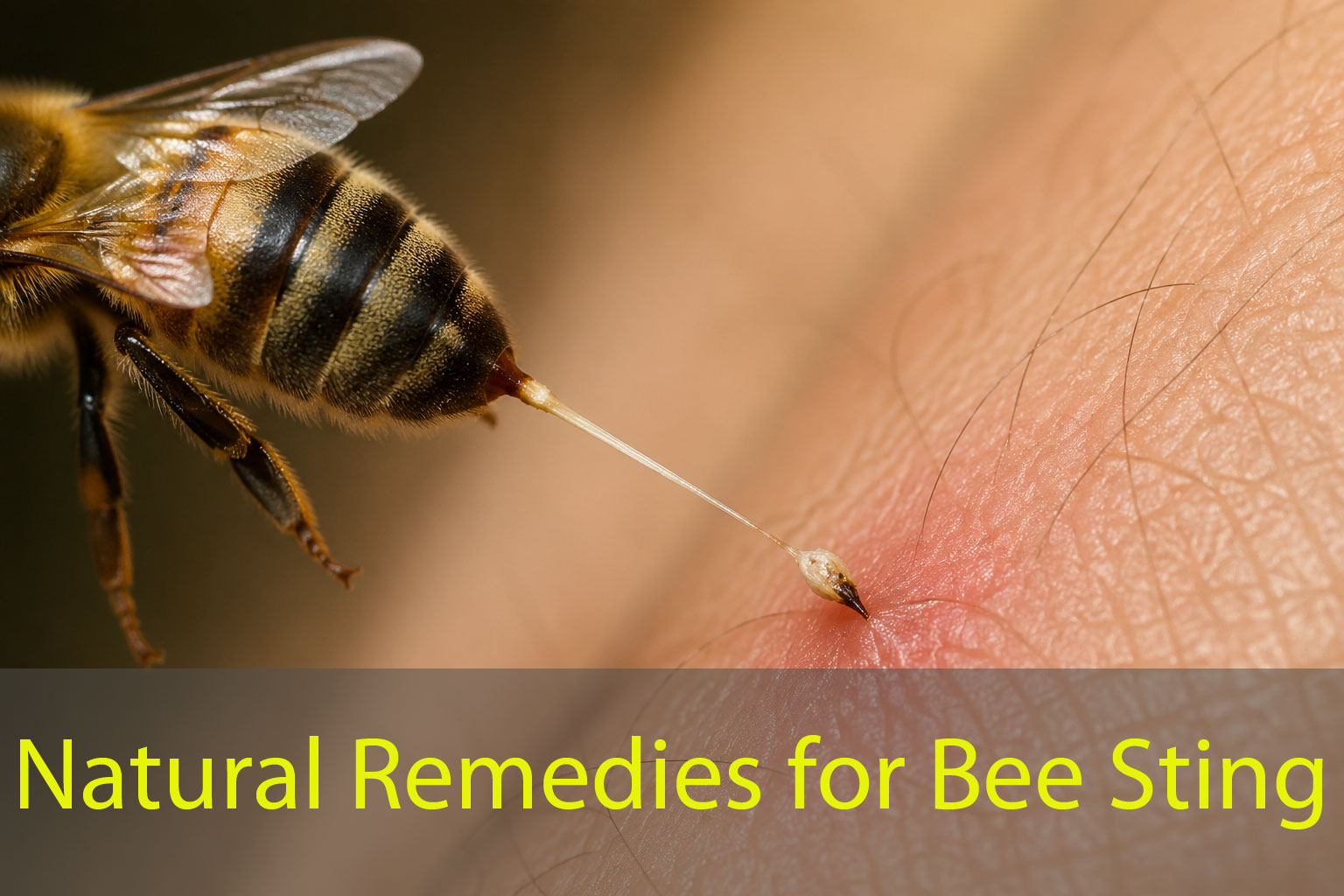
Your body fights back right away. As soon as those foreign proteins hit your skin, your immune system kicks in. Mast cells release a flood of histamine into the surrounding tissue and that’s what causes the redness, warmth, and swelling you see around the sting 3. Honeybees make things worse because their stingers are barbed. The bee actually dies during the attack, leaving its stinger and a still-pumping venom sac stuck in your skin 4. For most people, the result is just a few days of soreness and itching. But knowing what’s actually happening beneath your skin is the first step toward finding natural ways to ease the discomfort.
Causes of Bee Sting
1. Provoking or Disturbing the Hive
The most common reason people get stung is getting too close to a bee’s nest or disturbing it, because bees see nearby movement as a threat to their colony and will quickly alert other bees to defend it 5 6.
2. Wearing Brightly Colored or Floral Clothing
Bees use their vision to find flowers, so wearing bright colors or floral prints can attract them to you, and loose-fitting clothing can trap them against your skin, making a sting more likely. 7
3. Using Scented Cosmetics and Floral Fragrances
Using Scented Cosmetics and Floral Fragrances Scented personal care products like perfumes, lotions, and hairsprays can attract bees and other nectar-seeking insects because the floral and fruity smells mimic flowers, so using unscented products when spending time outdoors helps you avoid getting their attention. 8
4. Leaving Sugary Foods and Beverages Uncovered
Uncovered sweet foods and drinks at outdoor gatherings attract bees and wasps, which can even crawl into open cans and sting your mouth when you drink, so keeping food sealed and checking your cups before sipping helps prevent stings 9.
5. Swatting or Acting Aggressively
Swatting at or making sudden movements around a bee makes it feel threatened and more likely to sting, so it is better to stay calm and still until it flies away on its own. 10
Symptoms of Bee Sting
1. Mild Localized Reactions
A bee sting typically causes immediate sharp pain, followed by a small raised welt with redness and swelling at the sting site, which usually goes away on its own within a few hours for most people. 11
2. Moderate or Large Local Reactions
Some people have a stronger immune response to venom that causes redness and swelling to spread over a large area sometimes more than 10 centimeters which can keep growing and itching for up to 48 hours, but these reactions are usually not dangerous and go away on their own within about a week 3 1.
3. Severe Allergic Reactions (Anaphylaxis)
If you are severely allergic to bee venom, your body can have a dangerous, life-threatening reaction called anaphylaxis usually within 15 to 60 minutes after being stung with symptoms like hives, swelling of the tongue and throat, chest tightness, and dizziness from a drop in blood pressure, and it requires immediate emergency treatment with adrenaline. 5 4
4. Toxic Reactions from Multiple Stings
Receiving a large number of stings at once can flood your body with enough venom to act as a poison causing symptoms like nausea, vomiting, fever, and dizziness even if you are not allergic. 12
Bee Sting Facts
| Symptoms |
|
| Causes |
|
| Types of Bee Sting |
|
| How does spread |
|
| Causes of Bee Sting
|
|
| Age Group |
|
| You might be at a higher risk for exposure of this disease if you: |
|
| How doctors diagnose |
|
| Remedies for Bee Sting |
|
| Additional facts |
|
Natural Remedies of Bee Sting
1. Raw and Medical-Grade Honey
Reaching for a jar of honey after a bee sting might sound odd after all, it comes from the same creature that just stung you. But honey is one of the oldest healing remedies around, and science backs it up. Honey is a natural humectant with high osmolarity. In simple terms, it draws excess fluid out of swollen tissue through osmotic pressure, which helps bring down inflammation and ease pain 19. Medical-grade options like Manuka honey are especially useful. They contain natural antibacterial compounds that help keep fungi and bacteria from infecting the open wound {% https://www.centurymedicaldental.com/home-remedies-to-help-treat-a-bee-sting-reaction/ %}. To use it, just dab a small amount over the sting, cover it loosely with a clean gauze bandage, and leave it on for up to an hour. The honey’s natural enzymes help clear out dead tissue and calm irritated skin.
2. Baking Soda Paste
The way baking soda helps with bee stings comes down to a relatively simple mechanism: it neutralizes the venom’s acidity right on your skin. Honeybee venom is acidic, so applying baking soda a basic, alkaline substance helps balance out the sting site and counteract the venom 21. To make a paste, mix one teaspoon of water with enough baking soda to get a thick, mud-like consistency 22. Spread it over the sting, leave it on for at least fifteen minutes, then rinse with cool water. This can noticeably reduce both swelling and pain.
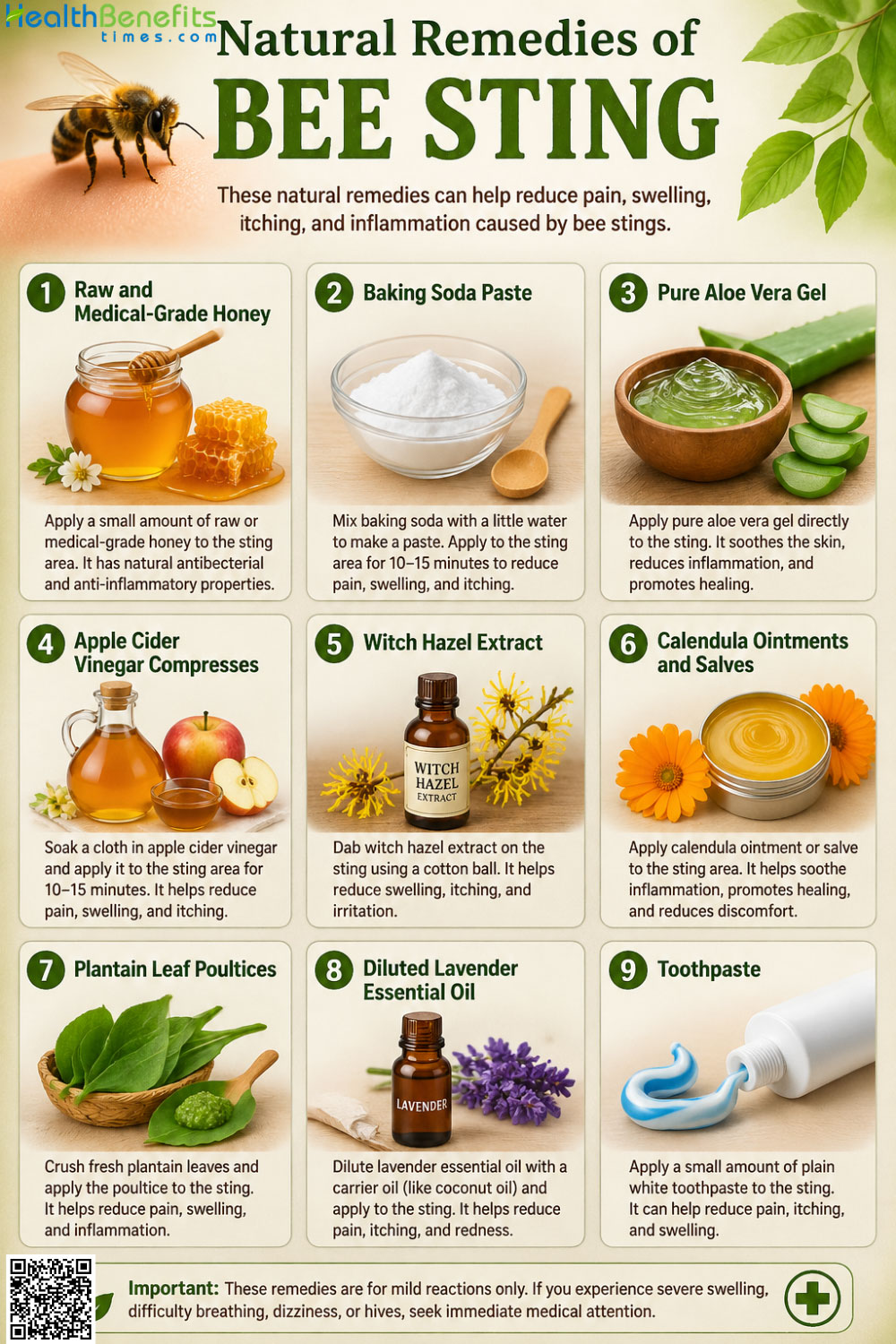
3. Pure Aloe Vera Gel
For a food with so few ingredients, aloe vera gel packs a surprisingly rich supply of skin-healing compounds. If you keep an aloe plant at home, you’ve got easy, year-round access to one of the most effective natural options for soothing irritated skin. The leaves contain complex carbohydrates and a high water content, which form a thick gel that cools the burning feeling as soon as you apply it 23. Aloe is also linked to faster wound healing, better skin hydration, and natural pain relief 24. If you get stung, just break off a fresh leaf, squeeze the clear gel directly onto the sting, and let it air dry. It should help calm the itching fairly quickly.
4. Apple Cider Vinegar Compresses
In Southeast Asia and across many traditional medicine systems, vinegar-based remedies have been used for centuries to treat skin inflammation. Now, researchers are examining those traditional claims more closely. Raw apple cider vinegar works by restoring the natural acid layer on your skin. This protective barrier helps keep harmful bacteria from settling into the sting site and causing an infection 25. To use it, dilute the vinegar in a bowl of cold water, soak a clean cloth in the mixture, and hold it against the swollen area for several minutes. Just be careful never apply it undiluted. On raw or broken skin, full-strength vinegar can cause chemical burns or serious irritation.
5. Witch Hazel Extract
Most people don’t think of a shrub as a source of sting relief, but witch hazel made from the Hamamelis virginiana plant consistently ranks among the more practical natural remedies you can reach for. It works as a natural astringent, which means it helps reduce swelling around the sting site. Witch hazel contains tannins and gallic acid, compounds that act as antioxidants and help calm inflammation. They also cause your skin tissue to tighten 26. That tightening effect shrinks the pores around the sting, which can help keep the venom from spreading further into the surrounding tissue. To use it, just dab a little onto the area with a cotton ball. It’s a simple, widely used home remedy for bringing down redness and easing the throbbing that follows a sting.
6. Calendula Ointments and Salves
Most people don’t think of marigold flowers as medicine, but the extract from their bright orange petals known as calendula has a long history in herbal care. It’s been shown to help with minor burns, cuts, and insect irritations by supporting skin repair and fighting off bacteria 27. To use it on a bee sting, apply a thin layer of calendula gel or cream to the area three times a day. This helps calm inflammation and reduce swelling 28. For overnight relief, try a thicker beeswax-based calendula salve. It acts as a protective barrier that locks in moisture and lets the healing compounds absorb into your skin while you sleep.
7. Plantain Leaf Poultices
Chances are, you’ve walked past this plant hundreds of times without giving it a second thought. Broadleaf or narrowleaf plantain grows just about everywhere lawns, sidewalk cracks, patches of disturbed soil. It’s one of the most common weeds around, and also one of the most useful. Plantain leaves have what herbalists call a “drawing” effect. The plant’s natural compounds can help pull dirt, toxins, and leftover venom out of the skin 29. If you’re stung while outdoors, you can chew a freshly washed leaf to break it down, then press the mashed leaf directly onto the sting as a simple poultice 30. Wrap it with a bandage and leave it on for about thirty minutes. It’s messy, but many people find it helps reduce swelling quickly.
8. Diluted Lavender Essential Oil
You probably already know lavender for its calming scent. What you might not know is that the essential oil itself can also help with pain relief when applied to the skin. Lavender oil contains compounds like linalool, which have anti-inflammatory properties that can reduce the pain and itching from insect stings 31. However, pure essential oils are highly concentrated and can irritate your skin on their own. So before applying, dilute 24 to 60 drops into one ounce of a carrier oil sweet almond or fractionated coconut oil both work well 32. Then gently massage the diluted mixture over the sting site every few hours to help soothe irritation.
9. Toothpaste
You’ve likely heard that toothpaste can help with bee stings it’s one of those home remedies that gets passed around but rarely questioned. There’s no solid scientific evidence that it works, but the idea behind it is straightforward. Regular toothpaste is alkaline, and honeybee venom is acidic. Applying toothpaste may help neutralize the venom and draw toxins out of the skin 19. If you use a mint-flavored variety, the menthol creates a cooling sensation that can temporarily distract from the pain. To try it, dab a small amount onto the sting, let it sit for a few minutes, and wipe it off with a damp cloth.
Foods and Activities to Avoid When You Have Bee Sting
1. Consuming High-Histamine Foods
When you get stung by a bee, your body’s mast cells release a flood of histamine and eating certain foods can pour more of the same chemical into your system. Aged cheeses, processed meats like salami, and fermented foods like sauerkraut are naturally high in histamine 33. Eating them after a sting is like adding fuel to a fire your body is already trying to put out. That extra histamine can keep swelling going longer, make itching worse, and slow down your recovery overall.
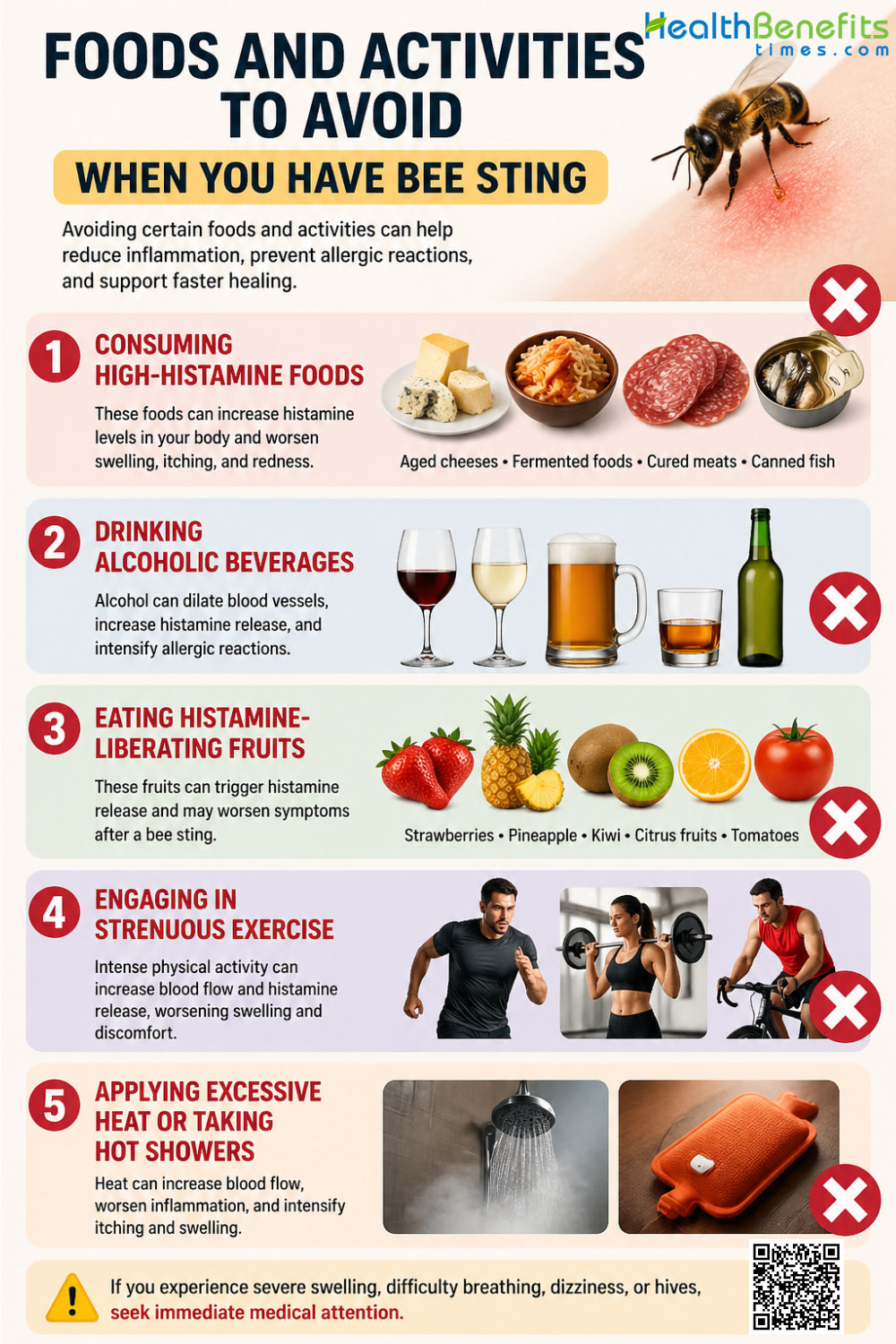
2. Drinking Alcoholic Beverages
You’ve likely heard that a glass of wine can help you relax. Here’s what the science actually shows when it comes to bee stings alcohol makes things worse. A cold beer or a glass of wine might feel like a good way to calm your nerves after getting stung, but alcohol is a known dietary trigger that can worsen your body’s reaction. Drinks like champagne, red wine, and hard cider are high in vasoactive amines. These are chemicals that cause your blood vessels to dilate 34. When your blood vessels widen, the redness and heat around the sting get worse. It also helps the venom spread through your bloodstream faster and more widely.
3. Eating Histamine-Liberating Fruits
You probably already know fresh fruit is good for you. What you might not know is that some fruits can actually make a bee sting worse. Strawberries, pineapple, papaya, and citrus fruits don’t contain much histamine on their own. But they act as “histamine liberators” they trigger your body to release more histamine into your system 35. That’s the same chemical already flooding the sting area and causing swelling. Skipping these fruits for a few days gives your immune system a chance to settle down and helps keep the swelling from flaring back up 36
4. Engaging in Strenuous Exercise
If you’ve ever wondered why doctors tell you to rest after a bee sting, the answer often comes back to how your circulatory system handles venom. Hitting the gym or going for a run right after getting stung is something every medical professional advises against. When you exercise hard, your heart rate and blood flow increase and that pushes the venom away from the sting site and deeper into your body 37. On top of that, having venom circulating in your blood while your body is under physical stress can sometimes trigger exercise-induced anaphylaxis, a rare but serious allergic reaction.
5. Applying Excessive Heat or Taking Hot Showers
A hot shower might sound like a good way to relax after getting stung, but it can actually make things worse. Heat causes the blood vessels around the sting to widen. When that happens, the venom spreads over a larger area of your skin and so does the pain and swelling 38. Instead, reach for a cold compress. It helps keep the venom contained in one spot, which makes the sting easier to manage 39.
Precaution before use of natural remedies
1. Rapid Stinger Extraction
The real-world question isn’t whether removing a bee stinger matters it clearly does but how quickly you act in those first few seconds. Most people make the same mistake: they leave the stinger in too long. That tiny venom sac sitting on top of the stinger keeps pumping venom into your skin for several minutes after the sting, even after the bee is gone 40. So speed matters here. Use a fingernail, the edge of a credit card, or the flat side of a butter knife to scrape the stinger out sideways. Don’t pinch or squeeze it that forces whatever venom is left straight into your body 8.
2. Monitoring for Systemic Anaphylaxis
The real-world question isn’t whether natural remedies can help with bee stings many of them can soothe the skin but whether it’s safe to skip medical attention in the first place. Before reaching for any home treatment, you need to watch your body carefully. Natural remedies only work on the surface of your skin. They can’t protect you if your immune system overreacts and triggers a full-body allergic reaction. Signs like trouble breathing, swelling in your face, or sudden severe dizziness mean you need emergency help not a kitchen remedy 41. Wait at least a full hour and make sure none of these symptoms appear before relying on a mild home treatment alone.
3. Seeking Proper Non-Opioid Pain Management
Reaching for leftover prescription painkillers after a bad sting might seem like a quick fix but it’s a risky one. The American Society of Addiction Medicine (ASAM) recommends treating pain from minor injuries or insect stings with non-opioid options only 42. Over-the-counter options like ibuprofen or acetaminophen work well for this kind of pain. They reduce inflammation at the source without the serious risks of dependence that come with opioids 43.
4. Avoiding Harmful Topical Agents
Most people assume pouring a strong disinfectant on a fresh sting is the safest move. But that assumption doesn’t hold up when you look at what actually happens to your skin. Harsh chemicals like hydrogen peroxide don’t just kill bacteria they destroy healthy skin cells too, and slow down your body’s natural healing process 4. You’re better off keeping it simple. Wash the area gently with mild soap and cool water. That’s enough to prevent infection before you apply any natural remedies.
5. Carrying Emergency Epinephrine
If you already know you have a severe, IgE-mediated venom allergy, relying entirely on natural remedies isn’t just risky it’s dangerous. No herb or botanical can replace emergency medical treatment when your life is on the line. You should always carry a prescribed, unexpired epinephrine auto-injector like an EpiPen or Auvi-Q especially when heading into parks, gardens, or any outdoor area where stinging insects are common. 11 If you get stung and notice even mild systemic symptoms, skip the herbs. Inject the epinephrine into your outer thigh right away and call emergency services immediately no matter what natural treatments you have with you.
Comments
comments