

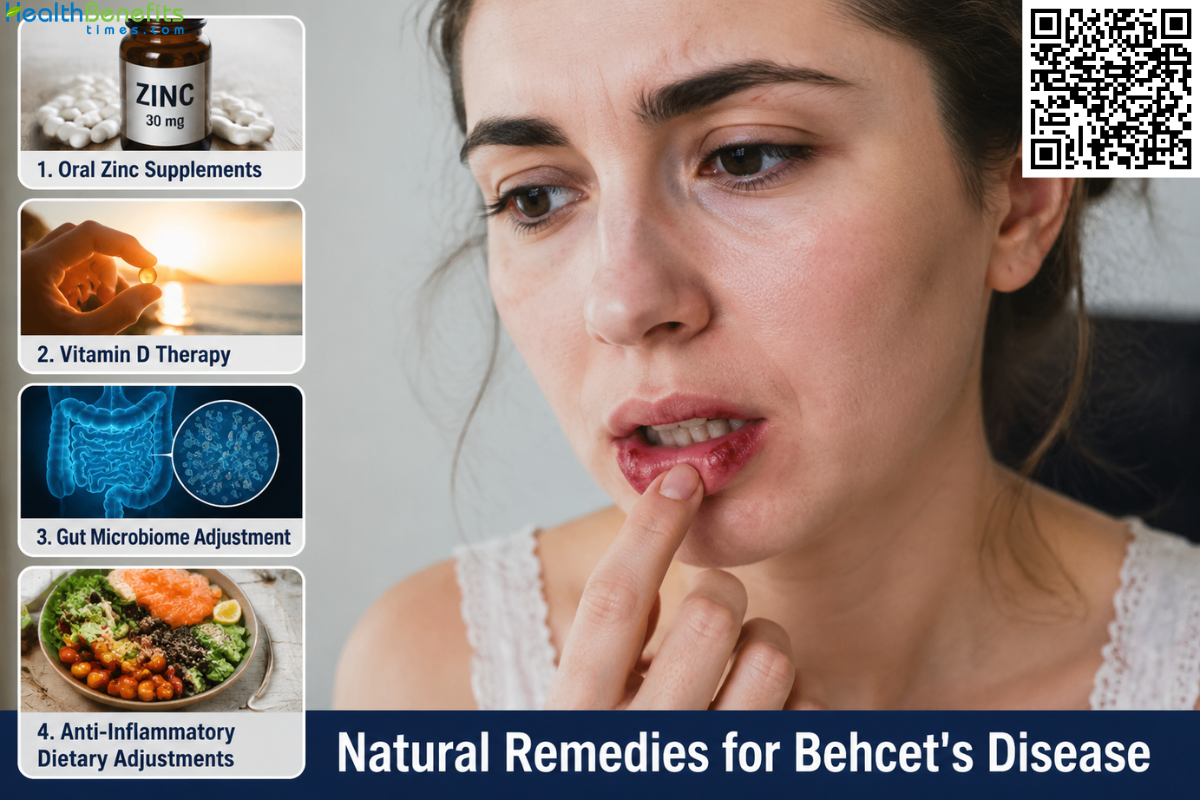
Causes of Behcet’s Disease
- Genetic Susceptibility: Inheriting specific genetic markers, most notably the HLA-B51 gene, significantly increases the likelihood of developing the condition 5. Additional genes responsible for regulating the immune system, such as ERAP1 and IL-10, also contribute by altering how the body identifies foreign threats and manages internal inflammation 6.
- Environmental Triggers: Exposure to specific infectious agents often initiates the disease in individuals with genetic vulnerabilities. Bacterial infections, particularly Streptococcus sanguinis found in the mouth, or certain viruses can confuse the immune system, causing it to attack healthy tissues because the tissues physically resemble the invading germs 7.
- Immune System Dysfunction: The underlying driver of the disease is an overly aggressive immune response. Specialized white blood cells become highly overactive and release excessive amounts of inflammatory proteins, resulting in a persistent loss of normal immune tolerance toward the body’s own cells 3.
- Blood Vessel Damage: The direct physical cause of the condition’s symptoms is widespread inflammation affecting both arteries and veins of all sizes. Hyperactive immune cells bind to the inner lining of these blood vessels, causing direct tissue injury, severe cellular stress, and an increased risk of harmful blood clots 4.
Symptoms of Behcet’s Disease
- Mouth Sores: The most common and often earliest indicator involves painful, round, raised ulcers inside the mouth that closely resemble typical canker sores but recur frequently and in greater numbers 5.
- Genital Lesions: Painful, open sores frequently develop on the external genitals, presenting as red, ulcerated areas that commonly leave permanent scarring after healing 2.
- Eye Inflammation: The condition causes severe inflammation of the middle layer of the eye, leading to chronic pain, redness, blurred vision, and light sensitivity, which carries a high risk of permanent vision loss if poorly managed 3.
- Skin Abnormalities: Individuals commonly experience acne-like skin lesions across the body and develop red, highly tender, elevated nodules that typically form on the lower legs 5.
- Joint Pain: Short-term joint inflammation triggers episodic pain, stiffness, and noticeable swelling that primarily affects the knees, ankles, and wrists without causing permanent structural damage to the bone 2.
- Blood Vessel Complications: Widespread inflammation of the vascular system heavily increases the risk of dangerous blood clots, resulting in deep vein blockages, severe limb swelling, and weakened, bulging arterial walls 4.
- Digestive Tract Issues: Inflammatory ulcers can manifest anywhere from the mouth to the intestines, producing severe abdominal cramping, chronic diarrhea, and internal bleeding that clinically mimics inflammatory bowel diseases like Crohn’s disease 1.
- Neurological Problems: In severe cases, the disease attacks the brain and central nervous system, triggering intense headaches, cognitive confusion, poor coordination, and stroke-like symptoms resulting directly from tissue inflammation 4.
Natural Remedies for Behcet’s Disease
1. Oral Zinc Supplements
How it may help:
Zinc is an essential mineral with strong anti-inflammatory and antioxidant properties. By lowering cellular stress and regulating immune responses, it helps calm the chronic tissue inflammation that triggers the painful oral and genital ulcers associated with Behçet’s disease 8.
What research says:
Clinical trials indicate that patients with Behçet’s disease frequently have lower blood zinc levels. Studies demonstrate that zinc sulfate supplementation significantly reduces overall symptoms, meaning patients experience fewer and less severe disease flares compared to those taking a placebo 9.
How to use it safely:
Research has evaluated protocols using 100 mg of zinc sulfate taken three times daily 9. Because this dosage exceeds standard upper limits, you must only use high-dose zinc under strict medical supervision to monitor blood levels and prevent nutritional imbalances.
Potential precautions or side effects:
Excessive zinc intake frequently causes nausea, stomach cramps, and diarrhea. Prolonged high-dose use can lead to dangerous copper deficiency, weakened immunity, and neurological damage 10.
2. Vitamin D Therapy
How it may help:
Vitamin D acts as a powerful immunomodulator that helps control chronic inflammation in Behçet’s disease. It regulates the immune system by calming overactive inflammatory pathways, boosting protective regulatory cells, and reducing cellular stress, which minimizes the vascular and tissue damage responsible for symptoms 11.
What research says:
Clinical studies consistently show that individuals with active Behçet’s disease have significantly lower blood levels of vitamin D than healthy populations. Furthermore, research indicates that maintaining higher vitamin D levels is strongly associated with decreased inflammation and a substantially lower risk of severe disease flares 12.
How to use it safely:
Because an exact dosage for Behçet’s disease is not standardized, you should first ask a doctor to test your blood levels. If you are deficient, your healthcare provider will prescribe a personalized supplementation plan to safely elevate and maintain your levels within a therapeutic range 13.
Potential precautions or side effects:
Taking excessive vitamin D without medical supervision can cause hypercalcemia, which leads to nausea, severe dehydration, kidney stones, and dangerous cardiovascular or neurological complications 14.
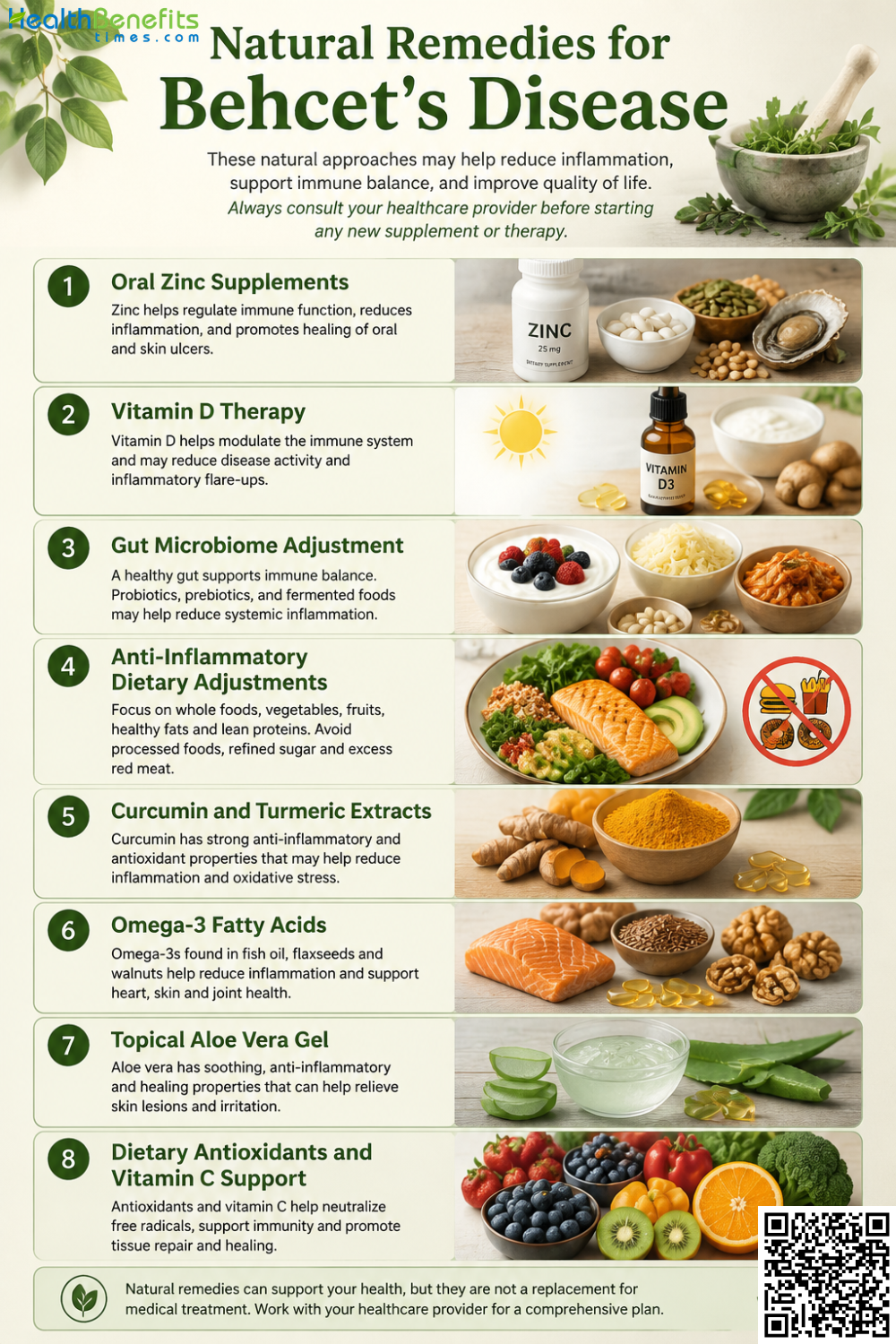
3. Gut Microbiome Adjustment
How it may help:
Adjusting the gut microbiome helps control Behçet’s disease by correcting bacterial imbalances that trigger abnormal immune reactions. Increasing populations of helpful bacteria boosts the production of butyrate, an essential fatty acid that strengthens the intestinal barrier, increases protective regulatory immune cells, and dampens overactive inflammatory pathways responsible for symptoms 15.
What research says:
Clinical analyses confirm that patients with Behçet’s disease exhibit significant gut dysbiosis, characterized by a severe depletion of butyrate-producing bacteria. Research demonstrates that this microbial deficiency directly drives aggressive immune responses, while restoring microbial diversity successfully reduces systemic inflammation and helps manage disease activity 16.
How to use it safely:
You can safely improve your gut microbiome by adopting a Mediterranean or plant-based diet rich in fiber and resistant starches, which naturally feeds beneficial bacteria 17. Always consult your doctor before starting commercial probiotic supplements or oral butyrate to ensure they complement your medical treatment.
Potential precautions or side effects:
ncreasing dietary fiber or taking probiotics frequently causes temporary gas, bloating, and diarrhea. Patients with active gastrointestinal Behçet’s ulcers require medical supervision to prevent further digestive irritation 17.
4. Anti-Inflammatory Dietary Adjustments
How it may help:
An anti-inflammatory diet helps manage Behçet’s disease by lowering systemic inflammation and regulating the immune system. Emphasizing whole plant foods and healthy fats while limiting saturated fats reduces pro-inflammatory cytokines and oxidative stress. This protects blood vessels and decreases the frequency of painful ulcer outbreaks 18.
What research says:
Clinical studies indicate that high-fiber, plant-based, and Mediterranean-style diets alter the gut microbiome to produce more butyrate, a fatty acid that significantly dampens inflammation. Research shows that patients adopting these dietary patterns experience improved immune responses, lower inflammatory markers like C-reactive protein, and reduced overall disease severity 17.
How to use it safely:
Focus on eating a balanced Mediterranean or plant-based diet rich in vegetables, fruits, whole grains, and omega-3 fatty acids 17. You should strictly limit processed meats, refined sugars, and saturated fats. Always consult a registered dietitian before making drastic changes to ensure you meet all nutritional requirements.
Potential precautions or side effects:
Highly restrictive diets can cause dangerous nutritional deficiencies. Additionally, specific healthy foods, such as walnuts, melon, or eggplant, may unexpectedly trigger oral ulcers in some patients 19.
5. Curcumin and Turmeric Extracts
How it may help:
Curcumin, the active compound in turmeric, provides strong anti-inflammatory and antioxidant benefits. It actively blocks key inflammatory pathways and reduces the production of pro-inflammatory cytokines, such as tumor necrosis factor-alpha. This process helps calm the overactive immune response and prevents the tissue damage characteristic of Behçet’s disease 20.
What research says:
Clinical trials demonstrate that taking nanocurcumin significantly increases the frequency of protective regulatory T cells in patients with Behçet’s disease. Furthermore, research confirms this supplementation successfully reduces overall disease activity and suppresses the expression of aggressive inflammatory markers compared to a placebo 21.
How to use it safely:
Standard turmeric powder has poor bodily absorption. To achieve clinical benefits, you should use specialized bioavailable forms, such as nanocurcumin, which studies have evaluated at 80 mg daily 21. Always consult your healthcare provider to ensure the supplement safely integrates with your current medications.
Potential precautions or side effects:
High doses of curcumin frequently cause stomach upset, nausea, and diarrhea. It also possesses mild blood-thinning properties, which can increase bleeding risks if combined with anticoagulant medications 22.
6. Omega-3 Fatty Acids
How it may help:
Omega-3 fatty acids, particularly EPA and DHA, help manage Behçet’s disease by competing with normal inflammatory pathways. They shift the production of powerful inflammatory molecules toward much weaker ones, which significantly reduces the release of aggressive cytokines that drive vascular inflammation and tissue damage 23.
What research says:
Clinical observations indicate that omega-3 supplementation suppresses the recruitment of aggressive white blood cells to affected tissues. Furthermore, research demonstrates that taking eicosapentaenoic acid (EPA) successfully decreases the recurrence and severity of painful oral ulcers in patients with Behçet’s disease by lowering systemic inflammatory markers 24.
How to use it safely:
You can safely boost omega-3 levels by eating fatty fish like salmon twice weekly or taking a purified fish oil supplement. Clinical studies typically evaluate supplemental doses ranging from 1 to 2.5 grams daily 25. Always consult your doctor before starting to ensure appropriate dosing.
Potential precautions or side effects:
Omega-3 supplements frequently cause fishy burps, indigestion, and diarrhea. Because they mildly thin the blood, excessive amounts increase bleeding risks, particularly if combined with prescription anticoagulant medications 26.
7. Topical Aloe Vera Gel
How it may help:
Topical aloe vera gel accelerates the healing of the painful oral and genital ulcers caused by Behçet’s disease. Its active plant compounds promote rapid tissue repair and collagen production, while its natural anti-inflammatory properties soothe mucous membranes to directly reduce redness, swelling, and severe pain 27.
What research says:
Clinical trials demonstrate that applying aloe vera gel to minor aphthous ulcers significantly reduces both ulcer size and pain severity. Research concludes that it successfully shortens overall healing time and provides pain relief comparable to standard topical steroid treatments without causing adverse side effects 28.
How to use it safely:
Apply a small amount of pure, medical-grade aloe vera gel directly to the affected oral or genital ulcers three times daily 28. To ensure maximum absorption and effectiveness, you should wait at least 30 minutes before eating or drinking after the application.
Potential precautions or side effects:
Topical aloe vera is considered highly safe, though rare allergic reactions can occur. Stop use immediately if you experience increased burning, severe itching, or worsened inflammation at the site 28.
8. Dietary Antioxidants and Vitamin C Support
How it may help:
Dietary antioxidants and vitamin C protect the body from cellular damage during Behçet’s disease flare-ups. By neutralizing unstable molecules called free radicals, they reduce severe oxidative stress. This action helps shield delicate blood vessels from injury, lowers excessive inflammation, and supports the healing of damaged tissues 29.
What research says:
Clinical studies confirm that patients with Behçet’s disease have depleted antioxidant defenses and elevated blood markers of cellular damage. Research indicates that increasing antioxidant capacity successfully restores this balance. Strengthening these antioxidant levels is directly associated with reduced vascular inflammation and decreased overall disease activity 30.
How to use it safely:
You can safely increase your antioxidant intake by eating a daily variety of citrus fruits, berries, and leafy greens. If your doctor recommends vitamin C supplements, standard clinical guidelines suggest doses between 500 to 1,000 mg per day to avoid gastrointestinal irritation 31.
Potential precautions or side effects:
Consuming more than 2,000 mg of vitamin C daily frequently causes stomach cramps, nausea, and severe diarrhea. High doses also increase the risk of developing kidney stones in susceptible individuals 31.
Foods to Avoid When You Suffer from Behcet’s Disease
Certain foods act as significant environmental triggers for Behçet’s disease. To successfully manage your symptoms and minimize painful flare-ups, you should closely monitor your diet and avoid the following items:
1. Eggplant:
Clinical studies identify eggplant as the most common dietary trigger. Its chemical profile can rapidly irritate delicate mucous membranes and provoke severe oral ulcer outbreaks 19.
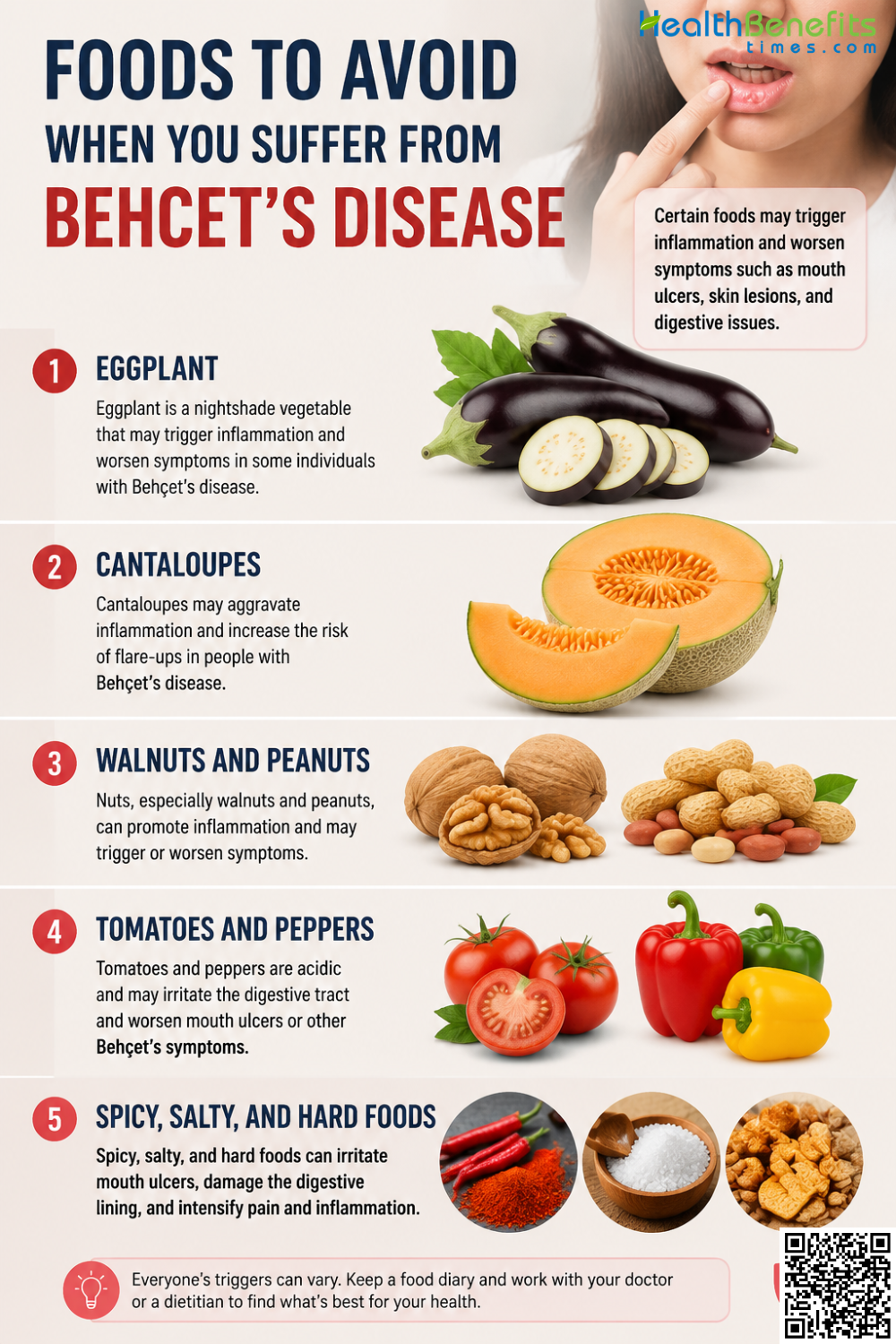
2. Melons and Cantaloupes:
While generally nutritious, melons and cantaloupes frequently induce adverse reactions in Behçet’s patients. Research shows they consistently trigger rapid and painful flare-ups of mucocutaneous lesions 19.
3. Walnuts and Peanuts:
Rough nuts physically irritate the mouth during chewing. Furthermore, clinical surveys report that their specific proteins frequently stimulate immune responses resulting in new oral and genital ulcers 19.
4. Tomatoes and Peppers:
These acidic nightshade vegetables contain potent compounds that irritate the mouth. Studies confirm they commonly exacerbate existing mucosal injuries and significantly increase the risk of ulcer recurrence 19.
5. Spicy, Salty, and Hard Foods:
Aggressively spicy, highly salty, or hard-textured foods physically and chemically traumatize the oral cavity. This direct irritation creates an ideal environment for new painful ulcers to form 32.
When To See a Doctor When You Suffer from Behcet’s Disease
Behçet’s disease can rapidly escalate from mucosal discomfort to severe systemic emergencies. You must seek immediate medical evaluation if you experience any of the following critical symptoms:
1. Vision Changes or Eye Pain:
Sudden eye redness, pain, or blurred vision indicates severe inflammation called uveitis. Prompt treatment prevents permanent tissue damage and irreversible blindness 33.
2. Severe Headaches and Confusion:
Unexplained severe headaches, disorientation, or balance issues signal neurological involvement. This dangerous complication requires immediate clinical intervention to prevent permanent brain damage 34.
3. Chest Pain or Leg Swelling:
Sudden chest pain, shortness of breath, or painful leg swelling strongly suggests blood clots or inflamed blood vessels, which are life-threatening cardiovascular emergencies 35.
4. Intense Abdominal Pain:
Severe stomach pain, chronic diarrhea, or bloody stools indicate serious gastrointestinal ulcers. Immediate evaluation is required to prevent life-threatening intestinal bleeding or bowel perforation 36.
5. Unmanageable Ulcer Outbreaks:
When oral or genital ulcers become excessively painful, constantly recur, or show signs of infection, you must consult a specialist to escalate immunosuppressive therapies 37.
Comments
comments