

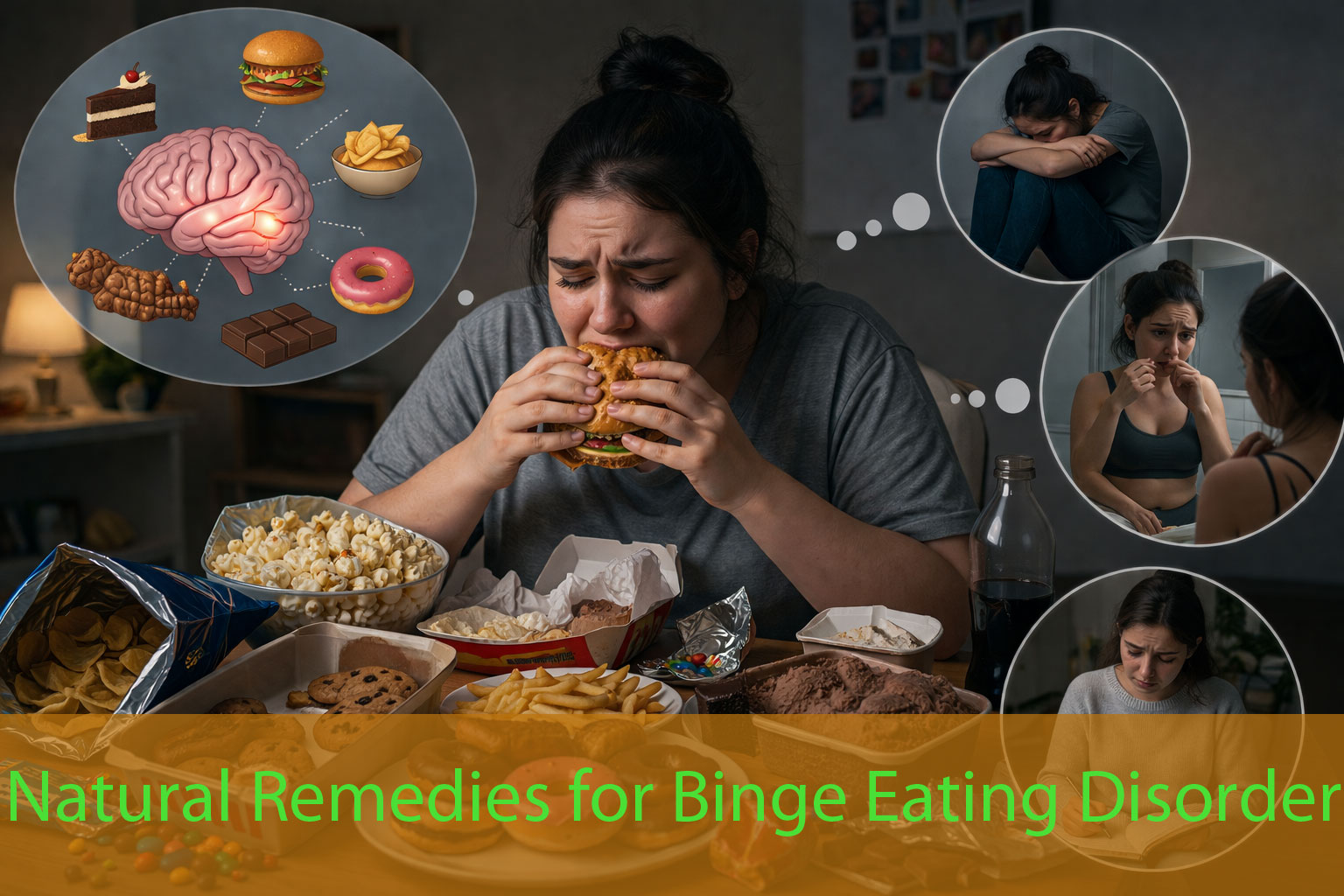
Causes of Binge Eating Disorder
Figuring out exactly why you feel compelled to overeat is rarely simple, as this condition usually stems from a tangled mix of different physical and emotional triggers in your life.
1. Your Family History and Genetics
Research shows that genetics can make some people more vulnerable to disordered eating, as having a close relative with eating or substance use issues increases your own risk due to inherited traits that make the brain more sensitive to food rewards and harder to regulate appetite. 5
2. Severe Emotional Stress and Trauma
Painful life experiences such as childhood trauma, difficult relationships, or major hardships can leave you emotionally overwhelmed, often leading you to turn to food, especially high-calorie, sugary options that trigger feel-good chemicals as an accessible way to cope with anxiety, depression, or deep emotional pain, which can gradually train your brain to rely on binge eating as a primary escape. 6
3. A Long History of Strict Dieting
A Long History of Strict Dieting Strict dieting, such as skipping meals or cutting out whole food groups, causes your body to react as if it is starving, which leads to strong urges to overeat and creates a cycle where dieting itself causes the binge eating you were trying to avoid. 2
4. Imbalances in Your Brain Chemistry
When your brain doesn’t have enough serotonin, a chemical that helps control your mood and appetite you may crave carbohydrates and sweets and have trouble feeling full, which can lead to overeating. 7
5. Your Social Environment and Peer Influence
Being around friends or online communities that obsess over weight, praise extreme thinness, or normalize unhealthy eating habits can strongly influence you to adopt those same harmful behaviors, as research shows that disordered eating attitudes are highly contagious among social groups. 8
Symptoms of Binge Eating Disorder
Recognizing that you have a problem goes far beyond simply noticing that you ate a little too much at dinner; it involves identifying a specific set of extremely distressing behaviors.
1. Eating Unusually Large Amounts of Food Quickly
A key sign of binge eating is consuming an extremely large amount of food in a short period such as a full day’s worth of meals in two hours at a much faster pace than normal, driven by an intense urge that makes eating feel uncontrollable rather than voluntary 9.
2. Feeling Completely Out of Control
What makes a binge different from ordinary overeating is the frightening feeling that you have completely lost control over what and how much you eat, as if you cannot stop yourself no matter how hard you try 10.
3. Eating When You Are Not Physically Hungry
Eating large amounts of food when you are not actually hungry such as right after a full meal is a sign that emotions, not physical need, are driving your eating. 11
4. Hiding Your Eating Habits from Others
People with binge eating disorder often eat in secret and hide evidence of their food consumption because they feel ashamed of how much they eat, which leads to greater isolation and emotional distress. 2
5. Feeling Intense Shame and Guilt
After a binge, people with this condition are overwhelmed by shame, guilt, and depression, which damages their self-esteem and often drives them to restart restrictive dieting, continuing the cycle. 3
6. Eating Until You Are Uncomfortably Full
During a binge eating episode, a person eats far beyond their body’s natural fullness signals, continuing until they feel painfully bloated and physically sick, which shows how disconnected the brain becomes from the body’s cues during these episodes. 12
Binge Eating Disorder Facts
| Symptoms |
|
| Causes |
|
| Types of Binge Eating Disorder |
|
| How does spread |
|
| Caused of Binge Eating Disorder |
|
| Age Group |
|
| You might be at a higher risk for exposure of this disease if you: |
|
| How doctors diagnose |
|
| Remedies for Binge Eating Disorder |
|
| Other facts |
|
Natural Remedies of Binge Eating Disorder
Most people assume willpower is the answer to binge eating. But that assumption doesn’t hold up when you look at the biology behind cravings. Holistic approaches work differently they target the actual imbalances in your body that fuel those urges in the first place.
1. 5-HTP (5-Hydroxytryptophan) for Appetite Control
Your body converts 5-HTP, a natural amino acid, directly into serotonin one of the key chemicals that tells your brain you’re full. That’s what makes it useful. When your serotonin levels rise, your appetite naturally dials down. You crave fewer carbs. You may even lose weight, all without forcing yourself to eat less 7. It also helps lift your mood, which matters more than most people realize. When you’re not running low on feel-good brain chemicals, you’re far less likely to reach for sugary comfort foods. The result is a calmer, more peaceful relationship with eating.
2. Chromium Supplements for Blood Sugar Balance
If you’ve ever wondered why a blood sugar crash leaves you reaching for anything sweet or starchy, the answer often comes back to how your body handles glucose. Keeping your blood sugar steady plays a big role in reducing those sudden, intense cravings for carbs. Chromium supplements may help with this. Research shows that chromium can lower fasting blood glucose levels and reduce daily preoccupation with weight and eating habits 13. When your blood sugar stays more consistent throughout the day, you’re less likely to hit those energy crashes that drive you straight to the pantry looking for a quick fix.
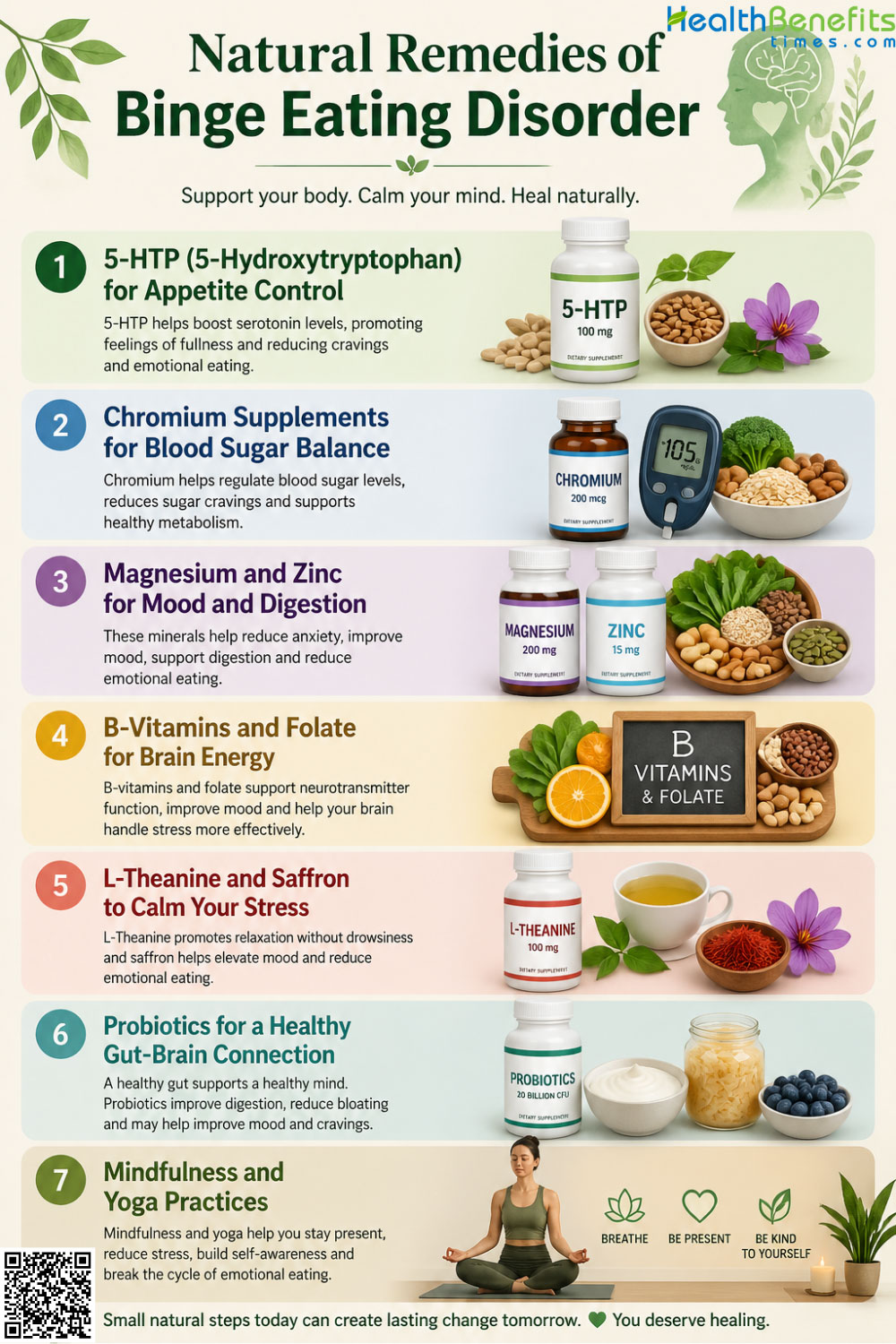
3. Magnesium and Zinc for Mood and Digestion
Most people don’t eat nearly enough magnesium or zinc. That gap matters more than you might think for both mood and digestion. These two minerals play a quiet but important role in how your nervous system functions. If you’re low on magnesium, it can contribute to insulin resistance and those persistent sugar cravings that feel impossible to shake. Low zinc, on the other hand, is linked to depression and emotional ups and downs both of which can set off a binge 14. When your body gets enough of both, your digestive enzymes work the way they should, and your mood stays more even even on tough days.
4. B-Vitamins and Folate for Brain Energy
Your body responds to B-vitamins in a specific way one that directly supports the brain chemistry behind appetite control. Your brain needs these vitamins to produce dopamine and serotonin, two chemicals that regulate mood and hunger. One form in particular, L-methylfolate, plays a key role in making both. When levels run low, mood dips and blood sugar becomes harder to manage a combination that often triggers binge eating. Targeted supplementation can help restore these levels, which may shorten recovery time from depressive episodes and reduce the blood sugar swings that fuel overeating 15. When your brain has the fuel it needs, you’re less likely to reach for food as a way to compensate for what’s missing neurochemically.
5. L-Theanine and Saffron to Calm Your Stress
If you’ve ever wondered why a cup of green tea feels so calming, the answer often comes back to L-theanine. This amino acid, along with saffron extract, works like a natural brake on your body’s stress response. Research shows that L-theanine noticeably reduces how stressed you feel during challenging tasks. A daily dose of saffron, meanwhile, lowers subclinical depressive feelings and improves heart rate variability when you’re dealing with anxiety 16. When cortisol levels drop, so does the biological urge to comfort yourself with large amounts of food. That’s what makes these two remedies worth paying attention to, they target the stress that drives binge eating, not just the behavior itself.
6. Probiotics for a Healthy Gut-Brain Connection
A growing body of research links mental health to gut health and probiotics play a specific role in that connection through the gut-brain axis. Your gut produces a large share of your body’s serotonin, so when your microbiome is out of balance, your mood and eating patterns can suffer too. That’s where psychobiotics come in. Taking a daily probiotic like Lactobacillus acidophilus helps create a healthier microbial environment in your gut. In one study, this approach significantly reduced food addiction symptoms and lowered binge eating scores effects that lasted up to a year 17. A balanced gut, in other words, supports a calmer, more satisfied brain and a steadier relationship with food.
7. Mindfulness and Yoga Practices
If you’ve ever wondered why you reach for food when you’re stressed rather than hungry, the answer often comes back to how your nervous system handles distress. Yoga and mindfulness work directly on that system. When you practice them regularly, your body gets better at sitting with uncomfortable emotions anxiety, sadness, frustration without needing to numb them with food 18. Over time, these practices also help you rebuild a healthier relationship with your body. Instead of trying to escape how you feel, you learn to process those feelings in a safe, gentle way.
Foods and Activities to Avoid When You Have Binge Eating Disorder
Protecting your progress means being honest with yourself about the habits, environments, and triggers that work against you.
1. Strict Dieting and Food Restriction
For years, cutting calories and following strict diets seemed like the obvious path to health. The research tells a more nuanced story especially if you’re dealing with binge eating disorder. Putting rigid rules on your meals is one of the fastest ways to trigger a binge later. Skipping meals, cutting out carbs, or mentally labeling foods as “good” or “bad” creates a cycle of deprivation. Your brain reads that deprivation as a threat. Eventually, it pushes back hard, demanding a large intake of calories all at once 19. Recovery works differently. It means giving yourself full permission to eat regular, satisfying meals. When your body trusts that food is consistently available, it stops feeling the need to overcompensate.
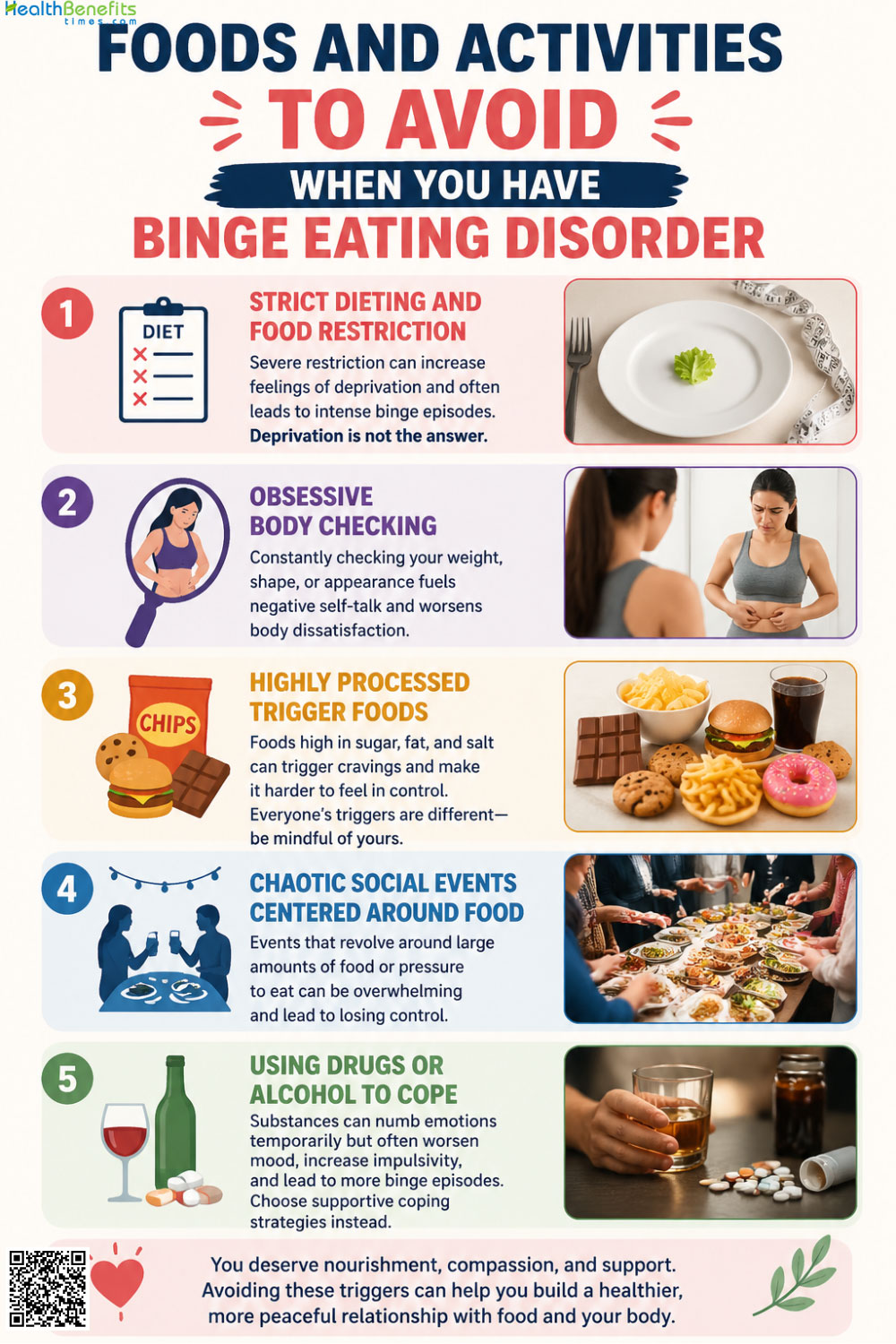
2. Obsessive Body Checking
If you’ve ever wondered why you feel worse after spending time in front of the mirror, the answer often comes back to a cycle that feeds on itself. Pinching your stomach, checking your reflection over and over, stepping on the scale multiple times a day these habits keep your mind locked on what you think is wrong with your body. That constant focus raises anxiety and deepens dissatisfaction, which almost always leads to an emotional eating episode 20. The fix isn’t willpower. It’s removing the triggers. Consider getting rid of your scale entirely. The goal is to break the link between how you see your body and how you value yourself.
3. Highly Processed Trigger Foods
Keeping ultra-processed junk food in your pantry while recovering from binge eating disorder is a bit like storing matches next to kindling. You might tell yourself you can resist, but you’re making recovery harder than it needs to be. Older recovery approaches used to say “all foods fit.” But newer research paints a different picture. Ultra-processed foods loaded with refined sugars and trans fats are designed to override your body’s natural fullness signals. They can trigger addiction-like eating patterns that make it much harder to stop once you start 21. Until you’ve developed strong coping skills, it’s best to keep these foods out of easy reach in your day-to-day environment.
4. Chaotic Social Events Centered Around Food
A holiday party with food everywhere or a massive buffet can feel like walking into a minefield. Your senses go into overdrive, and suddenly every recovery goal you’ve been working toward feels shaky. That’s because unstructured social gatherings built entirely around eating break apart the safe routines you rely on. You’re surrounded by trigger foods not one or two, but dozens all at once. The anxiety spikes fast, and the risk of a relapse climbs right alongside it 22. If you do decide to go, don’t walk in without a plan. Bring a supportive friend. Know your exit strategy before you need it. Having a clear way out when things start feeling like too much isn’t weakness it’s one of the smarter moves you can make.
5. Using Drugs or Alcohol to Cope
If you’ve ever reached for a drink or a pill to numb difficult feelings, you’re not alone but with binge eating disorder, this habit carries serious risks. Your eating disorder can quickly spiral into a substance use problem. People dealing with eating issues often misuse illicit drugs or prescription stimulants to kill their appetite or escape painful emotions. This creates a dangerous cycle of cross-addiction that takes a heavy toll on the body 23. Swapping one harmful coping mechanism for another won’t help you heal. Instead, working with a professional therapist can help you address the root causes of your emotional pain and that’s where real recovery starts.
Precaution before use of natural remedies
For most people, natural supplements seem like a safe choice. There are, however, a few situations where caution makes sense because even natural compounds can trigger serious reactions in your body.
1. The Danger of Serotonin Syndrome
Mixing certain mood-boosting supplements with prescription medications can create a medical emergency. If you take 5-HTP alongside antidepressants like SSRIs or MAOIs, you risk developing serotonin syndrome. This is a dangerous condition that can cause rapid heartbeat, severe confusion, uncontrollable shivering, and even seizures 24. Never combine natural serotonin precursors with psychiatric medications without direct guidance from your doctor.
2. Unpredictable Interactions with Medications
If you’re picking up a regular prescription, it’s worth pausing especially if you’re also taking herbal remedies. Scientists still don’t fully understand how supplements like 5-HTP interact with many common medications. That gap in knowledge means mixing them without guidance could lead to unexpected or serious side effects 25. So be upfront with your doctor about everything you take every capsule, every tea. It’s the simplest way to make sure one remedy isn’t working against another
3. Mixing Different Natural Supplements Can Backfire
Whether natural supplements benefit you often depends less on how many you take and more on how they interact inside your body. Combining 5-HTP with other serotonin-boosting supplements like St. John’s wort or SAM-e can flood your brain with too much serotonin at once. This raises your risk of serious neurological side effects 26. The safer approach is to introduce one remedy at a time, giving your body space to respond before adding anything else.
4. False Results on Important Medical Tests
If you’re dealing with a health condition, accurate lab work matters and certain supplements can throw those results off completely. 5-HTP, for example, changes how your body processes and excretes specific chemicals. If you take it before a urine or blood test, it can artificially raise your numbers 27. That spike might lead your doctor to suspect something serious, like a carcinoid tumor, when there’s actually nothing wrong. To avoid that kind of scare, stop taking these remedies ahead of time and let your medical team know before any specialized endocrine testing.
5. Gastrointestinal and Psychiatric Vulnerabilities
For most people, natural supplements are safe and beneficial. There are, however, a few situations where caution makes sense especially when you’re introducing something potent into your body without medical guidance. Even on their own, strong natural supplements can cause severe nausea, diarrhea, and vomiting. And if you have an undiagnosed psychiatric vulnerability, they can unexpectedly destabilize your mood or even trigger a manic episode 28. You’re essentially altering your internal chemistry, and your body may not react the way you expect. The safest approach is to treat these remedies the way you’d treat any serious medicine. Monitor how you feel, start cautiously, and always prioritize your long-term safety over a quick fix.
Comments
comments