

Causes of Blastocystis
1. Contaminated Drinking Water
Ingesting untreated or improperly treated water is a primary cause of infection, as the parasite can survive in rural wells, natural rivers, and sometimes even chlorinated tap water systems 4 5.
2. Poor Food Hygiene
Consuming unwashed raw fruits, vegetables, or ready-to-eat salads can introduce the organism into the digestive tract if the produce was exposed to contaminated soil or water 6.
3. Animal Contact
Direct handling of infected household pets, livestock—such as pigs and poultry—or other animals serves as a major transmission route from animals to humans 7 8.
4. Human-to-Human Spread
The organism spreads easily between individuals through the fecal-oral route, particularly in shared facilities like child care centers where thorough handwashing after using the toilet is sometimes neglected 9.
5. Inadequate Sanitation
Living in or traveling to environments with poor waste management or untreated sewage significantly raises the risk of encountering and ingesting the parasite.
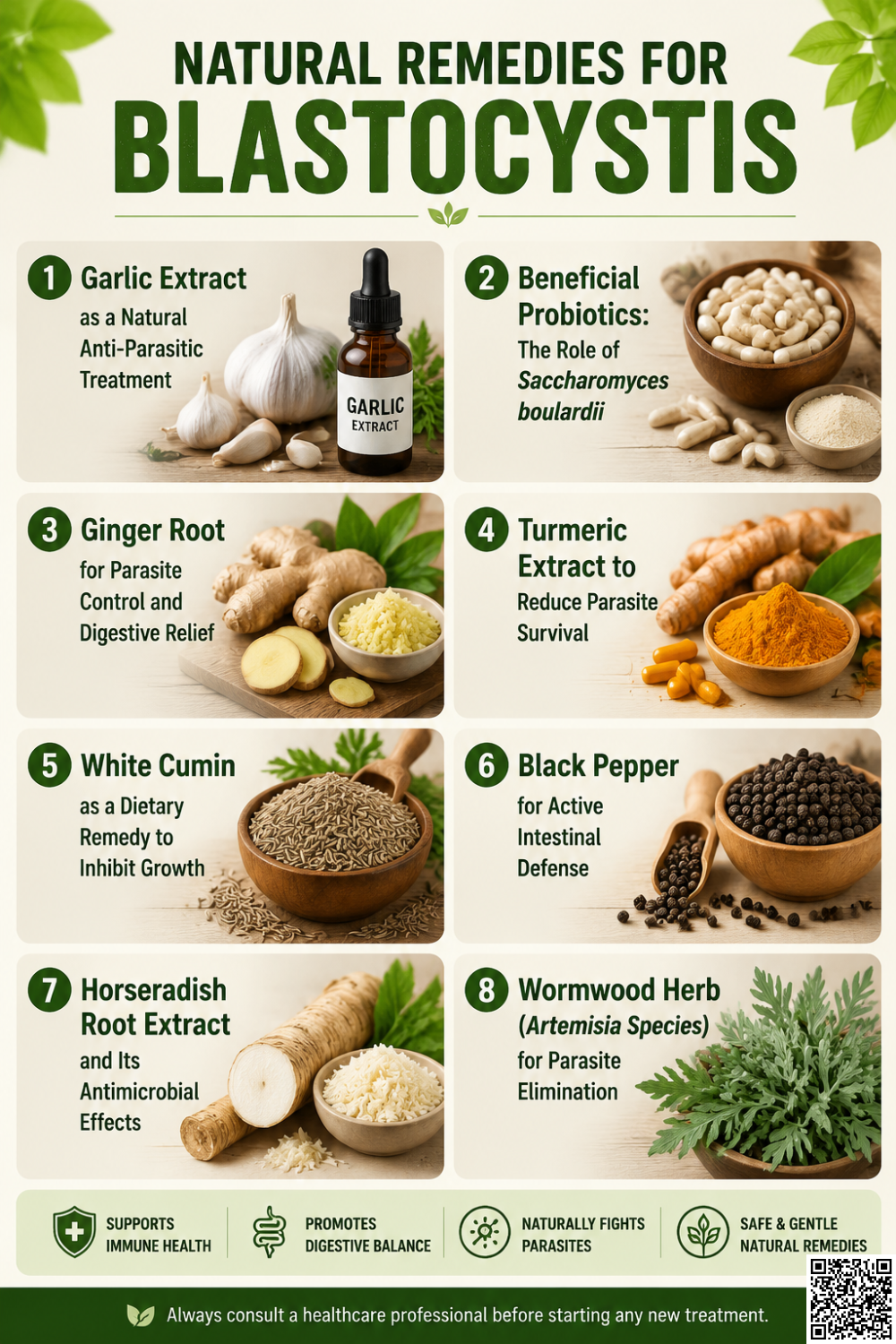
1. Garlic Extract as a Natural Anti-Parasitic Treatment
How it may help
Garlic contains powerful natural compounds, particularly allicin, which act as a defense against intestinal parasites. These substances work by blocking the essential enzymes the Blastocystis organism needs to survive, disrupting its growth and helping the body clear the infection to relieve stomach distress 10.
What research says
Laboratory research confirms that garlic extract possesses strong anti-parasitic properties capable of destroying common Blastocystis strains. Furthermore, animal studies demonstrate that regular garlic treatment effectively reduces intestinal inflammation and significantly decreases the amount of the active parasite remaining in the digestive tract 11.
How to use it safely
To support your digestive health, you can easily add fresh, crushed raw garlic to your daily meals. If you prefer a supplement, choose an aged garlic extract or an allicin capsule. Always start with a low dose and consult your doctor to ensure it fits your routine.
Potential precautions or side effects
Garlic is generally safe but frequently causes bad breath, heartburn, or mild stomach upset. Because it acts as a mild blood thinner, avoid large doses if taking anticoagulant medications.
2. Beneficial Probiotics: The Role of Saccharomyces boulardii
How it may help
Saccharomyces boulardii is a beneficial, living yeast that acts as a powerful probiotic to stabilize the internal gut environment 12. It actively reinforces the intestinal lining and boosts the local immune response, which makes it significantly harder for the Blastocystis parasite to colonize the digestive tract and trigger inflammation.
What research says
Clinical trials demonstrate that Saccharomyces boulardii effectively fights active Blastocystis infections. In a controlled study, patients taking this probiotic experienced parasite clearance rates and relief from symptoms—such as persistent diarrhea and stomach pain—that were highly comparable to the success rates of standard prescription anti-parasitic medications 13.
How to use it safely
You can easily purchase Saccharomyces boulardii as an oral dietary supplement in either capsule or powder form. Follow the dosage instructions on the product label or consult your healthcare provider. For optimal digestive support, take the supplement consistently for at least ten to fifteen days.
Potential precautions or side effects
This specific probiotic is very safe for most healthy individuals. However, if you have a severely weakened immune system or a central venous catheter, avoid it due to rare infection risks.
3. Ginger Root for Parasite Control and Digestive Relief
How it may help
Ginger root acts as a natural digestive aid that can help fight off intestinal parasites. Its active compounds are believed to interfere with the cellular structure of the organism, disrupting its lifecycle while simultaneously soothing common digestive symptoms such as stomach pain and severe bloating.
What research says
Laboratory and animal studies confirm that ginger extract possesses strong anti-parasitic properties capable of fighting Blastocystis. Researchers found that treating the infection with ginger significantly reduces the amount of active parasite cysts in the digestive tract and lowers intestinal inflammation to levels comparable with standard prescription medications.
How to use it safely
You can easily incorporate ginger into your routine by drinking fresh ginger tea, chewing raw ginger slices, or using it as a spice. Standardized ginger extract capsules are also available. Always start with a low dose and consult your doctor before starting any new supplement.
Potential precautions or side effects
Ginger is extremely safe for most people but can occasionally cause mild heartburn. Because it acts as a mild blood thinner, use caution if taking anticoagulant medications.
4. Turmeric Extract to Reduce Parasite Survival
How it may help
Turmeric extract contains curcumin, a potent natural compound known for its ability to reduce severe intestinal inflammation and stabilize the gut microbiome. By altering internal digestive conditions and disrupting the cellular mechanisms of intestinal protozoa, curcumin helps the body clear the infection naturally while easing common symptoms like stomach cramping 14.
What research says
Laboratory studies demonstrate that concentrated curcumin extracts and curcumin nanoparticles exhibit strong anti-parasitic effects against intestinal protozoa, including Blastocystis. Researchers concluded that curcumin significantly reduces parasite survival rates and replication, performing comparably to—and in some models better than—standard prescription medications like metronidazole without causing extensive cellular damage 15.
How to use it safely
To support your digestive health, you can incorporate turmeric powder into daily meals or take standardized curcumin extract capsules. Because the body poorly absorbs plain turmeric, choose a dietary supplement containing black pepper extract (piperine) to enhance absorption. Always consult your doctor before starting any new supplement regimen.
Potential precautions or side effects
Turmeric is generally very safe but can occasionally cause mild stomach upset or nausea in large doses. Because it acts as a mild blood thinner, avoid large amounts if taking anticoagulants.
5. White Cumin as a Dietary Remedy to Inhibit Growth
How it may help
White cumin is a traditional dietary spice that contains active essential oils and natural digestive compounds. These substances can alter the intestinal environment, making it hostile to parasites. By inhibiting the replication and cellular function of the Blastocystis organism, white cumin helps manage stomach discomfort and reduce active infections 16.
What research says
Laboratory studies demonstrate that white cumin extract significantly suppresses the growth of Blastocystis cells. Researchers found that exposing the parasite to concentrated white cumin reduced the organism’s cell count almost as effectively as standard prescription anti-parasitic medications, showcasing its potential as a natural inhibitory agent.
How to use it safely
You can easily add white cumin to your daily diet by mixing the roasted or ground spice into soups, stews, and meals. Alternatively, steep whole cumin seeds in hot water to make a digestive tea. Always consult your doctor before using large medicinal doses.
Potential precautions or side effects
White cumin is highly safe when used as a culinary spice. However, consuming excessive amounts may occasionally cause mild heartburn, stomach upset, or lower blood sugar levels.
6. Black Pepper for Active Intestinal Defense
How it may help
Black pepper contains active compounds, particularly piperine, that serve as a natural defense against intestinal parasites. These substances disrupt the organism’s cellular functions, making it harder for the parasite to survive in the digestive tract while helping the body clear the infection and ease general stomach discomfort 17.
What research says
Laboratory research demonstrates that black pepper extract exhibits strong anti-parasitic activity against Blastocystis. Studies show that exposing the parasite to specific concentrations of black pepper or its active essential oils effectively inhibits its growth and significantly reduces its cellular replication in a controlled environment 18.
How to use it safely
You can easily incorporate freshly ground black pepper into your daily meals. For a more targeted approach, dietary supplements containing standardized piperine extract are widely available. Always start with a low dose and consult your doctor before beginning any new supplement routine.
Potential precautions or side effects
Black pepper is extremely safe as a culinary spice. However, taking large supplement doses can cause heartburn, upset stomach, or unintentionally increase your body’s absorption of certain prescription medications.
7. Horseradish Root Extract and Its Antimicrobial Effects
How it may help
Horseradish root contains powerful natural antimicrobial compounds that act as a strong defense against intestinal parasites. These active plant substances help disrupt the cell structures of the organism, reducing its ability to survive in the digestive tract and assisting the body in clearing the infection.
What research says
Laboratory studies demonstrate that horseradish extract possesses potent anti-parasitic activity against different strains of Blastocystis. Researchers concluded that exposing the parasite to this root extract significantly reduces its cellular viability and inhibits its growth, confirming its potential as a highly effective natural option for infection control.
How to use it safely
You can easily add small amounts of freshly grated horseradish to your daily meals as a condiment. For targeted support, standardized dietary supplements and liquid tinctures are also available. Always begin with a low dose and consult your doctor before starting any new herbal remedy.
Potential precautions or side effects
Horseradish is highly pungent and can cause mouth irritation, severe heartburn, or an upset stomach. Avoid using large amounts if you suffer from stomach ulcers or severe digestive inflammation.
8. Wormwood Herb (Artemisia Species) for Parasite Elimination
How it may help
Wormwood and related Artemisia herbs contain potent natural compounds, such as sesquiterpene lactones, that naturally combat intestinal parasites. These substances disrupt the internal cellular functions and physical structures of protozoa in the digestive tract. This makes the gut environment hostile for the organism and helps relieve general gastrointestinal distress 19.
What research says
Laboratory research confirms that extracts from various Artemisia species exhibit exceptionally strong anti-parasitic activity against Blastocystis. Studies demonstrate that exposing the organism to concentrated extracts causes significant growth inhibition and physical cell destruction, often neutralizing the parasite almost entirely within a few days in controlled settings 20.
How to use it safely
You can find wormwood as a standardized dietary supplement in capsule, liquid tincture, or dried tea form. Because it is highly potent, you should only take it for brief periods—usually no more than two to four weeks. Always use it strictly under the guidance of a healthcare provider.
Potential precautions or side effects
Wormwood is unsafe during pregnancy and for individuals with seizure disorders. High doses or prolonged use can cause toxicity, dizziness, or hallucinations due to a chemical called thujone.
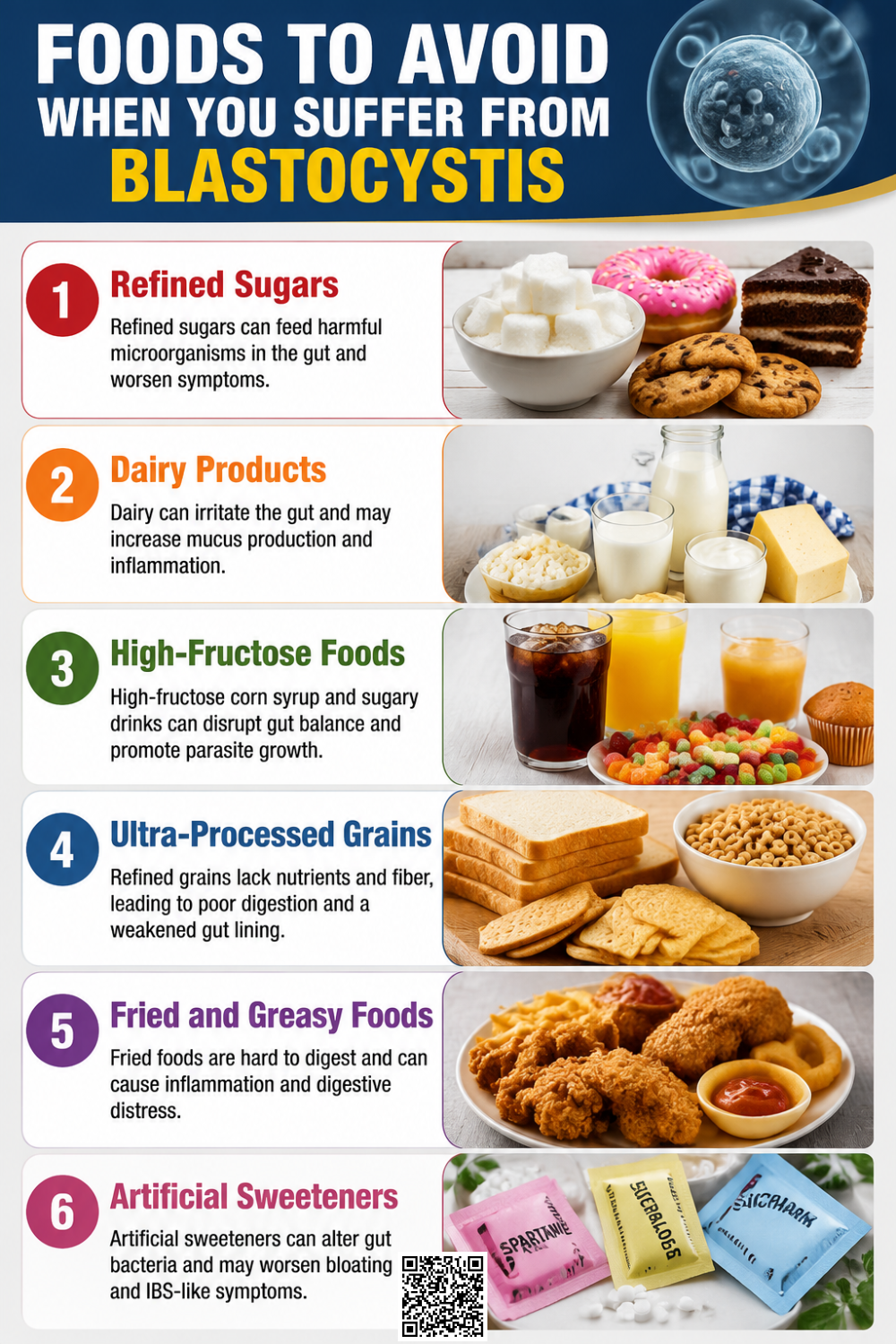
1. Refined Sugars
High sugar consumption negatively alters the gut microbiome and fuels intestinal inflammation, which can prolong gastrointestinal distress and hinder recovery from the infection 21.
2. Dairy Products
Parasitic infections often damage the intestinal lining, causing temporary lactose intolerance; eating dairy can therefore trigger severe bloating, gas, and diarrhea.
3. High-Fructose Foods
Excess fructose ferments rapidly in the gut, exacerbating the painful abdominal swelling, cramps, and severe gas frequently experienced by symptomatic carriers 22.
4. Ultra-Processed Grains
Foods made with refined flours lack essential fiber, disrupting the balance of healthy gut bacteria necessary to naturally defend against and clear the parasite.
5. Fried and Greasy Foods
Heavy, high-fat diets disrupt healthy intestinal function and stimulate rapid bowel contractions, which can significantly worsen frequent, watery diarrhea during active protozoan infections 23.
6. Artificial Sweeteners
Sugar alcohols like sorbitol draw excess water into the intestines, which can aggravate existing diarrhea and increase stomach discomfort during an active gut infection.
When To See a Doctor When You Suffer from Blastocystis
1. Prolonged Diarrhea
See a doctor if you experience watery stools lasting more than three days, which can indicate a persistent infection requiring targeted treatment 24.
2. Signs of Dehydration
Seek immediate help if you develop a dry mouth, dizziness, or minimal urination, as prolonged digestive illness quickly depletes essential bodily fluids.
3. Blood in Stool
Finding blood or mucus in your diarrhea is a serious warning sign of severe intestinal inflammation that requires prompt clinical testing.
4. High Fever
Contact a healthcare provider if your stomach discomfort is accompanied by a persistent fever higher than 102°F, which suggests a severe infection.
5. Severe Abdominal Cramps
You should consult a doctor if you experience intense, unrelenting stomach pain that disrupts daily activities and does not improve with rest.
6. Frequent Vomiting
Seek medical care if you vomit so often that you cannot keep any liquids down, making it impossible to safely rehydrate at home.
Comments
comments