

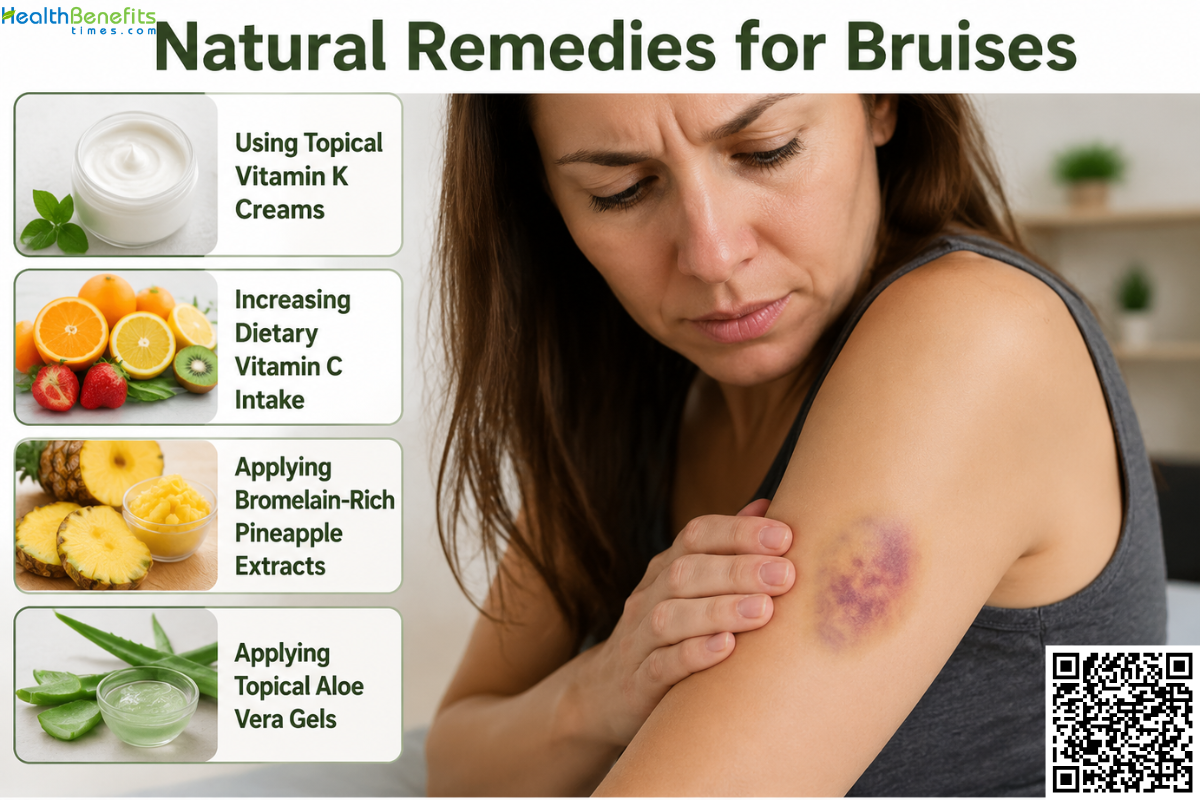
Causes of Bruises
Bruises develop primarily from localized physical impacts that damage small blood vessels, though various physiological factors can also influence their formation.
- Physical Trauma and Injury: Blunt force impacts from bumps, falls, or sports collisions rupture subcutaneous capillaries, causing blood to leak into surrounding tissue spaces 1.
- Blood-Thinning Medications: Anticoagulant and antiplatelet drugs impair the body’s natural clotting ability, making individuals significantly more susceptible to developing prominent bruises from minor bumps 4.
- Nutritional Deficiencies: Inadequate dietary intake of essential nutrients like Vitamin C or Vitamin K weakens capillary walls and impairs blood coagulation, leading to spontaneous bruising 5.
- Aging and Thinning Skin: Natural aging decreases the protective layer of subcutaneous fat and thins the skin, reducing structural support for underlying blood vessels 6.
- Inherited Bleeding Disorders: Genetic conditions such as hemophilia or von Willebrand disease disrupt normal blood clotting mechanisms, resulting in frequent and unexplained bruising 3.
Symptoms of Bruises
Bruises present predictable physical signs as underlying blood vessels break and the body subsequently metabolizes the trapped blood.
- Localized Discoloration: An initial red or purplish mark appearing directly over the site of physical impact 2.
- Progressive Color Transitions: Gradual shifting of the bruise color through shades of dark blue, green, yellow, and light brown as hemoglobin breaks down 2.
- Local Tenderness and Pain: Mild to moderate soreness, tenderness to the touch, or aching discomfort directly around the injured tissue area 1.
- Localized Swelling: Mild soft-tissue puffiness or inflammation accompanying the impact zone during the initial stages of injury 1.
- Gradual Fading: Slow reduction in color intensity and complete resolution of the skin mark as the body fully reabsorbs the trapped blood 2.
Natural Remedies for Bruises
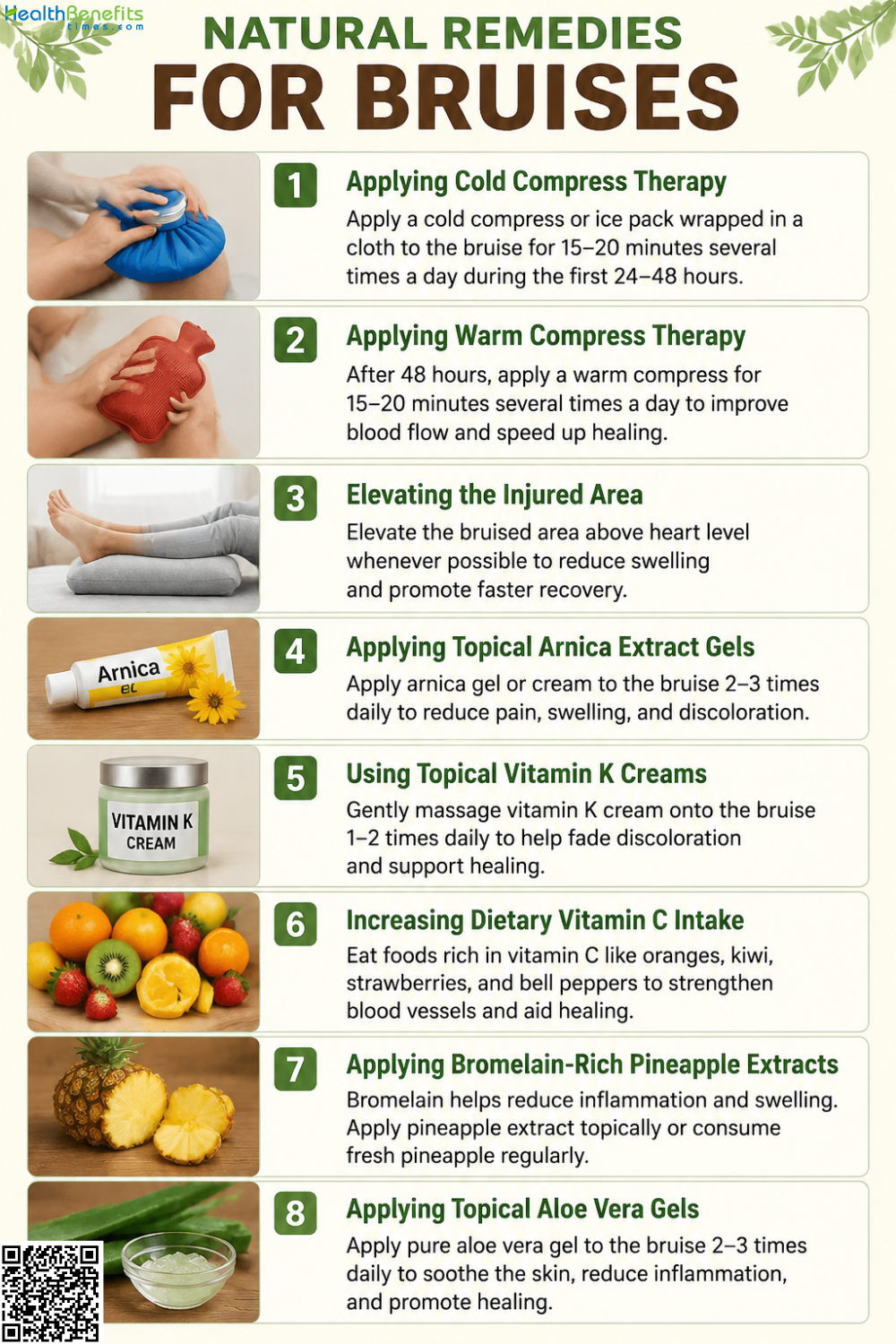
1. Applying Cold Compress Therapy
How it may help
Applying a cold compress constricts blood vessels at the site of trauma, which slows down active bleeding into the surrounding tissue and significantly reduces early swelling and discoloration 1.
What research says
Clinical guidelines conclude that immediate cold therapy effectively limits the spread of hematomas and decreases localized inflammation following acute soft-tissue injuries 2. Research confirms that rapid cooling minimizes overall tissue damage and shortens the recovery timeline.
How to use it safely
Wrap an ice pack or a bag of frozen vegetables in a clean towel before applying it directly to the bruised skin 1. Keep the cold pack in place for 15 to 20 minutes at a time during the first 24 to 48 hours after injury.
Potential precautions or side effects
Never place raw ice directly onto bare skin, as extreme cold can cause frostbite, skin irritation, or permanent tissue damage.
2. Applying Warm Compress Therapy
How it may help
Applying warm therapy dilates blood vessels and boosts local blood circulation around the injury site, which accelerates the body’s natural reabsorption of trapped blood cells and clears lingering discoloration 2.
What research says
Clinical evidence indicates that heat application is beneficial during the later stages of healing to promote tissue repair and clear out pooled cellular debris 2. Research confirms that warmth should only be introduced after initial bleeding and swelling have completely stopped.
How to use it safely
Apply a clean, warm damp cloth or a low-temperature heating pad to the established bruise for 15 minutes 2. Ensure the temperature is comfortable and never use heat during the first 48 hours following the initial injury.
Potential precautions or side effects
Applying heat too early can reopen broken blood vessels, increase swelling, and worsen the spread of the bruise.
3. Elevating the Injured Area
How it may help
Elevating a bruised area uses gravity to slow down blood flow to the injury. This process helps prevent blood and other fluids from pooling under the skin, which significantly reduces swelling and keeps the bruise from getting larger. It also helps ease throbbing pain by lowering the pressure in the affected tissue 7.
What research says
Clinical guidelines consistently support elevation as a core component of the standard first-aid method for acute soft tissue injuries. Research confirms that keeping an injury above heart level effectively reduces local blood volume and swelling, leading to faster recovery and less tissue discoloration 1.
How to use it safely
To treat a bruise, prop up the injured area so it rests above the level of your heart. Use soft pillows or folded blankets for support. Keep the area elevated as much as possible while resting during the first 24 to 48 hours after the injury occurs.
Potential precautions or side effects
Stop elevating the area if it increases your pain. Do not move or elevate the limb if you suspect a broken bone until a doctor has examined it.
4. Applying Topical Arnica Extract Gels
How it may help
Arnica is an herbal plant containing natural compounds that lower inflammation and reduce swelling. When applied directly to the skin, it stimulates the healing process to clear away trapped blood under the surface 8. This action fades the dark colors of a bruise faster and eases tissue tenderness.
What research says
Clinical trials show that applying topical arnica gel significantly reduces the size and severity of bruises. Research confirms that it effectively speeds up the clearance of pooled blood from soft tissues and decreases localized inflammation following minor physical trauma or skin procedures 9.
How to use it safely
Gently rub a thin layer of arnica extract gel onto the bruised area two to three times a day. Only apply the gel to intact skin. Wash your hands thoroughly after use to prevent the medicine from getting into your eyes.
Potential precautions or side effects
Never apply arnica to open wounds or broken skin. It may cause skin irritation or allergic contact rashes. Stop using the gel immediately if you develop itching or blisters.
5. Using Topical Vitamin K Creams
How it may help
Vitamin K is an essential nutrient that helps the body clot and clear pooled blood. When applied directly to a bruise, it aids the body in breaking down and removing trapped blood cells from the affected tissue 10. This process helps fade dark discoloration much faster.
What research says
Clinical trials demonstrate that topical vitamin K significantly reduces the severity and duration of skin bruising. Research confirms that applying it after physical trauma or cosmetic laser procedures accelerates the clearance of purpura and speeds up overall visual recovery 11.
How to use it safely
Gently rub a thin layer of vitamin K cream or gel directly onto the bruised area once or twice a day. Only apply the product to fully intact skin. Wash your hands thoroughly after each application to avoid transferring the cream to your eyes.
Potential precautions or side effects
Never apply vitamin K cream to open wounds or broken skin. It may cause mild skin irritation or allergic contact rashes. Stop using it if itching, burning, or redness develops.
6. Increasing Dietary Vitamin C Intake
How it may help
Vitamin C is an essential nutrient required to produce collagen, a structural protein that builds and strengthens blood vessels 5. When capillary walls are strong, they are less likely to rupture and leak blood after minor impacts. This reduces both the frequency and severity of skin bruising.
What research says
Clinical studies establish that a severe lack of vitamin C leads to weak blood vessels and widespread tissue bruising, a condition known as scurvy. Research confirms that restoring normal vitamin levels strengthens vascular integrity and significantly decreases unexplained skin bruising and bleeding tendencies 12.
How to use it safely
Increase your intake by eating foods rich in vitamin C, such as citrus fruits, strawberries, tomatoes, and bell peppers. If you choose to take an oral supplement, aim for the recommended daily amount of 75 to 90 milligrams to support healthy blood vessels and skin.
Potential precautions or side effects
Avoid taking extremely high doses of vitamin C supplements. Consuming more than 2,000 milligrams daily can cause stomach cramps, nausea, diarrhea, and increase your risk of developing kidney stones.
7. Applying Bromelain-Rich Pineapple Extracts
How it may help
Bromelain is a natural mixture of enzymes found in pineapples that reduces inflammation and breaks down proteins 13. By breaking apart the proteins that trap fluid in injured tissues, it helps the body reabsorb pooled blood faster. This action effectively reduces swelling and fades bruise discoloration.
What research says
Clinical evaluations demonstrate that bromelain effectively reduces swelling, bruising, and pain following physical trauma or surgery. Research concludes that bromelain accelerates soft tissue healing and significantly shortens the duration of visible skin discoloration compared to standard recovery times 14.
How to use it safely
Gently apply a thin layer of topical bromelain extract gel directly to the bruised area twice a day. You can also take oral bromelain supplements to support tissue repair. Always follow the product’s dosing instructions and strictly apply gels only to fully intact skin.
Potential precautions or side effects
Avoid bromelain if you are allergic to pineapples. It may interact with blood-thinning medications and increase bleeding risks. Stop topical use immediately if you develop a skin rash.
8. Applying Topical Aloe Vera Gels
How it may help
Aloe vera gel contains natural anti-inflammatory compounds and enzymes that soothe injured skin and reduce swelling. When applied to a bruise, it calms the underlying tissue inflammation, lowers pain, and supports the local immune system in repairing damaged blood vessels more efficiently, which aids in fading the discoloration.
What research says
Research indicates that aloe vera contains enzymes like bradykinase and compounds like salicylic acid, which act as strong anti-inflammatory agents on the skin. Clinical studies confirm that topical aloe vera application effectively reduces soft tissue inflammation, stimulates collagen production for faster cellular repair, and promotes overall recovery in minor skin injuries 15.
How to use it safely
Gently rub a thin layer of pure aloe vera gel directly onto the bruised area two to three times daily. For a cooling effect that further reduces swelling, store the gel in the refrigerator before use. Only apply the gel to clean, completely intact skin.
Potential precautions or side effects
Aloe vera is generally safe but can cause mild stinging, redness, or allergic contact rashes in sensitive individuals. Never apply it to open cuts, deep wounds, or broken skin.
Foods to Avoid When You suffer from Bruises
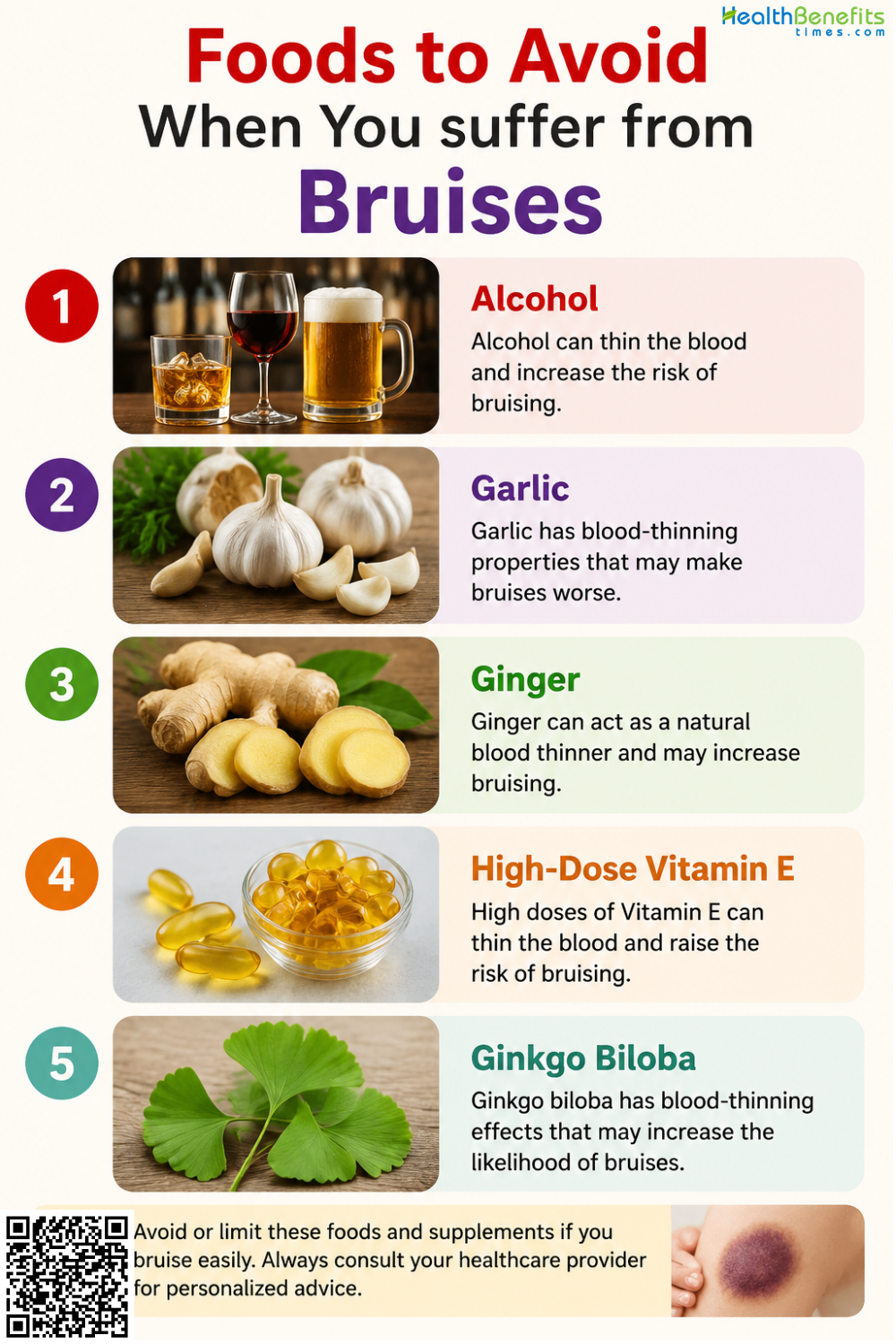
Certain dietary choices can interfere with the body’s natural blood-clotting process, making skin bruising more severe and prolonging recovery time.
1. Alcohol
Alcohol dilates blood vessels and impairs platelet function, preventing proper blood clotting. This allows bruises to expand further under the skin and delays the healing process 16.
2. Garlic
Garlic contains natural compounds that thin the blood. Consuming large amounts prevents blood cells from clumping together, which increases bleeding under the skin and worsens bruises 17.
3. Ginger
Ginger acts as a mild blood thinner by delaying blood coagulation. Eating large amounts can interfere with normal tissue repair and prolong the healing time of existing bruises 18.
4. High-Dose Vitamin E
Excessive vitamin E intake acts as a strong anticoagulant. Consuming extremely high doses prevents standard blood clotting, which directly exacerbates skin bruising and slows recovery 19.
5. Ginkgo Biloba
Ginkgo strongly prevents blood platelets from sticking together. This powerful natural blood-thinning effect significantly increases the severity of bruises and prolongs bleeding beneath the skin 20.
When to see Doctor when you struggle from Bruises
While most minor bruises heal independently, specific patterns require professional medical evaluation to rule out underlying systemic illnesses, severe injuries, or medication complications.
1. Unexplained or Frequent Bruising
Seek medical care if large bruises appear suddenly without physical trauma. This can indicate an underlying blood clotting disorder or a serious bone marrow condition 21.
2. Prolonged Healing Time
Consult a doctor if a bruise shows no signs of improvement after two weeks or fails to fade completely after four weeks 21.
3. Severe Pain and Swelling
Extreme swelling, unusually high pain levels, or a tight feeling around the bruised area may indicate a bone fracture or a dangerous buildup of tissue pressure 22.
4. Abnormal Bleeding Elsewhere
Immediate medical attention is required if skin bruising occurs alongside frequent nosebleeds, persistent bleeding gums, or blood in your urine and stool 3.
5. Bruising on Blood Thinners
If you develop large or recurring bruises while taking prescription blood-thinning medications, contact your healthcare provider immediately to evaluate and adjust your dosage safely 23.
Comments
comments