

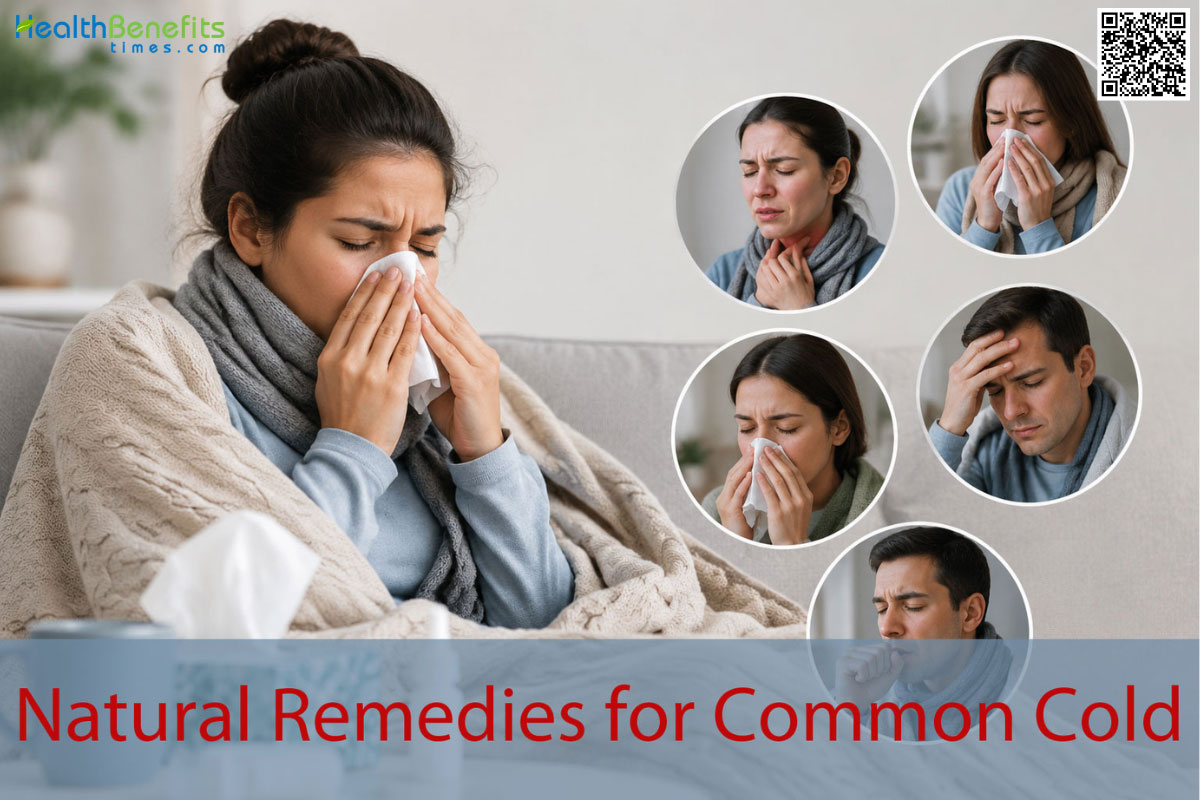
If it feels like you’re getting sick often, that’s actually pretty normal. Healthy adults typically catch two to three colds a year. Kids tend to get hit even more frequently, partly because their immune systems are still maturing and partly because they’re constantly around other children 2. It’s a short-lived illness, but it spreads easily which is why it keeps coming back around.
Causes of COMMON COLD
1. Rhinovirus dominance
More than 200 distinct viruses have been identified as culprits, but rhinoviruses are unequivocally the most common cause of your symptoms 3.
2. Alternative viral agents
Beyond rhinoviruses, you might also be infected by human coronaviruses, adenoviruses, parainfluenza viruses, or respiratory syncytial virus (RSV), all of which trigger nearly identical respiratory reactions 4.
3. Airborne transmission
You can easily catch this illness simply by breathing. When a sick individual coughs, sneezes, or talks, they expel infectious droplets into the air that you subsequently inhale 5.
4. Surface contamination (Fomites)
Touching everyday objects can also lead to illness. Rhinoviruses demonstrate remarkable environmental resilience and can survive on environmental surfaces, like doorknobs and countertops, for up to four days 6.
5. Direct physical contact
Hand-to-hand contact with an infected person transfers the virus to your skin, where it easily enters your body the moment you touch your own eyes, nose, or mouth 7.
Symptoms of COMMON COLD
1. Nasal congestion and discharge
You will typically experience a stuffy or blocked nose, accompanied by rhinorrhea, which is a discharge that may start clear before gradually turning thicker, yellow, or green 8.
2. Pharyngeal discomfort
A sore, scratchy, or tickling sensation in your throat is frequently the very first symptom you will notice, appearing one to three days after your initial exposure to the virus 9.
3. Respiratory reflexes
Coughing and frequent sneezing are your body’s natural mechanical reflexes aimed at clearing irritating mucus and viral debris from your airway passages 10.
4. Systemic aches and fatigue
While less severe than the flu, you may still suffer from mild muscle aches, a low-grade headache, and a general feeling of being unwell or profoundly tired 11.
5. Temperature elevation
Adults rarely develop a significant fever with a standard cold, but you might notice a low-grade fever if you are caring for infected infants or preschool-aged children 12.
COMMON COLD Facts
| Symptoms |
|
| Causes |
|
| Types of COMMON COLD |
|
| How does spread |
|
| Age Group |
|
| You might be at a higher risk for exposure of this disease if you: |
|
| How doctors diagnose |
|
| Other facts |
|
Natural Remedies of COMMON COL
1. Zinc lozenges
The real-world question isn’t whether zinc helps with colds most evidence suggests it does but how quickly you start taking it. If you begin using zinc lozenges within the first 24 hours of feeling symptoms, you can noticeably cut your cold short 13. Studies show that zinc acetate and zinc gluconate both work well for this. The sweet spot seems to be around 80 to 92 milligrams per day 14.
2. Pelargonium sidoides (Geranium extract)
Most people reach for the same handful of remedies when a cold hits. What they might not know is that a plant extract from a South African geranium called Pelargonium sidoides has shown real promise in clinical research. Standardized extracts from this plant appear to block viruses from copying themselves and help people feel better faster. Studies show that those who take it are more likely to see their symptoms fully clear up by day five, compared to people taking a placebo 15.
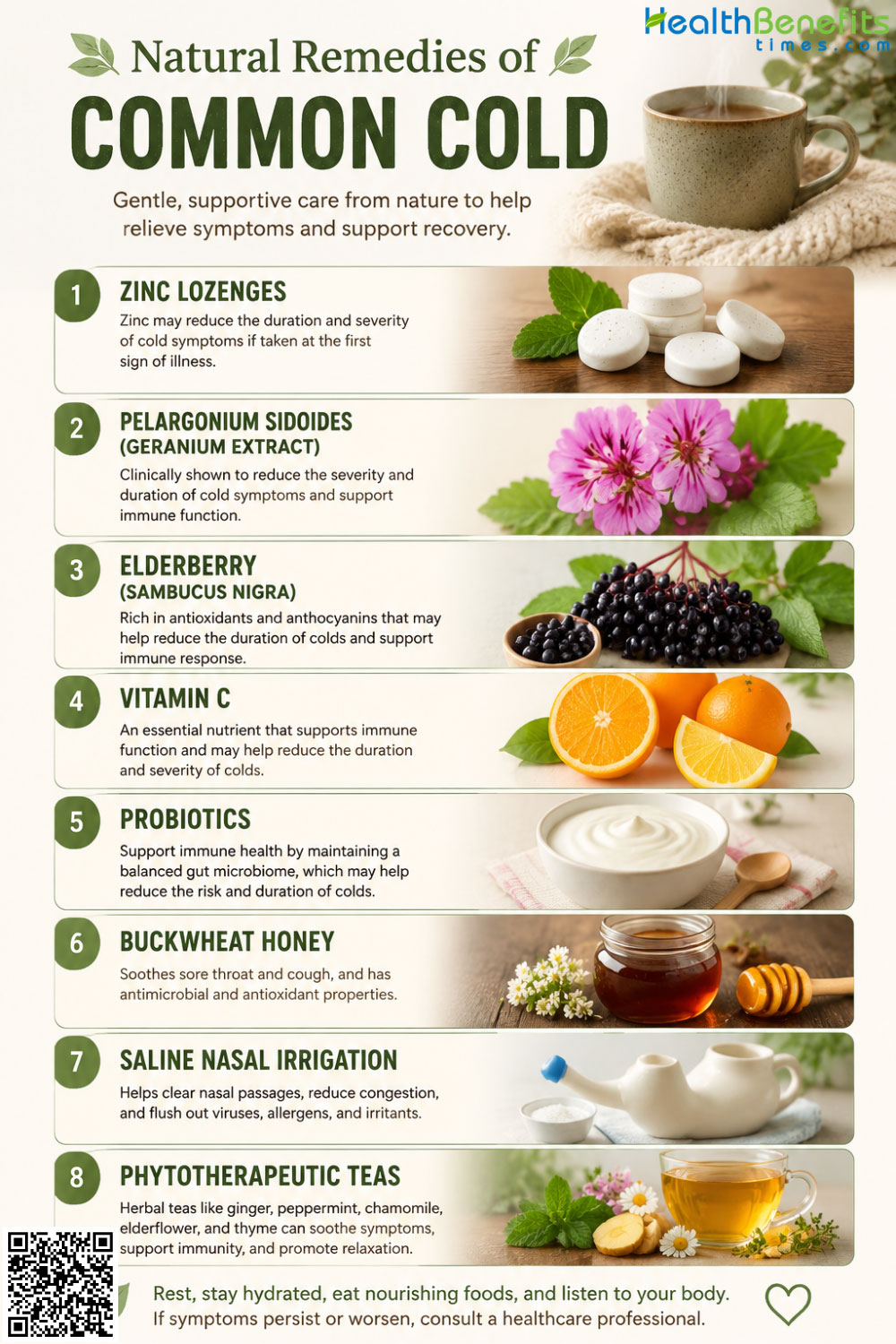
3. Elderberry (Sambucus nigra)
Most people reach for vitamin C at the first sign of a cold. What they might not know is that European black elderberry loaded with antioxidants has some solid science behind it too. Studies show that elderberry extract can meaningfully shorten how long a cold lasts and reduce how bad the symptoms feel 16.
4. Vitamin C
You’ve likely heard that loading up on vitamin C is the go-to move when a cold hits. Here’s what the science actually shows. For most people, taking vitamin C regularly only shortens a cold by a small amount and makes symptoms slightly milder 17. It’s not the cure-all many assume. Where vitamin C really shines, though, is prevention under extreme physical stress like marathon running or heavy training in cold environments. In those situations, it can cut your risk of catching a cold significantly.
5. Probiotics
A growing body of research links immune health to gut health and probiotics play a specific role in that connection. Taking probiotics daily can help boost your body’s immune signals, lower the amount of virus in your system, and reduce how often and how long you deal with colds 18.
6. Buckwheat Honey
You’ve likely heard that honey can help with a cough. Here’s what the science actually shows dark honey, like buckwheat honey, works surprisingly well. It coats the irritated lining of your throat, which helps ease soreness. It also loosens mucus in your airways, making it easier to cough up. The result is a cough that actually does its job better 19.
7. Saline nasal irrigation
Most of us deal with sinus congestion at some point during a cold. One of the simplest ways to get relief is by flushing your nasal passages with salt water either isotonic or hypertonic. This helps clear out trapped mucus and wash away viral particles. It can also reduce your need for medicated decongestant sprays 20.
8. Phytotherapeutic Teas
If you’ve ever wondered why a warm cup of tea feels so soothing when you’re sick, the answer often comes back to what’s actually in the herbs. Peppermint tea releases menthol, which helps calm your cough. Ginger tea works as a natural anti-inflammatory, easing the soreness in your throat. And chamomile tea does double duty it gives your immune system a boost while helping you get the deep sleep your body needs to recover. On top of all that, every cup keeps you hydrated, which matters more than most people realize when you’re fighting a cold 21.
Foods and Activities to Avoid When You suffer from COMMON COLD
1. Caffeinated and alcoholic beverages
Most of us reach for coffee or a drink without thinking twice even when we’re sick. But when you have a cold, staying hydrated is one of the most important things you can do. It keeps your mucus thin and easier to clear. Coffee and alcohol work against that goal. They’re both diuretics, which means they push fluids out of your body faster than usual. That leaves you more dehydrated at a time when your body needs every drop 22.
2. Sugary foods and drinks
Most of us reach for comfort food when we’re sick but sugary snacks and drinks may be one of the worst choices you can make during a cold. When you load up on refined sugar, it triggers inflammation throughout your body. Your blood sugar spikes, and that actually weakens your immune system’s ability to do its job. The result? Your body has a harder time fighting off the virus 23.
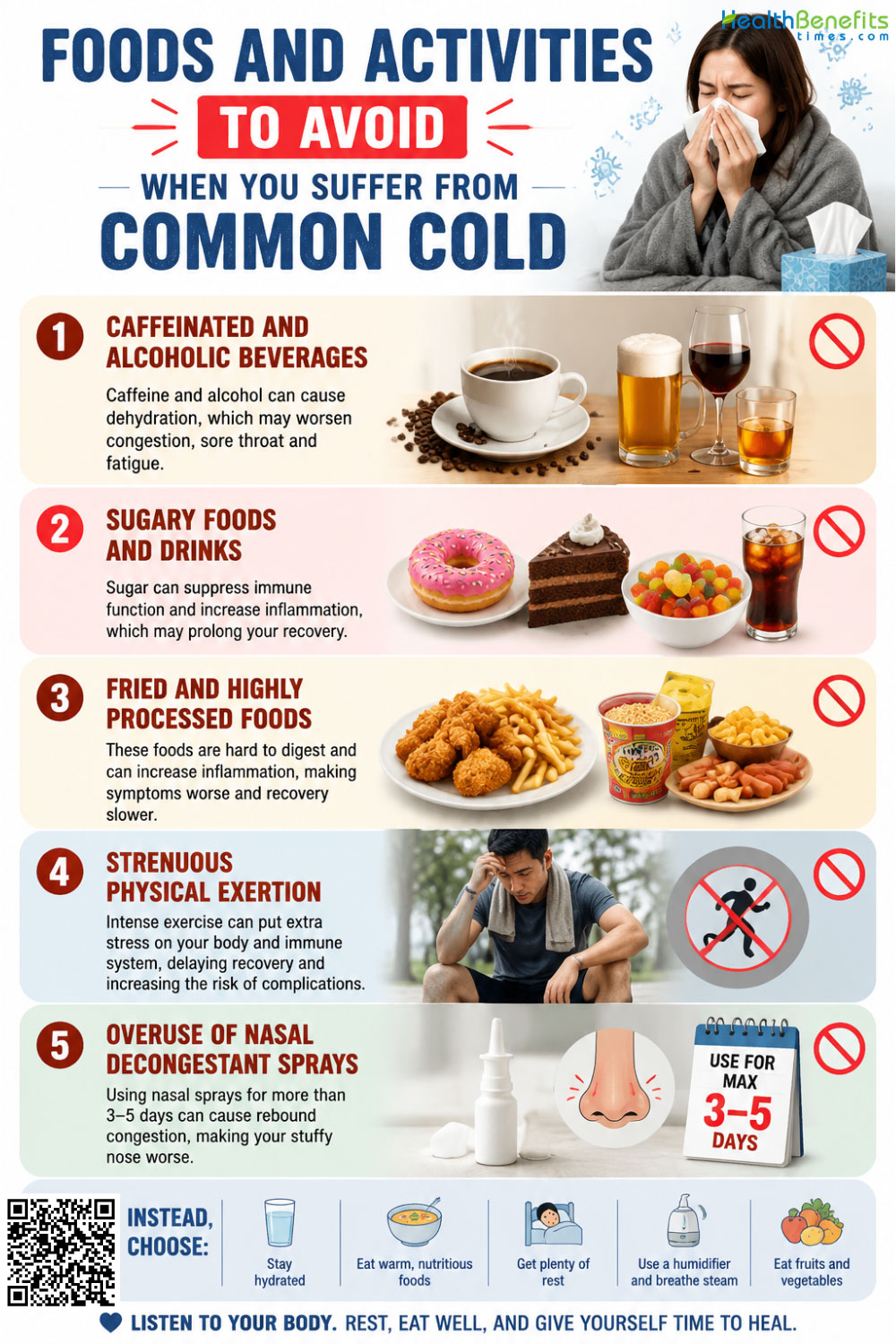
3. Fried and highly processed foods
Your body responds to greasy, processed foods in a specific way one that works against you when you’re fighting a cold. These foods are loaded with trans fats, which are hard on your stomach even on a good day. When you’re sick, your digestive system is already under stress, making them even tougher to break down. On top of that, fast food and fried items fuel inflammation throughout your body, which chips away at your immune system’s ability to do its job 24.
4. Strenuous physical exertion
When you’re fighting a cold, your body is already working hard producing antibodies, repairing inflamed airways, and battling the virus on multiple fronts. That takes a surprising amount of energy. Pushing through intense workouts pulls resources away from your immune system right when it needs them most. Resting for two to three days gives your body the chance to focus on recovery 25.
5. Overuse of nasal decongestant sprays
Many people reach for decongestant sprays hoping for fast relief. And they do work at first. But if you use medicated drops or sprays for more than five days in a row, they can backfire. Your congestion actually comes back worse than before, a problem doctors call “rebound congestion.” So while it’s fine as a short-term fix, keep it to five days max 20.
Myths and Misconceptions
The idea that cold weather makes you sick is so widespread that most people accept it without question. It’s also largely incorrect. Your grandmother may have warned you not to go outside with wet hair, but research shows that simply being cold doesn’t give you a cold. The real reason colds spike in winter? People spend more time indoors, close together, where viruses spread easily 26.
Then there’s the dairy myth the belief that drinking milk floods your body with extra mucus. No clinical evidence supports this. Milk doesn’t increase mucus production during a cold, so if a warm glass soothes your throat, go ahead and drink it 27.
You’ve likely heard the old saying: “feed a cold, starve a fever.” Modern science says ignore it. Eating doesn’t meaningfully affect your body temperature, and skipping meals when you have a fever only leaves you weaker 28. And while chicken soup does offer real comfort, hydration, and electrolytes, no evidence shows the broth itself can cure a viral infection.
Perhaps the most harmful myth is the belief that antibiotics will help you recover faster. Colds are caused by viruses. Antibiotics only work against bacteria. Taking them for a cold won’t help and can actually damage your gut microbiome 29.
Special Considerations
1. Children
When your little one catches a cold, it’s natural to want to reach for something anything to help them feel better. But over-the-counter cough and cold medicines aren’t safe for children under six 3. These products carry real risks of fatal overdoses and serious side effects in small bodies. There’s one more rule worth remembering: never give aspirin to children or teenagers who are fighting off a viral illness. Aspirin is linked to Reye’s syndrome a rare but potentially fatal condition that affects the brain and liver 20.
2. Pregnancy
During pregnancy, your body’s immune system naturally dials down which is essential for protecting the baby, but it also leaves you more open to catching colds and flu. That’s tricky, because many of the medications and herbal remedies you’d normally reach for aren’t considered safe during pregnancy. They can cross the placental barrier and potentially affect your baby 30. Acetaminophen is generally regarded as a safe go-to for bringing down fevers and easing body aches while you’re expecting. But when it comes to herbal options like elderberry or eucalyptus, the picture is less clear. There simply isn’t enough human safety data to confirm they’re risk-free during pregnancy. So before trying any botanical extract, check with your obstetrician first 31.
3. Chronic conditions
For people with heart or lung conditions, a common cold carries implications that go beyond general health advice. What feels like a minor nuisance for most can become a serious problem if you’re living with asthma, COPD, or heart disease. Rhinoviruses the usual culprits behind colds can trigger intense inflammation in your airways. If you have asthma or COPD, this inflammation can set off a flare-up that’s not just uncomfortable but genuinely dangerous 32. These aren’t rare occurrences either. Cold viruses are one of the most common reasons people with these conditions end up needing urgent care.
There’s also a medication concern worth knowing about. If you have hypertension or heart disease, over-the-counter decongestants like pseudoephedrine can be risky. They work by narrowing blood vessels throughout your body not just in your nose which can cause your blood pressure to spike to dangerous levels 33. Before reaching for a cold remedy, check with your doctor or pharmacist about safer alternatives.
4. Elderly
As we age, our immune system gradually loses its ability to fight off infections the way it once did. If you’re 65 or older, even a mild upper respiratory infection can slip past your body’s weakened defenses and settle deep into your lungs 34. That’s why a simple cold carries much higher stakes for older adults it can develop into serious viral or bacterial pneumonia 35.
Precaution before use of natural remedies when you have COMMON COLD
1. Avoid intranasal zinc
Getting zinc from lozenges and getting it through your nose are very different things and the difference matters more than most people realize. Zinc lozenges can help when you have a cold. But zinc nasal sprays or swabs? Stay away from them. They’ve been strongly linked to anosmia a complete and permanent loss of your sense of smell 13. That’s not a temporary side effect. It’s irreversible damage. So if you’re reaching for zinc, stick with the oral form.
2. Beware of addiction triggers
For people recovering from substance use disorders, over-the-counter cold medicines carry implications that go beyond general health advice. Some of these products contain ingredients that can seriously threaten your recovery. Dextromethorphan (DXM) is one to watch out for. It’s a common cough suppressant found in many cold medicines. In normal doses, it works fine. But when taken in large amounts, it can cause powerful hallucinogenic and dissociative effects 36. There’s another hidden risk, too. Many nighttime liquid cold medicines contain alcohol as an inactive ingredient. You might not even notice it on the label. But even a small amount can instantly put a recovering alcoholic’s sobriety at risk 37.
3. Monitor pseudoephedrine usage
For people recovering from stimulant addiction, pseudoephedrine carries implications that go beyond general cold relief. It’s a powerful stimulant, and because it can be used to make methamphetamine, there are strict limits on how much you can buy 38. More importantly, if you’re in recovery from a stimulant addiction, taking this decongestant can trigger strong physical cravings 39.
4. Herb-drug interactions
The gap between “natural” and “safe” is larger than most people assume and that distinction matters most when you’re already taking prescription medications 40. Many herbal extracts contain powerful active compounds that can interfere with how your body processes certain drugs. This is especially concerning with cardiovascular medications, where even small changes in how quickly your body breaks down a drug can lead to serious side effects. Before reaching for any herbal remedy while on prescription medication, talk to your doctor “natural” doesn’t mean risk-free 40.
When to see Doctor
1. Persistently high fever
Most of us deal with fevers at some point during a cold they’re usually nothing to worry about. But there’s a line where waiting it out stops being a good idea. If your fever goes above 101.3°F (38.5°C) and stays there for more than three days without letting up, it’s time to see a doctor 9. A fever that won’t break on its own can signal that your body needs more help fighting off the infection.
2. Breathing difficulties
Most colds stay in your nose and throat. But if you suddenly can’t catch your breath, feel chest pain, or struggle to take a full breath, something more serious may be going on 8. These are signs the infection has moved deeper into your lungs and that’s when you need emergency medical help right away.
3. Prolonged or worsening symptoms
Most people expect a cold to clear up on its own and it usually does. But if your congestion, cough, or that run-down feeling hangs around for more than ten days without getting any better, it’s time to check in with a doctor. At that point, you could be dealing with something more than a common cold, like bacterial sinusitis or pneumonia 41.
4. Biphasic illness patterns
You probably already know the flu hits hard for a few days and then eases up. What you might not know is that feeling better and then suddenly getting worse again is a red flag worth paying attention to. If your fever comes back and your cough gets deeper or more persistent after you thought you were on the mend, that’s a pattern doctors call a biphasic illness and it usually means a bacterial infection has moved in on top of the original virus. At that point, your body likely needs more than rest. It needs medical treatment 42.
5. Warning signs in children
Most parents deal with coughs and sniffles at some point and usually, they pass on their own. But some signs mean your child needs medical attention right away. If your little one is breathing fast or struggling to breathe, seems unusually irritable, refuses to drink fluids, or develops a bluish tint around their lips or face, don’t wait take them to a healthcare provider immediately. 42
Comments
comments