

Causes of COVID-19
1. The Primary Viral Culprit
COVID-19 is caused by infection with a virus called SARS-CoV-2, which enters the body and uses spike proteins to attach to human cells and multiply. 6 7
2. Expulsion of Respiratory Droplets
COVID-19 is caused by infection with a virus called SARS-CoV-2, which enters the body and uses spike proteins to attach to human cells and multiply. 6 7
3. Airborne Aerosolization in Enclosed Spaces
Viral particles can float in the air for a long time in poorly ventilated indoor spaces, meaning you can breathe them in even after an infected person has left the area. 3 8
4. Prolonged Physical Proximity
Staying close to others for long periods, especially within a few feet of an infected person for more than fifteen minutes, greatly increases the chance of catching a virus. 9 2
5. Contaminated Surfaces and Fomites
The virus can survive briefly on surfaces and objects, and you can get infected by touching these contaminated surfaces and then touching your eyes, nose, or mouth. 10 11
Symptoms of COVID-19
1. Early Upper Respiratory Irritations
The earliest signs of COVID-19 often resemble a common cold, with symptoms like nasal congestion, a runny nose, and a sore throat, which may seem minor but can be the first signs that your body is fighting the virus. 1 4
2. Distinct Sensorial Disruptions
A sudden, unexplained loss of taste or smell is one of the most distinctive early signs of this illness, indicating the virus has affected the nerves responsible for these senses. 9 12
3. Deep Pulmonary Distress
As the virus advances deeper into the lungs, it commonly causes a persistent dry cough and significant shortness of breath, even at rest, due to inflammation in the lung tissue that disrupts normal oxygen exchange. 2 13
4. Systemic Body Responses
Infections can cause your whole body to respond with fever, chills, fatigue, muscle aches, and headaches as your immune system releases inflammatory chemicals to fight the infection 14 15.
5. Gastrointestinal Upsets
Stomach problems like nausea, vomiting, and diarrhea are common because the virus can affect your digestive tract, and these symptoms can make it harder to stay hydrated during recovery. 16 17
COVID-19 Facts Table
| Symptoms |
|
| Causes |
|
| Types of COVID-19 |
|
| How it Spreads |
|
| Caused of COVID-19 |
|
| Age Group |
|
| You might be at a higher risk for exposure of this disease if you: |
|
| How doctors diagnose |
|
| Other facts |
|
Natural Remedies of COVID-19
1. Harnessing Vitamin C and Zinc
For a food with so few calories, citrus fruits pack a surprisingly rich supply of Vitamin C and when paired with Zinc, the combination becomes one of the more practical ways to support your immune system during illness. If you’re looking to strengthen your body’s front-line defenses, adding Vitamin C and Zinc to your daily routine is a solid place to start 25. Vitamin C works as an antioxidant. It helps neutralize the free radicals your immune system produces while fighting off a virus, which in turn helps bring down inflammation in your tissues 26. Zinc, on the other hand, plays a different role. It gets in the way of the virus’s ability to copy itself inside your respiratory cells, helping slow the infection down 27.
2. Leveraging Vitamin D for Cellular Defense
Most people don’t realize how much vitamin D influences their ability to fight off respiratory infections. This single nutrient plays a direct role in how well your white blood cells respond to pathogens like the virus that causes COVID-19 11. When your levels are low, your body has a harder time mounting a strong immune response. That makes you more vulnerable to severe lung complications 28. On the other hand, keeping your vitamin D levels in a healthy range may help reduce how severe a respiratory infection gets and could lower your chances of a long hospital stay 29.
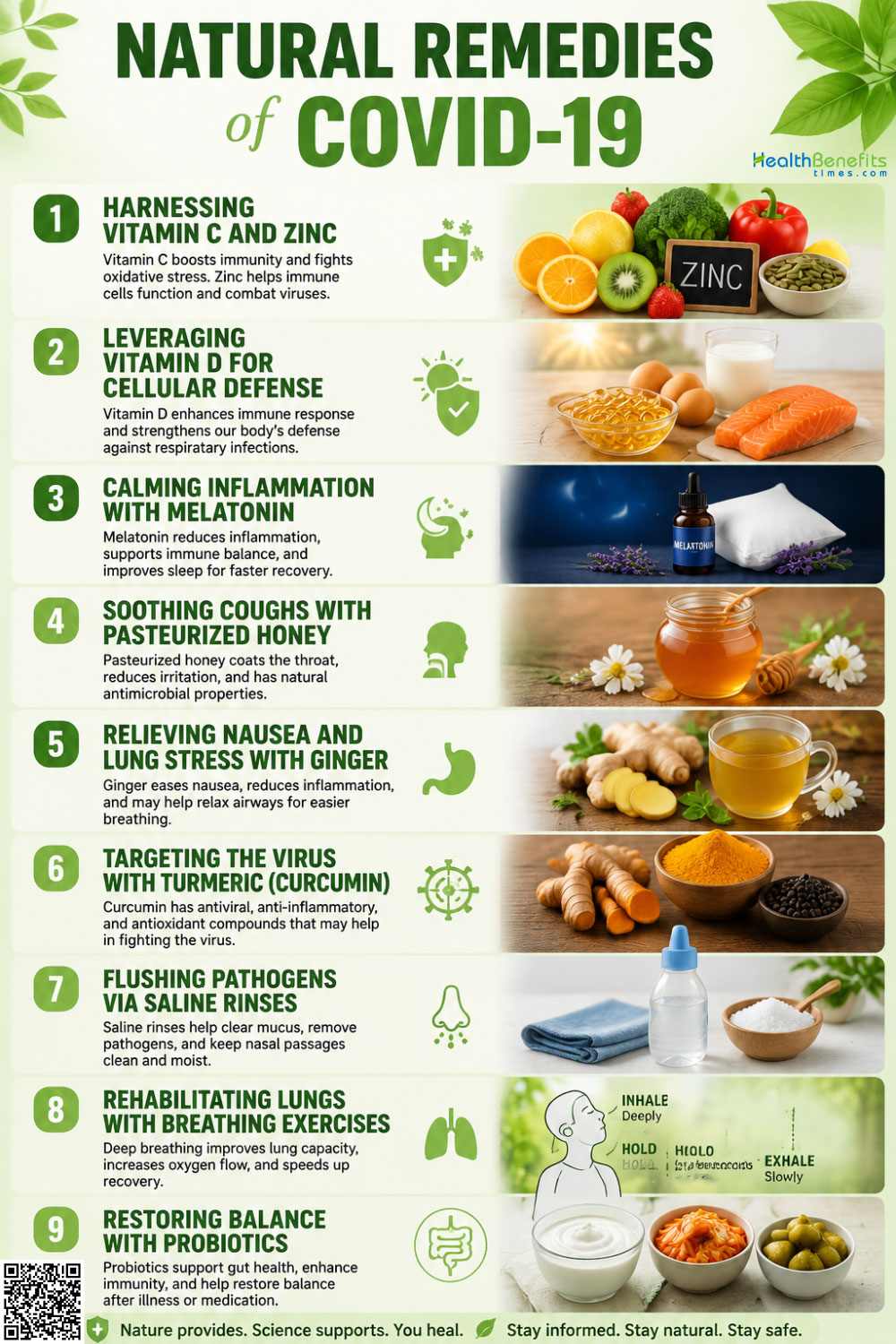
3. Calming Inflammation with Melatonin
You probably already know melatonin as a sleep aid. What you might not know is that this natural hormone also has strong antiviral and anti-inflammatory properties 30. When taken as a supplement during an active infection, melatonin helps shut down the harmful inflammatory pathways that can damage your lungs and heart 31. So it does double duty helping you get the deep rest your body needs to heal, while also protecting your vital organs from your own immune system’s overreactions 32.
4. Soothing Coughs with Pasteurized Honey
You’ve likely heard that honey is good for a cough. Here’s what actually makes it work. When you swallow honey, it coats the irritated receptors at the back of your throat 33. This creates a protective layer that calms the urge to cough. In fact, research shows honey works about as well as many over-the-counter cough medicines 34. For the best results, try taking a teaspoon of pasteurized honey every two hours. This helps keep your throat coated and can cut down on those frustrating coughing fits at night 35.
5. Relieving Nausea and Lung Stress with Ginger
Ginger has been consumed for health purposes for thousands of years. Modern science is now beginning to understand why it works so well especially when you’re fighting an infection like COVID-19. If your illness is upsetting your stomach, ginger can help calm nausea quickly 36. But its benefits go beyond digestion. Ginger also has antiviral and antioxidant properties that may help protect your lungs from serious respiratory stress 37. Drinking warm ginger tea or taking ginger supplements introduces compounds that fight the oxidative damage your body faces during infection 38.
6. Targeting the Virus with Turmeric (Curcumin)
Turmeric doesn’t just provide antioxidants it also appears to influence how your body responds to viral infections. The key compound behind this is curcumin, which research suggests may help slow viral replication 39. Curcumin seems to work by binding to cell receptors, which could make it harder for the virus to enter and infect healthy cells 40. It may also help reduce the risk of pneumonia by calming the excessive cytokine release that can damage lung tissue 41.
7. Flushing Pathogens via Saline Rinses
You’ve likely heard that saltwater gargles help with a sore throat. Here’s what the science actually shows they may do far more than just soothe discomfort. Daily nasal saline rinses and saltwater gargles are among the simplest ways to physically flush the virus from your upper airways 14. When you rinse your nasal passages with a properly mixed saline solution, you help lower the viral load sitting in your nose and throat. That can make a real difference in how congested you feel 42. Clinical data also shows that starting this simple habit early is linked to noticeably lower hospitalization rates 43.
8. Rehabilitating Lungs with Breathing Exercises
If you’ve ever wondered why you still feel winded weeks after COVID, the answer often comes back to how efficiently your lungs are clearing out stale air. The good news is, you can actively rebuild your respiratory strength with a couple of simple techniques pursed-lip breathing and deep belly breathing 44. Here’s how it works. You breathe in slowly through your nose, then exhale gently through puckered lips for a longer count than the inhale. This keeps your airways open longer and pushes trapped, stale air out of your lungs 45. Over time, these exercises improve how well your lungs move air in and out and they can significantly reduce that lingering breathlessness many people experience during recovery 46.
9. Restoring Balance with Probiotics
A growing body of research links your immune recovery to gut health and probiotics play a specific role in that connection. COVID-19 can damage the receptors in your digestive tract, which is why rebuilding your gut health matters during recovery. Daily probiotics live beneficial bacteria can help with that process 16. They work by strengthening the lining of your intestines and supporting a more balanced immune response 47. Getting your gut bacteria back in balance may also ease the lingering fatigue both mental and physical that many people experience after a viral illness 48.
Foods and Activities to Avoid When You suffer from COVID-19
1. Steering Clear of High-Sodium Condiments
Most of us reach for soy sauce or fish sauce without thinking twice. But when your body is fighting off COVID-19, that habit is worth pausing 10. Too much salt forces your heart to work harder and pushes your blood pressure up not what you need when your heart and lungs are already under strain from the virus 49. Skip the high-sodium condiments and salty snacks until you’re on the mend.
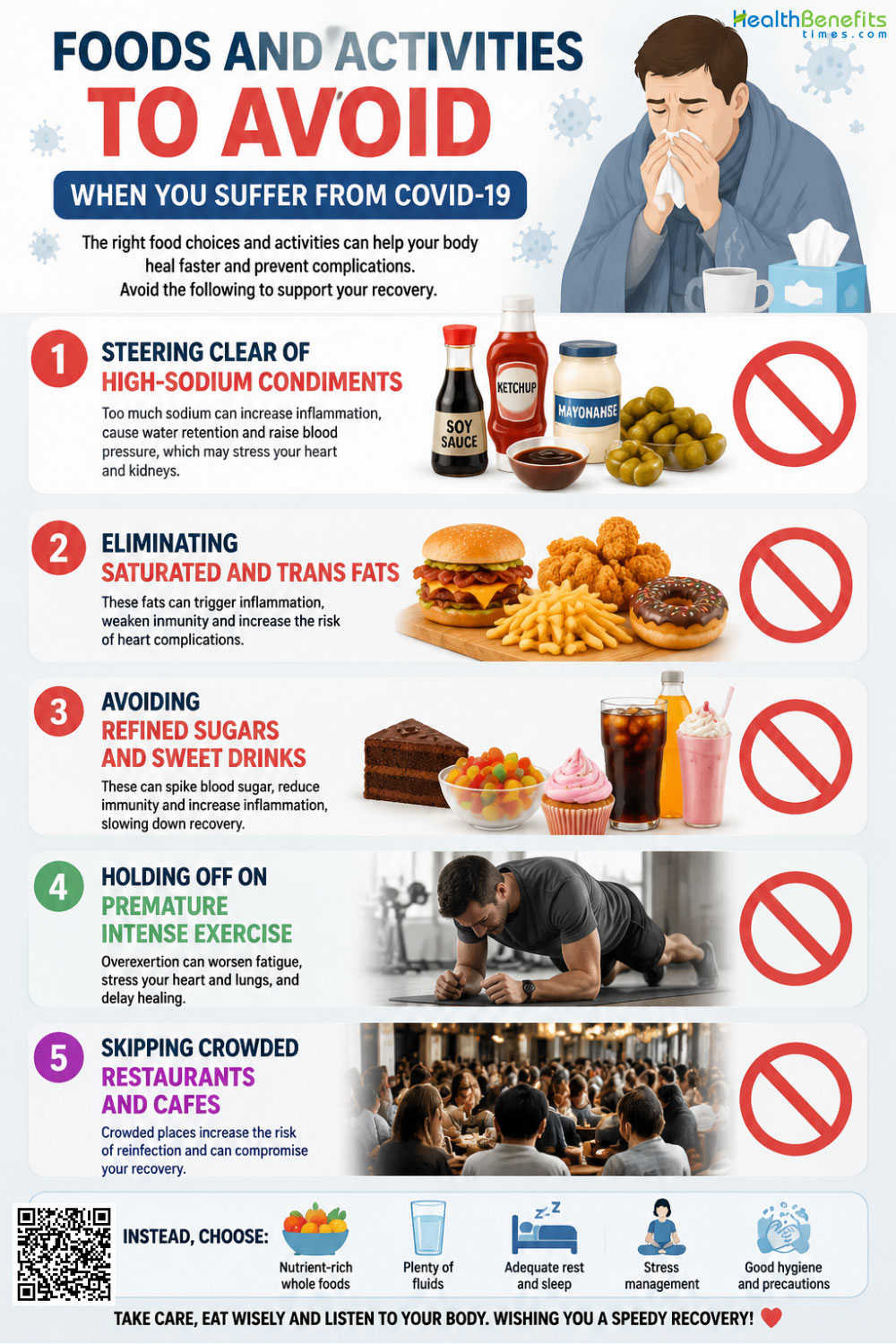
2. Eliminating Saturated and Trans Fats
The relationship between dietary fat and inflammation looks simple on the surface, but gets more complicated the deeper you look. When you’re fighting COVID-19, one of the most important dietary steps you can take is cutting out industrially produced trans fats and heavy saturated fats. These often hide in foods you might not suspect fast food, frozen pizzas, and fatty cuts of red meat 50. The problem is that these highly processed foods fuel your body’s inflammatory pathways. That makes it harder for your immune system to do its job and fight off the virus 51.
3. Avoiding Refined Sugars and Sweet Drinks
Your body responds to refined sugar in a specific way one that works against you when you’re fighting COVID-19. When you’re sick, it’s tempting to reach for cookies, cakes, or sugary soft drinks. But these foods can actually weaken your immune response right when you need it most 17. Refined sugar causes your blood glucose to spike quickly. That spike temporarily slows down your white blood cells, making them less effective at tracking and destroying viral particles 52.
4. Holding Off on Premature Intense Exercise
You probably already know rest is important when you’re sick. What you might not know is that exercising too soon during COVID-19 can do far more harm than just slowing your recovery it can trigger serious heart and lung complications 53. Your body is still fighting viral inflammation, and pushing it through a tough workout before that process wraps up can leave you dealing with severe exhaustion that drags your recovery back by weeks 54.
5. Skipping Crowded Restaurants and Cafes
Many people add a quick café stop or dinner out to their routine hoping for a morale boost while sick. Whether that’s a realistic idea depends on where you are in your recovery and who else is in the room. If you’re still actively sick with COVID-19 or in the early stages of recovery, stay away from crowded restaurants, cafes, and other busy public spaces 8. It’s not just about being considerate though that matters too. When you’re infected, your body is still shedding the virus. Sitting in a packed dining room means you could easily pass it on to the people around you. At the same time, your immune system is already under strain. Crowded places expose you to other respiratory infections that are circulating and your body is in no shape to fight off a second one 55.
Precaution before use of natural remedies when you have COVID-19
1. Identifying Dangerous Drug-Herb Interactions
Getting curcumin from turmeric and getting it from a supplement aren’t the same thing and mixing natural supplements with prescription medications can be just as unpredictable. Before you combine any herbal remedy with antiviral drugs like Paxlovid, know this: some combinations can be genuinely dangerous 56. Take St. John’s Wort as an example. It ramps up certain liver enzymes that break down medications faster than normal. The result? Your body clears the antiviral drug before it gets a chance to do its job against the virus 57.
2. Monitoring Hidden Alcohol in Recovery
For people managing a substance use disorder, over-the-counter natural remedies carry implications that go beyond general health advice. If that’s you, be very careful when choosing herbal syrups, tinctures, or liquid extracts 58. Many of these products use high-proof alcohol as a base. That alcohol can interact dangerously with medications like buprenorphine or methadone. It could trigger an accidental relapse or lead to severe central nervous system depression 59.
3. Ensuring Absolute Water Sterility
If you’ve ever wondered why doctors stress water safety for something as simple as a nasal rinse, the answer comes back to a serious risk most people overlook. Rinsing your sinuses with a neti pot can feel like a quick, natural relief but using untreated tap water is dangerous. It can carry microscopic amoebas that travel directly into your brain 14. To stay safe, only use water that has been boiled and cooled, distilled, or passed through a micro-filter designed to remove parasites 60.
4. Avoiding the Trap of Immune Overstimulation
The relationship between immune-boosting herbs and your body’s defenses looks simple on the surface, but gets more complicated the deeper you look. Taking large doses of these herbs without guidance can actually work against you 61. Powerful botanicals can push your immune system too far. When that happens, your body may trigger what’s called a “cytokine storm” a dangerous wave of inflammation that turns on your own healthy lung tissue 62.
5. Navigating Unregulated Dietary Supplements
Most people assume herbal supplements go through the same safety checks as prescription drugs. But that assumption doesn’t hold up when you look at how the industry actually works. Federal food and drug authorities don’t tightly regulate herbal supplements. That means the quality of what’s inside can change a lot from one bottle to the next 63. And many products that promise to cure viral infections don’t have strong clinical evidence behind those claims. So before you rely on any botanical extract to manage serious symptoms, talk to your healthcare provider first 64.
When to see Doctor
1. Recognizing Unrelenting Shortness of Breath
Most of us have felt winded after climbing stairs or rushing somewhere. But the kind of breathlessness that COVID can cause is different and it demands a very different response. If you reach a point where you’re gasping for air or can’t finish a simple sentence without stopping to breathe, that’s a medical emergency 4. Don’t try to manage it at home. Severe breathing difficulty means the virus has seriously damaged your lung function, and you likely need supplemental oxygen right away 9.
2. Responding to Persistent Chest Pain
If you feel a heavy, crushing pressure or a sharp pain deep in your chest that won’t go away, don’t ignore it 1. This kind of pain can point to serious lung inflammation, strain on your heart, or even a blood clot forming. Any of these needs emergency care right away 2.
3. Detecting Sudden Neurological Changes
If you’ve ever wondered why some COVID symptoms feel scarier than others, the answer often comes back to oxygen and what happens when your brain doesn’t get enough of it. Most people recovering at home keep an eye on fever, cough, and breathing. But there’s another warning sign that deserves just as much attention, and it has to do with your brain, not your lungs. Make sure your caregivers know to watch your mental state closely. Sudden confusion or an inability to stay awake are late-stage warning signs that shouldn’t be ignored 65. When your lungs start failing, your brain stops getting the oxygen it needs. That’s when your thinking gets foggy and it can happen fast. If this happens, get emergency medical help right away so your oxygen levels can be stabilized 66.
4. Watching for Cyanosis and Skin Discoloration
Your body responds to dangerously low oxygen levels in a specific way one that you can sometimes spot just by looking in the mirror. If your lips, nail beds, or face start turning pale, grayish, or blue, that’s a condition called cyanosis 55. It means your blood isn’t carrying enough oxygen. This isn’t something to manage on your own at home call emergency services right away 13.
5. Managing High-Risk Substance Use Complications
For most people, COVID-19 runs its course without major complications. For those dealing with an active substance use disorder, however, the risks are considerably higher including a greater chance of severe hospitalization and death 23. Here’s why: substances like high-dose opioids already slow your breathing, and stimulants put extra strain on your heart and blood vessels. So when a respiratory virus enters the picture, your body is starting from a weakened position. If you test positive, don’t try to ride it out on your own. Reach out to a doctor right away 67.
Comments
comments