

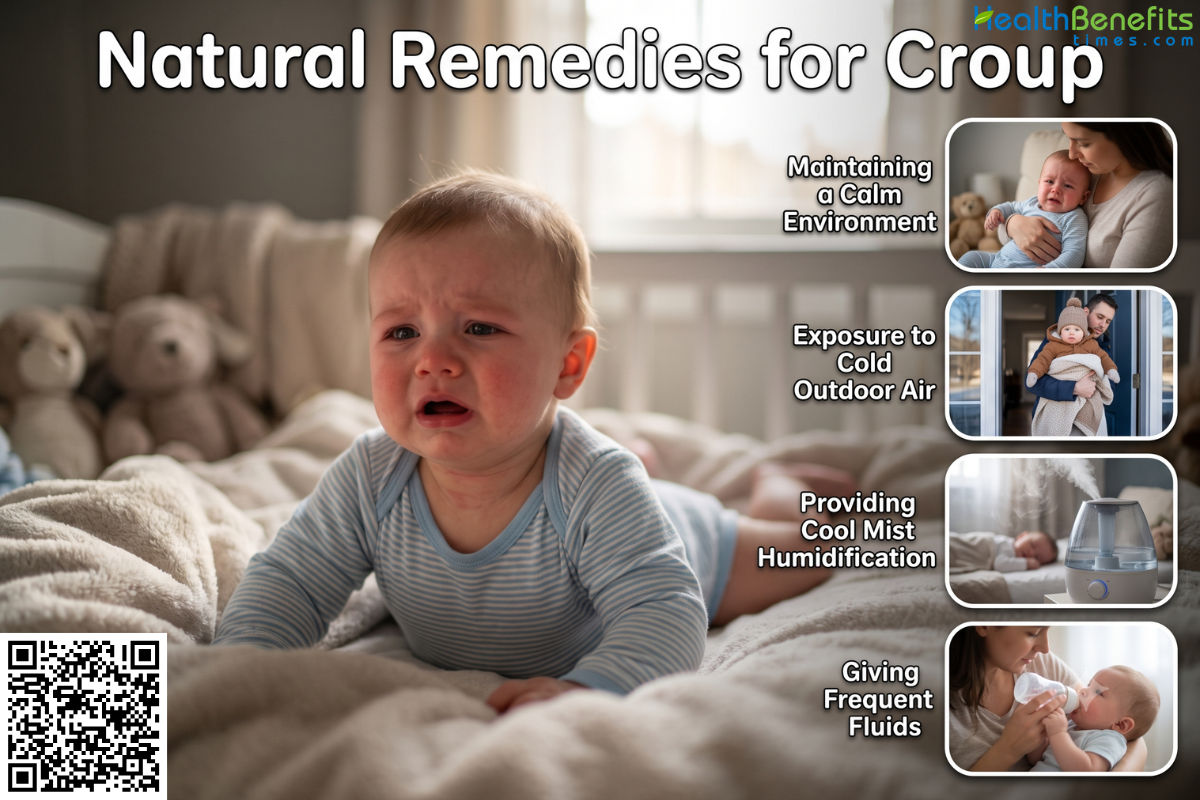
Causes of Croup
- Human Parainfluenza Viruses: These specific respiratory viruses are the primary trigger for the illness, directly causing approximately 75 to 80 percent of all diagnosed croup infections in young children 2.
- Respiratory Syncytial Virus (RSV) and Rhinoviruses: Other common airborne viruses, including RSV and standard cold viruses, frequently infect the voice box and windpipe to produce the exact same airway swelling and barking cough 2.
- Influenza Viruses: Both Influenza A and B can cause the condition, and clinical data shows that these specific flu strains often lead to more severe respiratory distress and higher hospital admission rates 5.
- Allergies and Acid Reflux: A non-infectious variant called spasmodic croup occurs without a fever and is primarily triggered by sudden environmental allergies or stomach acid flowing back into the throat 6.
- Airborne and Surface Transmission: The pathogens that cause croup spread rapidly when a child inhales infected microscopic droplets from a cough or sneeze, or touches contaminated surfaces and then touches their own face 1.
Symptoms of Croup
- Seal-Like Barking Cough: The most recognizable symptom is a harsh, distinct cough that sounds remarkably like a barking seal, which is directly caused by severe swelling around the vocal cords and windpipe 2.
- High-Pitched Breathing (Stridor): As the airway narrows, children frequently produce a harsh, squeaky, or whistling sound when breathing in, indicating restricted airflow in the upper respiratory tract 2.
- Hoarseness: The viral infection heavily inflames the vocal cords, which consistently results in a raspy, altered voice or a weakened, muffled cry in younger infants 2.
- Nighttime Worsening: The breathing difficulties and sudden coughing fits characteristically peak and become significantly more severe during the late evening and overnight hours 3.
- Initial Cold-Like Symptoms: The illness typically presents first with standard viral symptoms, including a low-grade fever, runny nose, and nasal congestion, which persist for one to two days before the major airway symptoms begin 2.
- Chest Retractions: In moderate to severe infections, the skin between the ribs or at the base of the neck visibly pulls inward with every breath as the child struggles to force air through the swollen windpipe 2.
Natural Remedies for Croup
1. Maintaining a Calm Environment
How it may help
Keeping a child calm directly prevents their breathing muscles from working too hard. When a child cries or becomes agitated, their vocal cords tighten and their breathing speeds up, which forces air through an already swollen windpipe and immediately worsens the barking cough and breathing difficulties 2.
What research says
Clinical guidelines emphasize that minimizing emotional distress is a critical first-line intervention for croup. Medical observations consistently confirm that crying rapidly increases oxygen demand and exacerbates airway obstruction, leading to more severe high-pitched breathing sounds and a higher likelihood of needing emergency medical intervention 2.
How to use it safely
Hold and comfort your child in a quiet, dimly lit room. Read a familiar book, sing softly, or offer a favorite toy to distract them from their breathing struggles. Always allow the child to find their own most comfortable resting position 2.
Potential precautions or side effects
While comforting the child is essential, you must not ignore worsening physical signs. Seek immediate emergency care if the child develops bluish skin or severe difficulty breathing 2.
2. Exposure to Cold Outdoor Air
How it may help
Breathing in cold air helps relieve croup symptoms by causing the blood vessels in the upper respiratory tract to temporarily narrow. This rapid constriction effectively reduces the dangerous swelling around the vocal cords and windpipe, which quickly opens the airway and lessens the severe barking cough 7.
What research says
Clinical trials confirm that exposing children to cold outdoor temperatures significantly improves moderate croup symptoms within thirty minutes. Medical studies demonstrate that children who inhaled cold air experienced a faster resolution of airway constriction and required fewer medical interventions compared to those kept at normal room temperatures 7.
How to use it safely
Wrap your child warmly in a heavy blanket or coat and step outside into the cool night air for ten to fifteen minutes. If the weather is warm, hold your child comfortably in front of an open freezer door, ensuring they remain calm and strictly upright 7.
Potential precautions or side effects
Never delay medical treatment if your child actively struggles to breathe. Seek emergency care immediately if they develop blue lips, extreme lethargy, or deep chest retractions while gasping for air 2.
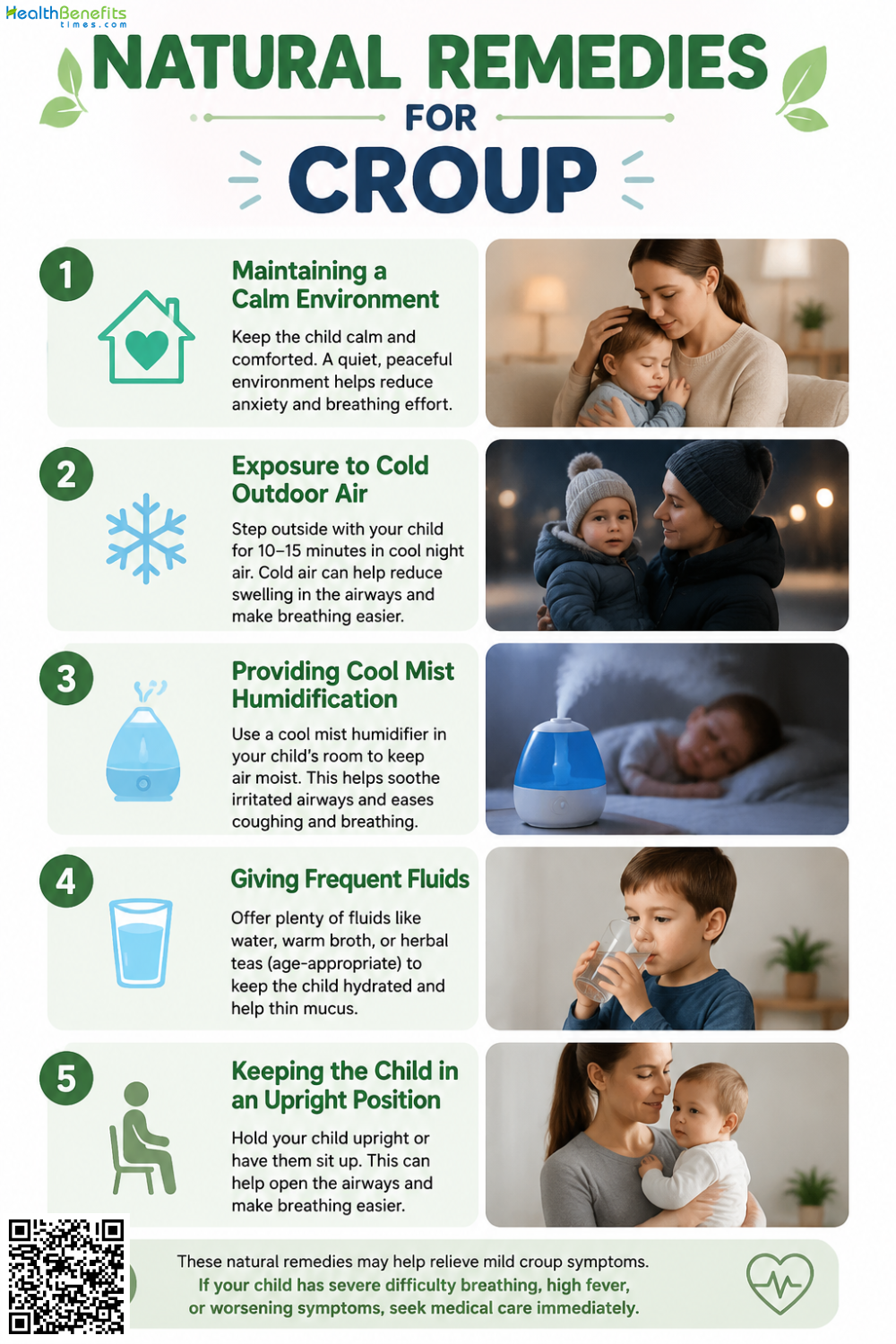
3. Providing Cool Mist Humidification
How it may help
Providing cool mist from a humidifier is a traditional remedy aimed at soothing a child’s irritated airway. The inhaled moisture is thought to temporarily cool the throat, thin thick respiratory secretions, and make breathing feel less harsh during a sudden coughing fit 8.
What research says
Extensive clinical reviews conclude there is no significant evidence that humidified air actually reduces upper airway swelling or improves croup severity 8. Furthermore, medical guidelines warn that confining a child in a traditional “mist tent” often provokes severe anxiety, which directly worsens their breathing struggles 9.
How to use it safely
If you use a humidifier, strictly choose a cool-mist model rather than a hot-steam vaporizer to prevent accidental burns. Place the machine safely out of reach, and thoroughly clean the water tank daily to prevent the dispersal of dangerous mold or bacteria into the air 10.
Potential precautions or side effects
You must avoid hot steam due to the high risk of scalding injuries. If the cool mist makes your child shiver or become increasingly agitated, discontinue its use immediately 9.
4. Giving Frequent Fluids
How it may help
Keeping a child well-hydrated helps thin out thick, sticky mucus in the respiratory tract, making it easier to clear the airway. Additionally, providing fluids prevents dehydration, which frequently occurs due to the fever and rapid breathing associated with viral croup infections 2.
What research says
Clinical guidelines for pediatric respiratory illnesses emphasize that adequate fluid intake is an essential supportive treatment. While hydration does not directly reduce vocal cord swelling, medical experts conclude it significantly lowers the risk of severe dehydration and prevents further systemic complications 2.
How to use it safely
Offer your child small, frequent sips of water, breast milk, or oral rehydration solutions. You should let them drink slowly at their own pace, completely avoiding sugary or caffeinated beverages that might worsen dehydration 11.
Potential precautions or side effects
Never force fluids if your child is actively struggling to breathe, coughing severely, or breathing rapidly, as this creates a high risk of dangerous choking or fluid inhalation 2.
5. Keeping the Child in an Upright Position
How it may help
Keeping a child in an upright position uses gravity to reduce fluid buildup and tissue swelling around the voice box. This posture naturally opens the airway and allows the lungs to expand more easily, which immediately decreases the physical effort required to breathe through the narrowed windpipe 2.
What research says
Clinical guidelines emphasize that allowing a child to sit upright or assume their preferred posture is a critical supportive measure for airway obstruction. Medical experts conclude that upright positioning directly minimizes respiratory strain and prevents the severe anxiety that otherwise worsens croup symptoms 2.
How to use it safely
Hold your child securely upright on your lap or shoulder while comforting them. For older toddlers, you may prop them up in a seated position. Always allow the child to naturally lean forward or choose whichever specific posture makes breathing feel easiest for them 2.
Potential precautions or side effects
Never use loose pillows to prop up an infant under one year old due to the severe risk of accidental suffocation. Do not force any posture that causes crying 12.
Foods to Avoid When You Suffer from Croup
1. Hard and Crunchy Foods
Avoid nuts, raw vegetables, or hard candies, as a sudden barking cough can easily cause these solid particles to be accidentally inhaled, creating a severe choking hazard 13.

2. Caffeinated and Sugary Beverages
You should strictly avoid sodas and caffeinated drinks because they increase fluid loss, actively worsening dehydration and preventing the natural thinning of thick respiratory mucus 11.
3. Dry or Crumbly Snacks
Avoid foods like dry toast or rough chips, as these abrasive textures can directly scratch the severely inflamed throat and immediately trigger intense, painful coughing fits 2.
When to See a Doctor When You Struggle from Croup
1. Stridor at Rest
Seek emergency care if the child makes a high-pitched, whistling sound while breathing in, even when completely calm, indicating severe airway obstruction 2.
2. Chest Retractions
You must get immediate medical help if the child’s skin visibly pulls inward between the ribs or at the base of the neck with each breath 2.
3. Blue or Pale Skin
Call emergency services immediately if you observe a blue, gray, or pale tint around the child’s mouth, lips, or fingernails, signaling dangerous oxygen deprivation 2.
4. Excessive Drooling
Seek urgent medical evaluation if the child suddenly begins drooling excessively or cannot swallow saliva, as this suggests a life-threatening airway emergency called epiglottitis 14.
5. Extreme Lethargy
Visit the emergency room if the child becomes unusually drowsy, extremely difficult to wake up, or completely unresponsive, which indicates severe respiratory failure and exhaustion 2.
Comments
comments