


Causes of DENGUE FEVER
1. Viral Serotypes
Dengue fever is caused by four closely related virus types, and being infected by one type only protects you from that same type, so you can still get sick often more seriously from the other three 5.
2. Aedes Mosquito Vectors
Female Aedes aegypti and Aedes albopictus mosquitoes spread dengue to people by biting an infected person, carrying the virus in their bodies, and then passing it on through future bites 6.
3. Antibody-Dependent Enhancement
Complicating secondary infections is a paradoxical immunological phenomenon where previously When a person is infected with a different strain of the virus, antibodies from a previous infection can sometimes help the new virus enter immune cells instead of fighting it, which causes the virus to multiply faster and can lead to more severe illness 7.
4. Unplanned Urbanization
Unplanned urban growth, with poor drainage and waste like old tires and plastic containers collecting stagnant water, creates ideal breeding grounds for mosquitoes and leads to sharp rises in disease spread, especially during monsoon seasons 8.
Symptoms of DENGUE FEVER
1. Sudden Hyperthermia
Dengue fever often begins with a sudden high fever that can reach up to 104°F, usually lasting two to seven days and often not responding well to common fever-reducing medications 9
2. Severe Musculoskeletal Pain
Dengue causes severe pain in the muscles and joints that makes it hard to move, which is why it was historically called “breakbone fever” 10.
3. Retro-Orbital Agony
A sharp pain behind the eyes that worsens with eye movement or bright light is an early and distinctive symptom of dengue fever, often helping doctors identify the disease 1.
4. Cutaneous Rash and Petechiae
During the fever, a temporary rash may appear on the body, and as platelet levels drop, small spots called petechiae can show up under the skin, signaling serious bleeding problems 11.
DENGUE FEVER Facts table
| Category | Clinical Details and Epidemiological Facts |
| Symptoms |
|
| Causes |
|
| Types of DENGUE FEVER |
|
| How does spread |
|
| Age Group |
|
| You might be at a higher risk for exposure of this disease if you: |
|
| How doctors diagnose |
|
| Other facts |
|
Natural Remedies of DENGUE FEVER
1. Papaya Leaf Extract
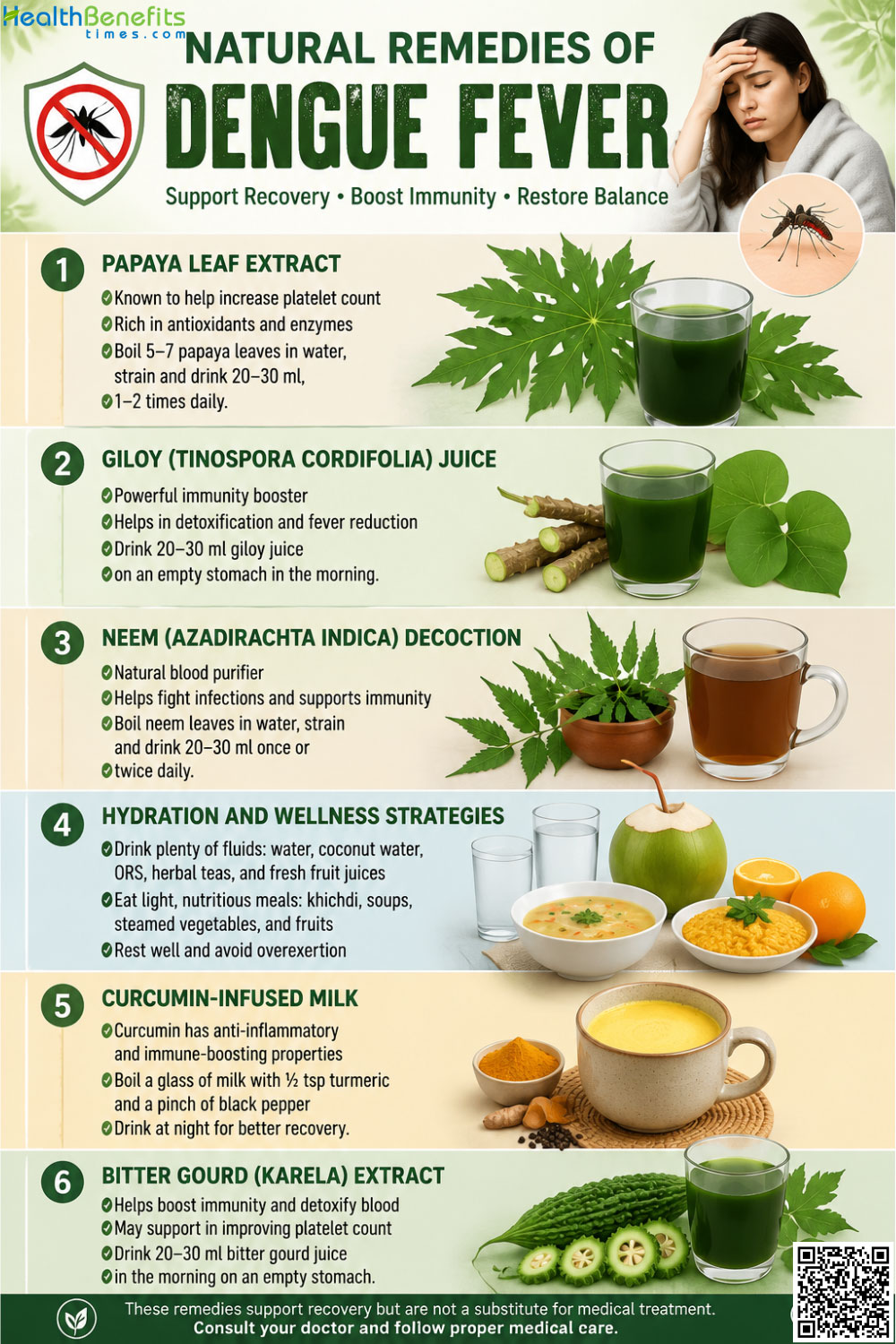
One of the more dangerous aspects of dengue fever is the sharp drop in blood platelets the cells that help your blood clot. When platelet counts fall too low, the risk of serious bleeding rises. That’s what makes papaya leaf extract worth paying attention to. Research shows that compounds in papaya leaves can help boost platelet production and reduce clotting time. They appear to work by protecting blood cells from being destroyed by the body’s own immune response during infection. 7 To use it, wash fresh papaya leaves thoroughly, then crush or blend them to extract the green juice. A small dose about two tablespoons twice a day is what most studies have used. 15
2. Giloy (Tinospora cordifolia) Juice
In South Asian traditional medicine, giloy has been used for centuries as a natural fever remedy. Now, researchers are examining those traditional claims more closely. Giloy is a climbing shrub commonly used in Ayurveda. To prepare it, the stems are chopped and boiled in water to make a simple decoction. Studies suggest this preparation may help activate macrophages a type of immune cell and support the body’s natural defense against viral infections 16. Drinking giloy juice regularly during dengue may also support liver function and help ease the intense joint and bone pain that typically peaks during the infection 17.
3. Neem (Azadirachta indica) Decoction
Neem has been used for centuries as a natural remedy for infections across South and Southeast Asia. Now, researchers are examining those traditional claims more closely. Neem leaves contain compounds that may help fight the dengue virus directly. Brewing fresh leaves into a tea is one of the most common ways to use them. These compounds appear to block viral activity and may also help prevent secondary infections something that matters when the immune system is already under strain. 18 If you’re dealing with the itchy skin rashes that often show up as fever starts to drop, cooled neem leaf extract can be applied to the skin for relief. 19
4. Hydration and Wellness Strategies
Most people deal with dehydration at some point during a fever. With dengue, it becomes a far more serious concern. The body loses fluids rapidly during the active fever phase, and replacing them consistently is one of the most important things a person can do to support recovery. Drinking electrolyte-rich fluids like fresh coconut water and clear vegetable broths helps restore the fluid volume the body loses through sweating and reduced intake. 20 Staying well-hydrated also lowers the risk of a dangerous drop in blood volume, known as hypovolemic shock, which is one of dengue’s most serious complications. 21 Keep your fluid intake steady throughout the day rather than drinking large amounts at once. Small, frequent sips of coconut water, broths, or oral rehydration solutions tend to work better and are easier on the stomach.
5. Curcumin-Infused Milk
Turmeric doesn’t just provide antioxidants it also appears to influence how your body’s inflammatory signaling pathways switch on and off. During dengue, inflammation can spike as the immune system fights the virus. Curcumin, the active compound in turmeric, helps bring that response under control. Stirring a spoonful of turmeric powder into warm milk makes a simple drink that can ease muscle pain and body stiffness 22. Try drinking it before bed sleep is when your immune system does most of its repair work, and the warmth of the milk can help you settle into deeper rest 23.
6. Bitter Gourd (Karela) Extract
For a food with so few fans, bitter gourd packs a surprisingly powerful set of plant compounds that may help the body fight dengue. Its fresh juice contains phytochemicals that have shown the ability to slow the virus from multiplying inside cells 24. Yes, the taste is genuinely hard to get through. But drinking a diluted amount on a regular basis may help strengthen your immune response and support the normal functioning of your organs during recovery 25.
Foods and Activities to Avoid When You suffer from DENGUE FEVER
1. Dark-Colored and Red Foods
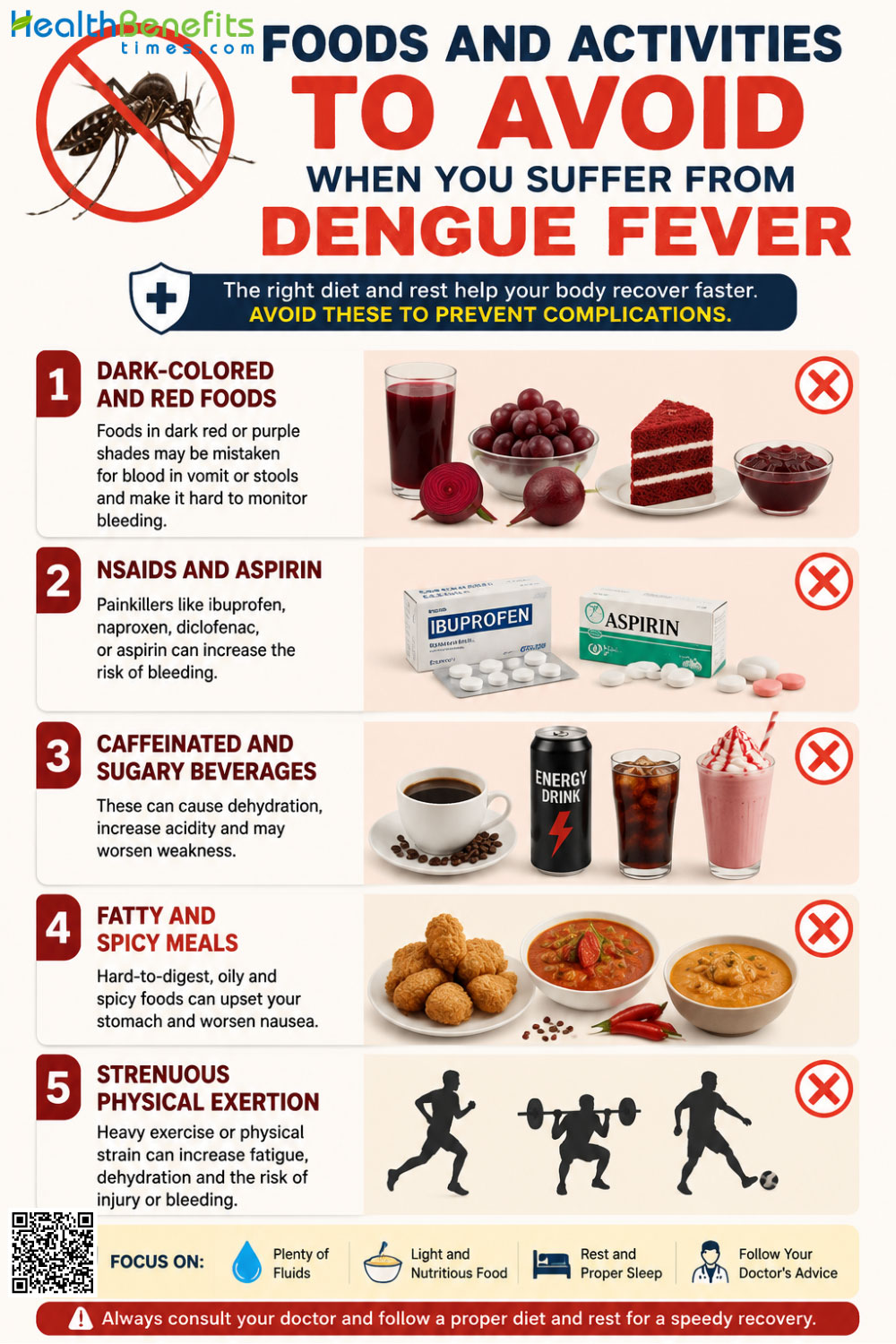
The relationship between diet and accurate diagnosis looks simple on the surface, but gets more complicated when you’re dealing with dengue. During recovery, it’s best to cut out dark chocolate, beetroot, and purple juices entirely. These deeply colored foods can make vomit or stool look like it contains blood. That resemblance is a problem it can hide real signs of internal bleeding, one of dengue’s most serious complications. 26.
2. NSAIDs and Aspirin
For people with dengue fever, common pain relievers like ibuprofen, naproxen, and aspirin carry implications that go beyond general medication advice. These drugs interfere with how platelets clump together to form clots. In dengue, platelet counts are often already low. Adding a medication that further impairs clotting raises the risk of serious internal bleeding 27. If you need to manage a fever, stick with acetaminophen (paracetamol) instead and check with your doctor before taking anything else.
3. Caffeinated and Sugary Beverages
The real-world question isn’t whether hydration matters during dengue it clearly does but which drinks are quietly working against you. Strong coffee, black tea, and commercial energy drinks all act as diuretics. They push your kidneys to flush out water and electrolytes faster than your body can afford, especially when it’s already struggling to maintain fluid balance. During dengue, that kind of fluid loss can quickly tip into dehydration a serious and potentially dangerous complication. 28
4. Fatty and Spicy Meals
During dengue, the stomach and intestines are already under stress and what you eat can either ease that burden or make it worse. Fried foods, rich curries, and highly acidic fruits like lemons and oranges are best avoided. Heavy fats are harder for the body to process, especially when the liver is already dealing with inflammation. Spicy foods and acidic items can irritate the stomach lining, making nausea worse and raising the chance of developing ulcers 29.
5. Strenuous Physical Exertion
During dengue fever, the body’s blood vessels are already under stress and pushing them further through exercise is a risk not worth taking. Heavy lifting, intense cardio, or hard physical labor can raise heart rate too quickly, putting extra pressure on capillaries that are already fragile. This increases the chance of small internal bleeds or sudden drops in blood pressure that may cause fainting 30. Rest is essential during recovery save the workouts for when your body is ready.
Myths and Misconceptions
The idea that papaya leaf juice can instantly cure dengue is so widespread that many people accept it without question. It’s also largely incorrect. 31 Yes, scientific evidence does support papaya leaf extract’s ability to help boost platelet counts. But no natural remedy can wipe out the virus on its own. Relying on it alone and skipping proper medical care like intravenous fluid therapy can be life-threatening. 32
Most people assume severe dengue only affects children, sparing adults entirely. But that assumption doesn’t hold up when you look at the evidence. 14 The virus does not pick its victims by age. Healthy young adults and older individuals face the same risk of serious complications including shock and severe bleeding especially when infected by a new serotype they haven’t encountered before.
Widespread confusion around immunity also puts communities at risk. Many people believe that getting dengue once protects them for life. It doesn’t. Four distinct serotypes of the virus exist, and recovering from one offers no protection against the others. 6 In fact, a previous infection can actually make a second one more dangerous through a process called immune enhancement.
For years, antibiotics had a reputation for being a go-to treatment during dengue outbreaks. The research tells a very different story. 33 Dengue is caused by a virus, not bacteria so antibiotics do nothing against it. Taking them unnecessarily only disrupts gut health and contributes to the growing problem of antimicrobial resistance.
Special Considerations
1. Children
Children’s nutritional needs differ from adults’ in a few key ways and when it comes to dengue, those differences carry serious clinical weight. Young children have capillaries that are naturally more permeable than those of adults. Their total blood volume is also much smaller. Together, these two factors make infants and young children especially vulnerable to rapid fluid loss sometimes progressing to hypovolemic shock before it’s even detected 34. This is why IV fluid management in pediatric dengue cases requires careful, calculated dosing. Too much fluid too quickly can lead to pulmonary edema fluid buildup in the lungs which is particularly dangerous during the critical phase of the illness
2. Pregnancy
For people who are pregnant, dealing with this intense viral infection raises serious health risks for both the mother and the developing baby. The extreme inflammation it causes can trigger premature labor, and the virus may pass directly from mother to child during pregnancy or birth. This makes care especially complex, often requiring a team of specialists working together 35.
3. Chronic Conditions
For people with conditions like metabolic syndrome, heart disease, or long-term substance use disorders, infections don’t just hit harder they tend to last longer and lead to more serious hospital stays 36. That’s because chronic illness puts ongoing stress on the body’s organs. Over time, this weakens the immune system and makes it harder for the body to fight off new threats. It also complicates treatment, since standard approaches may not work as well when multiple health issues are involved. Careful monitoring of infection spread is especially important in these groups, and recovery plans often need to be tailored to account for the added complexity.
4. Elderly
For people over 65, dengue carries implications that go beyond general clinical advice. Older adults rarely develop the high fevers typically seen in younger patients. Their symptoms tend to be quieter mild fatigue, confusion, or unusual changes in behavior 4. This makes the infection easier to miss. At the same time, aging weakens the cardiovascular system, which means the body is less equipped to handle plasma leakage. The risk of organ failure rises sharply as a result 4. If you’re caring for an older adult with a possible dengue infection, don’t wait for a high fever to seek medical attention the warning signs may look nothing like what you’d expect.
Precaution before use of natural remedies when you have DENGUE FEVER
1. Secure Medical Authorization
For people with dengue fever, adding natural remedies carries implications that go beyond general nutrition advice. Your body is already under serious stress, and certain herbs or supplements can interfere with your treatment in ways that aren’t always obvious. Before trying any botanical supplement, talk to your doctor. This isn’t just a formality it’s a safety step. Some natural remedies can work against the fluids and medications your medical team has prescribed. Others may throw off your blood test results, making it harder for doctors to track how you’re recovering 37. Getting that clearance first helps ensure nothing you take disrupts your treatment plan.
2. Recognize Hepatic Limitations
Dengue fever doesn’t just affect your blood it also inflames your liver, even in mild cases. That temporary liver stress matters more than most people realize when it comes to herbal remedies. Your liver is responsible for breaking down everything you consume, including concentrated herbal extracts. When it’s already struggling with the inflammation dengue causes, adding large doses of raw or unstandardized botanicals forces it to work even harder. This extra burden can tip an already weakened liver toward serious toxic damage 38. If you’re considering natural remedies during a dengue infection, start cautiously. Your liver simply isn’t operating at full capacity, and what might be safe under normal circumstances can become risky when it’s already under strain.
3. Verify Botanical Integrity
The gap between a medicinal plant and its toxic look-alike can be dangerously small and during a serious illness like dengue, mistaking one for the other could be life-threatening. If you’re foraging or buying raw plants, make sure you’ve confirmed the exact species before consuming anything. Some plants closely resemble beneficial herbs but carry compounds that can cause severe harm, especially when the body is already fighting a viral infection. To stay safe, source your remedies only from certified and reputable herbal dispensaries. 39
4. Monitor Hypoglycemic Shifts
If you’ve ever wondered why certain home remedies feel risky during dengue, the answer often comes back to blood sugar. Plants like bitter gourd and concentrated neem leaf extracts are known for lowering blood sugar levels. That can become a real problem during dengue, when most people are already eating very little due to loss of appetite caused by the illness. The combination a powerful sugar-lowering plant and reduced food intake can lead to dangerously low blood sugar episodes 17. If you’re using these remedies, keep a close watch on your glucose levels and make sure you’re getting enough calories throughout the day.
5. Evaluate Pharmacological Intersections
For people managing chronic conditions, adding herbal remedies during dengue carries implications that go beyond general nutrition advice. If you’re already taking prescription medications, you need to check how any new herb or supplement might interact with them before you start. Here’s why this matters. Many plant-based compounds can change the way your liver processes medications. In some cases, they increase a drug’s effects to dangerous levels. In others, they block the drug from working at all 21. Either outcome can be serious, especially when you’re already fighting an infection like dengue. Talk to your doctor before combining any natural remedy with your current medications. This simple step can prevent complications that are otherwise entirely avoidable.
When to see Doctor
1. Continuous Abdominal Agony
Severe stomach pain that doesn’t let up is one symptom you should never try to wait out. It often signals that the liver has become inflamed or that fluid is leaking into the space around your abdominal organs both of which can turn dangerous quickly. If the pain is constant and intense, get to an emergency room right away. 23
2. Uncontrollable Emesis
Three or more episodes of violent vomiting in a single hour is a medical emergency get to a hospital immediately. At that point, your body can’t keep any fluids down. This means dehydration sets in fast, and without IV fluids, it can quickly lead to hypovolemic shock, a dangerous drop in blood volume that can become life-threatening. 40
3. Spontaneous Mucosal Hemorrhage
Bleeding that starts on its own from the gums, as heavy nosebleeds, or as dark blood in the urine is not something to wait out. These signs point to a serious breakdown in the body’s ability to form clots, and they require emergency medical attention right away 41.
4. Extreme Neurological Shifts
If you or someone in your family suddenly becomes extremely drowsy, unusually irritable, or seems confused and unresponsive, call emergency services right away. These changes happen because severe plasma leakage from blood vessels reduces the amount of oxygen reaching the brain. Without treatment, this can quickly become life-threatening. 42
Comments
comments